Millions of T-Mobile customers who have come to rely on free in-flight Wi-Fi as a standard perk of their mobile plan are discovering a quiet but consequential change at 35,000 feet. With no press release, no public announcement, and no warning to passengers at the gate, both American Airlines and United Airlines have effectively been removed from T-Mobile's in-flight Wi-Fi programme, a benefit that has been one of the most tangible, well-used perks in US aviation for years.
The Perk Disappears Without Warning
Per an email reviewed by TheStreet, T-Mobile has advised customers that "free in-flight Wi-Fi may no longer be available on some flights and airlines starting April 13, 2026." The email does not specify which airlines are affected.
T-Mobile's in-flight Wi-Fi benefit appears to be disappearing on American Airlines and United Airlines, though neither carrier has formally confirmed the change. For travellers who discovered the loss mid-flight, expecting a familiar free login screen only to be met with a paywall, the experience has been jarring. Reports surfaced rapidly across travel forums, including FlyerTalk and Reddit, where passengers began comparing notes on a benefit that had quietly ceased to function.
The T-Mobile "In-Flight Connection" page was updated this week to remove United Airlines, after American Airlines had been removed some weeks before. United Airlines responded with minimal transparency when contacted, stating only:
"This change is due to an update T-Mobile made to its customer benefit program. We'd encourage you to reach out to T-Mobile directly for additional information."

Why American's Exit Makes Sense
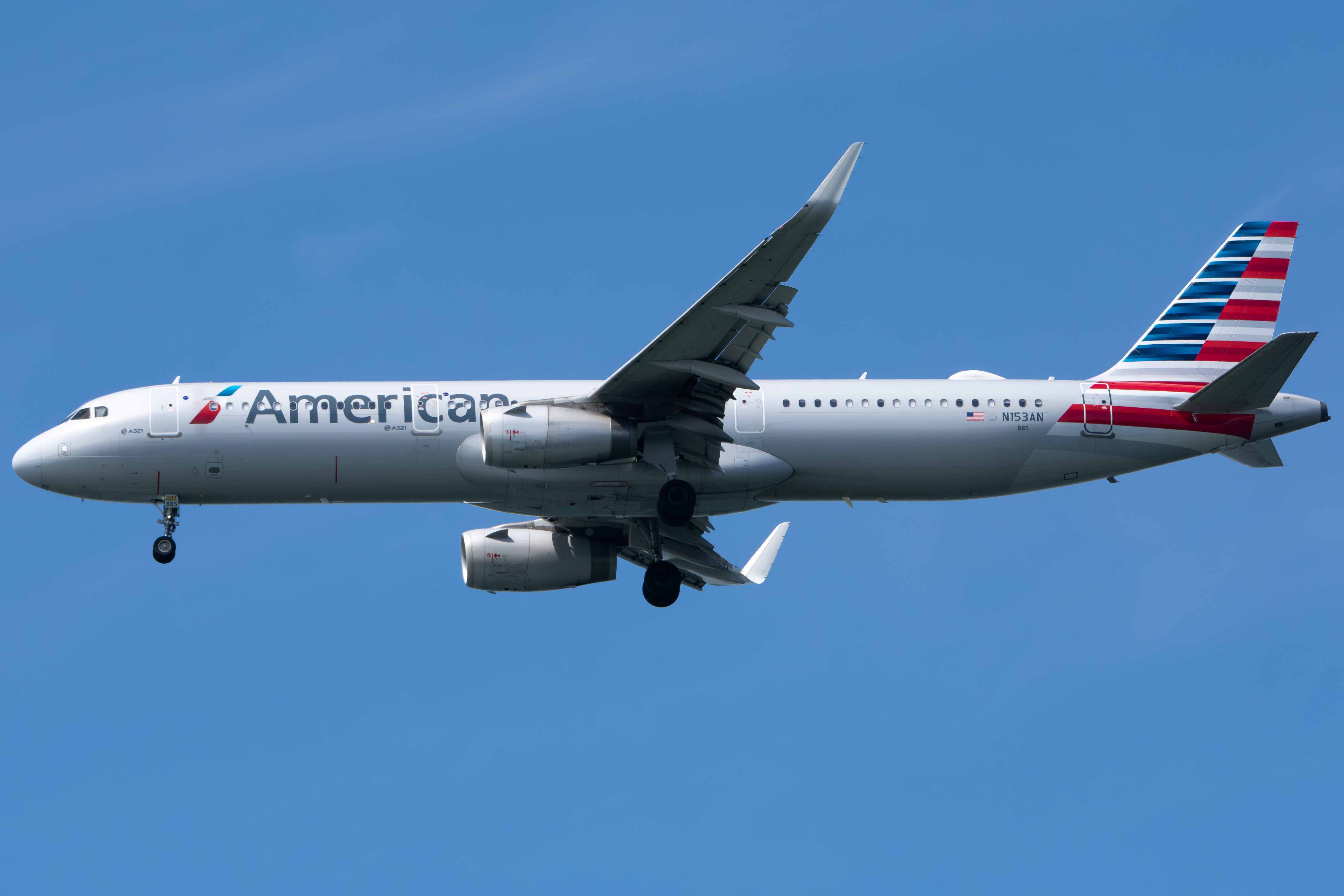
On American Airlines, the loss of T-Mobile Wi-Fi is not especially surprising. The carrier has been rolling out free Wi-Fi across its narrowbody fleet, sponsored by AT&T. That effectively replaces the need for a carrier-specific perk like T-Mobile's, since all passengers now have access to connectivity without needing a specific mobile plan.
American Airlines plans to offer all AAdvantage loyalty members free Wi-Fi beginning in January 2026, having partnered with AT&T to provide the service across approximately 90% of its fleet, covering more than 2 million annual flights. American's chief customer officer, Heather Garboden summed up the partnership at its launch:
"This was a natural partnership in every aspect: two iconic Texas-based brands, known for innovation and connection."
For American passengers, the removal of T-Mobile access is therefore largely redundant — they are gaining something broader in its place.
Why United's Exit Makes Far Less Sense
The United situation is a different matter entirely, and it is the case attracting the most criticism from frequent travellers and aviation analysts.
The situation is far less logical on United. United has made a big push toward free Wi-Fi through its partnership with Starlink, but that rollout is still in its early stages. The vast majority of United's mainline fleet does not yet offer Starlink connectivity. Removing it before a full replacement is in place strikes me as highly premature. I understand that United may be simplifying its onboard Wi-Fi offerings ahead of a broader transition, but from a passenger perspective, this represents a clear step backwards.
At this point, United has Starlink Wi-Fi on 300-plus planes; by the end of 2026, United will have Starlink Wi-Fi on 800-plus planes; and by the end of 2027, United will have Starlink Wi-Fi on all planes.
That timetable leaves a meaningful gap. United's Wi-Fi is now offered via a paid pricing model, starting at $8 for MileagePlus members or $10 for all other passengers. Not all aircraft are fitted with Wi-Fi connectivity, and it is only available on select flights.

The Starlink Factor
The T-Mobile In-Flight Connection programme no longer covers United and American Airlines. At its core, many airlines are dropping Gogo Inflight because it is slow, inconsistent, and outdated compared to newer satellite options. United Airlines announced in 2024 that it would add Starlink to its aircraft, replacing Gogo on its fleet. The first flight with Starlink onboard was operated in October 2025, offering free Wi-Fi to all United MileagePlus members.
The situation carries an irony that has not been lost on aviation observers. T-Mobile's own "T-Satellite" service is powered by Starlink, the very same technology United is now aggressively deploying across its fleet. The two companies are simultaneously partners in one context and apparently at odds in another, a contradiction that has generated considerable debate among frequent flyers who cannot understand why T-Mobile would withdraw a perk from an airline transitioning to T-Mobile's own satellite backbone.
One Reddit user claims that the reason some United flights are still offering a T-Mobile Wi-Fi option is that only Panasonic-equipped planes have been initially impacted. However, starting on July 13, 2026, aircraft with Thales and Viasat Wi-Fi will also no longer be supported.
Alaska Goes Global: How Hawaiian Airlines Changed the Carrier’s Future
Who Still Has the Perk?
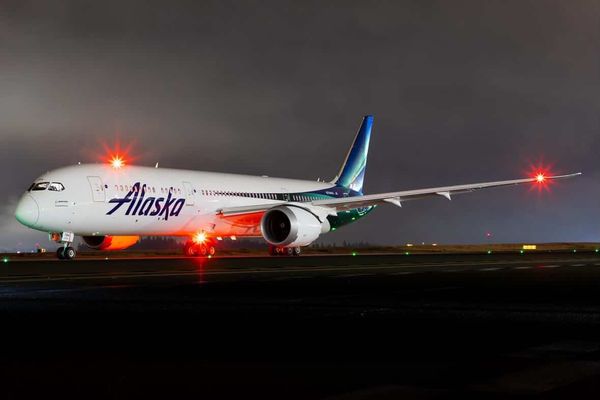
T-Mobile will continue to sponsor free in-flight Wi-Fi for several major US carriers. Delta Air Lines, Alaska Airlines, Hawaiian Airlines, and Southwest Airlines still have a T-Mobile in-flight connection as suggested on the provider's website.
T-Mobile says it sponsors free in-flight Wi-Fi on Delta, Alaska/Hawaiian, and Southwest flights in partnership with Intelsat. For T-Mobile customers whose loyalty to the carrier was partly built on the in-flight benefit, the choice of airline going forward has now become a more pointed consideration.
A Sky Full of Competing Standards
The collapse of T-Mobile's arrangement with American and United is a symptom of a much larger technological transition reshaping in-flight connectivity across the industry.
Alaska Airlines is striking a similar tone, just months after renewing its partnership with T-Mobile. It plans to add Starlink to its fleet in 2026, with plans to have it installed across its entire fleet by 2027. Not all airlines are going in the Starlink direction. JetBlue does not work with T-Mobile today, and plans to begin using Amazon Leo (formerly Amazon Project Kuiper) in 2027, becoming the first major carrier to add the still-unproven satellite constellation.
United expects to have Starlink installed across its entire fleet by the end of 2027. The timing is unfortunate, since the Starlink project won't be completed until the end of next year, but it will become less of an issue as the weeks pass and United introduces more Starlink-equipped jets into its fleet.
What Passengers Should Do Now
For T-Mobile customers flying United in the coming months, the practical reality is unwelcome but manageable. On Starlink-equipped United aircraft, free Wi-Fi remains available to MileagePlus members regardless of mobile carrier. On non-Starlink aircraft, which still represent the majority of United's mainline operation, passengers face either a paid connection or no connectivity at all until the retrofit programme advances.
The absence of any proactive communication from either airline or T-Mobile about this change is itself a notable failure of customer service. Millions of travellers built their connectivity expectations around a benefit that was, at its peak, one of the most competitive perks in the US domestic market, and its quiet removal, with no replacement timeline clearly communicated, is the kind of silent downgrade that erodes passenger trust far more than the loss of the benefit itself.
How the AI Chip Boom Is Squeezing Transpacific Air Cargo » Heathrow Cites Airline Demand for Slots as Third Runway Review Continues » 4th vs 5th Generation Fighter Jets: How Fighter Jets Have Evolved »

Comments (0)
Add Your Comment
TAGS
NEWS T-Mobile United Airlines American Airlines Wi-Fi In-Flight Connectivity Starlink Aviation Free Inflight Wi-Fi Airline Passenger Perks SpaceX Starlink Delta Wi-Fi Alaska Airlines Airline TechnologyRECENTLY PUBLISHED
 Lufthansa Wins Bid for 44.9% Stake in TAP Air Portugal, Edging Out Air France-KLM
Portugal selects Lufthansa as preferred buyer for a 44.9% stake in TAP Air Portugal, beating competing offers from Air France-KLM and IAG.
NEWS
READ MORE »
Lufthansa Wins Bid for 44.9% Stake in TAP Air Portugal, Edging Out Air France-KLM
Portugal selects Lufthansa as preferred buyer for a 44.9% stake in TAP Air Portugal, beating competing offers from Air France-KLM and IAG.
NEWS
READ MORE »
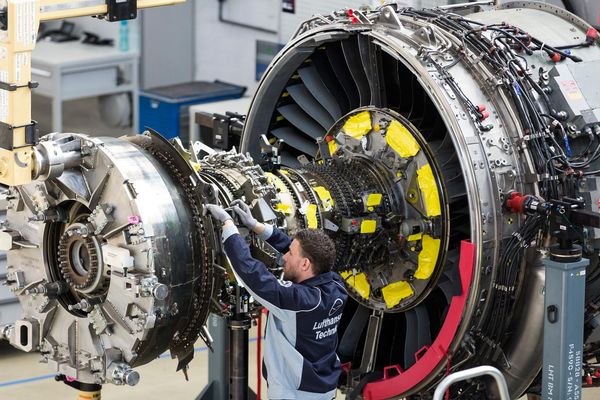 Why Engine Lease Rates Are Still Climbing as Values Level Off
Spirit Airlines’ shutdown released dozens of A320-family aircraft and spare engines into the market, but engine lease rates remain high despite stabilizing values. Explore how engine availability, MRO capacity and aircraft storage are shaping the narrowbody engine leasing market.
INFORMATIONAL
READ MORE »
Why Engine Lease Rates Are Still Climbing as Values Level Off
Spirit Airlines’ shutdown released dozens of A320-family aircraft and spare engines into the market, but engine lease rates remain high despite stabilizing values. Explore how engine availability, MRO capacity and aircraft storage are shaping the narrowbody engine leasing market.
INFORMATIONAL
READ MORE »
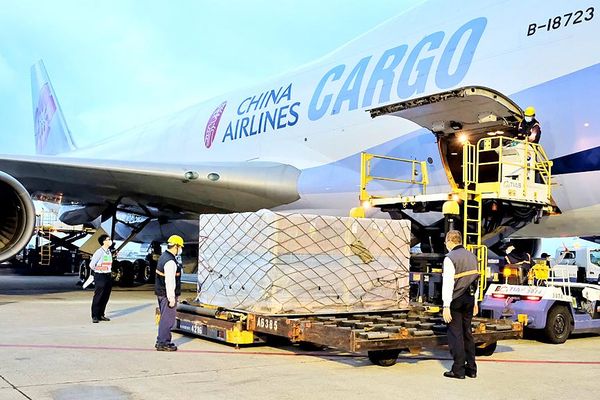 How the AI Chip Boom Is Squeezing Transpacific Air Cargo
AI-driven semiconductor demand and Middle East disruptions have pushed transpacific air cargo rates higher, with Taiwan-US rates reaching $7.02/kg in May 2026. Explore why shippers are paying premium prices, shifting to shorter contracts, and whether the market will cool as AI demand evolves.
INFORMATIONAL
READ MORE »
How the AI Chip Boom Is Squeezing Transpacific Air Cargo
AI-driven semiconductor demand and Middle East disruptions have pushed transpacific air cargo rates higher, with Taiwan-US rates reaching $7.02/kg in May 2026. Explore why shippers are paying premium prices, shifting to shorter contracts, and whether the market will cool as AI demand evolves.
INFORMATIONAL
READ MORE »
More than just headlines.
Get unlimited ad-free access to in-depth aviation news, premium stories, and exclusive insights other sites don't cover.
- Ad-free browsing on AeroXplorer
- Unlimited access to premium and exclusive articles
- Higher photo upload limits & commissions on sales
- Free access to Jetstream Magazine on higher tiers
- Ad-free browsing
- Sell aviation photos with 60% commission
- First week free!
- Everything in Basic+
- Unlimited premium articles
- Sell aviation photos with 70% commission
- Free Digital subscription to Jetstream Magazine
- First week free!
- Everything in Basic+ and Pro
- Sell aviaiton photos with 80% commission
- Early access to exclusive stories
- Free Digital+Print subscription to Jetstream Magazine