Gulfstream Aerospace has completed a series of high-altitude flight tests demonstrating that 100% sustainable aviation fuel (SAF) can sharply reduce the emissions responsible for forming contrails, the thin white trails that streak the sky behind jet aircraft.
The tests, conducted at altitudes up to 50,000 feet, offer new evidence that alternative fuels can address one of aviation's less visible climate concerns. Gulfstream became the first business aviation company to complete a high-altitude flight test campaign of this kind.
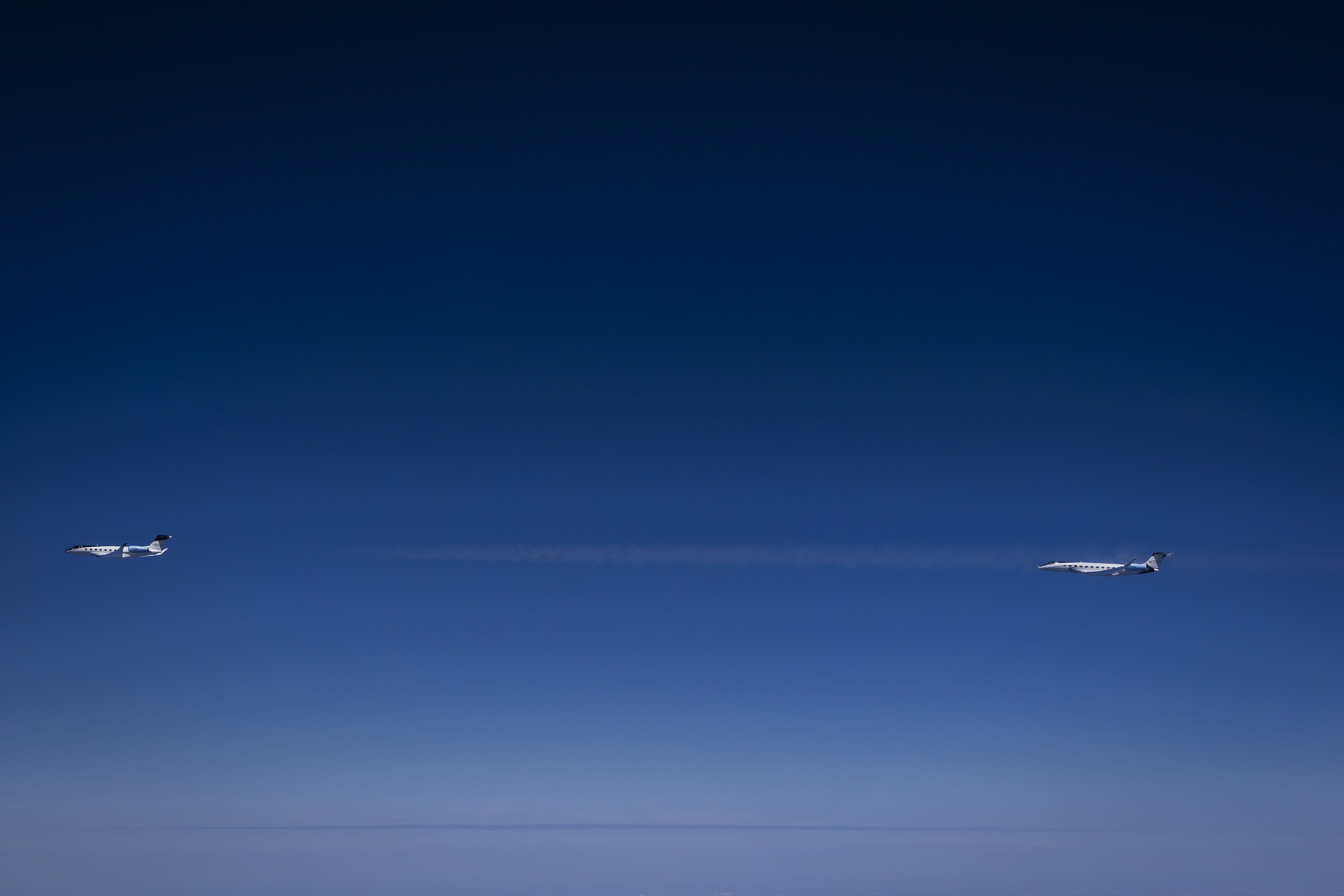
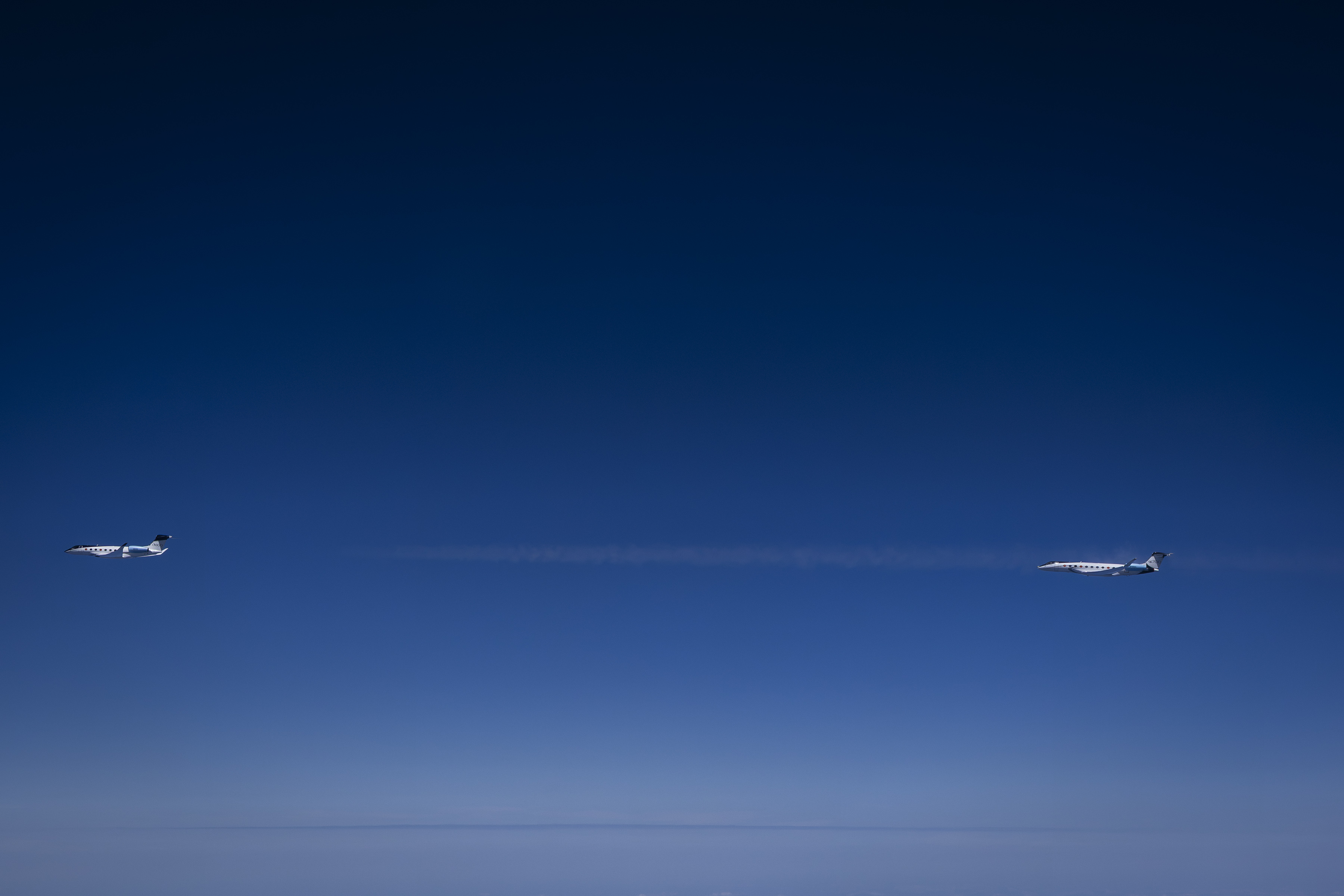
The manufacturer carried out the testing aboard a Gulfstream G800 powered by Rolls-Royce Pearl 700 engines. A specially modified Gulfstream G700, also powered by Pearl 700 engines, was transformed into a flying emissions measurement laboratory, flying in close formation with the G800 to capture precise real-world measurements of particulate matter and contrail-forming atmospheric characteristics at altitude.
According to the company, to accomplish this, the team compared conventional Jet A, low-sulfur Jet A and neat hydroprocessed esters and fatty acids (HEFA) SAF, which contains no sulfur or aromatics. The SAF flights produced significantly fewer soot particles, which act as the seeds around which ice crystals form to create contrails.
Contrails matter because they trap heat in the atmosphere. Research cited across the aviation industry suggests that these ice-crystal trails may account for a substantial share of aviation's overall climate impact, potentially rivaling the warming effect of the sector's carbon dioxide emissions. Reducing the particles that trigger their formation could deliver climate benefits that arrive far sooner than those tied to lowering CO2 alone.
What the Tests Measured
The research campaign was conducted in partnership with the FAA, NASA, the German Aerospace Center (DLR), Missouri University of Science and Technology, Rolls-Royce, Aerodyne Research, Rolls-Royce, Montana Renewables, and World Fuel Services.
The testing focused on non-volatile particulate matter. Fewer particles in the exhaust means fewer sites for water vapor to condense and freeze, resulting in thinner, shorter-lived contrails or, in some cases, none at all.
Preliminary results suggest a significant, measurable reduction in particulate emissions that contribute to contrail formation when operating on neat SAF. Gulfstream has not released the full data set publicly, but engineers involved in the program described the reductions as consistent with earlier ground-based and lower-altitude studies conducted by NASA and European research agencies.
Why 50,000 Feet Matters
Business jets like the G800 routinely cruise well above the altitudes flown by commercial airliners. That upper airspace, cold and often humid enough to sustain ice crystals, is prime territory for contrail formation. Demonstrating emissions reductions at those heights gives operators and regulators data specific to how business aviation actually flies.
"This campaign reflects our strategy to lead with advanced technology, real-world testing and meaningful collaboration to better understand and reduce aviation's environmental impact,"
said Mark Burns, president of Gulfstream.
The campaign marks the first 100% SAF flight for the G800 and its Rolls-Royce Pearl 700 engines, and builds on Gulfstream's previous SAF milestones, including the industry's first transatlantic flight using SAF in one engine in 2011 and the industry’s first trans-Atlantic flight powered by 100% SAF in 2023.
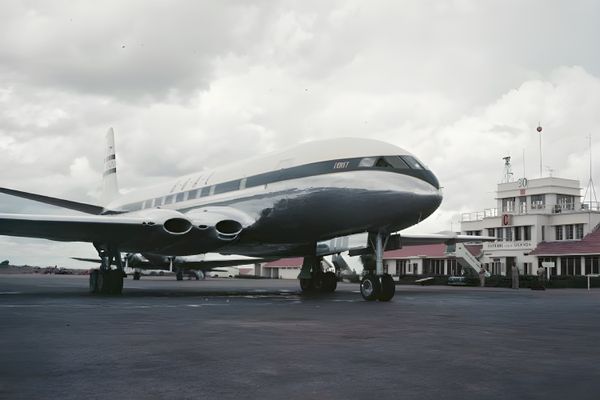
The Shape of Disaster: The Plane That Kept Falling Apart Mid-Air
The Supply Problem
SAF remains scarce and expensive. Global production covers only a small fraction of jet fuel demand, and neat SAF is not yet approved for routine commercial use. Current industry standards permit blends of up to 50% SAF with conventional jet fuel. Certifying engines and airframes to run on 100% SAF is a longer process, one that tests like Gulfstream's are meant to support.
Business aviation groups have committed to reaching net-zero carbon emissions by 2050, with SAF expected to deliver the largest share of reductions. Contrail avoidance, whether through cleaner fuels or rerouting flights around ice-forming atmospheric regions, has emerged as a parallel strategy that could deliver near-term climate benefits.
Gulfstream will continue further testing as it works with engine manufacturers and fuel suppliers to build the technical case for wider adoption. For now, the results add to a growing body of evidence that what goes into the tank changes what comes out of the sky.
Halon Was Supposed to Disappear. This Company Kept It Flying. » FAA Clears JetBlue's $58.5M Purchase of Spirit's LaGuardia Slots » Southwest Airlines Blames Brief System Outage for Boarding Delays and Checked Bag Disruptions »

Comments (0)
Add Your Comment
TAGS
NEWS Gulfstream SAF neat SAF Contrail Emissions Sustainable Aviation Fuel G800 G700RECENTLY PUBLISHED
 This Week in Aviation: The 10 Stories That Mattered Most
From major airline developments to aircraft updates and industry shifts, this weekly recap highlights the ten most-read aviation stories from the week of October 04.
INFORMATIONAL
READ MORE »
This Week in Aviation: The 10 Stories That Mattered Most
From major airline developments to aircraft updates and industry shifts, this weekly recap highlights the ten most-read aviation stories from the week of October 04.
INFORMATIONAL
READ MORE »
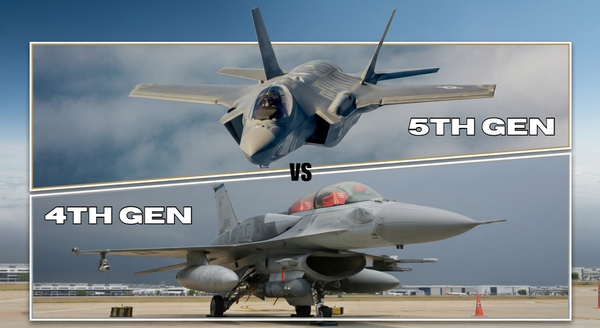 4th vs 5th Generation Fighter Jets: How Fighter Jets Have Evolved
A look at what separates fourth- and fifth-generation fighter jets, from stealth and sensor fusion to combat capability and cost.
INFORMATIONAL
READ MORE »
4th vs 5th Generation Fighter Jets: How Fighter Jets Have Evolved
A look at what separates fourth- and fifth-generation fighter jets, from stealth and sensor fusion to combat capability and cost.
INFORMATIONAL
READ MORE »
 United 777 Diverts to Dublin After Cockpit Windscreen Cracks Over the Atlantic
A United Airlines Boeing 777 bound for Milan made a steep descent and diverted to Dublin after its cockpit windscreen cracked mid-flight.
NEWS
READ MORE »
United 777 Diverts to Dublin After Cockpit Windscreen Cracks Over the Atlantic
A United Airlines Boeing 777 bound for Milan made a steep descent and diverted to Dublin after its cockpit windscreen cracked mid-flight.
NEWS
READ MORE »
More than just headlines.
Get unlimited ad-free access to in-depth aviation news, premium stories, and exclusive insights other sites don't cover.
- Ad-free browsing on AeroXplorer
- Unlimited access to premium and exclusive articles
- Higher photo upload limits & commissions on sales
- Free access to Jetstream Magazine on higher tiers
- Ad-free browsing
- Sell aviation photos with 60% commission
- First week free!
- Everything in Basic+
- Unlimited premium articles
- Sell aviation photos with 70% commission
- Free Digital subscription to Jetstream Magazine
- First week free!
- Everything in Basic+ and Pro
- Sell aviaiton photos with 80% commission
- Early access to exclusive stories
- Free Digital+Print subscription to Jetstream Magazine