

By Ricardo Real, CEO at Aerocardal
For decades, doing business across South America has required executives to accept a simple reality: travelling between the region's major commercial centers often meant losing valuable working time. A meeting in Buenos Aires could consume an entire day. Visiting clients in São Paulo and returning home before the end of the week was often unrealistic. Even relatively short distances became complicated once commercial airline schedules, airport connections and overnight stays were factored into the equation.
That model is beginning to change.

As Latin American companies expand beyond their domestic markets, executives increasingly require mobility that matches the pace of modern business. Whether negotiating acquisitions, visiting mining operations, meeting investors or overseeing regional subsidiaries, leadership teams are expected to be present in multiple locations without sacrificing productivity.
Business aviation has become an increasingly practical solution to that challenge. Much like in the United States and Europe, companies across South America are recognizing that private aviation is not simply another way to travel. It is a business tool that allows organizations to use their most valuable resource more effectively: time.

The Cockpit’s Next Revolution: When the Co-Pilot Is a Computer
South America is Becoming One Interconnected Business Market
Trade and investment across Latin America continue to deepen. Chilean companies are investing throughout the region, Brazilian firms maintain operations across multiple countries, Colombian businesses are expanding internationally, and multinational corporations increasingly manage South American operations from regional headquarters.
The result is a growing need for efficient travel between the continent’s principal business centers.
Cities such as Santiago, Buenos Aires, São Paulo, Rio de Janeiro and Bogotá have become regular destinations for executives working across industries including mining, finance, energy, technology, infrastructure, manufacturing and agriculture. Many companies also maintain important operations in Lima, Montevideo and Asunción, creating a network of commercial activity that extends well beyond national borders.
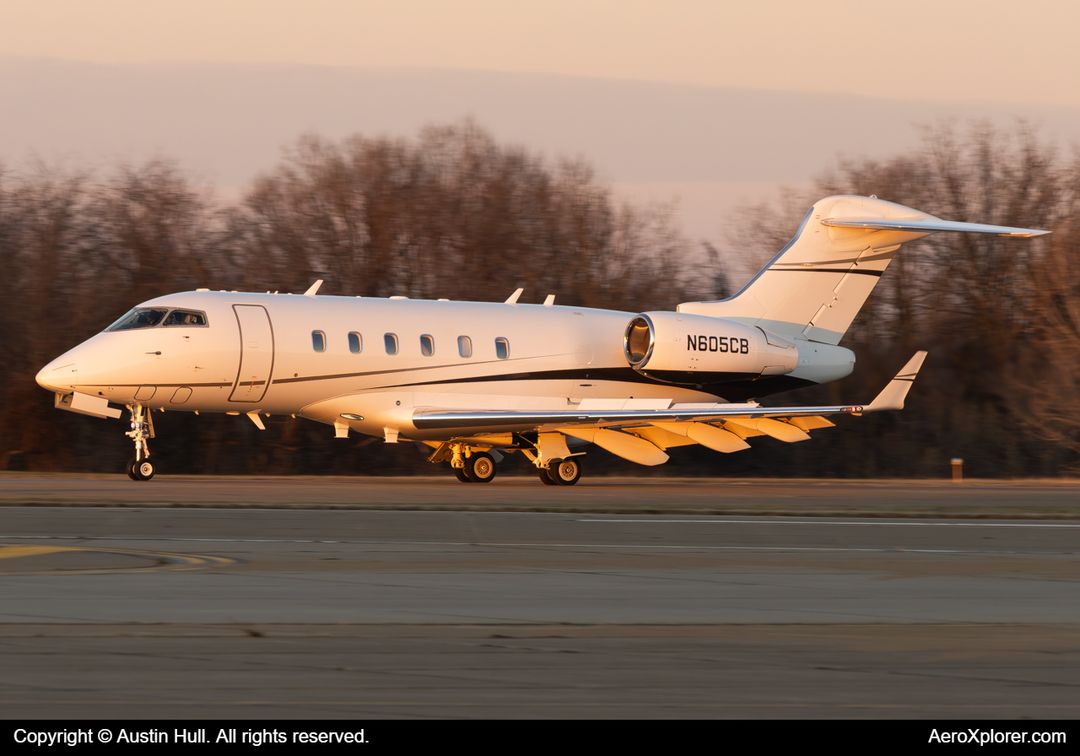
The challenge is that while these cities are relatively well connected by commercial airlines, airline schedules are designed for mass transportation, not executive productivity. Flights operate according to fixed timetables, connections are often unavoidable, delays can disrupt carefully planned itineraries, and overnight stays frequently become necessary even for relatively short business visits.
For executives whose time directly influences business performance, these limitations increasingly represent an opportunity cost.
The Airport Matters as Much as the Destination
Business travel is often measured in flight hours, but experienced executives understand that much of the lost time actually occurs on the ground.
Choosing the right airport can significantly reduce journey times and create opportunities that simply do not exist through scheduled airline operations.
Buenos Aires provides an excellent example. While international airlines primarily operate through Ministro Pistarini International Airport (Ezeiza), business aviation can frequently utilize Aeroparque Jorge Newbery, located much closer to the city's financial districts. The difference can easily save an hour or more in ground transportation each way.
The same applies in Brazil. São Paulo’s Guarulhos International Airport handles the majority of commercial international traffic, but business aviation also benefits from airports that provide more direct access to the city's commercial centers depending on operational requirements. In Rio de Janeiro, Santos Dumont Airport offers exceptional proximity to the city's business district compared with Galeão International Airport, making it particularly attractive for executive travel.
Bogotá's El Dorado International Airport remains Colombia's primary gateway, while Lima's Jorge Chávez International Airport continues to serve as one of the region's most important hubs for corporate travel.
When every hour matters, selecting the most suitable airport becomes part of the overall business strategy, not simply a logistical decision.
When One Day Replaces Three
Perhaps the greatest advantage of business aviation is not speed alone. It is flexibility.
Commercial aviation requires travelers to adapt their schedules to available flights. Business aviation reverses that relationship by allowing the aircraft to adapt to the executive's schedule.
This creates entirely different possibilities for regional business travel.
An executive based in Santiago can depart early in the morning, attend meetings in Buenos Aires, continue to São Paulo during the afternoon, and return home that evening. A mining executive may visit operations in northern Chile before continuing to Lima on the same day. Financial executives can meet investors in Bogotá and return without losing multiple working days.

These itineraries are often impossible through commercial airlines, regardless of the available routes.
Instead of spending valuable time waiting in terminals, navigating lengthy connections or remaining overnight simply because no suitable return flight exists, executives spend more of their day doing what creates value for their organizations: meeting customers, inspecting facilities, negotiating agreements and making decisions.
Increasingly, companies are calculating the true cost of executive travel by considering productivity rather than airline ticket prices alone.
For senior leadership teams, completing two or three high-value meetings in different countries within a single day often deliver returns that far exceed the additional investment in private aviation.
Choosing The Right Aircraft for Each Mission
One of the greatest misconceptions surrounding business aviation is that every aircraft serves the same purpose. In reality, different missions require different capabilities, and selecting the appropriate aircraft depends on the distance to be flown, passenger requirements, airport infrastructure and the objectives of the trip.
At Aerocardal, our fleet has been developed to support the diverse travel needs of companies operating across South America. Whether the priority is connecting regional business capitals, reaching remote industrial sites or carrying senior executives on longer international missions, matching the right aircraft to each itinerary is essential.
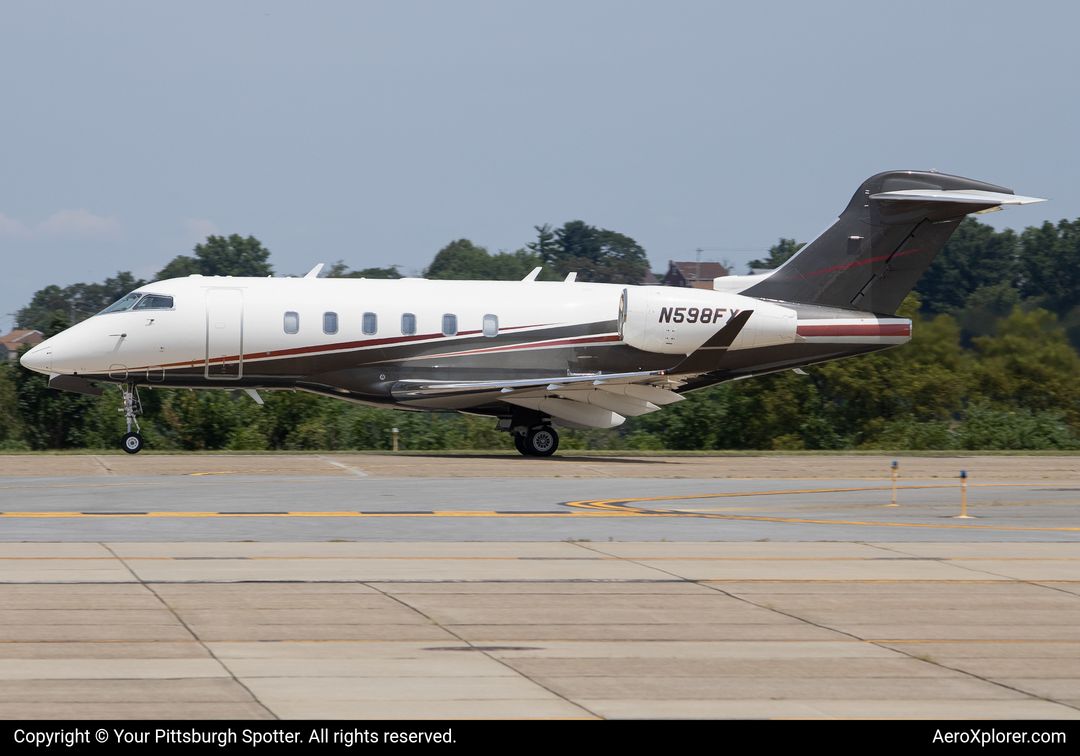
For longer regional routes and international travel, Aerocardal operates the Gulfstream G550, offering the range, speed and cabin comfort required for executives travelling between South America's principal business centers and beyond. Its spacious cabin also allows passengers to continue working throughout the flight, turning travel time into productive time.
For many regional business missions, Aerocardal operates the Gulfstream G150, an aircraft ideally suited to connecting destinations such as Santiago, Buenos Aires, São Paulo, Rio de Janeiro and Lima efficiently and comfortably. It enables companies to travel according to their own schedules instead of adapting to commercial airline timetables.
Complementing the jet fleet, we also operate the Pilatus PC-24, combining jet performance with exceptional operational flexibility. Its ability to access airports that may not accommodate larger business jets allows companies to arrive closer to industrial facilities, mining operations and regional business centers, reducing valuable ground travel time.

How AI Quietly Became the Backbone of Today’s Aviation Industry
For shorter regional sectors and destinations with more demanding runway conditions, the Pilatus PC-12 provides another important capability within our fleet. Its versatility allows executives to reach locations that are often difficult or inefficient to serve through commercial aviation, particularly where airport infrastructure is more limited.
Ultimately, business aviation is not about choosing the largest or fastest aircraft. It is about selecting the right tool for the mission. By operating a fleet with complementary capabilities, the company can tailor each flight to the specific needs of its clients, ensuring executives spend less time travelling and more time where they create the greatest value: with customers, partners and their own teams.
Latin America is Following a Global Trend
The growing use of business aviation across South America reflects a broader evolution already well established in North America and Europe.
There, business aircraft are routinely used by companies of all sizes to improve operational efficiency, strengthen customer relationships and increase executive productivity. While high-profile individuals may attract public attention, the majority of business aviation activity supports ordinary commercial operations carried out by companies whose success depends on moving people efficiently.
Latin America is increasingly embracing the same mindset.

Executives today are expected to oversee operations across several countries, respond quickly to emerging opportunities and remain close to customers regardless of geography. Remote meetings continue to play an important role, but many strategic decisions still benefit from face-to-face conversations.
Negotiating contracts, visiting production facilities, conducting due diligence or meeting local partners often requires personal presence. Business aviation simply makes that presence possible without disrupting an executive's entire working week.
More importantly, companies are beginning to recognize that business aviation is not about exclusivity. It is about enabling better decisions.
Looking Ahead
South America has always presented unique geographical challenges. Vast distances, mountain ranges and differing transport infrastructures have traditionally limited how efficiently companies could operate across borders.
Today, those limitations are becoming less significant.
As regional economies become more interconnected and corporate decision-making accelerates, mobility is emerging as a competitive advantage. Companies that can respond faster, meet clients more frequently and maintain closer oversight of regional operations position themselves to compete more effectively in an increasingly integrated market.
Business aviation is playing an important role in that transformation.

The conversation is gradually shifting away from whether private aviation represents luxury and towards whether organizations can afford to lose valuable time using transport systems that were never designed around executive productivity.
Time has always been money. Across Latin America, more companies are recognizing that the ability to connect business capitals efficiently, complete multiple meetings in a single day and return home ready for the next challenge is no longer an exceptional capability. It is becoming an essential part of doing business in a region where opportunity increasingly moves faster than traditional travel allows.
AirBaltic to Cut Up to 700 Jobs in Restructuring » Why Did Some Air India A320s Have Extra Wheels? Bogie Gear Explained » Heathrow Cites Airline Demand for Slots as Third Runway Review Continues »

Comments (0)
Add Your Comment
TAGS
INFORMATIONAL Business Aviation South America Travel Private Aviation Trends AnalysisRECENTLY PUBLISHED
 Why Did Some Air India A320s Have Extra Wheels? Bogie Gear Explained
Why Air India operated select Airbus A320s with an unusual bogie landing gear.
INFORMATIONAL
READ MORE »
Why Did Some Air India A320s Have Extra Wheels? Bogie Gear Explained
Why Air India operated select Airbus A320s with an unusual bogie landing gear.
INFORMATIONAL
READ MORE »
 Heathrow Cites Airline Demand for Slots as Third Runway Review Continues
Heathrow says more than 40 airlines want slots at the UK hub, strengthening the case for a third runway as Parliament reviews expansion plans.
NEWS
READ MORE »
Heathrow Cites Airline Demand for Slots as Third Runway Review Continues
Heathrow says more than 40 airlines want slots at the UK hub, strengthening the case for a third runway as Parliament reviews expansion plans.
NEWS
READ MORE »
 Power Bank Fire in Overhead Bin Forces IndiGo A321neo to Divert
An IndiGo A321neo diverted to Hyderabad after a fire broke out on the aircraft
NEWS
READ MORE »
Power Bank Fire in Overhead Bin Forces IndiGo A321neo to Divert
An IndiGo A321neo diverted to Hyderabad after a fire broke out on the aircraft
NEWS
READ MORE »
More than just headlines.
Get unlimited ad-free access to in-depth aviation news, premium stories, and exclusive insights other sites don't cover.
- Ad-free browsing on AeroXplorer
- Unlimited access to premium and exclusive articles
- Higher photo upload limits & commissions on sales
- Free access to Jetstream Magazine on higher tiers
- Ad-free browsing
- Sell aviation photos with 60% commission
- First week free!
- Everything in Basic+
- Unlimited premium articles
- Sell aviation photos with 70% commission
- Free Digital subscription to Jetstream Magazine
- First week free!
- Everything in Basic+ and Pro
- Sell aviaiton photos with 80% commission
- Early access to exclusive stories
- Free Digital+Print subscription to Jetstream Magazine