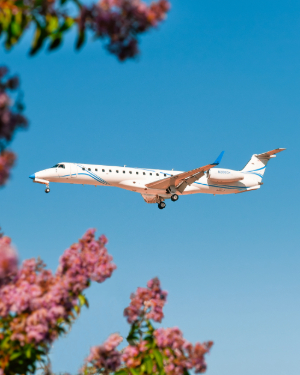
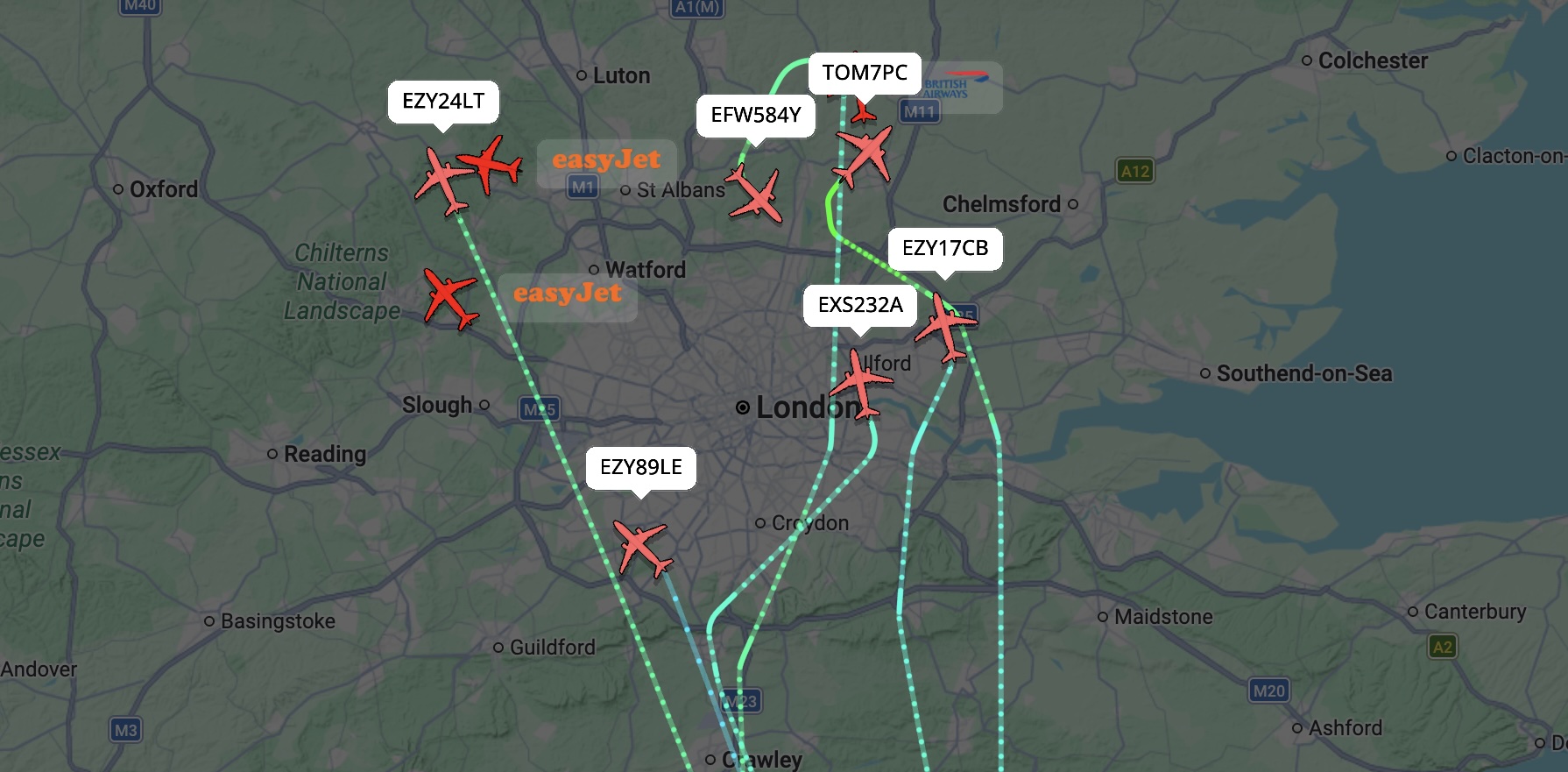
A British Airways Airbus A320 suffered a nose wheel failure on the runway at London Gatwick Airport in the early hours of Wednesday morning, July 15, 2026, triggering a cascade of fuel emergencies as nine of the inbound aircraft were forced to divert, scrambling to find alternate airports with dwindling fuel reserves.
The incident forced one of the busiest airports in the United Kingdom to close its runway for an extended period, leaving crews circling overhead and controllers redirecting traffic across southern England.
What Happened on the Runway
The British Airways A320, a 24-year-old aircraft registered G-GATS operating flight BA2673 from Palma de Mallorca, reported a problem with its nose wheel on approach and entered a holding pattern. The flight was scheduled to land at around 11:50 PM on Tuesday but eventually touched down at 12:50 AM local time on Wednesday, where it was met by fire and ground vehicles as a precaution. However, due to the nose wheel failure, the aircraft became stuck on Runway 08L – Gatwick's only operational runway and could not vacate.
Gatwick operates with a single runway in regular use, which means any obstruction brings the entire operation to a halt. The airport does have a secondary runway, but it sits too close to the main strip to be used simultaneously under normal conditions.
Nine Flights Declare Fuel Emergencies
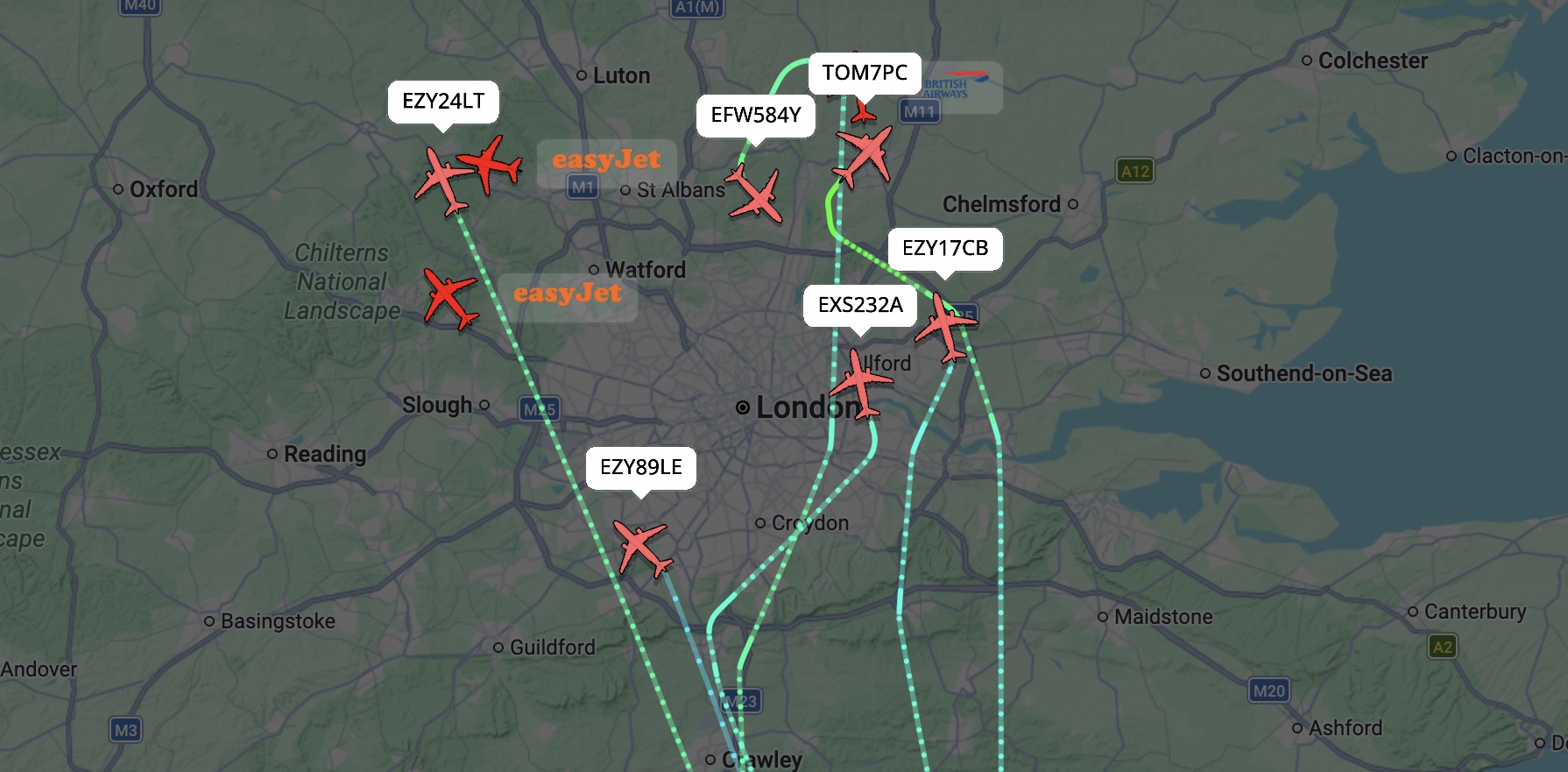
As the closure stretched on, a total of 14 inbound flights were forced to divert, nine of which declared fuel emergencies while waiting for a resolution or diversion clearance.
Declaring a fuel emergency is a serious step. Pilots make the call when they calculate that landing at their intended airport with the required final reserve fuel is no longer possible, generally enough for about 30 minutes of flight at holding altitude. Air traffic control then gives those aircraft priority handling to the nearest suitable airport.
The 14 diversions sent aircraft to London Luton, London Stansted, Birmingham, Bristol, and London Heathrow with one, the latter being permitted to land despite Heathrow's strict night curfew, which caps arrivals between 11:30 PM and 6:00 AM. One easyJet flight that diverted to Stansted became stranded after landing, as there were no ground handling staff available for the unscheduled arrival and the aircraft could not be refueled. Passengers spent over two hours on board in the middle of the night before eventually disembarking.

Passengers Left Stranded
On the ground, the disruption spread rapidly. Departing passengers waited at gates as aircraft could not push back. Airlines operating at Gatwick, including British Airways, easyJet, and several long-haul carriers, absorbed knock-on delays that stretched into the following operational period. Aircraft and crew ended up out of position, which typically triggers cancellations well after the original incident is resolved.
Why Fuel Emergencies Matter
Commercial aircraft carry fuel calculated for the planned flight plus reserves. Under standard rules, pilots must land with a defined final reserve, generally enough for about 30 minutes of flight at holding altitude. If holding patterns or diversions eat into that reserve, the flight crew must declare an emergency.
Nine simultaneous fuel emergencies at a single airport is unusual. It points to a situation where the runway closure caught controllers and airlines off guard, with many flights already committed to Gatwick and past the point where an easy diversion was possible.
British Airways Response
The disabled aircraft was eventually towed clear, and Gatwick resumed operations, though the recovery took hours. British Airways has not released a detailed public statement on the nose wheel failure that caused the A320 to stop on the runway. Tracking data confirms the aircraft remains on the ground at Gatwick and was pulled from its scheduled rotation out the following morning.
The Cockpit’s Next Revolution: When the Co-Pilot Is a Computer
Gatwick's Single Runway Problem
The incident renewed attention on Gatwick's reliance on a single operational runway. As the UK's second-busiest airport and one of the world's busiest single-runway airports, Gatwick handles around 46 million passengers and approximately 280,000 flights per year. The airport is in the process of converting its Northern Runway into routine use by shifting its centerline 12 meters further north, making it operational by around 2030.
Supporters argue that a second active runway would reduce the impact of exactly this kind of event. Opponents cite noise, air quality, and community concerns.
What Comes Next
The UK Air Accidents Investigation Branch may look into the runway closure, particularly given the number of fuel emergencies it triggered. Airlines affected by the diversions will likely seek clarity on how the situation escalated and whether earlier warnings could have prompted faster diversion decisions.
For now, passengers caught up in the disruption face rebooking and delayed baggage. Gatwick has returned to normal operations, but the incident will feed into ongoing debates about capacity, resilience, and how a single stranded aircraft can bring a major European airport to a standstill.
Selma Blair Charged With Assault After Alleged Biting Incident on Delta Flight » Delta Passenger Arrested After Allegedly Stealing Airport Tug » This Week in Aviation: The 10 Stories That Mattered Most »

Comments (0)
Add Your Comment
TAGS
NEWS British Airways A320 LGW London Gatwick Fuel EmergencyRECENTLY PUBLISHED
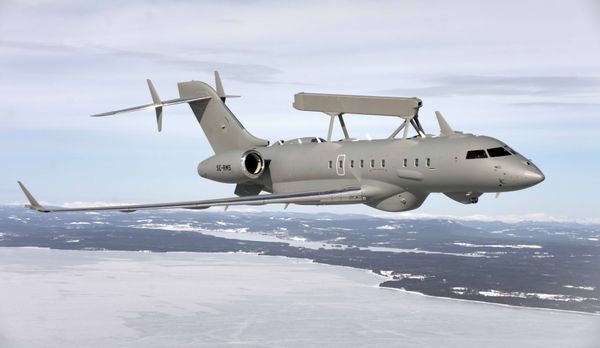 Saab Weighs Canadian GlobalEye Production Line to Match Growing Surveillance Aircraft Orders
Saab is considering establishing GlobalEye production in Canada as demand for the airborne early warning aircraft climbs across NATO nations.
NEWS
READ MORE »
Saab Weighs Canadian GlobalEye Production Line to Match Growing Surveillance Aircraft Orders
Saab is considering establishing GlobalEye production in Canada as demand for the airborne early warning aircraft climbs across NATO nations.
NEWS
READ MORE »
 Lawmakers Press FAA to Suspend AI Air Traffic Control Tool at Washington-Area Airports
Senators and union leaders urge the FAA to pause an AI-driven air traffic management tool at DC airports, citing safety concerns.
NEWS
READ MORE »
Lawmakers Press FAA to Suspend AI Air Traffic Control Tool at Washington-Area Airports
Senators and union leaders urge the FAA to pause an AI-driven air traffic management tool at DC airports, citing safety concerns.
NEWS
READ MORE »
 Lufthansa Wins Bid for 44.9% Stake in TAP Air Portugal, Edging Out Air France-KLM
Portugal selects Lufthansa as preferred buyer for a 44.9% stake in TAP Air Portugal, beating competing offers from Air France-KLM and IAG.
NEWS
READ MORE »
Lufthansa Wins Bid for 44.9% Stake in TAP Air Portugal, Edging Out Air France-KLM
Portugal selects Lufthansa as preferred buyer for a 44.9% stake in TAP Air Portugal, beating competing offers from Air France-KLM and IAG.
NEWS
READ MORE »
More than just headlines.
Get unlimited ad-free access to in-depth aviation news, premium stories, and exclusive insights other sites don't cover.
- Ad-free browsing on AeroXplorer
- Unlimited access to premium and exclusive articles
- Higher photo upload limits & commissions on sales
- Free access to Jetstream Magazine on higher tiers
- Ad-free browsing
- Sell aviation photos with 60% commission
- First week free!
- Everything in Basic+
- Unlimited premium articles
- Sell aviation photos with 70% commission
- Free Digital subscription to Jetstream Magazine
- First week free!
- Everything in Basic+ and Pro
- Sell aviaiton photos with 80% commission
- Early access to exclusive stories
- Free Digital+Print subscription to Jetstream Magazine