
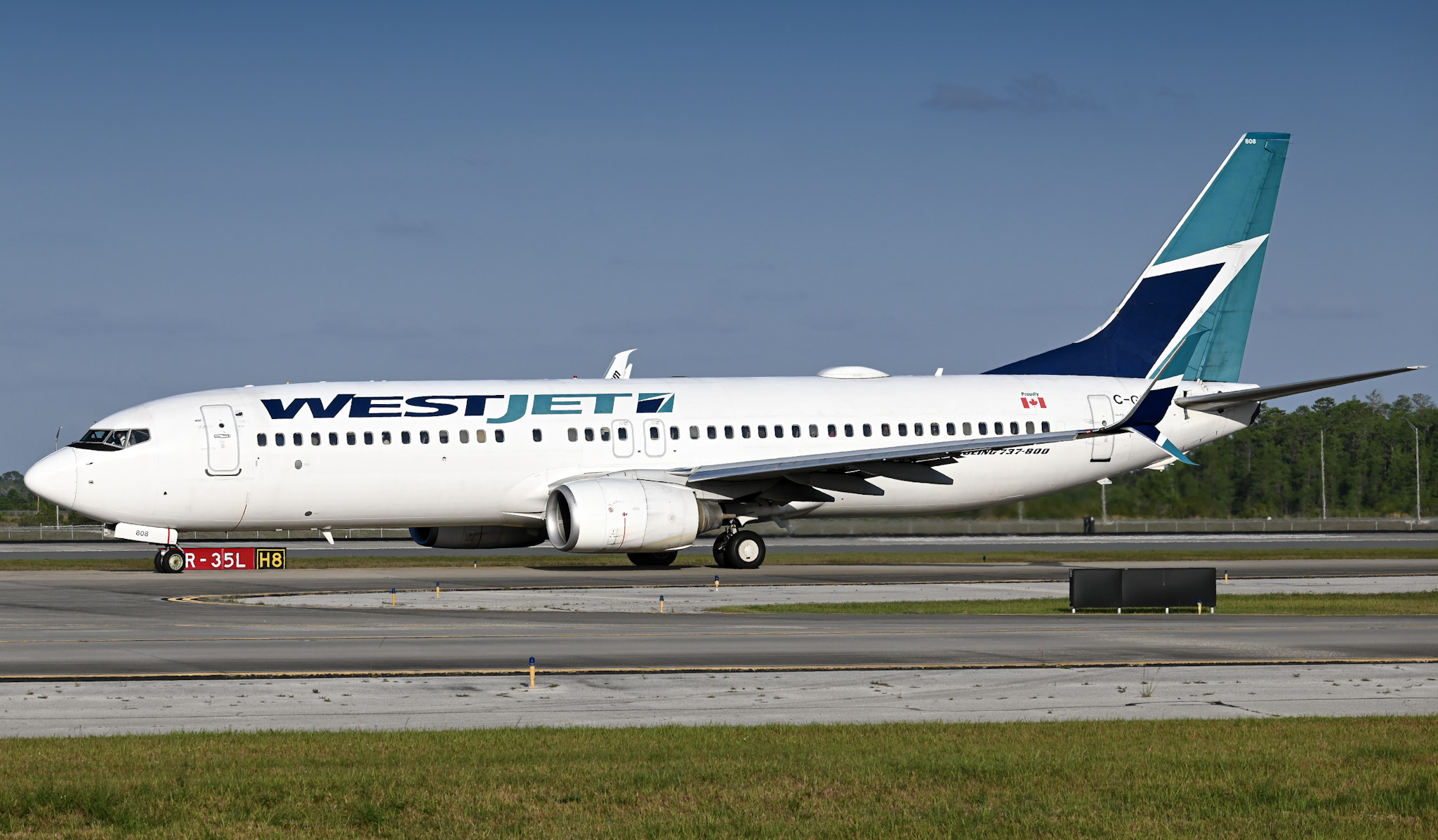

CALGARY – Safety investigators have detailed a harrowing incident in which a WestJet Boeing 737-700, registration C-FWSV, was forced to execute a high-speed rejected takeoff (RTO) after the first officer’s seat unlatched and slid entirely away from the flight controls. As of February 3, 2026, the Transportation Safety Board of Canada (TSB) has concluded its preliminary review, identifying a mechanical deficiency in the cockpit seating assembly as the primary cause.
The occurrence, which took place during the critical acceleration phase of departure, underscores the vital importance of cockpit ergonomic integrity during high-load operations.
A Critical Loss of Control Geometry
According to the TSB disclosure, the aircraft was accelerating through its takeoff roll when the first officer’s seat suddenly unlatched from its tracking mechanism. Without warning, the seat shifted to its fully aft position, effectively moving the pilot out of reach of the rudder pedals and significantly altering their perspective of the flight instruments and window view.
In the high-stakes environment of a takeoff roll, any shift in the pilot’s physical position can be catastrophic. The crew acted decisively, initiating an RTO at high speed, a manoeuvre that carries its own risks of tyre bursts and brake fires, to ensure the safety of the aircraft.
“Canadian investigators have disclosed that a WestJet Boeing 737-700 rejected take-off at high speed after the first officer’s seat unlatched and fully shifted backwards,” the report stated.


Ghost Networks: The Rise, Fall, and Revival of Fifth-Freedom Flights
Investigation Findings
Following the safe termination of the takeoff at about 120 KIAS and the taxi back to the gate, the aircraft was removed from service for a mechanical inspection. Maintenance crews and TSB investigators focused on the seat’s adjustment and locking hardware.
The inspection revealed that the seat’s failure was not due to improper positioning by the pilot, but rather a mechanical wear issue. Investigators found “excessive play” in a seat control handle, which directly impeded the safety mechanism’s ability to function.
“Inspection of the first officer’s seat found ‘excessive play’ in a seat control handle, says the safety board, which resulted in ‘difficulty’ engaging seat-locking pins.”
The failure of these pins to securely seat in the floor tracks allowed the chair to succumb to the inertial forces of the aircraft's acceleration, resulting in the sudden backward slide.

Safety Outcome and Maintenance Action
Despite the high-speed nature of the abort, the TSB confirmed that none of the 64 occupants on board sustained injuries. The aircraft itself remained undamaged, a testament to the crew's adherence to standard operating procedures for high-speed rejects.
WestJet has since addressed the specific mechanical failure by replacing the faulty unit.
“The seat was removed and replaced,” the TSB confirmed, signalling that the aircraft had returned to the flight line following testing of the new installation.
This incident serves as a reminder of the "silent" mechanical risks within a cockpit. While much of aviation safety focuses on engines and avionics, the stability of the pilot’s physical interface with the aircraft remains a foundational requirement for safe flight.
Power Bank Fire in Overhead Bin Forces IndiGo A321neo to Divert » Lufthansa Wins Bid for 44.9% Stake in TAP Air Portugal, Edging Out Air France-KLM » Boeing's Touchscreen Flight Controls for 737 Draw Sharp Criticism from Pilots »

Comments (2)
 Jay
There has been a long standing AD on the 737's for cockpit seat track wear at the locking holes.
Raphael Solomon
Plane built in 2004. Not really surprising.
Jay
There has been a long standing AD on the 737's for cockpit seat track wear at the locking holes.
Raphael Solomon
Plane built in 2004. Not really surprising.
Add Your Comment
TAGS
NEWS WestJet Boeing 737-700 Aviation Safety Incident CanadaRECENTLY PUBLISHED
 6 Key Rules for Claiming Citizenship Status Through Your Parents or Grandparents
If you want to know about ancestry rights in Canadian citizenship law, you need to understand what has changed in the rules lately.
INFORMATIONAL
READ MORE »
6 Key Rules for Claiming Citizenship Status Through Your Parents or Grandparents
If you want to know about ancestry rights in Canadian citizenship law, you need to understand what has changed in the rules lately.
INFORMATIONAL
READ MORE »
 FlyUSA Opens 50,000-Square-Foot Owner-Exclusive Hangar and Lounge at Tampa International Airport
FlyUSA has opened a 50,000-square-foot private hangar and lounge at Tampa International Airport, serving aircraft owners and charter clients.
NEWS
READ MORE »
FlyUSA Opens 50,000-Square-Foot Owner-Exclusive Hangar and Lounge at Tampa International Airport
FlyUSA has opened a 50,000-square-foot private hangar and lounge at Tampa International Airport, serving aircraft owners and charter clients.
NEWS
READ MORE »
 Federal Grand Jury Indicts Passenger Duct-Taped to Seat on American Airlines Flight
A passenger restrained with duct tape after a violent outburst on an American Airlines flight to Newark faces federal charges and up to 20 years in prison.
NEWS
READ MORE »
Federal Grand Jury Indicts Passenger Duct-Taped to Seat on American Airlines Flight
A passenger restrained with duct tape after a violent outburst on an American Airlines flight to Newark faces federal charges and up to 20 years in prison.
NEWS
READ MORE »
More than just headlines.
Get unlimited ad-free access to in-depth aviation news, premium stories, and exclusive insights other sites don't cover.
- Ad-free browsing on AeroXplorer
- Unlimited access to premium and exclusive articles
- Higher photo upload limits & commissions on sales
- Free access to Jetstream Magazine on higher tiers
- Ad-free browsing
- Sell aviation photos with 60% commission
- First week free!
- Everything in Basic+
- Unlimited premium articles
- Sell aviation photos with 70% commission
- Free Digital subscription to Jetstream Magazine
- First week free!
- Everything in Basic+ and Pro
- Sell aviaiton photos with 80% commission
- Early access to exclusive stories
- Free Digital+Print subscription to Jetstream Magazine