Originally published in Jetstream Magazine by Sanghyun Kim.
In the early decades of intercontinental air travel, it was common to see airlines operate routes far beyond the borders of their home countries. A Pan American World Airways flight, for example, might run from Mumbai to Karachi, onward to Frankfurt, and finally to New York, all under the same flight number. Likewise, a British Airways flight could operate from London, UK, to Bombay, India, then onto Kuala Lumpur, Malaysia, Perth, Australia, and Melbourne, Australia before finally arriving in Auckland, New Zealand.
This patchwork routing was the result of passenger demand, aircraft range limitations, and the economic logic of serving multiple markets with a single aircraft. Every stop offered new revenue opportunities, while each additional tag-on improved aircraft utilization.
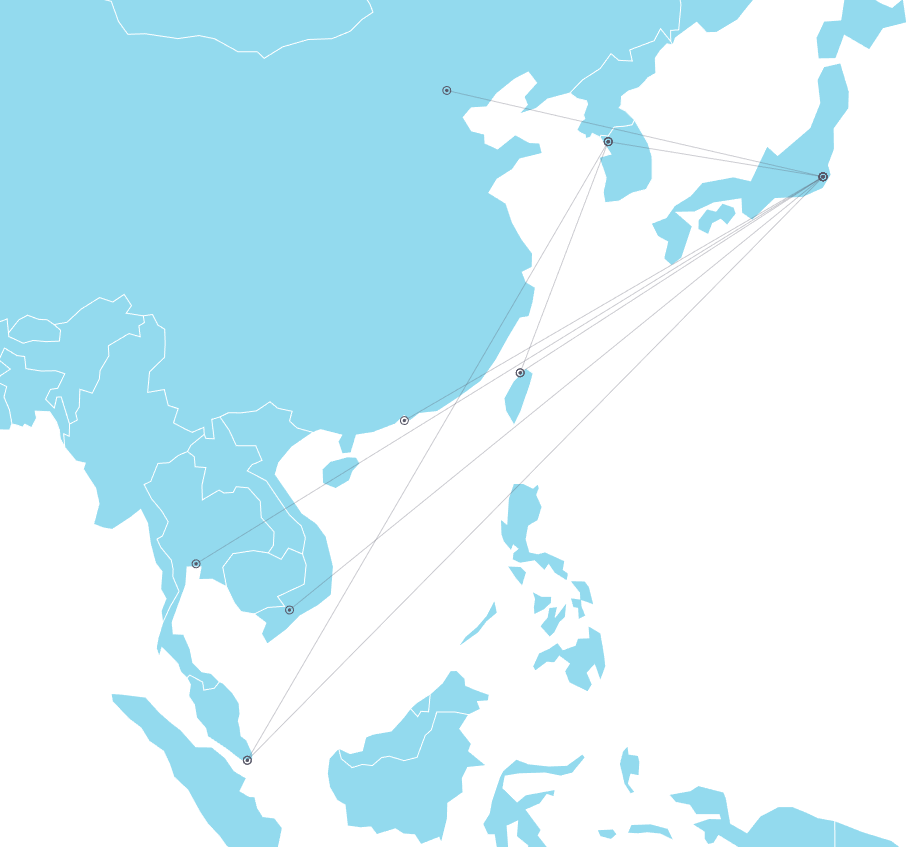
However, operating between two foreign markets introduces regulatory complications. To operate a route between foreign points, an airline must secure permissions from both governments, a process often hindered by protectionist air policies. Some carriers solved this by establishing full-fledged “international stations” at strategically located foreign airports, effectively operating miniature hubs abroad. For example, Pan Am's Pacific Division (which was later bought by United) and Northwest Airlines maintained international stations at Narita International Airport serving Tokyo, Japan. From there, the airlines would operate routes that connected Asian cities such as Seoul, Busan, Taipei, and Hanoi. These foreign hubs mirrored the hub-and-spoke systems airlines used at home, but they functioned entirely on foreign soil.
What is a Fifth Freedom Flight?
Such flights operating between two destinations in foreign countries are known as Fifth Freedom flights. To be more precise, a fifth freedom flight originates/terminates at its own country while also flying between two foreign destinations, all under the same flight number (even for the flights at international stations, they are also tied to a flight number that originates from their homeland). The airline can sell tickets independently for each leg, allowing passengers to book flights between the two foreign countries with no intention of continuing to the aircraft’s home airport. For example, travelers can book British Airways purely for the Singapore-Sydney sector, despite the flight continuing all the way to London.
The Rise and Fall of Fifth-Freedom Networks
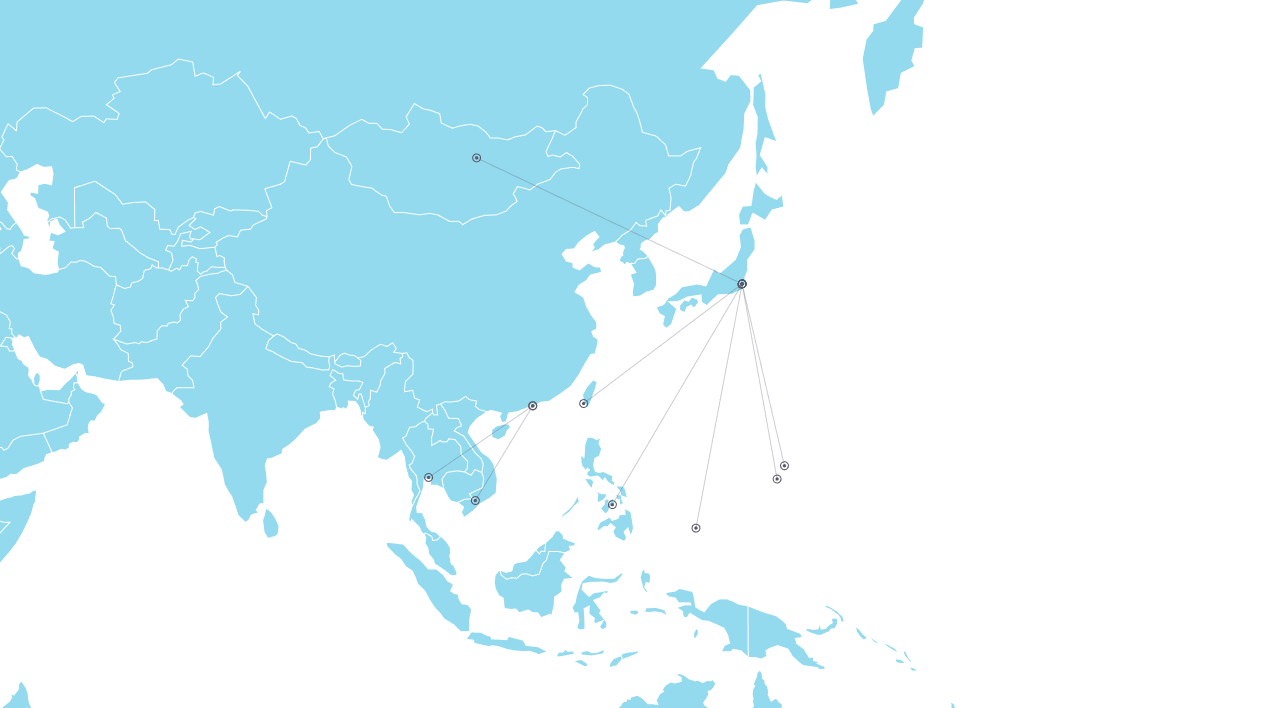
With the development of longer-range aircraft and a shift in passenger preference towards direct flights, stopovers have become less desirable. As a result, most carriers have prioritized direct flights to connect destinations, rather than having multiple stops. International stations have also died out, with Delta (which inherited Northwest’s Narita hub) terminating service to Tokyo-Narita in favor of the more convenient Haneda Airport in 2020. United also did the same, reducing to only its Narita to Seoul-Incheon route. However, that route was also cut in 2017, bringing an end to intra-Asian United flights. Only recently, on October 27th, 2024, did United resume its intra-Asian service from Narita to Cebu, with flights to additional destinations such as Kaohsiung and Ulaanbaatar launched in 2025. Since then, the airline has also added services between Hong Kong and Bangkok as well as between Hong Kong and Ho Chi Minh City.
Why do Fifth-Freedom Flights Still Matter?
Despite their decline, fifth-freedom flights continue to play an important role for several airlines. This is because while aircraft range has increased dramatically in recent years, it is often still insufficient to operate a scheduled service halfway around the globe.
Air China, for example, operates Beijing-Madrid-São Paulo as a fifth-freedom service, with both sectors sold independently. Air China also operates a similar itinerary to Havana, with a stop in Madrid.
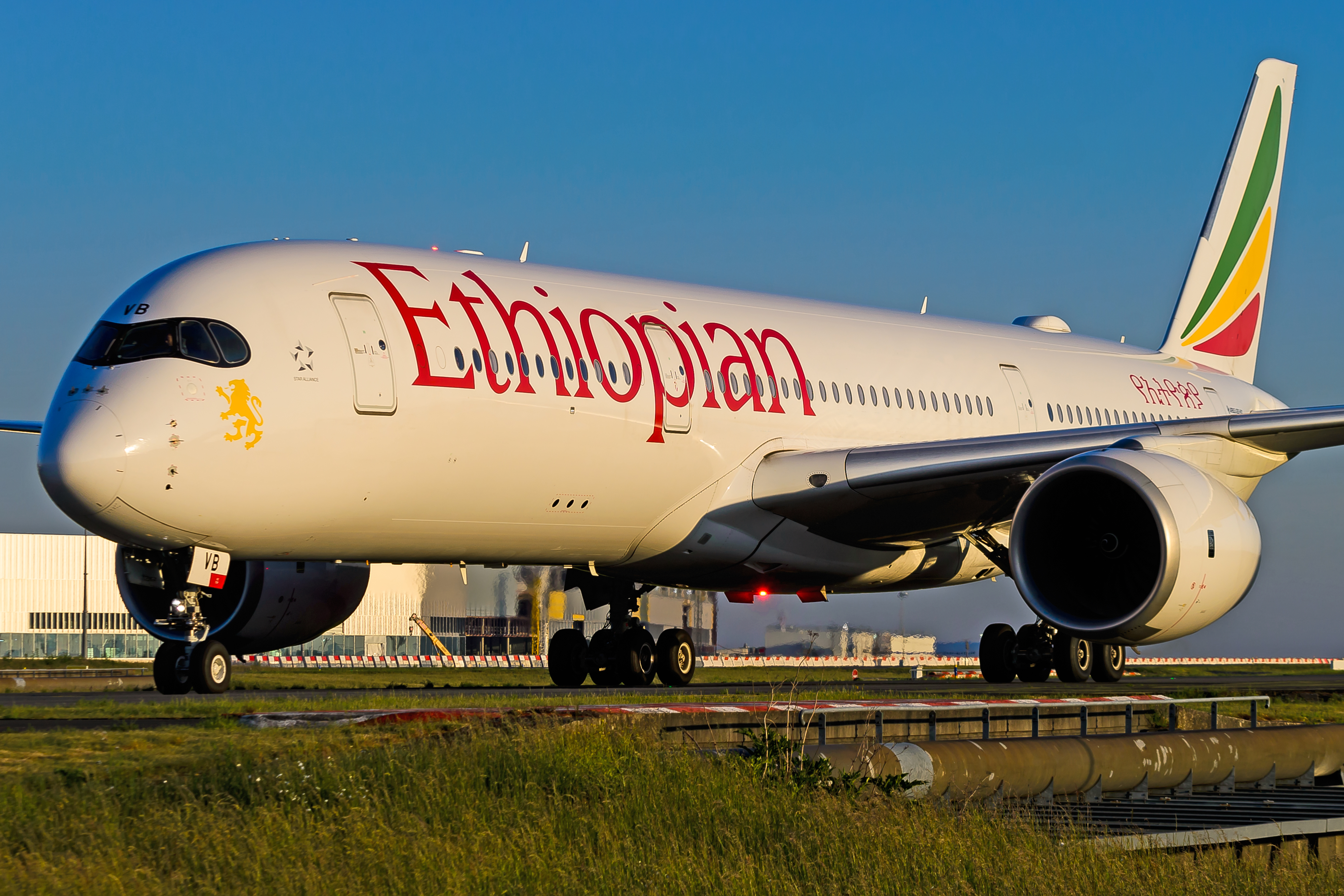
When demand is not high enough to maintain direct flights to several nearby cities, having a stopover can make more economic sense to the airline. African carriers, particularly Ethiopian Airlines and Kenya Airways, depend on multi-stop routings to sustainably serve geographically vast markets with uneven demand. Ethiopian alone operates 28 fifth-freedom routes, including Milan to Zurich, Singapore to Kuala Lumpur, and Seoul to Tokyo.

What it's Like Onboard a Fifth Freedom Flight
I recently flew one of Ethiopian Airlines’ most interesting fifth-freedom sectors: Seoul-Incheon to Tokyo-Narita, continuing onward to Addis Ababa under the same flight number. The itinerary included Economy Class outbound and Cloud Nine Business Class on the return, an ideal comparison.
Flights from Addis Ababa to Tokyo via Seoul are usually operated with a Boeing 787-8. While Ethiopian is infamous for its last-minute equipment changes, longer routes — such as mine — seem to be unaffected by equipment changes.
The Shape of Disaster: The Plane That Kept Falling Apart Mid-Air
Flight 1: ET672 from Seoul Incheon (ICN) to Tokyo Narita (NRT)
Economy Class - 22J - October 26, 2025
For the first segment, I flew from Seoul Incheon International Airport (ICN) to Tokyo Narita International Airport (NRT) in Economy Class. Ethiopian allows passengers to choose most of their seats for free regardless of their booking class, which meant that I was able to assign my seat at 22J, right behind the first row of Economy Class.
Ethiopian Airlines operates from Incheon’s Terminal 1 alongside other Star Alliance carriers. Check-in was swift, and the baggage allowance – two checked bags for all Economy passengers – stood out immediately. No other carrier on the ICN-NRT route offers this.
I boarded Ethiopian flight 672 for Tokyo at around 5:10 PM. The agent at check-in informed me that today’s flight from Seoul to Tokyo was full. I greeted my seatmate and settled in for my 2-hour flight to Japan.

My flight was operated with a Boeing 787-8 Dreamliner registered as ET-AOO. It has the oldest line number in Ethiopian’s Dreamliner fleet, 39. The 12-year-old Dreamliner was clean and well-maintained, with Ethiopian’s characteristic GEnx engines humming at pushback.
We departed on time for Tokyo. Dinner arrived about 20 minutes after takeoff, with a choice of fish, beef, or salad. The beef option was solid, and the kimchi surprisingly excellent at 30,000 feet.

Ethiopian Airlines offers In-Flight Entertainment Systems on all seats with touch and remote controls. Ethiopian’s in-flight entertainment system offers a refreshingly different library from regional competitors, with a mix of African music, international films, and games. For a two-hour hop, it exceeded expectations.

The In-Flight Entertainment offering was great, with a variety of games, movies, and songs to choose from.
Overall, Economy Class on board Ethiopian Airlines was a greatly refreshing experience. The service by Ethiopian crew members was unique in that they were professional but delightfully different than what I was used to on Asian carriers. Ethiopian’s generous baggage policy is also another benefit that the Fifth Freedom identity brings, as this flight falls under the airline's "long-haul" baggage policy.
Flight 2: ET673 from Tokyo Narita (NRT) to Seoul Incheon (ICN)
Cloud Nine Business Class - 1A - October 29, 2025
After three days in Tokyo, I returned to Narita’s Terminal 1, where Ethiopian passengers benefit from the Star Alliance ecosystem: priority check-in, Gold Track security, and access to all Star Alliance lounges. I assigned myself seat 1A.
Since I was flying business class, I had access to Ethiopian’s Cloud Nine check-in desk. Cloud Nine Business Class passengers are allowed three checked bags free of charge.
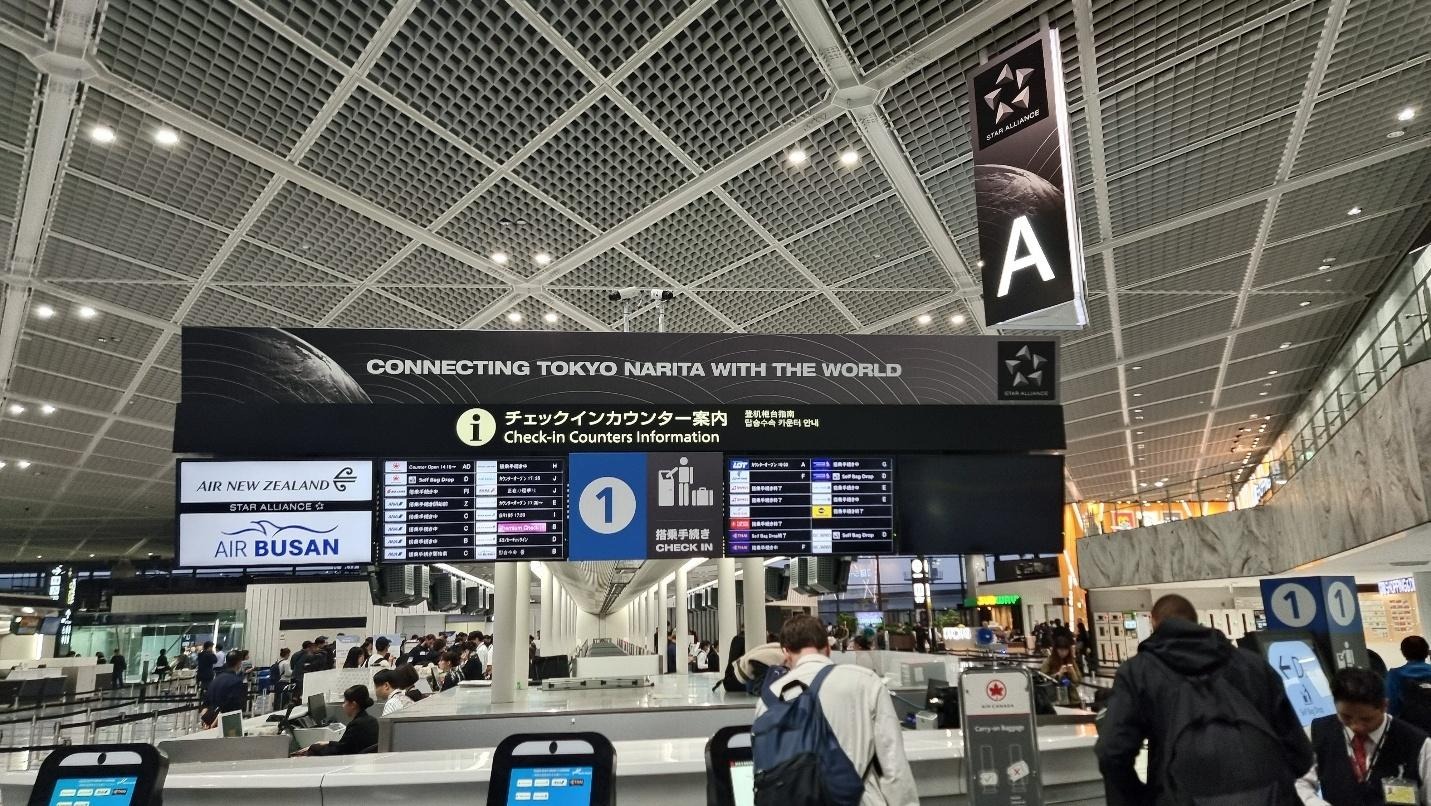
After checking in, Ethiopian Business Class passengers have access to Star Alliance Gold Track, which offers a dedicated security line for eligible passengers. This perk saved at least 15 minutes, and I was able to finish security and immigration in no time.

Only Way Out: Private Aviation in a Region at War
Star Alliance Gold members and Business Class passengers flying on a Star Alliance carrier have access to all the Star Alliance airline lounges in Narita Terminal 1. They are:
- ANA Lounge, Satellite 2
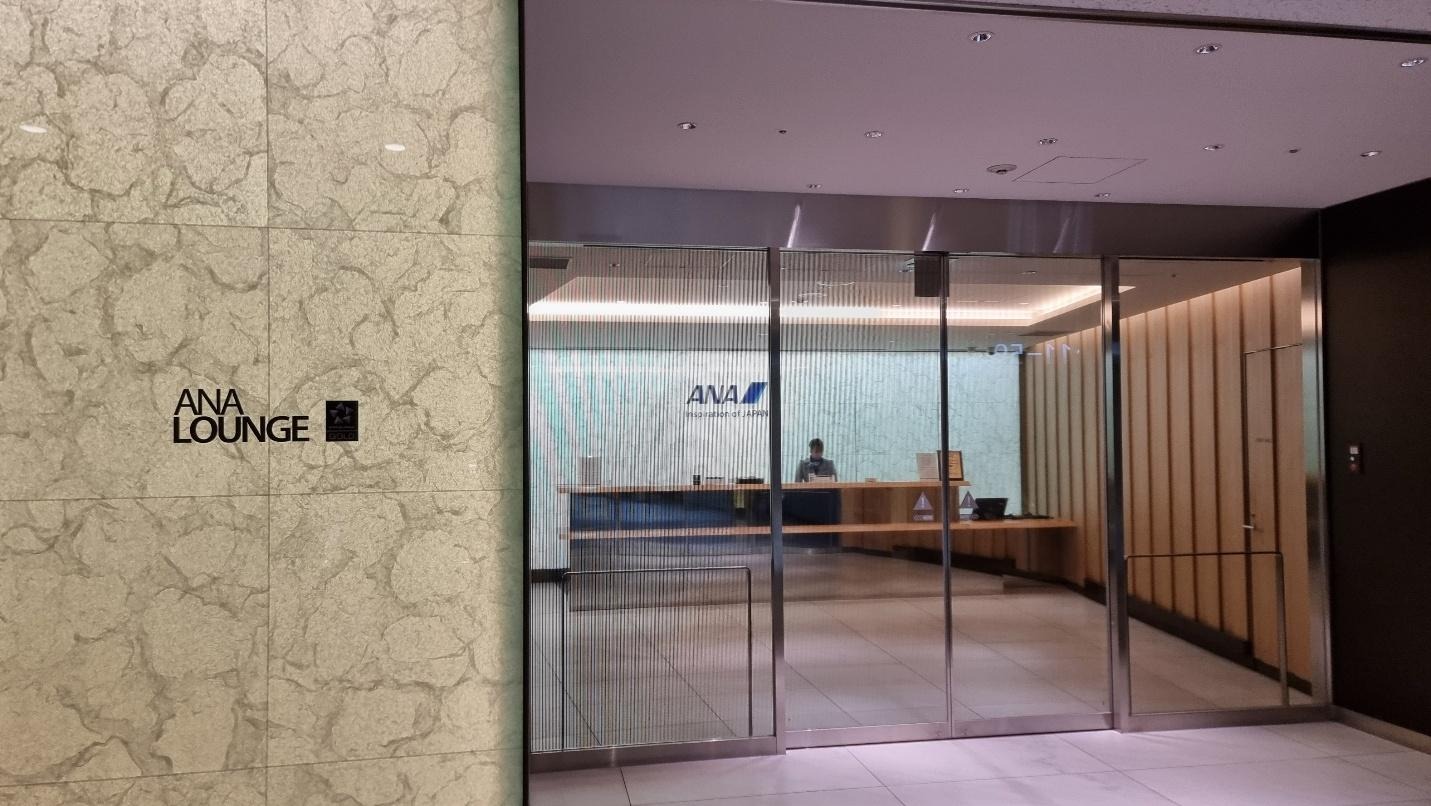
- ANA Lounge, Satellite 5

- United Club
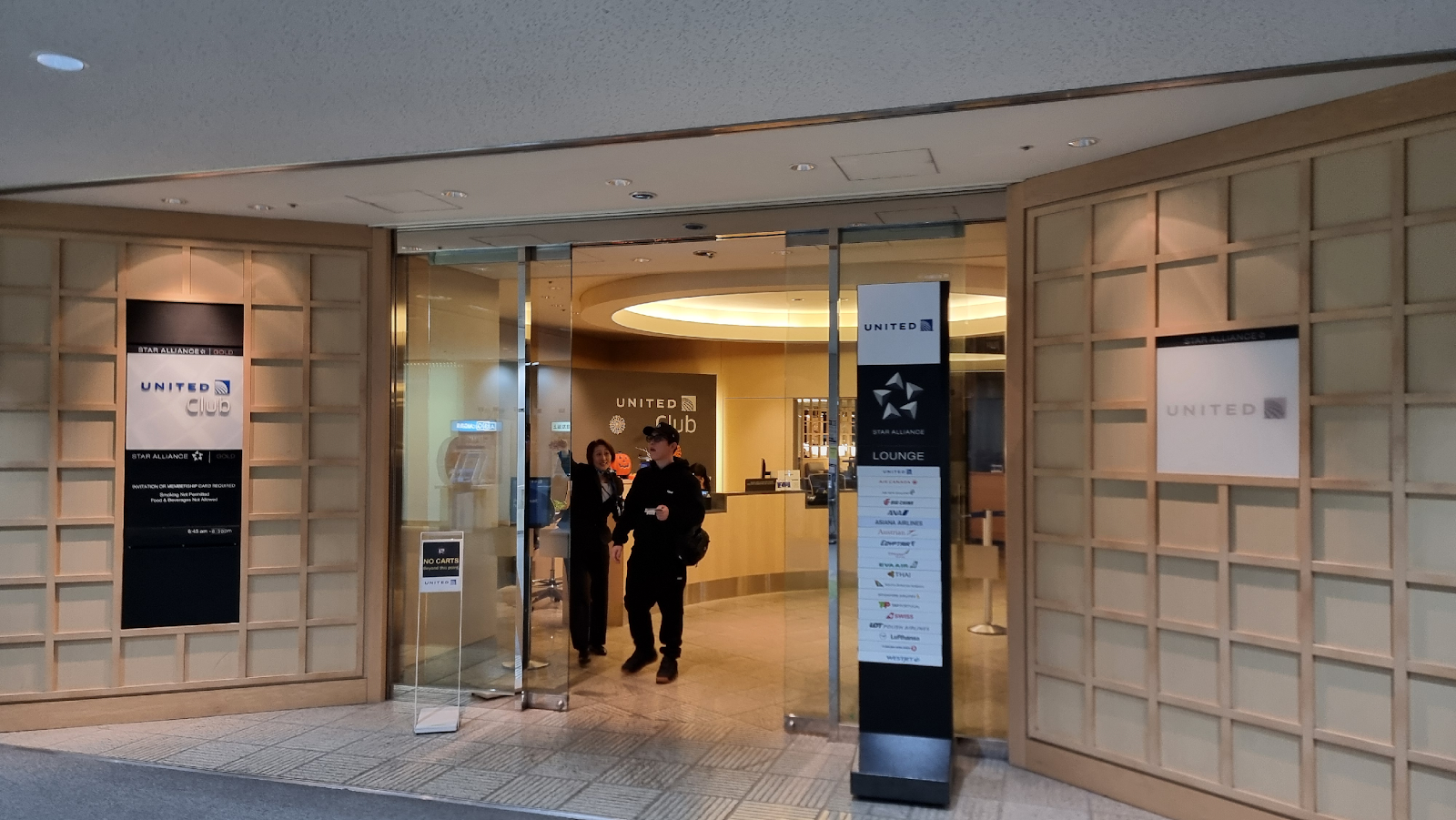
- Turkish Airlines Lounge

I chose to visit the United Club, a sprawling space that feels like an artifact of United’s former Narita mega-hub. With fewer connecting passengers today, the lounge is almost serene: high ceilings, abundant seating, and solid food options, including sushi and Japanese curry. The surplus seating would have provided a place to relax for thousands of passengers connecting through Narita on United flights back when it was in full use.

After lounging, I boarded Ethiopian Flight 673 to Seoul.
Onboard, Cloud Nine Business Class offered lie-flat seats that became a comfortable bed when fully reclined. The infotainment screens were large and modern.

Waiting at my seat was a plush pillow and an Icis Korean water bottle. Ethiopian-branded headphones were also offered.
Pre-departure drinks arrived promptly. I opted for a surprisingly fresh orange juice.

Dinner was served shortly after takeoff. The choices included grilled halibut, fillet steak, and grilled chicken thigh. The steak was respectable, and once again the kimchi impressed. I had some great Ethiopian coffee after my meal, an authentic touch no other carrier on this route can replicate.

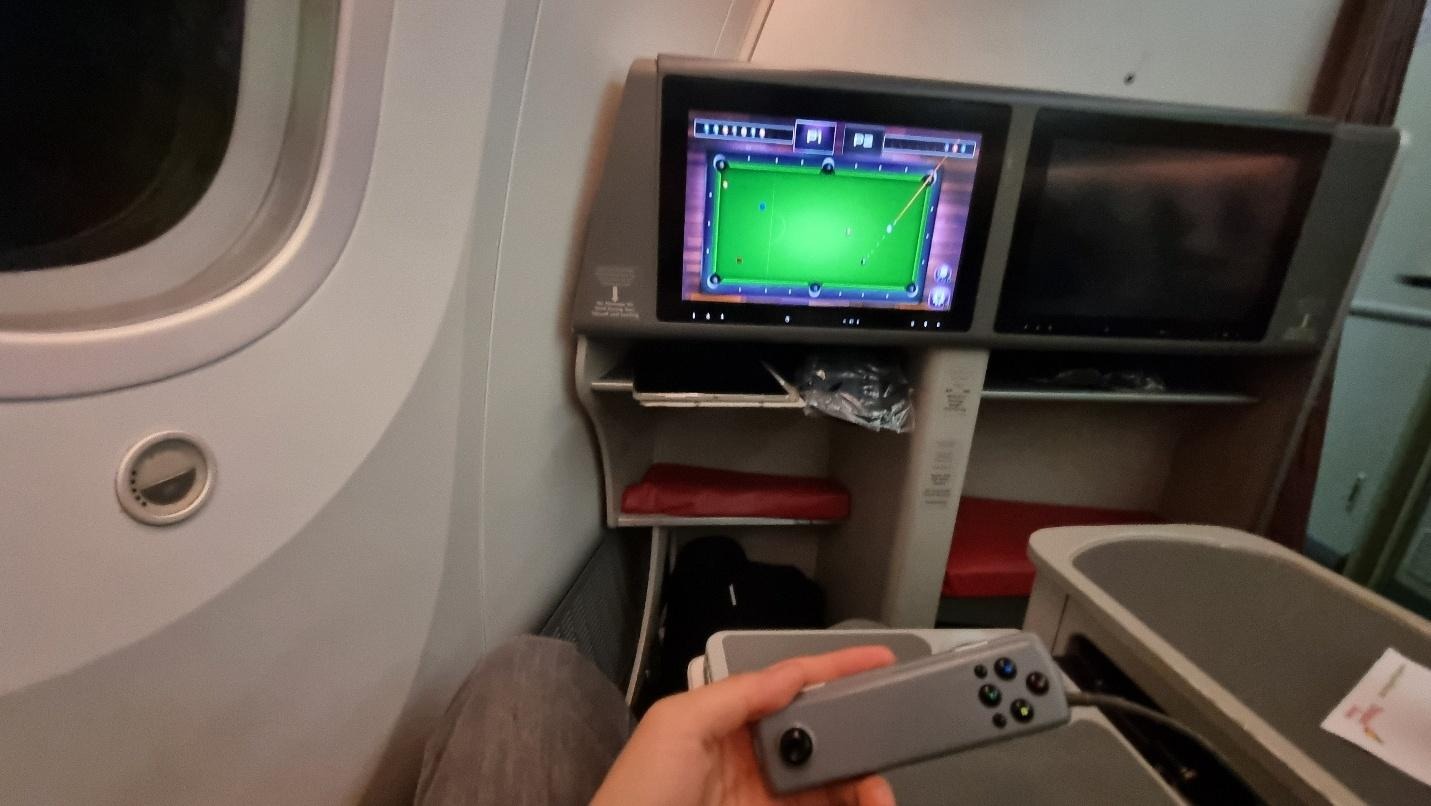
Since Business Class seats had access to the remote for the In-Flight Entertainment System, controlling the screen was much easier. Moreover, I could finally play the games that required the gaming pad on the rear of the remote.
The system itself was slightly different from the one in Economy Class, with a better overall performance. I enjoyed games and Ethiopian music on my way to Korea.
Upon arrival at Incheon, my bag appeared first thanks to Star Alliance priority handling.

Analysis: How Spirit Airlines Changed Airline Pricing, then Paid the Price
Overall, Business Class on board Ethiopian Airlines was an interesting experience – it felt indulgent, culturally unique, and genuinely memorable. Having steak at 35,000 feet was definitely a luxurious experience. The Ethiopian coffee was something that other airlines could never offer, made possible thanks to the flight's Fifth Freedom nature. The seat was also very comfortable, and I was even able to sleep on this short hop.
It is undoubtedly one of the quirkiest flights that offer good value for what it provides.
The Enduring Appeal of Unusual Flights
Fifth-freedom flights offer something rare in modern aviation: character. In an era dominated by efficiency and point-to-point connections, these multi-national itineraries provide a sense of uniqueness and adventure. They allow travelers to sample foreign carriers on shorter routes, enjoying better luggage allowances and lower fares.
Whether flying Singapore-Sydney on British Airways, Geneva-Manchester on Ethiopian, or New York-Milan on Emirates, the appeal is the same, and my journeys on Ethiopian only emphasize that. These flights may be quirks in the global system, but for travelers who love aviation, they can be some of the most memorable trips in the sky.
This content is only available with an AeroXplorer+ subscription.
Lawmakers Press FAA to Suspend AI Air Traffic Control Tool at Washington-Area Airports » Why Engine Lease Rates Are Still Climbing as Values Level Off » Southwest Airlines Considers Boeing 787 Order for Long-Haul International Expansion »
Comments (1)
 Felisha
References:
Neue Online Casinos mit MGA Lizenz echtgeld bonus ohne einzahlung
Felisha
References:
Neue Online Casinos mit MGA Lizenz echtgeld bonus ohne einzahlung
Add Your Comment
TAGS
TRIP REPORTS Jetstream Magazine Exclusive Travel Fifth-Freedom Ethiopian Trip ReportRECENTLY PUBLISHED
 Saab Weighs Canadian GlobalEye Production Line to Match Growing Surveillance Aircraft Orders
Saab is considering establishing GlobalEye production in Canada as demand for the airborne early warning aircraft climbs across NATO nations.
NEWS
READ MORE »
Saab Weighs Canadian GlobalEye Production Line to Match Growing Surveillance Aircraft Orders
Saab is considering establishing GlobalEye production in Canada as demand for the airborne early warning aircraft climbs across NATO nations.
NEWS
READ MORE »
 Lawmakers Press FAA to Suspend AI Air Traffic Control Tool at Washington-Area Airports
Senators and union leaders urge the FAA to pause an AI-driven air traffic management tool at DC airports, citing safety concerns.
NEWS
READ MORE »
Lawmakers Press FAA to Suspend AI Air Traffic Control Tool at Washington-Area Airports
Senators and union leaders urge the FAA to pause an AI-driven air traffic management tool at DC airports, citing safety concerns.
NEWS
READ MORE »
 Lufthansa Wins Bid for 44.9% Stake in TAP Air Portugal, Edging Out Air France-KLM
Portugal selects Lufthansa as preferred buyer for a 44.9% stake in TAP Air Portugal, beating competing offers from Air France-KLM and IAG.
NEWS
READ MORE »
Lufthansa Wins Bid for 44.9% Stake in TAP Air Portugal, Edging Out Air France-KLM
Portugal selects Lufthansa as preferred buyer for a 44.9% stake in TAP Air Portugal, beating competing offers from Air France-KLM and IAG.
NEWS
READ MORE »
More than just headlines.
Get unlimited ad-free access to in-depth aviation news, premium stories, and exclusive insights other sites don't cover.
- Ad-free browsing on AeroXplorer
- Unlimited access to premium and exclusive articles
- Higher photo upload limits & commissions on sales
- Free access to Jetstream Magazine on higher tiers
- Ad-free browsing
- Sell aviation photos with 60% commission
- First week free!
- Everything in Basic+
- Unlimited premium articles
- Sell aviation photos with 70% commission
- Free Digital subscription to Jetstream Magazine
- First week free!
- Everything in Basic+ and Pro
- Sell aviaiton photos with 80% commission
- Early access to exclusive stories
- Free Digital+Print subscription to Jetstream Magazine