
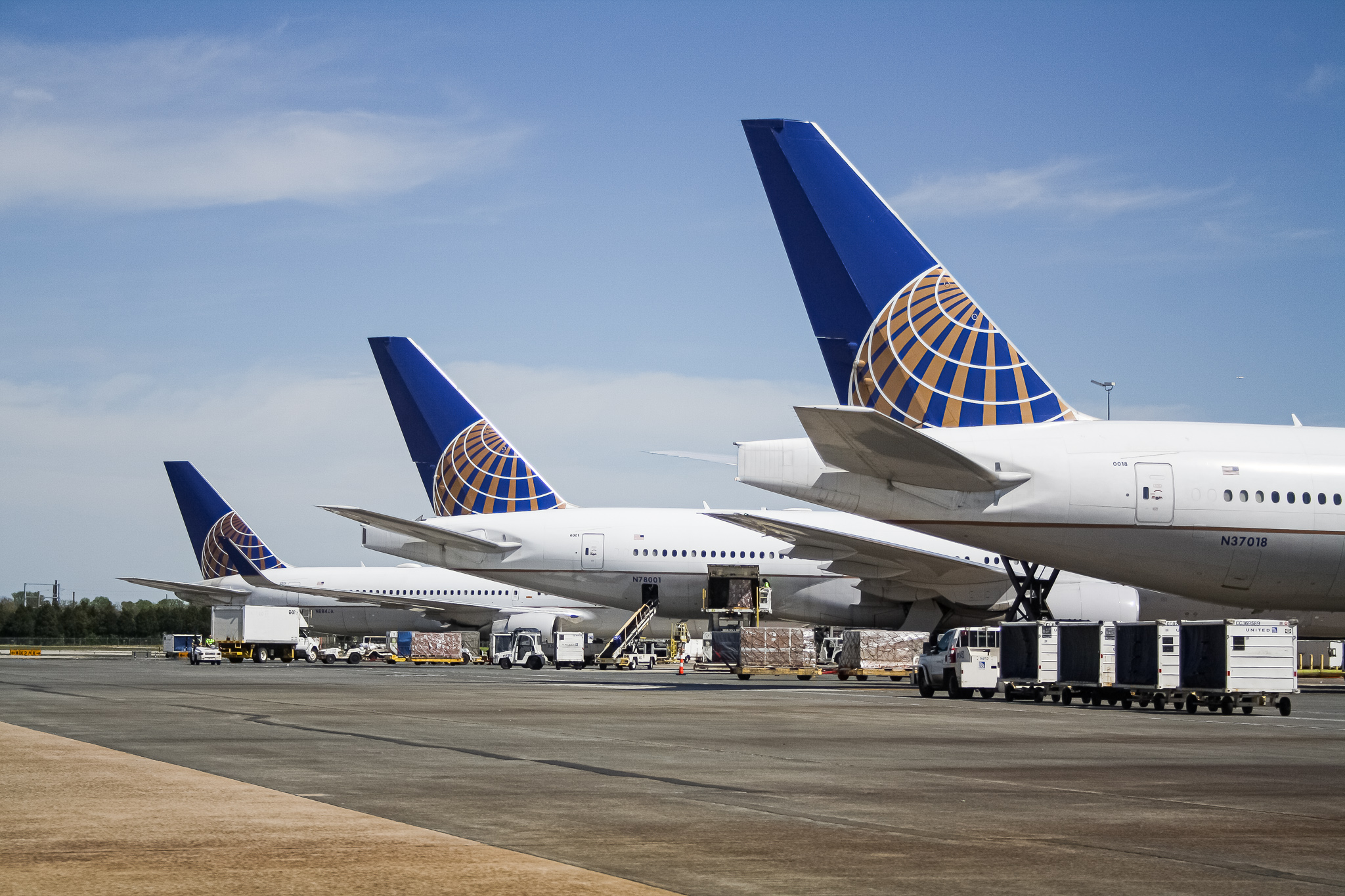

Federal regulators have drawn a definitive line at Chicago O'Hare International Airport, issuing a binding order that will force United Airlines to cut more than 200 flight movements during peak summer periods, the most dramatic government intervention in domestic airline scheduling since the FAA capped operations at Newark Liberty International Airport in 2025. The move caps a months-long scheduling war between United and American Airlines that had pushed O'Hare toward what experts feared could become a catastrophic collapse in operational reliability during the busiest travel season of the year.
The FAA Order
The US Federal Aviation Administration ordered airlines to slash flights at Chicago O'Hare International Airport this summer to prevent overscheduling and flight disruptions, further complicating a turf war between United Airlines Holdings Inc. and American Airlines Group Inc. at the busy hub. The agency said in the order, released Thursday, that it's limiting total daily operations to 2,708 takeoffs and landings, almost 400 fewer than airlines had originally scheduled. The cap will be in place from May 17 through Oct. 24.
U.S. Transportation Secretary Sean Duffy said the original summer schedule was "unrealistic" and would have "dramatically" exceeded what the airport's infrastructure and air traffic controllers could handle. The initial summer 2026 schedule would have been a 15% peak-day increase from last summer, the FAA said.
FAA Administrator Bryan Bedford said in a statement:
"Our number one priority is the safety of the flying public, and that means ensuring airline schedules reflect what the system can safely handle."
Transportation Secretary Sean Duffy said:
"If you book a ticket, we want you and your family to have the certainty that you'll fly without endless delays and cancellations."

How Badly Was O'Hare Already Performing?
The FAA did not act without evidence. Less than 60% of flights at O'Hare were on time last summer, according to the FAA. At a hub of O'Hare's size, that kind of unreliability does not stay local. Missed connections can spread into airline networks nationwide, forcing rebookings in Chicago, Denver, Dallas, Atlanta and other hubs that depend on tight banked schedules.
More than 3,080 flights were planned for peak summer days, a level that O'Hare's infrastructure simply could not accommodate. The cap, at 2,708 daily flights, was the product of weeks of negotiations. Bloomberg reported that the final number split the difference between an FAA proposal for 2,608 daily flights and O'Hare's request for 2,800.
United Gets the Heaviest Cut
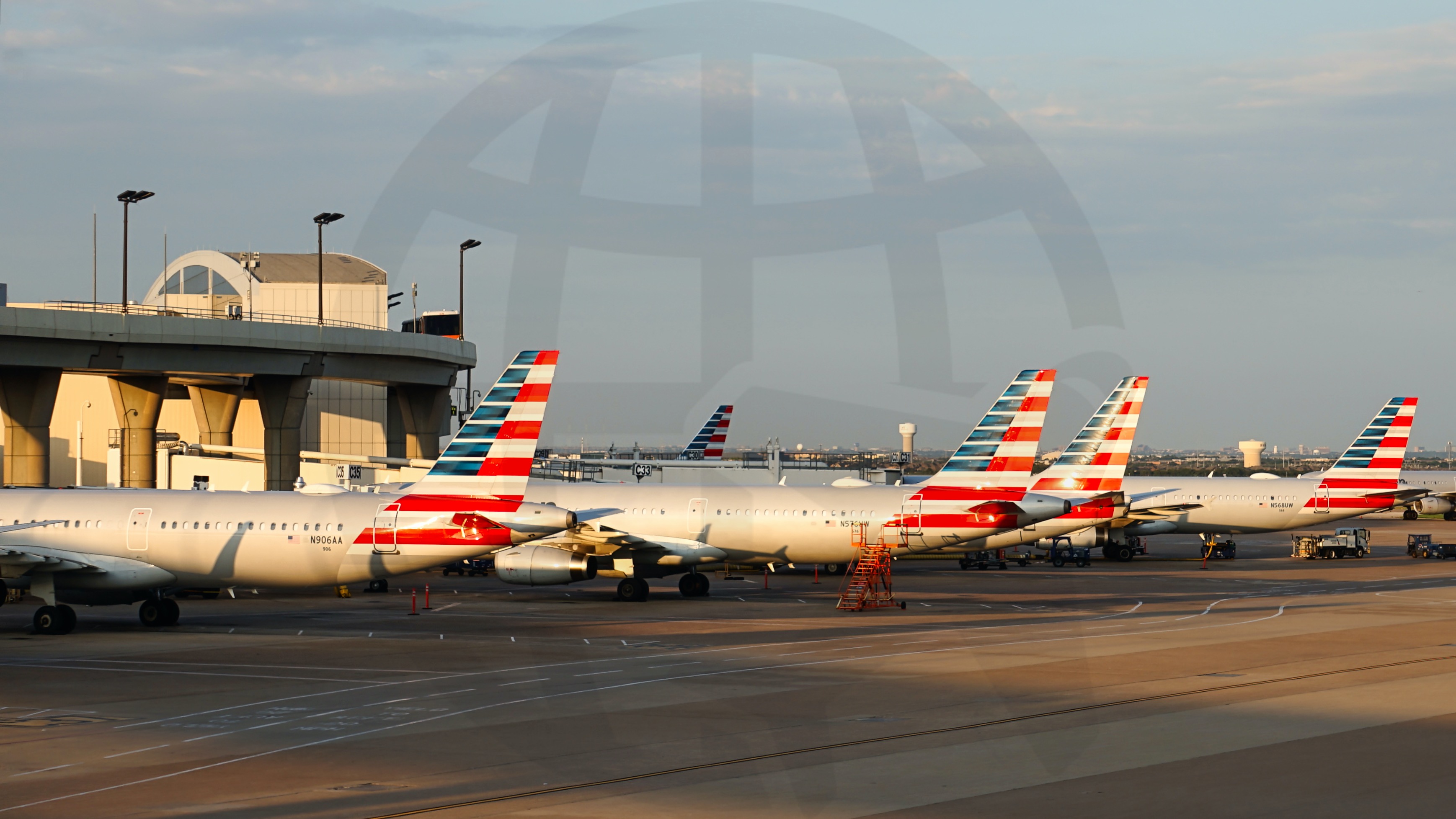
American told employees in a memo that it estimates that it will have to cut no more than 40 arrivals and departures per day, but it estimates that United might have to cut more than 200 arrivals and departures based on the published schedules.
The disparity is not accidental. The decision came in response to the allegations that United Airlines was attempting a tactic known as 'flooding the zone,' in which an airline might operate flights unnecessarily to assert dominance at an airport and stifle competition from rival carriers.
United had wanted to increase its flying schedule by as much as 34% year on year, an additional 130 flights per day, pushing O'Hare to what could have been a breaking point.
American's chief operating officer, David Seymour, and chief commercial officer, Nat Pieper, warned in an internal memo to staff that United's strategy could create severe operational strain, cautioning that the expansion may cause “long taxi times, extensive tarmac delays, missed customer connections, disrupted crew sequences and cascading disruptions across the system.”
Seymour and Pieper told staff:
"This is not meaningful growth, it is a ploy to overschedule the airport to manipulate a provision which was meant to promote competition, seemingly without regard for ORD customers, team members or partners." They added: "United's reactive overcapacity is meant to undermine ORD's status as a dual hub."
The Cockpit’s Next Revolution: When the Co-Pilot Is a Computer
Two CEOs, Two Very Different Responses
The public postures adopted by the rival CEOs ahead of the FAA's ruling were strikingly candid. American Airlines CEO Robert Isom did not mince words. "Where we were headed in Chicago, due to the reckless scheduling of our competitor, OK, was going to be gridlock," Isom said at an investors conference in Washington, D.C., last month.
United CEO Scott Kirby took a characteristically breezy line. Kirby pointed the finger at American, where he used to work, and said he's glad the Department of Transportation is stepping in. "The DOT is going to come in and play dad and force us to share," Kirby said. "And it's going to all be fine."
Following the FAA's final order, both carriers issued broadly supportive statements. American said:
"We are grateful to Secretary Duffy, Administrator Bedford, and their leadership teams for acting swiftly to ensure that Chicagoans and all consumers continue to benefit from sensible competition and to help minimize flight disruptions during the busy summer season."
United said the airline appreciates that the government came up with "a solution that makes sense for everyone who cares about O'Hare's success."
American's chief operating officer, David Seymour, wrote:"For many reasons, this is a good result for our customers, our team, and the city of Chicago." Seymour said the schedule reduction program "resets the total level of operations to a manageable level. That should mean improved on-time performance, fewer departure peaks, and shorter taxi times."
United's Own Internal Acknowledgement
United CEO Scott Kirby confirmed in a message to employees that the airline would absorb the O'Hare reductions as part of a broader near-term capacity management strategy. Kirby wrote that the airline would "pull a point of capacity in ORD when the FAA process concludes." He placed this within a wider tactical trimming plan, noting that United is "canceling about 3 points of flying in off peak periods (think redeyes, Tues/Wed/Sat flying) during Q2 and Q3," with the O'Hare adjustment and the suspension of Tel Aviv and Dubai service combining to represent "about 5 points of this year's planned capacity in the short term."
Kirby was unambiguous that the cuts are temporary:
“Our current plan is to restore the full schedule this fall. To be clear, nothing changes about our longer-term plans for aircraft deliveries or total capacity for 2027 and beyond.”
The Bigger Picture
This is not the first time the FAA has intervened in this way. The agency sharply limited flights last year at Newark Liberty International Airport in New Jersey after a combination of air traffic control problems and runway construction led to chaos. Aviation analyst William McGee, who formerly worked in airline operations, noted that the FAA's approach at O'Hare is notably different in one key respect: "Their modus operandi has been to just let these things play out until they become a mess. And they're being a little proactive here," McGee said. "It's like, here's the pill. Now swallow it."
Joe Schwieterman, a professor of transportation at DePaul University in Chicago, said: "No other airport in the world is like this. We've got two global hubs side by side at the same airport, you know, within view of each other." That unique configuration, which makes gate allocation at O'Hare directly tied to prior-year flight volumes, is precisely the mechanism that drove the scheduling escalation in the first place.
What This Means for Summer Travellers
For passengers planning to fly through O'Hare between May 17 and October 24, the immediate effect is fewer available departures on high-frequency routes, particularly those served by regional jets. Analysts have flagged the likelihood of higher fares on busy travel days as airlines concentrate capacity onto larger aircraft where possible.
For travelers, the cap may mean fewer of the worst bottlenecks. It may also mean fewer seats on some routes and higher fares on busy days, especially as airlines trim schedules to fit the new ceiling.
The Chicago Department of Aviation called the FAA's order a "thoughtful approach" to ensure the limitations do not extend past the summer and that flight operations are not less than last year.
FAA-Capped Operations at Chicago O'Hare
| Flight No. | Route | Departure Time | Arrival Time | Duration | Operating Days |
|---|---|---|---|---|---|
| UA (various) | ORD Departures (all routes) | Various | Various | Various | Reduced from 17 May 2026 |
| AA (various) | ORD Departures (all routes) | Various | Various | Various | Max 40 movements cut/day |
| UA (ORD–GRR example) | Chicago O'Hare → Grand Rapids | Various | Various | ~50 min | Cut from up to 11 daily |
| UA (ORD–ABE) | Chicago O'Hare → Allentown | Various | Various | ~2 hr | Frequency under review |
| AA (ORD–CAE) | Chicago O'Hare → Columbia SC | Various | Various | ~2 hr 20 min | Frequency under review |
O'Hare hard cap: 2,708 total daily operations (arrivals + departures), in effect 17 May – 24 October 2026. United Airlines estimated to cut 200+ peak-period movements; American Airlines estimated to cut no more than 40. Source: FAA final order (16 April 2026), Bloomberg, NPR, Chicago Sun-Times, Paddle Your Own Kanoo, The Points Guy, Aviation A2Z.
KLM Brings Starlink Internet to Long-Haul Flights » FAA Clears JetBlue's $58.5M Purchase of Spirit's LaGuardia Slots » British Airways Unveils World's Largest Business Class Cabin With 106 Seats Aboard Refurbished A380 Fleet »

Comments (0)
Add Your Comment
TAGS
NEWS United Airlines American Airlines Chicago O'Hare FAA Flight Cap Summer 2026 Aviation Regulation Flight Cancellations Airline Scheduling DOT ORD O'Hare Congestion Flights Routes TravelRECENTLY PUBLISHED
 Boeing's Touchscreen Flight Controls for 737 Draw Sharp Criticism from Pilots
Boeing's plan to introduce Touchscreen Control Display Units on the 737 has sparked backlash from pilots who warn of safety and usability concerns.
NEWS
READ MORE »
Boeing's Touchscreen Flight Controls for 737 Draw Sharp Criticism from Pilots
Boeing's plan to introduce Touchscreen Control Display Units on the 737 has sparked backlash from pilots who warn of safety and usability concerns.
NEWS
READ MORE »
 Southwest Airlines Blames Brief System Outage for Boarding Delays and Checked Bag Disruptions
Southwest Airlines confirms a brief technology outage disrupted boarding and checked bag operations, forcing gate agents to process travelers manually.
NEWS
READ MORE »
Southwest Airlines Blames Brief System Outage for Boarding Delays and Checked Bag Disruptions
Southwest Airlines confirms a brief technology outage disrupted boarding and checked bag operations, forcing gate agents to process travelers manually.
NEWS
READ MORE »
 Southwest Airlines Considers Boeing 787 Order for Long-Haul International Expansion
Southwest Airlines is evaluating the Boeing 787 Dreamliner as it explores a shift into long-haul international flying, sources tell Reuters.
NEWS
READ MORE »
Southwest Airlines Considers Boeing 787 Order for Long-Haul International Expansion
Southwest Airlines is evaluating the Boeing 787 Dreamliner as it explores a shift into long-haul international flying, sources tell Reuters.
NEWS
READ MORE »
More than just headlines.
Get unlimited ad-free access to in-depth aviation news, premium stories, and exclusive insights other sites don't cover.
- Ad-free browsing on AeroXplorer
- Unlimited access to premium and exclusive articles
- Higher photo upload limits & commissions on sales
- Free access to Jetstream Magazine on higher tiers
- Ad-free browsing
- Sell aviation photos with 60% commission
- First week free!
- Everything in Basic+
- Unlimited premium articles
- Sell aviation photos with 70% commission
- Free Digital subscription to Jetstream Magazine
- First week free!
- Everything in Basic+ and Pro
- Sell aviaiton photos with 80% commission
- Early access to exclusive stories
- Free Digital+Print subscription to Jetstream Magazine