When an aircraft cabin component is damaged, the physical repair is often not the hardest part. The bottleneck usually comes earlier, when the part must be identified, recreated, measured, and prepared for quoting or evaluation. For older aircraft and obscure interior components, that front-end work can take days.
Novineer believes that first step can be reduced to minutes.
Novineer, a Florida-based engineering software company founded by Dr. Ali Tamijani, a professor of Aerospace Engineering at Embry-Riddle Aeronautical University, has developed NoviVision, a tool that reconstructs 3D models from ordinary photographs.
How NoviVision Works
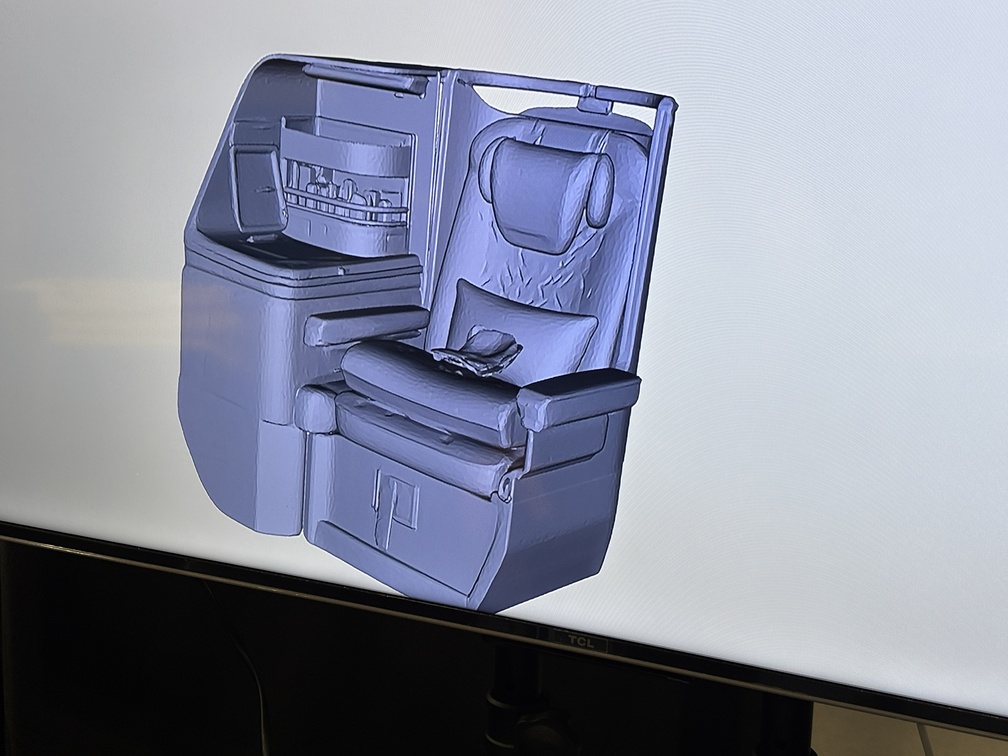
A user photographs a part from several angles. NoviVision then generates a digital model that can support early evaluation, quoting, and manufacturing feasibility checks. No scanner is required.
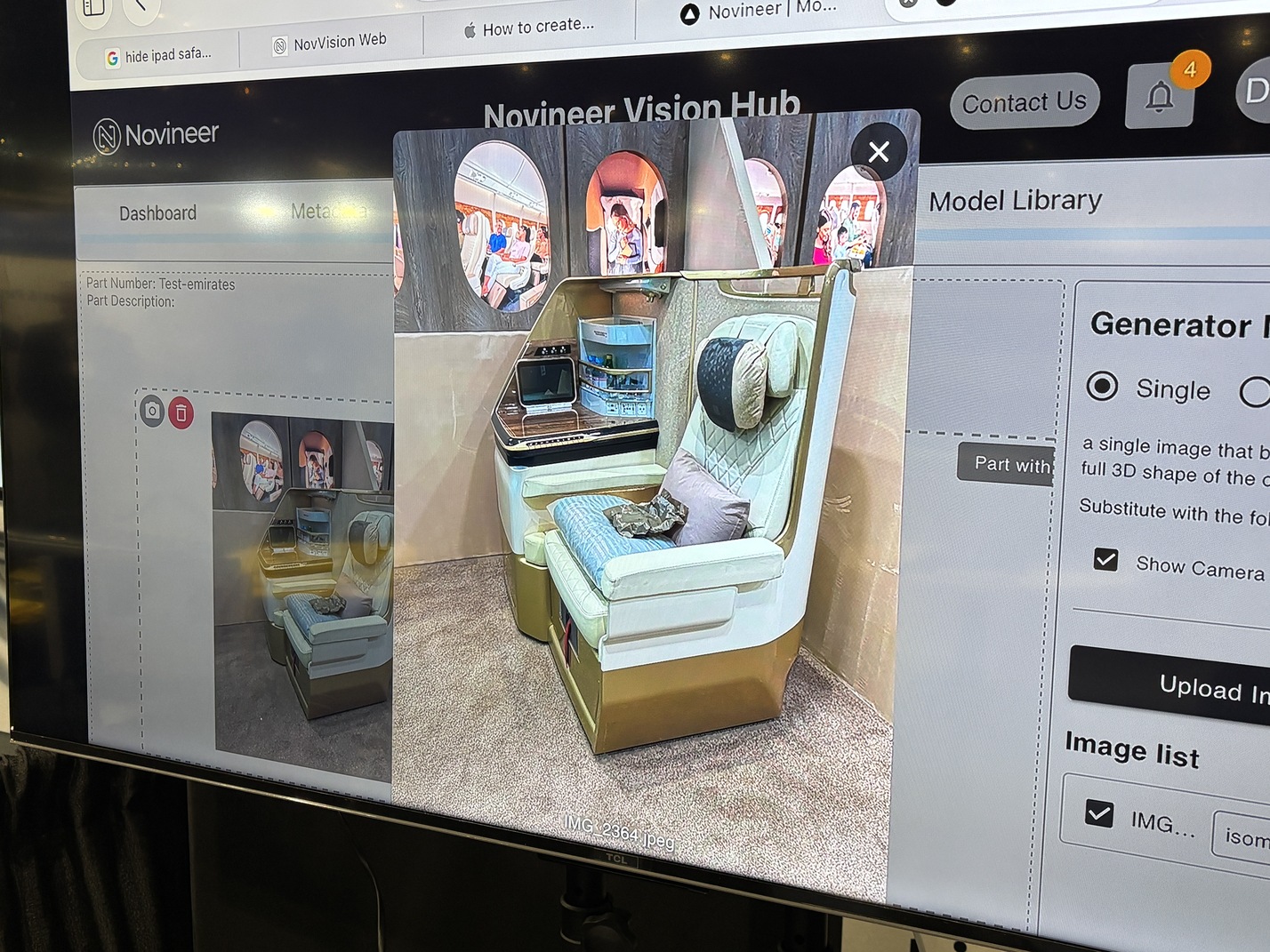
Tamijani demonstrated the technology to AeroXplorer at MRO Americas. “We provide a way that, in two minutes, you have something to work with, and the error is relatively small,” he said.
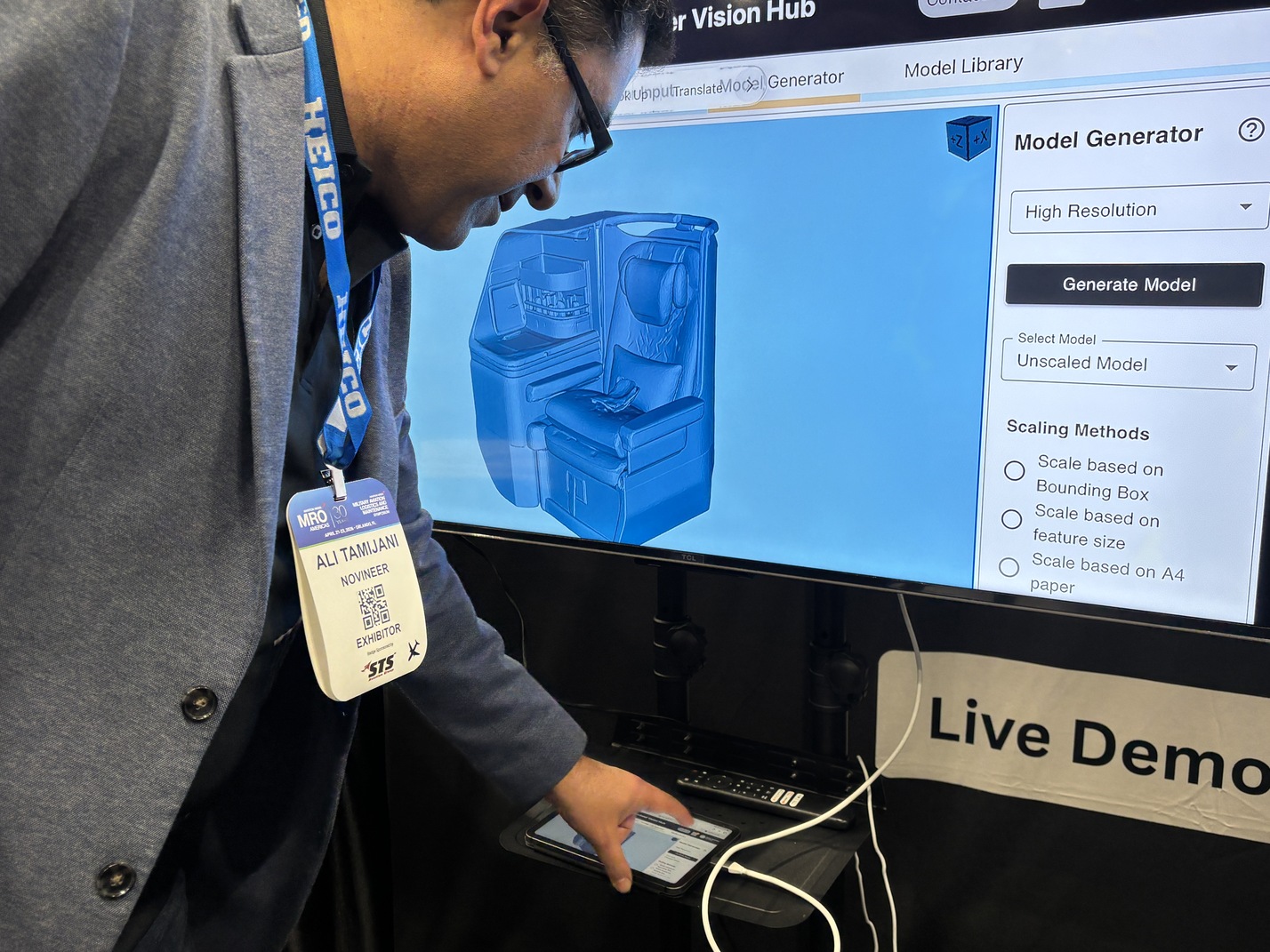
That matters in MRO settings, where traditional scanning is not always practical. Tamijani was direct about the tradeoff. “You don’t carry the scanner. You have these handheld scanners, but they are not very accurate. They require a lot of post-processing. NoviVision can reduce this time by more than 80%.”
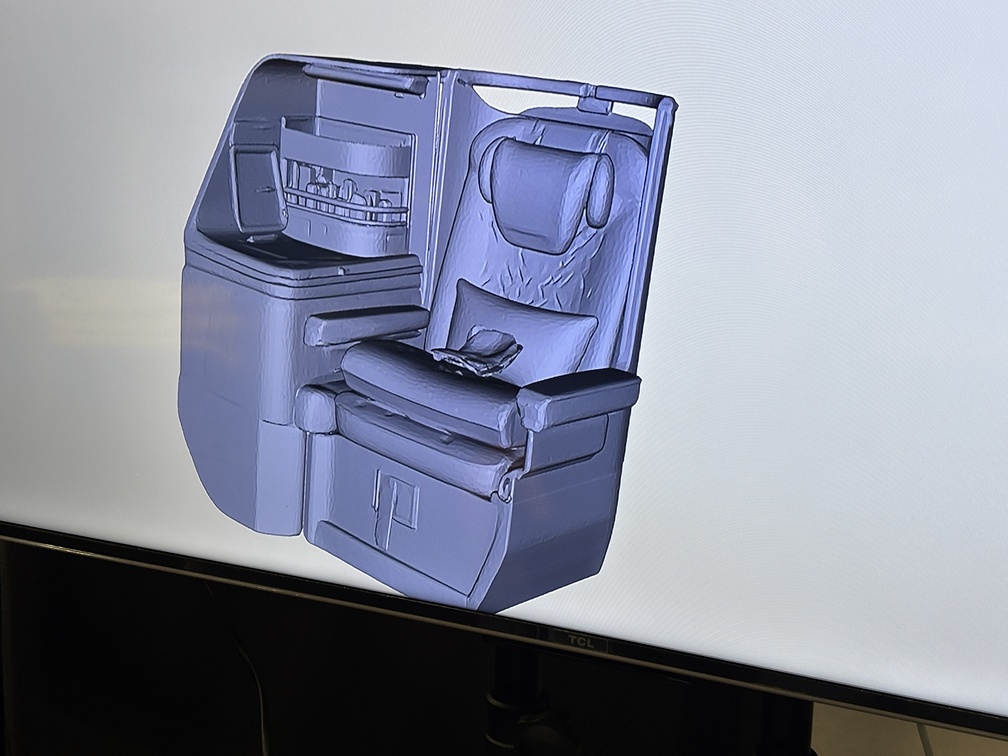
The software is designed to handle more than clean parts staged on a solid-colored backdrop. At Aircraft Interiors Expo, Novineer demonstrated reconstruction from photos captured against a crowded background. The resulting model was still usable, which is important for real maintenance environments where ideal photo conditions are not guaranteed.
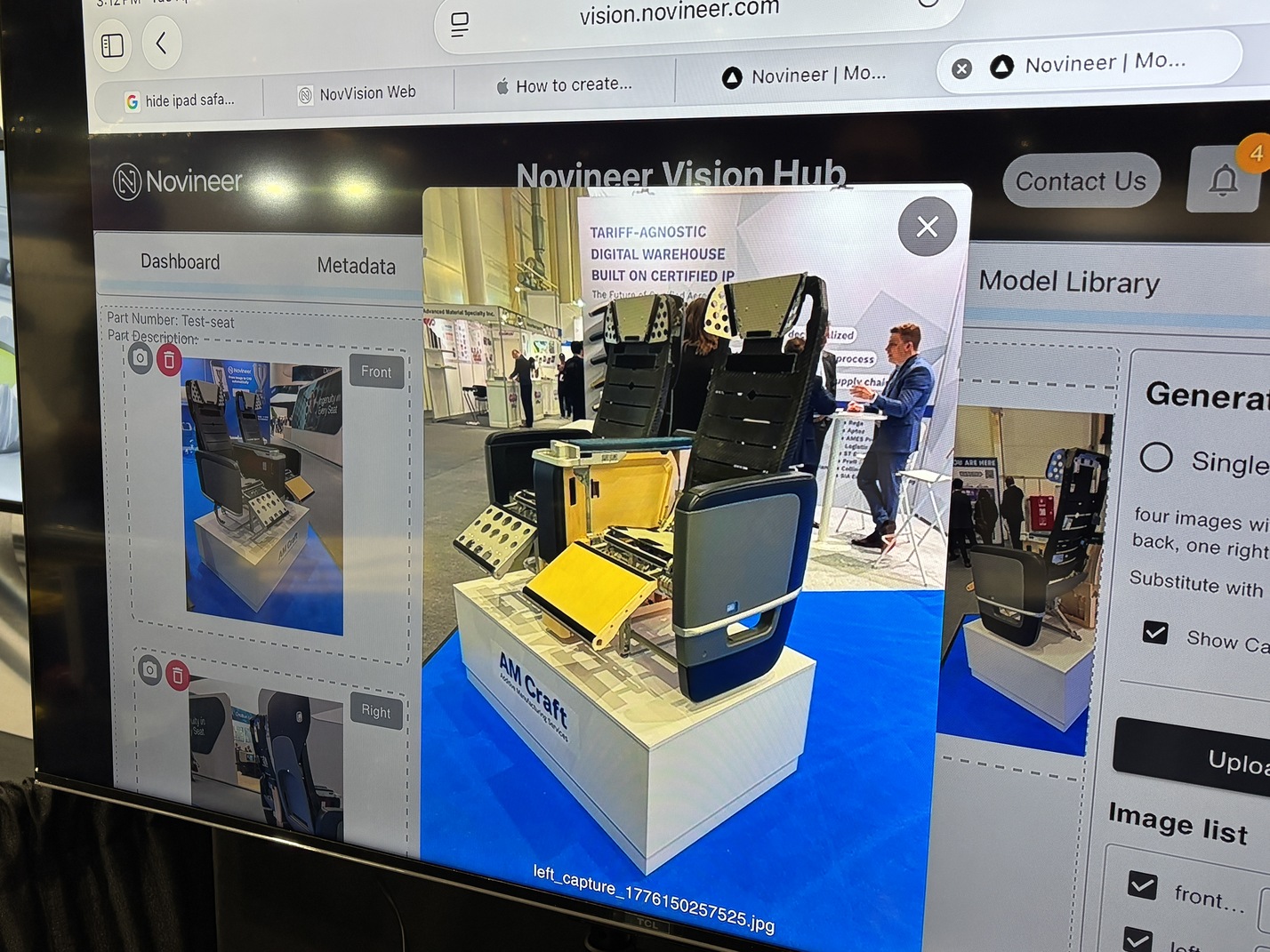
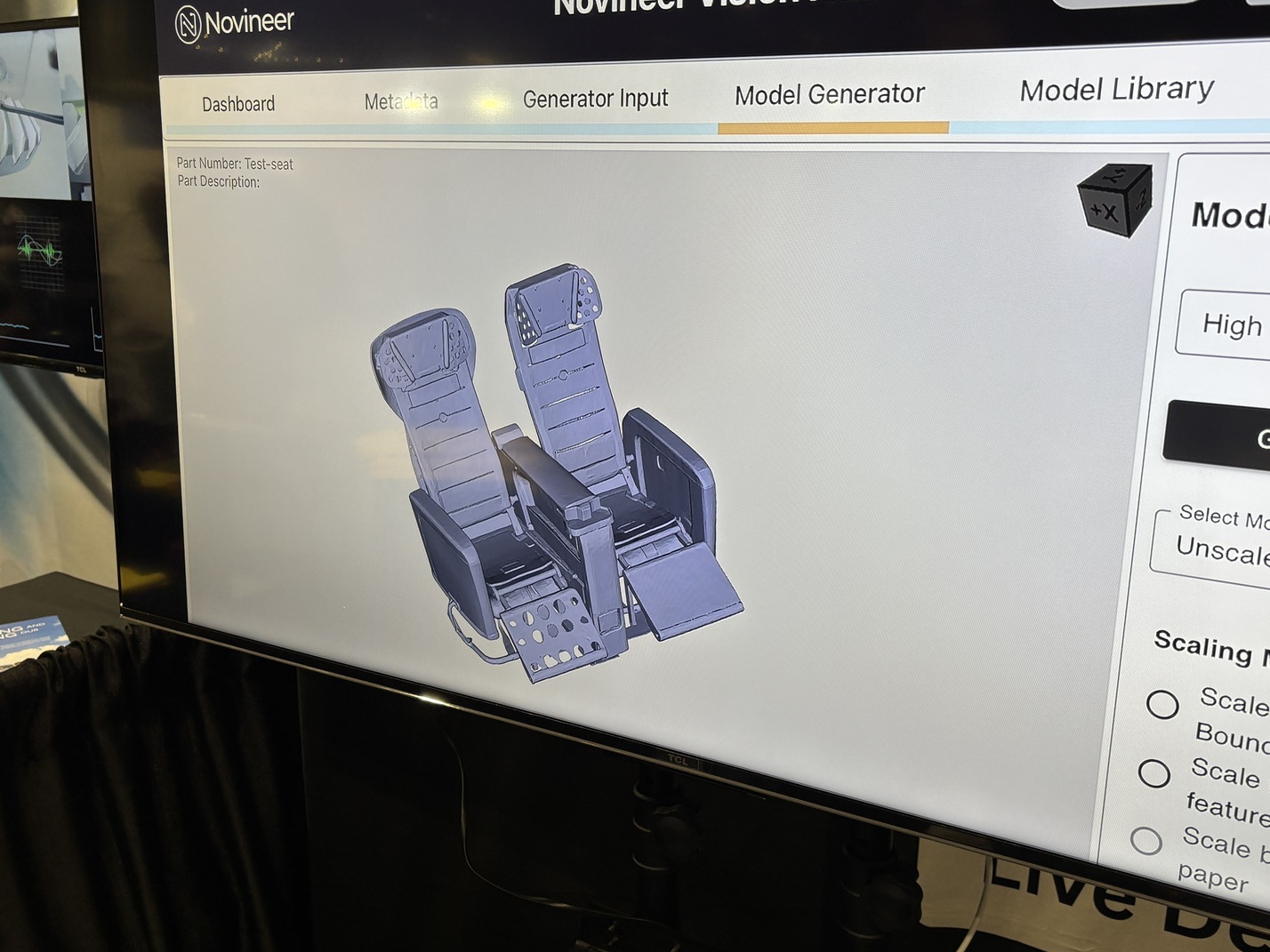
NoviVision can also infer geometry that is not directly visible, using an AI model trained on thousands of aerospace components. That capability has limits. During the demo, Tamijani pointed to an area where the software produced an imperfect connection between two surfaces. “The guess is not completely correct,” he said. “The best way is if it can see it.”
Lighting and surface quality also matter. Simple parts can tolerate less controlled image capture. Complex, glossy, or highly reflective components need cleaner photos and better lighting.
A Starting Point
For a part around 100 mm in size, average error is about 0.7 mm, or roughly one percent of the largest dimension. Maximum error reaches about 2.3 mm, or about two to three percent.

Analysis: How Spirit Airlines Changed Airline Pricing, then Paid the Price
For early assessment, quoting, or a preliminary manufacturability check, that range can be useful. For sensitive structural components, it is not enough by itself. Tamijani put it plainly: “If you have a part that’s very sensitive and you want accurate production, one millimeter is not okay.”
That distinction is central to how NoviVision should be understood. It is not a replacement for engineering validation, but a fast starting point that helps teams move from “we have a part” to “we have a digital model we can evaluate.” Everything after that still requires engineering judgment.
Certification
An AI-generated model does not automatically become a certified aircraft part. If the goal is to reproduce an existing design, OEM data rights and licensing requirements may need to be addressed. If the part is being redesigned, certification becomes the central hurdle.
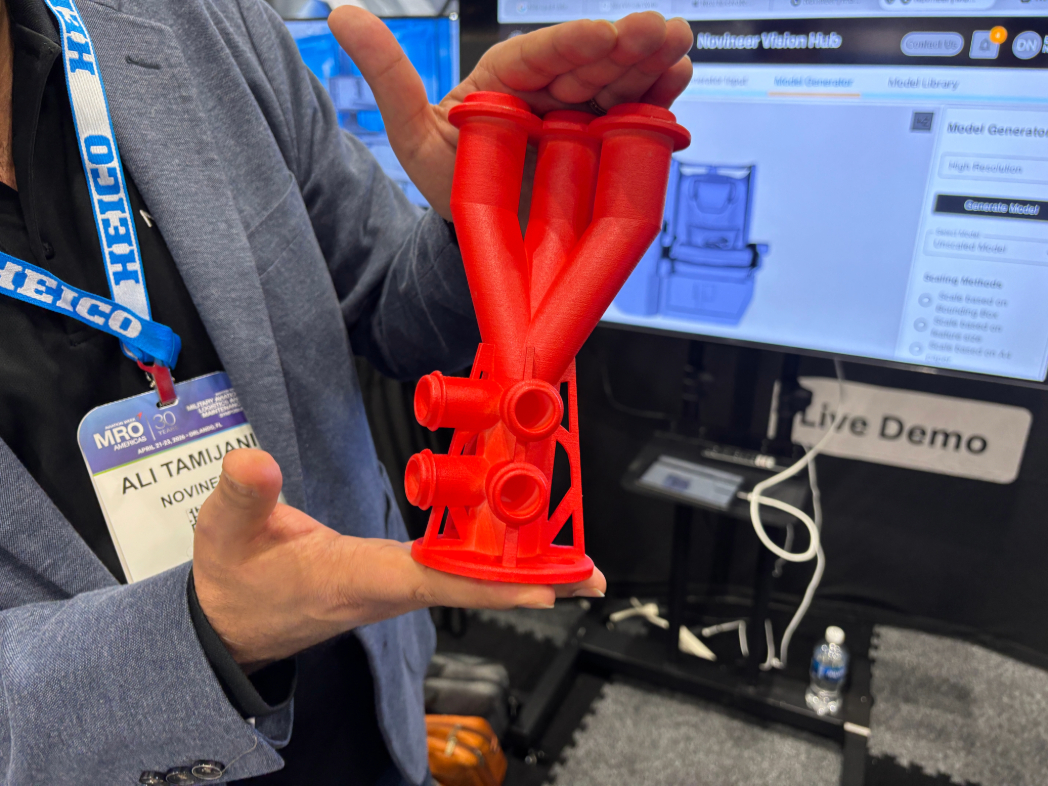
“If you are redesigning it, this needs to be given to a design organization,” Tamijani explained. “They run the different steps that they do, from verifying it, applying loads, and simulating and physically testing it.”
Novineer does not offer certified aircraft parts and does not claim to. The tool supports pre-purchase-order work, feasibility studies, and early engineering review. Production still requires the appropriate design, validation, and certification workflow.
The Broader Picture
NoviVision is one part of a broader Novineer software stack. The company also develops NoviPath, a toolpath-aware simulation platform for material extrusion 3D printing that evaluates parts based on geometry, loading, mounting conditions, materials, and print paths. Novineer has partnered with Stratasys, one of the largest additive manufacturing companies, and with AM Craft, a certified aerospace cabin-interiors manufacturer based in Europe.
The Shape of Disaster: The Plane That Kept Falling Apart Mid-Air
The intended workflow is straightforward: capture the part, create an initial model, check feasibility, and generate a quote. Once the customer approves, the formal engineering and certification process begins.
That process still takes time. But the first step can now start with a few photos and a cell phone.
The faster that first step moves, the sooner the real engineering work can begin.
US State Department Warns of Threats to Airlines and Airports in Saudi Arabia Following Deadly Houthi Attacks » Boeing's Touchscreen Flight Controls for 737 Draw Sharp Criticism from Pilots » Aviation Fuel Prices Hit Six-Month High in September »
Comments (0)
Add Your Comment
TAGS
STORIES Novineer MRO Design Part ModelingRECENTLY PUBLISHED
 NetJets Expands US Footprint With Three New Private Terminals and Larger Palm Beach Facility
NetJets announces exclusive-use terminals in Dallas, Washington, and Palm Beach, expanding private aviation infrastructure across key US markets.
NEWS
READ MORE »
NetJets Expands US Footprint With Three New Private Terminals and Larger Palm Beach Facility
NetJets announces exclusive-use terminals in Dallas, Washington, and Palm Beach, expanding private aviation infrastructure across key US markets.
NEWS
READ MORE »
 Army Report Points to Systemic Failures in Deadly Black Hawk Collision Near Reagan National
A new Army report identifies systemic failures behind the January collision between a UH-60L Black Hawk and American Airlines Flight 5342 near Washington.
NEWS
READ MORE »
Army Report Points to Systemic Failures in Deadly Black Hawk Collision Near Reagan National
A new Army report identifies systemic failures behind the January collision between a UH-60L Black Hawk and American Airlines Flight 5342 near Washington.
NEWS
READ MORE »
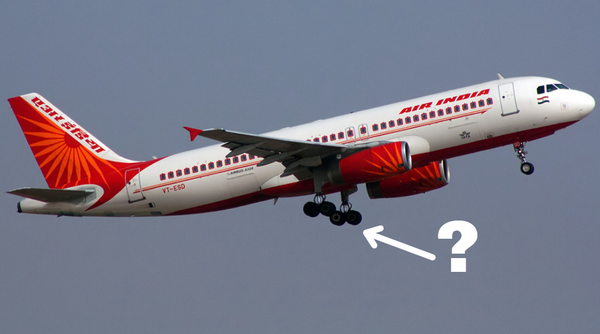 Why Did Some Air India A320s Have Extra Wheels? Bogie Gear Explained
Why Air India operated select Airbus A320s with an unusual bogie landing gear.
INFORMATIONAL
READ MORE »
Why Did Some Air India A320s Have Extra Wheels? Bogie Gear Explained
Why Air India operated select Airbus A320s with an unusual bogie landing gear.
INFORMATIONAL
READ MORE »
More than just headlines.
Get unlimited ad-free access to in-depth aviation news, premium stories, and exclusive insights other sites don't cover.
- Ad-free browsing on AeroXplorer
- Unlimited access to premium and exclusive articles
- Higher photo upload limits & commissions on sales
- Free access to Jetstream Magazine on higher tiers
- Ad-free browsing
- Sell aviation photos with 60% commission
- First week free!
- Everything in Basic+
- Unlimited premium articles
- Sell aviation photos with 70% commission
- Free Digital subscription to Jetstream Magazine
- First week free!
- Everything in Basic+ and Pro
- Sell aviaiton photos with 80% commission
- Early access to exclusive stories
- Free Digital+Print subscription to Jetstream Magazine