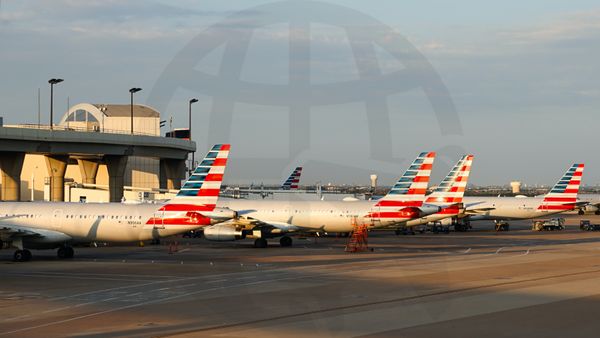
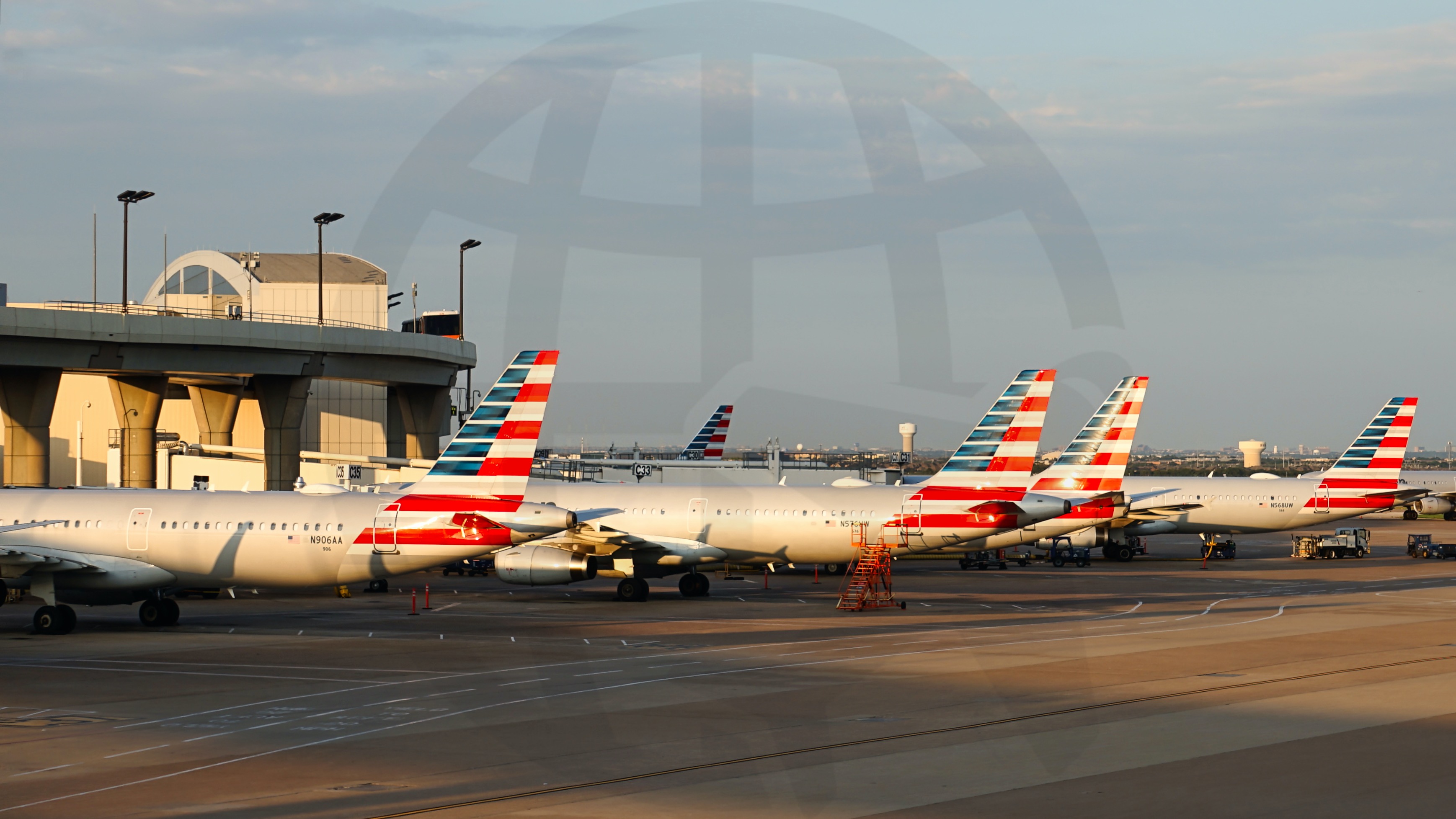
Effective May 1, 2026, American Airlines will become the largest carrier in the United States to formally revise its rules on portable power banks, the lithium-ion charging devices that tens of millions of travellers carry onto planes every day without a second thought. परिवर्तन, जो 28 अप्रैल को घोषित किया गया था, 2025 में ही व्यावसायिक विमानों पर लगभग 100 लिथियम बैटरी घटनाओं की पृष्ठभूमि के बीच आ रहा है, एक चिंताजनक वृद्धि जिसने विमानन उद्योग को दुनिया में सबसे आम उपभोक्ता इलेक्ट्रॉनिक्स वस्तुओं में से एक के प्रबंधन पर फिर से विचार करने के लिए प्रेरित किया है.
{{AD}}
What American Airlines Is Now Requiring
American Airlines has been direct about the rationale for its new policy. “We know our customers rely on portable chargers to keep devices powered throughout their journey. To support safety on board while ensuring our customers continue to have the ability to charge when on the go, American is requiring customers to keep these devices easily accessible during flight,” the airline said in a statement to CBS News.
The practical rules from May 1 are specific and non-negotiable. Under the new policy, the airline said it will limit passengers to two portable chargers that do not exceed 100 watt-hours each. Portable chargers may not be stored in overhead bins and cannot be recharged during the flight.
Starting Friday, American Airlines customers may carry only two power banks, which must be visible to airline personnel while in use on flights. When not in use, the chargers must be within a passenger's reach on the aircraft and may not be stowed in an overhead bin.
The 100-watt-hour capacity limit is a technically meaningful threshold. Most consumer power banks sold for everyday smartphone and tablet charging fall comfortably below this figure, but larger capacity devices, popular with frequent travellers and remote workers who need to charge laptops and tablets through long-haul flights, may exceed it and will be prohibited from the aircraft entirely under the new rules.
The Fire Data Behind the Decision
The policy shift is a direct response to a worsening statistical trend. In 2025 alone, there were 97 lithium battery incidents on aircraft, with 82 involving passenger planes and 34 involving batteries or battery packs, according to FAA data.
American Airlines is introducing the policy change after nearly two dozen lithium battery incidents on flights operated by commercial airlines this year. That figure, nearly two dozen incidents in the first four months of 2026 alone, suggests the rate of in-flight lithium battery events is not declining from 2025's already alarming level.
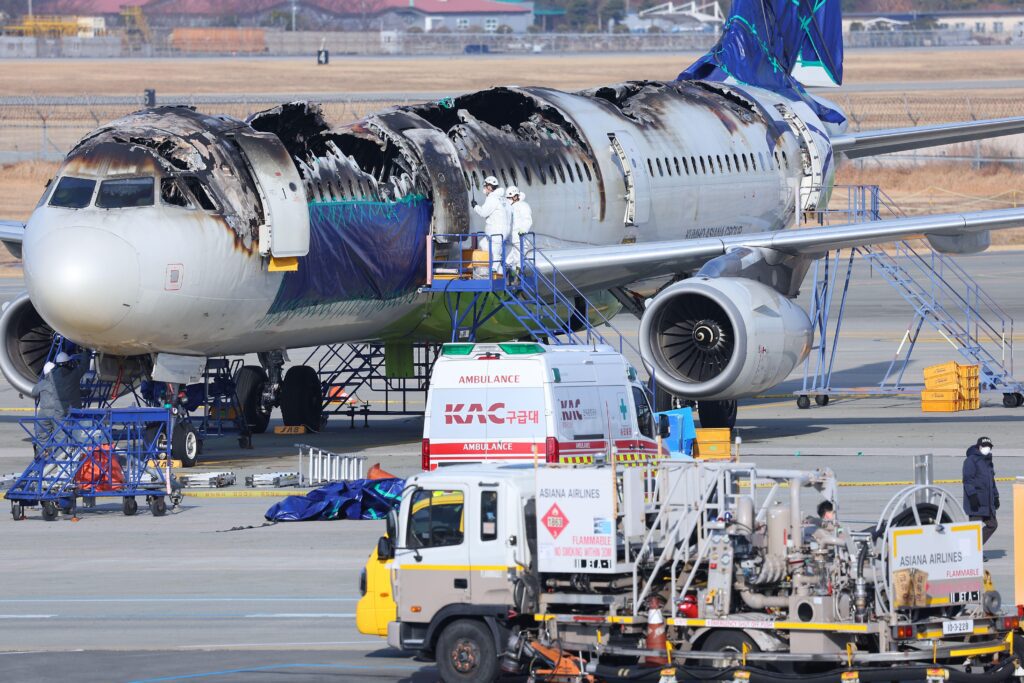
A single incident became the defining moment that accelerated the industry's response. A lithium battery caused a fire on an Air Busan flight in January 2025 was a defining moment for the aviation industry. That fire forced a dramatic emergency evacuation and focused international attention on the specific hazard posed by portable power banks stored in overhead compartments, precisely the scenario that American's new rule is designed to prevent. The reasoning is straightforward: a power bank that overheats in an overhead bin is out of sight, harder to reach, and less likely to be noticed by the crew before the fire escalates.
फोटो: Alamy Live News/ Yonhap
{{REC}}
The ICAO Framework Behind the Rules
American Airlines has not acted in isolation. Its new policy closely mirrors guidance issued by the International Civil Aviation Organization, the United Nations' specialist aviation safety body. The ICAO said in a statement,
"New lithium battery-powered power bank specifications from the International Civil Aviation Organization today will enhance safety and peace of mind for passengers and airlines alike. Following the improvements agreed today, these devices will now be limited to two per passenger, and passengers will be prohibited from recharging them during flights. Importantly, crew will, however, be able to continue to carry and use these power banks in line with the operational requirements of the aircraft. The new specifications will address emerging risks and become effective on 27 March 2026."
The new rules are based on official guidance created by ICAO, which set up a review last year in response to a spate of emerging diversions and evacuations caused by lithium battery fires. American Airlines has essentially adopted the ICAO guidelines as written.
Where Southwest Has Gone Further
American Airlines is the largest US carrier to implement these restrictions, but it is not the first. Southwest Airlines moved earlier and more aggressively. Since April 20, Southwest Airlines has banned passengers from carrying more than one power bank, which must be kept in plain sight at all times and never stored in the overhead locker. Passengers can still use power banks to charge their devices, but they must not use the in-seat power to charge the power bank.
Southwest's one-device limit is meaningfully stricter than the two-device limit adopted by American. The prohibition on using aircraft seat power to recharge a power bank adds a further layer of restriction not explicitly contained in the ICAO guidance, a measure that limits the cumulative thermal load that multiple devices charging simultaneously can impose on a single aircraft circuit.

Where the Other Major US Carriers Stand
The industry-wide picture is now shifting rapidly. Delta Airlines will limit starting May 1 to up to two battery packs that do not exceed 100 watt-hours each. Delta's effective date aligns directly with American's, meaning May 1 will mark a simultaneous tightening at two of the three largest US carriers.
United Airlines, in fact, beat American to the punch by a few weeks, implementing a policy on March 1 that tells passengers to keep power banks in their personal items under the seat, rather than in the overhead bins.
While it's not currently required by the Federal Aviation Administration, stricter portable charger policies are becoming industry standard among major carriers, following a string of fires sparked by lithium-ion batteries onboard flights operated by several different airlines last year.
Many international carriers like Emirates and Lufthansa also have similar limits in place. The global convergence around the ICAO framework is accelerating, though implementation remains uneven. Airlines around the world are currently reviewing the ICAO guidance, although implementation of the rules remains patchy, with some carriers responding much faster than others.
{{AD}}
What Passengers Need to Do Before May 1
The practical implications for travellers are immediate and clear. From May 1, any American Airlines passenger carrying more than two power banks will be required to surrender the excess devices before boarding. Any passenger who attempts to store a power bank in an overhead bin will be asked to retrieve it and stow it within reach under the seat in front. Any power bank exceeding 100 watt-hours will not be permitted on the aircraft at all, regardless of quantity.
Checking the watt-hour rating of a power bank is straightforward; it is printed on the device's label in most cases, typically expressed as "Wh" alongside the ampere-hour and voltage figures. A standard 10,000mAh power bank operating at 3.7 volts delivers approximately 37 watt-hours, well within the limit. A 30,000mAh device operating at the same voltage delivers approximately 111 watt-hours, above the threshold and therefore banned under the new rules.
For passengers who routinely carry high-capacity power banks for laptop charging on long-haul flights, the rule requires an immediate reassessment of their carry-on kit. For the majority of leisure travellers carrying a standard smartphone charger for a domestic flight, the rules will require only that they keep the device accessible rather than tucking it away in the overhead compartment, a modest adjustment with a meaningful safety rationale behind it.

Comments (0)
Add Your Comment
SHARE
TAGS
समाचार American Airlines पावर बैंक नियम लिथियम बैटरी आग कैरी-ऑन नियम 2026 ICAO दिशानिर्देश Southwest Airlines Delta Airlines United Airlines विमानन सुरक्षा इनफ्लाइट आग जोखिम FAA Lithium Battery Air Busan Fire यात्री नियम पोर्टेबल चार्जर प्रतिबंधRECENTLY PUBLISHED
 Alaska Airlines ने अपनी 93-वर्षीय इतिहास में पहली बार यूरोप के लिए उड़ान भरी
मंगलवार, 28 अप्रैल, 2026 को प्रशांत समयानुसार शाम 5:30 बजे, Alaska Airlines Flight AS180 ने Seattle-Tacoma International Airport से Leonardo da Vinci Rome Fiumicino Airport के लिए उड़ान भरी, और प्रशांत-केवल विमानन का 93 वर्षों का इतिहास समाप्त हो गया।
मार्ग
READ MORE »
Alaska Airlines ने अपनी 93-वर्षीय इतिहास में पहली बार यूरोप के लिए उड़ान भरी
मंगलवार, 28 अप्रैल, 2026 को प्रशांत समयानुसार शाम 5:30 बजे, Alaska Airlines Flight AS180 ने Seattle-Tacoma International Airport से Leonardo da Vinci Rome Fiumicino Airport के लिए उड़ान भरी, और प्रशांत-केवल विमानन का 93 वर्षों का इतिहास समाप्त हो गया।
मार्ग
READ MORE »
 एक Southwest फ्लाइट अटेंडेंट ने अपने धार्मिक विश्वासों को लेकर अपनी एयरलाइन और यूनियन के खिलाफ नौ साल तक लड़ाई लड़ी
एक नौ साल की कानूनी लड़ाई, जिसमें एक Southwest Airlines फ्लाइट अटेंडेंट, उसकी एयरलाइन और उसकी अपनी यूनियन शामिल थीं, अब अपने वित्तीय निष्कर्ष पर पहुंच चुकी है।
समाचार
READ MORE »
एक Southwest फ्लाइट अटेंडेंट ने अपने धार्मिक विश्वासों को लेकर अपनी एयरलाइन और यूनियन के खिलाफ नौ साल तक लड़ाई लड़ी
एक नौ साल की कानूनी लड़ाई, जिसमें एक Southwest Airlines फ्लाइट अटेंडेंट, उसकी एयरलाइन और उसकी अपनी यूनियन शामिल थीं, अब अपने वित्तीय निष्कर्ष पर पहुंच चुकी है।
समाचार
READ MORE »
 Joby Aviation ने JFK से Manhattan तक 10 मिनट से भी कम समय में एक इलेक्ट्रिक एयर टैक्सी उड़ाया और अगले 10 दिनों तक इसे फिर से करने की योजना बना रहा है
New York City ने शहरी विमानन में एक असली मील का पत्थर देखा जब Joby Aviation पहली कंपनी बन गई जिसने एक इलेक्ट्रिक वर्टिकल टेकऑफ और लैंडिंग विमान, एक eVTOL, को John F. Kennedy International Airport और Manhattan के बीच पॉइंट-टू-पॉइंट रूट पर उड़ाया।
समाचार
READ MORE »
Joby Aviation ने JFK से Manhattan तक 10 मिनट से भी कम समय में एक इलेक्ट्रिक एयर टैक्सी उड़ाया और अगले 10 दिनों तक इसे फिर से करने की योजना बना रहा है
New York City ने शहरी विमानन में एक असली मील का पत्थर देखा जब Joby Aviation पहली कंपनी बन गई जिसने एक इलेक्ट्रिक वर्टिकल टेकऑफ और लैंडिंग विमान, एक eVTOL, को John F. Kennedy International Airport और Manhattan के बीच पॉइंट-टू-पॉइंट रूट पर उड़ाया।
समाचार
READ MORE »