
Aircraft hangars present one of the biggest challenges in fire protection. Large wingspans block water from reaching the floor, and the volatile nature of jet fuel makes firefighting a risky operation.
In the past, hangars have used fire-suppressing foam to smother flames before they spread. However, with recent developments outlawing fluorine-based foam, foam-based fire protection techniques are no longer as effective.
The industry is now shifting away from blanket firefighting solutions towards those with surgical precision.
Current Fire Suppression in Hangars
For decades, the standard for hangar protection was the overhead deluge system, where fluorinated foams were sprayed into the hangar in the case of a fire. However, the shift away from fluorine foams means different application techniques are required to ensure complete fire protection.
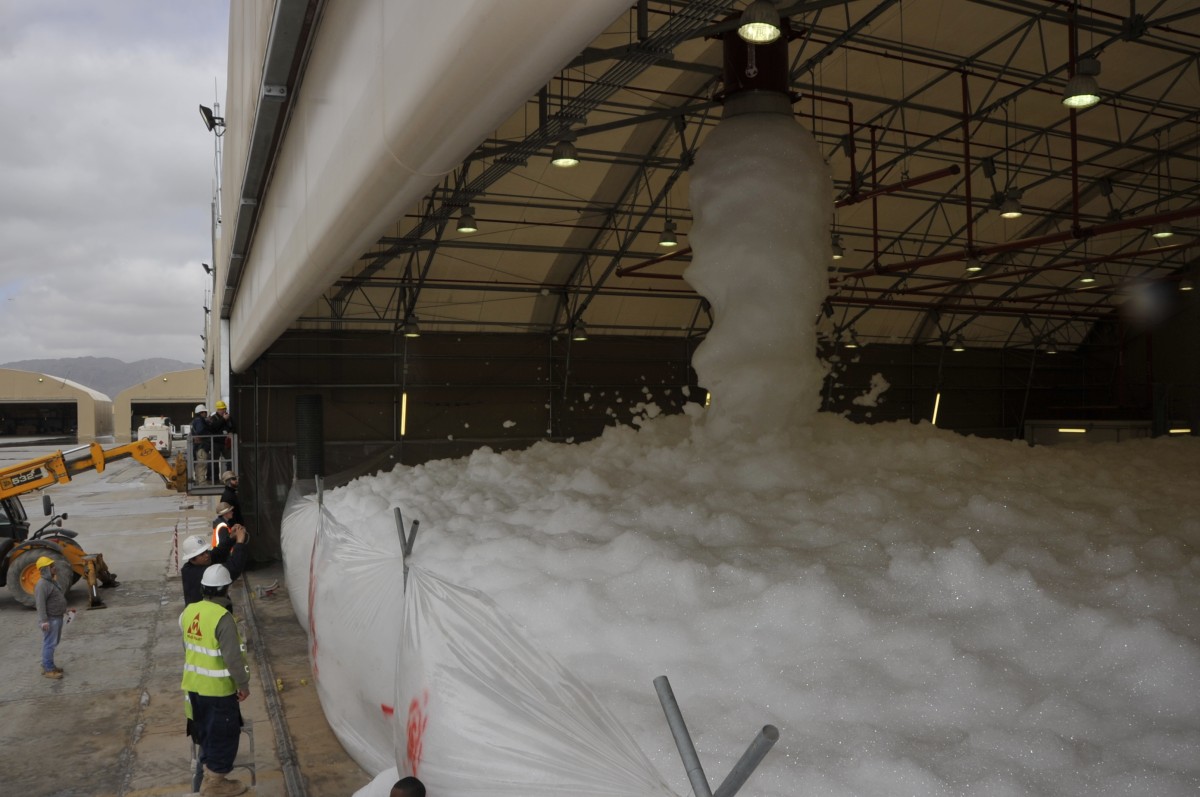
Additionally, in crowded hangars, aircraft wings and fuselages act similarly to umbrellas, shielding the foam from reaching the ground below. If a fire starts under the wing, the foam will take much longer to reach it, with a conventional water sprinkler likely being unable to reach it all.
With more organizations – such as the U.S. Department of War – moving towards fire suppression protocols that prioritize water before foam, this approach can prove to be even more dangerous, highlighting the need for a solution that can use conventional solvents in a revolutionary way.
The Solution: Minimax MXOne
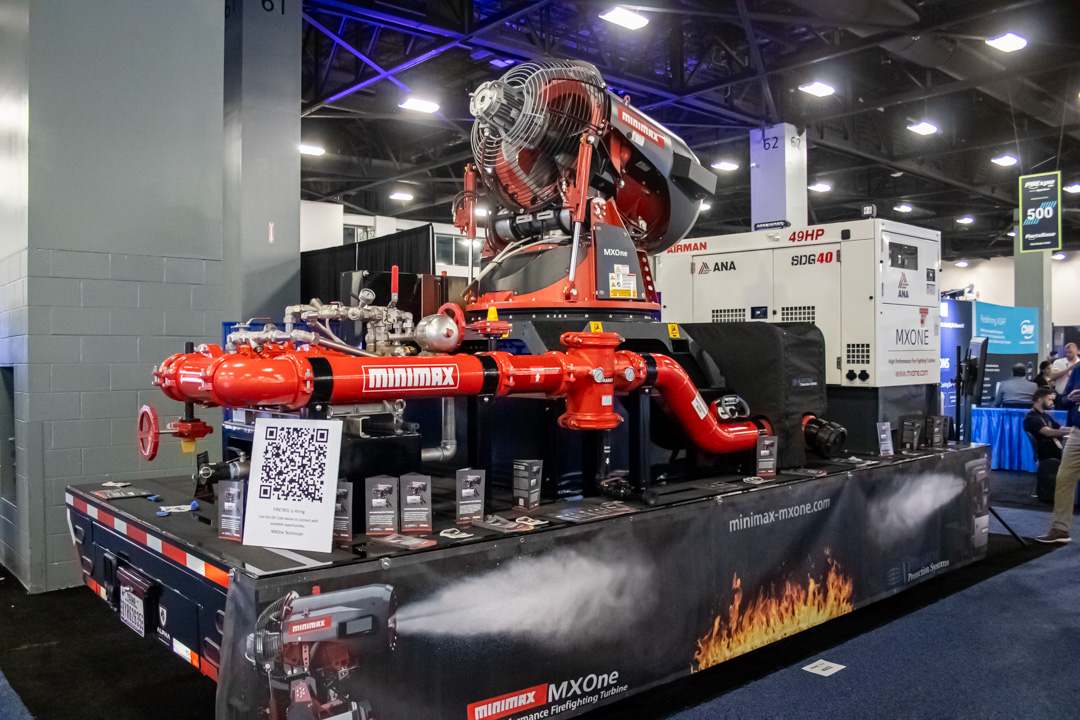
To bridge this gap, Firetrol introduced the MXOne, a high-performance turbine-aided suppression system developed by its parent company Minimax. This new product has already proven to check the boxes that old fire suppression systems were not able to, even receiving the FM Global "Gold Standard" approval last June.
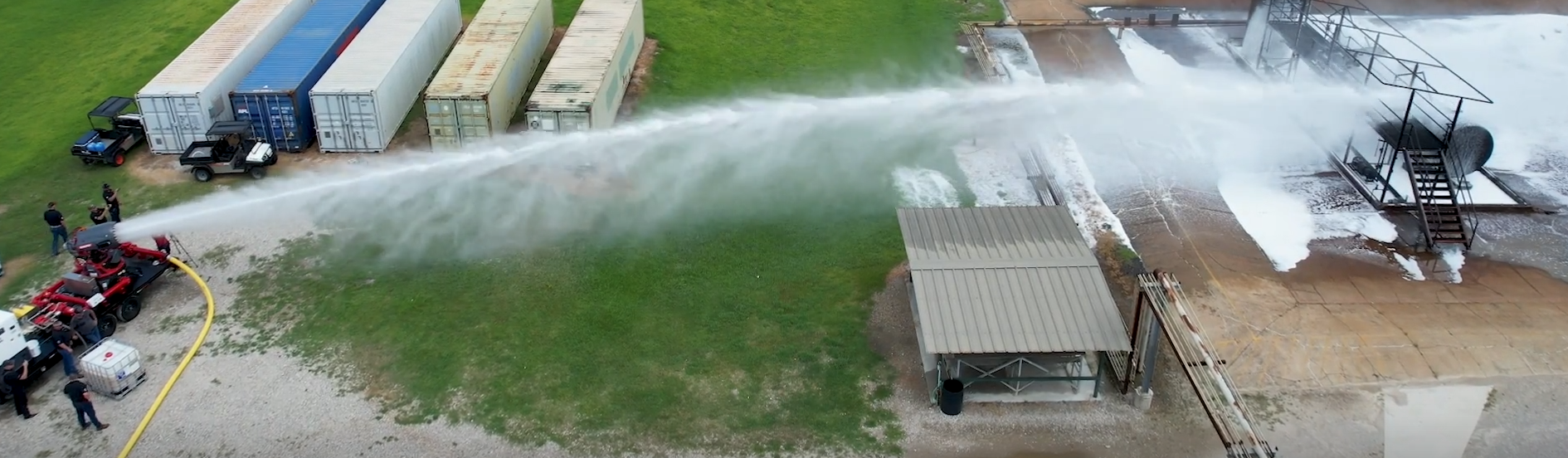
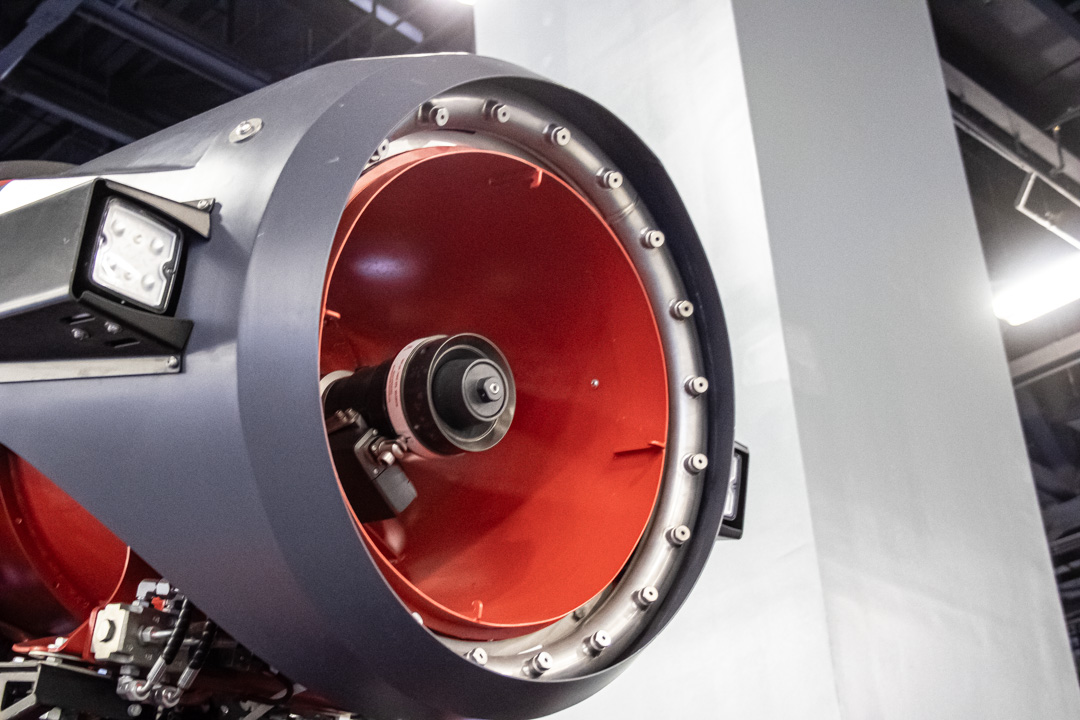
The MXOne uses a powerful turbofan that draws 18,500 cubic feet of air per minute across a main nozzle. This creates a laminar airflow, keeping water in a tight stream over a farther distance. Thus, in outdoor applications, this stream is less susceptible to wind and weather, allowing for a wide variety of MRO applications.
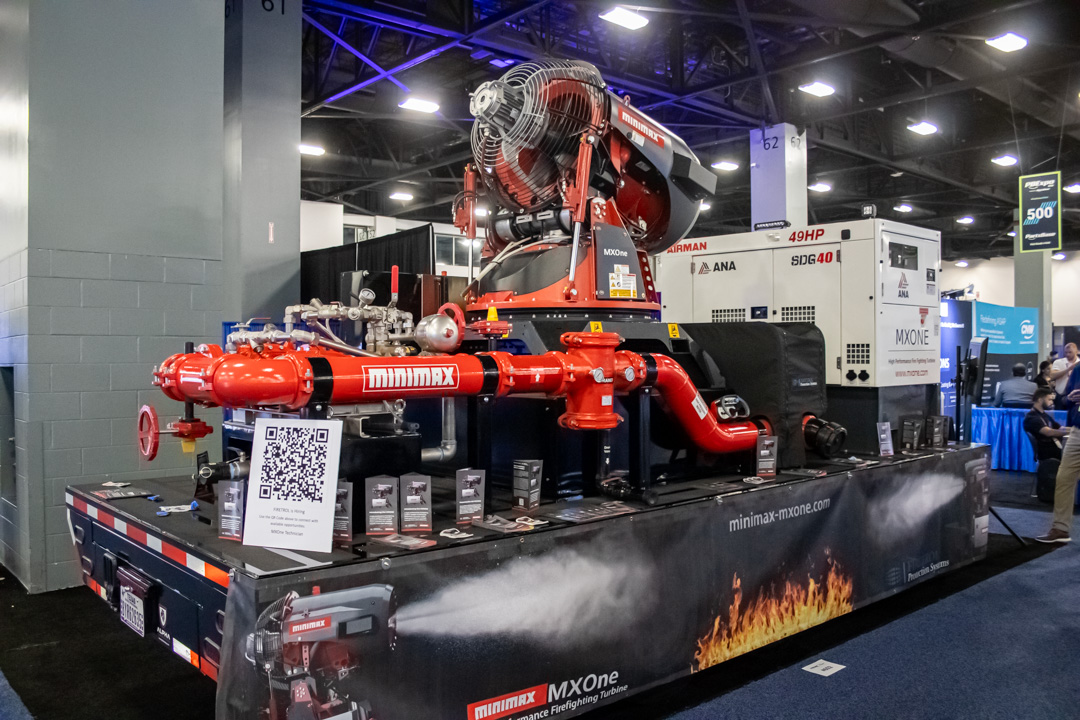
In addition to the central stream, the unit features 20 atomizing nozzles that create a fine water mist. Atomized water has the best cooling properties, allowing it to reach deep-seated fires and eliminate smoke. Besides the overall water savings of up to 73 percent, this approach also reduces the amount of contaminated runoff that is processed after the event.
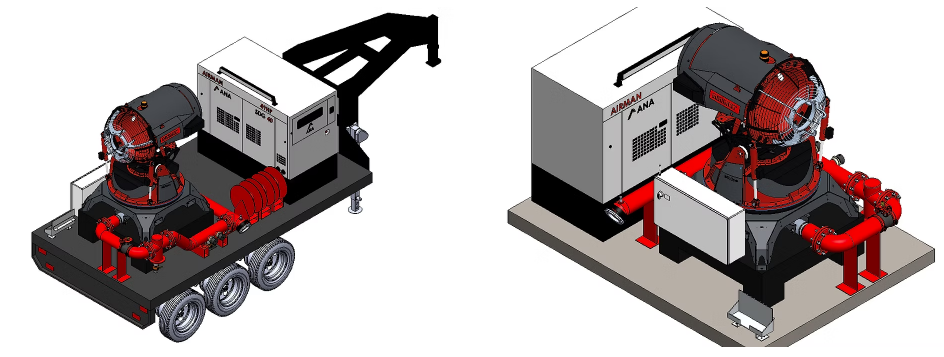
MXOne Mounting Options
According to Firetrol's website, the MXOne is designed to be versatile with different industrial and aviation use cases. It can be mounted in a stationary position, placed on a trailer, or installed on a vehicle. The unit's agility – 360 degrees of rotation and a pitch range of -19 to +43 degrees – enables it to provide effective fire suppression support, regardless of its implementation method.
It is also worth noting the system's ability to be foam-agnostic. Whether the operation uses potable water, seawater, or any type of fluorine-free foam, the MXOne system handles different fluid viscosities without the need for hardware changes.
Minimax MXOne Orglmeister Automation
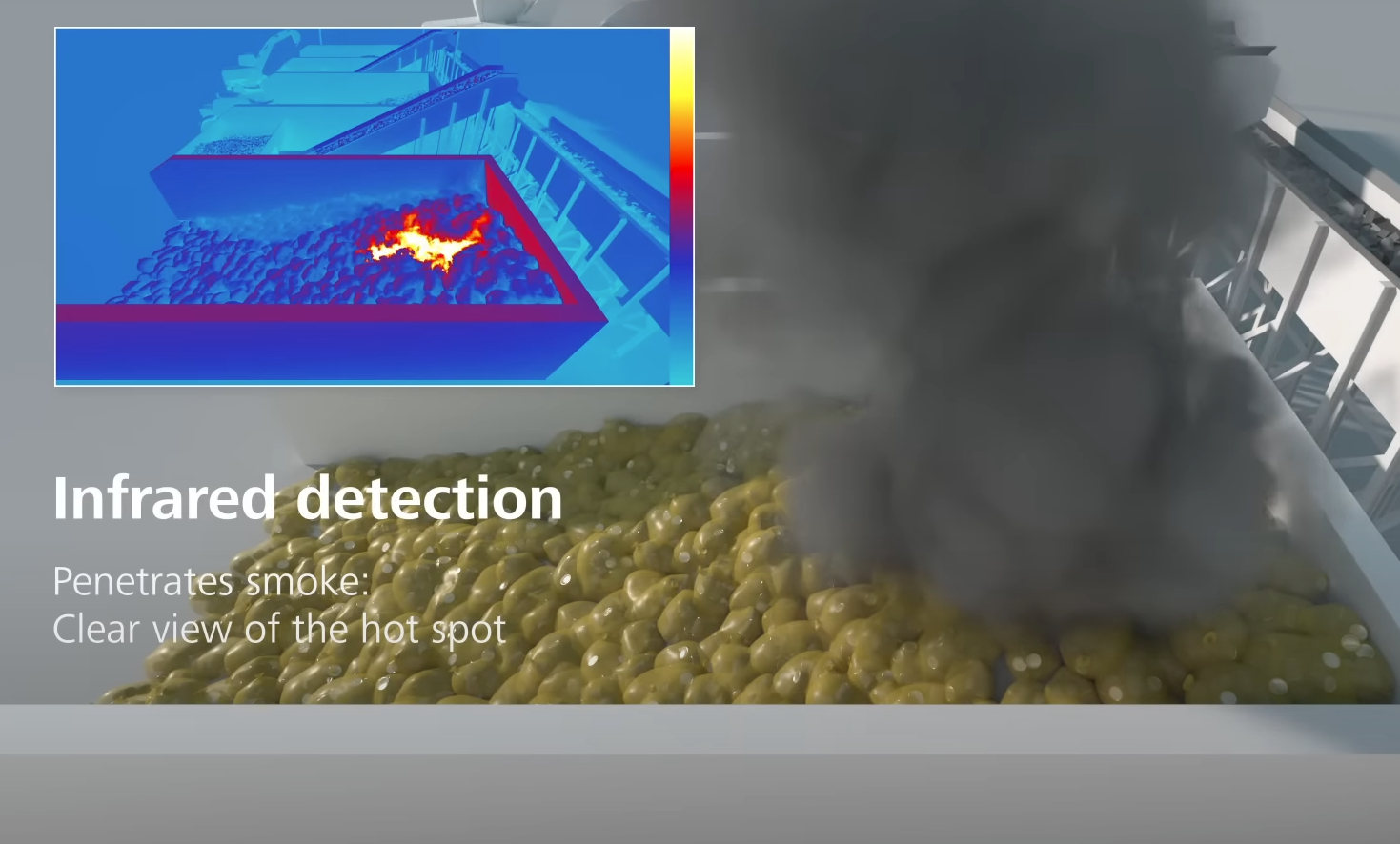
One of MXOne's most significant leaps is its Orglmeister detection system. According to Firetrol, this camera system leverages infrared detection to automatically activate MXOne when surveilled regions exceed a certain pre-programmed heat threshold. After activating, the scanner will continue to monitor the affected region until the heat signature disappears. At any time, an operator can take manual control using a radio remote control from up to 300 feet away, ensuring firefighter safety, even in the event of automation.
A common concern with this operation is electricity. What would happen in the case of energized fires? A water-based system would simply exacerbate the fire, which can prove catastrophic in a hangar.
Luckily, the MXOne's detection programming is sophisticated enough to differentiate between a fire and a "known hotspot." For example, if a military aircraft is spooling up its engines, the system can be programmed to ignore that specific signature to prevent accidental activation.
While the system is not yet smart enough to autonomously identify whether a system may be energized, its precision allows firefighters to make informed decisions about power isolation before manual application. Thus, controllers can select regions that would likely produce energized fires and prompt the system to activate alternative fire suppression techniques in those cases.
The Future of Firefighting
The industry is currently at a crossroads: some are resistant to moving away from precedent, while others are seeking to implement new technologies that revolutionize the industry altogether. Regardless, it seems that the transition to a technologically advanced fire suppression system is inevitable.
Though FM Global has not yet rated MXOne's mobile connectivity features, end-users are already beginning to implement WiFi and tablet-based remote controls of MXOne through their own secure networks.
Over the next several years, automated systems like MXOne will become commonplace: being environmentally friendly by using less water, improving their infrared detection systems, and reducing the need for human oversight through expanded connectivity options. And, most importantly, these systems will be able to fight fires without putting firefighters in harm's way.
Selma Blair Charged With Assault After Alleged Biting Incident on Delta Flight » This Week in Aviation: The 10 Stories That Mattered Most » Heathrow Cites Airline Demand for Slots as Third Runway Review Continues »

Comments (0)
Add Your Comment
TAGS
INFORMATIONAL Firetrol Minimax Fire MRO Hangars SafetyRECENTLY PUBLISHED
 Why Engine Lease Rates Are Still Climbing as Values Level Off
Spirit Airlines’ shutdown released dozens of A320-family aircraft and spare engines into the market, but engine lease rates remain high despite stabilizing values. Explore how engine availability, MRO capacity and aircraft storage are shaping the narrowbody engine leasing market.
INFORMATIONAL
READ MORE »
Why Engine Lease Rates Are Still Climbing as Values Level Off
Spirit Airlines’ shutdown released dozens of A320-family aircraft and spare engines into the market, but engine lease rates remain high despite stabilizing values. Explore how engine availability, MRO capacity and aircraft storage are shaping the narrowbody engine leasing market.
INFORMATIONAL
READ MORE »
 How the AI Chip Boom Is Squeezing Transpacific Air Cargo
AI-driven semiconductor demand and Middle East disruptions have pushed transpacific air cargo rates higher, with Taiwan-US rates reaching $7.02/kg in May 2026. Explore why shippers are paying premium prices, shifting to shorter contracts, and whether the market will cool as AI demand evolves.
INFORMATIONAL
READ MORE »
How the AI Chip Boom Is Squeezing Transpacific Air Cargo
AI-driven semiconductor demand and Middle East disruptions have pushed transpacific air cargo rates higher, with Taiwan-US rates reaching $7.02/kg in May 2026. Explore why shippers are paying premium prices, shifting to shorter contracts, and whether the market will cool as AI demand evolves.
INFORMATIONAL
READ MORE »
 Selma Blair Charged With Assault After Alleged Biting Incident on Delta Flight
Actress Selma Blair faces assault charges after allegedly biting a Delta flight attendant and kicking a police officer during a disturbance at JFK.
NEWS
READ MORE »
Selma Blair Charged With Assault After Alleged Biting Incident on Delta Flight
Actress Selma Blair faces assault charges after allegedly biting a Delta flight attendant and kicking a police officer during a disturbance at JFK.
NEWS
READ MORE »
More than just headlines.
Get unlimited ad-free access to in-depth aviation news, premium stories, and exclusive insights other sites don't cover.
- Ad-free browsing on AeroXplorer
- Unlimited access to premium and exclusive articles
- Higher photo upload limits & commissions on sales
- Free access to Jetstream Magazine on higher tiers
- Ad-free browsing
- Sell aviation photos with 60% commission
- First week free!
- Everything in Basic+
- Unlimited premium articles
- Sell aviation photos with 70% commission
- Free Digital subscription to Jetstream Magazine
- First week free!
- Everything in Basic+ and Pro
- Sell aviaiton photos with 80% commission
- Early access to exclusive stories
- Free Digital+Print subscription to Jetstream Magazine