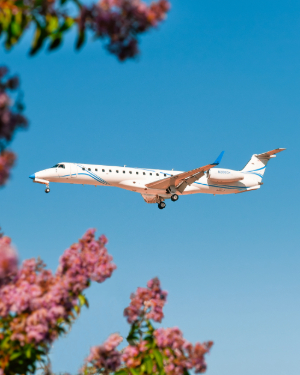


What began as a routine Monday afternoon domestic flight on April 13 ended with an unscheduled touchdown in the Arizona desert, a 3.5-hour delay, a maintenance inspection on the ground, and a Federal Aviation Administration inquiry. The aircraft in question was an American Airlines Airbus A321neo operating as flight AA1429, and the trigger was something passengers would rarely give a second thought to: an oven in the galley.

What Happened on Flight AA1429
Passengers onboard an American Airlines Airbus A321 faced an unexpected delay after their flight from Phoenix to Miami was diverted due to concerns over a potential onboard fire. Operating as flight 1429, the aircraft was forced to land at Tucson International Airport shortly after departure. The diversion followed a reported issue with an onboard oven, prompting the crew to act out of caution.
The aircraft is an Airbus A321-253NX (the A321neo variant) and the flight was scheduled to depart Phoenix Sky Harbor International Airport at 12:30 PM MST, bound for Miami International Airport.
The FAA confirmed the sequence of events, stating that American Airlines Flight 1429 landed safely at Tucson International Airport in Arizona around 1:30 PM local time on Monday, April 13, after the crew reported an oven issue.
American Airlines issued a formal statement, saying:
"Shortly after departure, crew members on American Airlines flight 1429 with service from Phoenix to Miami reported an issue with an onboard oven. Out of an abundance of caution, the flight diverted to Tucson."
The airline added in its statement to Newsweek:
“The aircraft landed safely and without incident. We apologize to our customers for the inconvenience and thank our team members for their professionalism.”
No Fire Found, But the Rules Required Action
Following the landing, maintenance crews inspected the aircraft. American Airlines said no evidence of a fire was found during the inspection and did not specify what prompted the initial report.
The airport confirmed that the incident was resolved quickly and that passengers deplaned normally via the jet bridge, with no impact on normal operations at Tucson International Airport.
The Airbus A321neo took off again for Miami at 3:17 PM MST. The aircraft continued to Miami, landing shortly before 10 PM. The total delay incurred by passengers amounted to approximately three and a half hours.

Analysis: How Spirit Airlines Changed Airline Pricing, then Paid the Price
The FAA Steps In
The FAA said the aircraft diverted "out of an abundance of caution" shortly after departing Phoenix. The plane landed safely in Tucson, and no injuries were reported.
The FAA has opened an investigation into the oven fire incident to determine the cause and any necessary safety improvements. This incident comes amid heightened attention on aviation safety. Federal regulators and airlines have emphasised that diversions like Monday's are part of established safety procedures designed to minimise risk, and aviation officials note that precautionary landings reflect the industry's emphasis on safety rather than an indication of imminent danger.
Why a Galley Oven Demands a Diversion
To many passengers, diverting an airliner because of a kitchen appliance may seem disproportionate. Aviation safety protocols, however, make no such distinction. Galley ovens are standard equipment used to heat meals during flights, and aviation safety protocols require crews to report any unusual odours, smoke, or electrical issues involving onboard equipment. Even when no fire is ultimately found, such reports can result in diversions as a precautionary measure.
Galley systems, including ovens and coffee makers, are among the most common sources of noncritical technical issues onboard. These components rely on electrical systems that can occasionally malfunction, triggering warnings or irregular behaviour. Although such incidents rarely escalate, they can mimic the early stages of more serious problems. As a result, flight crews are trained to respond conservatively and decisively.
The reasoning is well-grounded in aviation regulation. Fire is among the most dangerous scenarios a flight crew can face at altitude because the ability to evacuate is impossible until the aircraft is on the ground. Any indication of heat, smoke, or an electrical fault near galley equipment activates a chain of mandatory responses, regardless of whether a visible flame is present.

A Pattern of Galley-Related Diversions
The AA1429 diversion is far from an isolated event. Issues involving onboard kitchen equipment have led to similar diversions in recent years, with flights operated by multiple airlines reporting smoke or burning smells traced to ovens, often resulting in precautionary landings, including a Delta Air Lines flight from Lagos to Atlanta operated by an Airbus A330, where burning food debris obstructed certain oven components, causing a fire and a diversion to the nearest airport in Ghana. Another incident involved a United Airlines Boeing 737 on a domestic flight from Key West to Newark, when the oven started emitting smoke.
The American Airlines fleet is no stranger to galley-related issues. An earlier American Airlines flight from Austin to Charlotte was also diverted to Houston after crew members reported a mechanical issue involving a fire inside an oven in the galley. In that instance, as in the AA1429 case, the airline credited crew professionalism and confirmed no injuries.
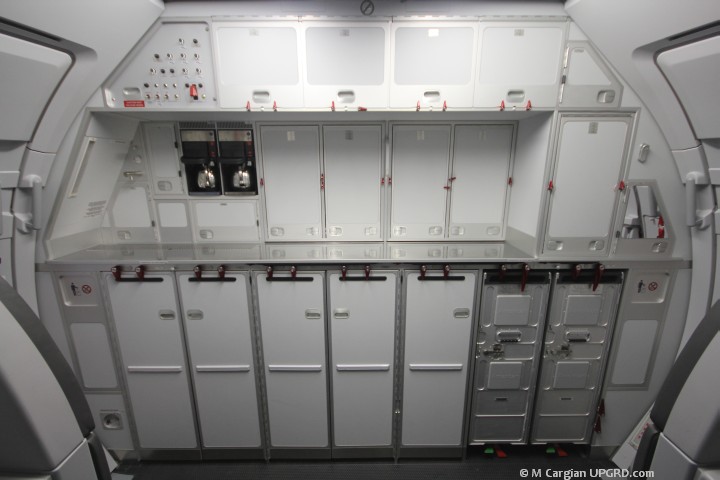
Photo: UPGRD.com/ M Cargian
A Reminder of What Aviation Safety Looks Like in Practice
The handling of AA1429 reflects precisely the kind of operational discipline that regulators and airlines have worked to embed across the industry. No corners were cut, no risks were taken, and crucially, no one was hurt. Emergency response teams were placed on standby as the aircraft touched down, and the aircraft was later cleared for further inspection before continuing operations.
This event highlights the layered safety approach that defines modern airline operations. Even minor technical irregularities, especially those involving heat or electrical systems, are treated seriously by flight crews. For passengers, this serves as a reminder that diversions can occur even when risks are low.
Looking Ahead
The FAA investigation into AA1429 will focus on determining what caused the oven malfunction and whether any systemic issue with galley equipment warrants a broader airworthiness directive or operational guidance to carriers. While the outcome of Monday's incident was entirely safe, the opening of a federal inquiry signals that regulators are not treating this as trivial, particularly against a backdrop of intensifying scrutiny of commercial aviation safety practices across the United States.
For American Airlines, whose crews acted swiftly and by the book, the incident offers little cause for internal criticism but significant cause for continued vigilance. The A321neo is one of the most widely operated narrowbody aircraft in the world, and its galley systems will continue to receive operational stress on long domestic sectors like Phoenix to Miami daily. The lesson from Tucson is clear: when in doubt, land.
Austrian Airlines Flight Diverts to Sofia Under Fighter Escort After Bomb Threat » Rolls-Royce Launches Serial Production of Pearl 10X Engine for Dassault's Falcon 10X » American Airlines Boeing 787 Makes Emergency Landing at O'Hare After Brake Issue, One Hospitalized »

Comments (0)
Add Your Comment
TAGS
NEWS American Airlines Airbus A321 Phoenix Sky Harbor Miami International Airport FAA Flight 1429 Flight Safety Fire Emergency Landing Aviation SafetyRECENTLY PUBLISHED
 American Airlines Boeing 787 Makes Emergency Landing at O'Hare After Brake Issue, One Hospitalized
An American Airlines Boeing 787 makes an emergency landing to Chicago O'Hare after a brake problem.
NEWS
READ MORE »
American Airlines Boeing 787 Makes Emergency Landing at O'Hare After Brake Issue, One Hospitalized
An American Airlines Boeing 787 makes an emergency landing to Chicago O'Hare after a brake problem.
NEWS
READ MORE »
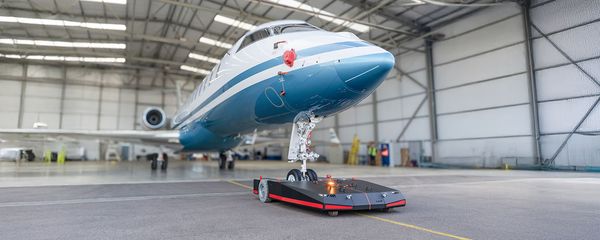 Why Aircraft Towing May Be One of the Last Frontiers of Autonomous Ground Operations
Ground support equipment has advanced steadily toward autonomy: baggage carts and pushback tractors, among others, are being designed to operate with minimal human intervention. Yet the aircraft itself – the single most valuable and structurally sensitive asset on the ramp – is still almost universally towed under direct human control.
STORIES
READ MORE »
Why Aircraft Towing May Be One of the Last Frontiers of Autonomous Ground Operations
Ground support equipment has advanced steadily toward autonomy: baggage carts and pushback tractors, among others, are being designed to operate with minimal human intervention. Yet the aircraft itself – the single most valuable and structurally sensitive asset on the ramp – is still almost universally towed under direct human control.
STORIES
READ MORE »
 British Airways Finishes Starlink Wi-Fi Rollout Across Its A350 Fleet
British Airways has installed SpaceX's Starlink Wi-Fi on every Airbus A350 in its fleet, offering passengers free high-speed internet on long-haul flights.
NEWS
READ MORE »
British Airways Finishes Starlink Wi-Fi Rollout Across Its A350 Fleet
British Airways has installed SpaceX's Starlink Wi-Fi on every Airbus A350 in its fleet, offering passengers free high-speed internet on long-haul flights.
NEWS
READ MORE »
More than just headlines.
Get unlimited ad-free access to in-depth aviation news, premium stories, and exclusive insights other sites don't cover.
- Ad-free browsing on AeroXplorer
- Unlimited access to premium and exclusive articles
- Higher photo upload limits & commissions on sales
- Free access to Jetstream Magazine on higher tiers
- Ad-free browsing
- Sell aviation photos with 60% commission
- First week free!
- Everything in Basic+
- Unlimited premium articles
- Sell aviation photos with 70% commission
- Free Digital subscription to Jetstream Magazine
- First week free!
- Everything in Basic+ and Pro
- Sell aviaiton photos with 80% commission
- Early access to exclusive stories
- Free Digital+Print subscription to Jetstream Magazine