

Boeing and Philippine Airlines announced a commitment for up to 20 787 Dreamliner jets, marking one of the most significant fleet expansion agreements for the Southeast Asian flag carrier in recent years. The deal strengthens Philippine Airlines' long-haul capabilities and reinforces Boeing's position in the widebody market across the Asia Pacific region.
The agreement covers a firm order for 10 787-9 aircraft along with options for 10 additional Dreamliners, according to information released by Boeing. The commitment expands Philippine Airlines' existing Dreamliner fleet, which the carrier already operates on routes connecting Manila with destinations across North America, Europe, and Australia.

A Strategic Fleet Decision
Philippine Airlines, the oldest commercial airline in Asia still operating under its original name, has relied on the 787 platform to modernize its long-haul network. The carrier currently flies the Dreamliner on some of its most demanding routes, including nonstop services between Manila and cities in the continental United States.
The new commitment positions the airline to retire older widebody aircraft and add capacity as international travel demand continues to recover across the region. Passenger traffic in the Asia Pacific market has climbed steadily since 2023, with carriers ordering new aircraft at a pace not seen in years.

How AI Quietly Became the Backbone of Today’s Aviation Industry
"This investment manifests our confidence in the future of Philippine Airlines and the continued growth of air travel. The Boeing 787-10 will strengthen our medium and long-haul fleet, allowing us to provide an even better travel experience for our customers while improving operational efficiency and supporting our long-term sustainability goals," said Lucio C. Tan III, president and chief operating officer of PAL Holdings, Inc. "As Asia's first and longest serving airline, we proudly celebrated our 85th anniversary earlier this year. An equally meaningful milestone that we celebrate this year is 80 years of partnership between Philippine Airlines and Boeing."
Boeing's Widebody Momentum
For Boeing, the commitment adds to a growing backlog of Dreamliner orders that has accelerated through 2025 and into 2026. The manufacturer has worked to increase 787 production rates at its facility in North Charleston, South Carolina, where all Dreamliners are now assembled.

"Philippine Airlines' selection of the 787 Dreamliner marks an important step forward in our partnership, one that spans 80 years," said Stephanie Pope, president and CEO of Boeing Commercial Airplanes. “We're grateful for PAL's trust in Boeing, and our team looks forward to delivering advanced-technology airplanes that deepen connections across the Philippines, Asia and beyond.”
The 787-9 variant, which forms the core of the Philippine Airlines commitment, seats between 240 and 290 passengers in typical two class configurations. The aircraft offers a range of approximately 7,565 nautical miles, allowing operators to link virtually any two major cities on the globe with a single stop or nonstop service.
Regional Competition and Route Planning
The order arrives as Philippine Airlines competes against a growing roster of full service and low cost carriers across Southeast Asia. Regional rivals including Singapore Airlines, Thai Airways, and Vietnam Airlines have all expanded their widebody fleets in recent years, with each carrier positioning itself to capture premium traffic between Asia and long-haul markets.
Philippine Airlines plans to deploy the new Dreamliners on both existing and future routes, according to statements accompanying the announcement. The carrier has signaled interest in expanding service to additional destinations in North America and potentially resuming or increasing frequencies to European gateways.

The Philippines represents one of the fastest growing aviation markets in the region, driven by a large overseas Filipino worker population and rising outbound leisure travel. These traffic patterns have historically supported long-haul point to point service, a segment where the 787 excels compared to older four engine aircraft.
At list prices, the commitment carries a value in the billions of dollars, though airlines typically negotiate significant discounts on large orders. Boeing does not disclose specific transaction terms, and Philippine Airlines has not published detailed financial figures related to the agreement.
Delivery timelines were not fully specified in the announcement, though Boeing's current production backlog suggests aircraft would arrive over multiple years. The manufacturer has faced supply chain challenges affecting delivery schedules across its commercial programs, and analysts will watch closely to see how the Philippine Airlines aircraft fit into the production sequence.
Philippine Airlines emerged from Chapter 11 bankruptcy protection in late 2021 after restructuring its finances during the pandemic. The carrier has since returned to profitability and has moved forward with fleet renewal plans that were postponed during the industry downturn.
Federal Grand Jury Indicts Passenger Duct-Taped to Seat on American Airlines Flight » FAA Nears Final Approval of Boeing 737 MAX 10 as Certification Review Concludes » Southwest Overhauls Rapid Rewards and How it Affects You »

Comments (0)
Add Your Comment
TAGS
NEWS Philippine Airlines Boeing 787 Boeing 787-9 Aircraft Order Farnborough Airshow BoeingRECENTLY PUBLISHED
 This Week in Aviation: The 10 Stories That Mattered Most
From major airline developments to aircraft updates and industry shifts, this weekly recap highlights the ten most-read aviation stories from the week of October 11.
INFORMATIONAL
READ MORE »
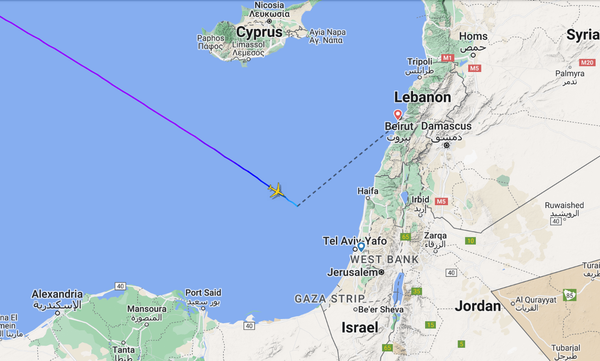 GPS Jamming Is Now a Daily Airline Problem. Here Is How Bad It Has Gotten
GPS jamming and spoofing are disrupting airline navigation across Europe, the Middle East and South Asia. Explore how widespread GNSS interference threatens flight safety, affects airline operations, and what pilots and regulators are doing to manage the growing risk.
INFORMATIONAL
READ MORE »
 Who Is Accountable When an AI Air Traffic Tool Gets It Wrong?
Who is liable when an AI air traffic control tool gets it wrong? The FAA’s SMART system faces scrutiny over safety testing, controller oversight, and legal accountability as lawmakers question its use in U.S. airspace.
INFORMATIONAL
READ MORE »
More than just headlines.
Get unlimited ad-free access to in-depth aviation news, premium stories, and exclusive insights other sites don't cover.
- Ad-free browsing on AeroXplorer
- Unlimited access to premium and exclusive articles
- Higher photo upload limits & commissions on sales
- Free access to Jetstream Magazine on higher tiers
- Ad-free browsing
- Sell aviation photos with 60% commission
- First week free!
- Everything in Basic+
- Unlimited premium articles
- Sell aviation photos with 70% commission
- Free Digital subscription to Jetstream Magazine
- First week free!
- Everything in Basic+ and Pro
- Sell aviaiton photos with 80% commission
- Early access to exclusive stories
- Free Digital+Print subscription to Jetstream Magazine