


Artificial intelligence is commonly associated with a glaring paradox: it helps with streamlining work but simultaneously threatens to replace many existing jobs. The aviation industry continues to grapple with this reality.
While many procedures within the industry may benefit from streamlined processes, AI implementation is not as straightforward here as it may be in other industries. Think pilots, air traffic controllers, and maintenance, repair, and overhaul (MRO) work.
In aviation, there is very little room for error. As such, when it comes to keeping aircraft airworthy, the procedures that are carried out must be rigid, effective, and safe. One company is at the forefront of addressing this, heavily experimenting with the benefits – and dangers – of AI in MRO.
FL Technics was founded in 2005 in Vilnius, Lithuania. Initially a fledgling provider serving mostly regional clients, it has since grown into a global MRO leader with over 4,000 employees, facilities spanning multiple continents, and annual revenue exceeding $600 million USD.
FL Technics CEO Žilvinas Lapinskas joined AeroXplorer to provide insight into the world of MRO, its indispensability in aviation, and how he envisions the field evolving amid AI.

Why MRO Is Different From Other AI Use Cases
Aircraft maintenance is governed by strict regulations. Every action must be documented, traceable, and justifiable in the event of an audit. Unlike many industries where AI can be used without supervision, aviation has no tolerance for taking chances.
As Lapinskas says, “Mistakes in aviation maintenance cost a lot. A lot. And there is no place for mistakes, simply speaking.”

Even a routine aircraft tire replacement is a highly regulated MRO procedure involving far more than simply removing and replacing a wheel.

The Cockpit’s Next Revolution: When the Co-Pilot Is a Computer
Before even removing the tire, maintenance teams must first consult manufacturer manuals, regulatory requirements, and maintenance records. This can take hours and be even more difficult if manuals are poorly organized or difficult to find.

After replacing the tire, the team must then formally sign documentation that confirms the aircraft meets all safety and regulatory requirements.
A substantial amount of human oversight is required throughout these processes, an area where, as Lapinskas noted, any small issue can trigger a catastrophic result. Thus, it's not so simple as to introduce a ChatGPT wrapper to complete these tasks on behalf of engineers; a more structured, gradual approach must be put in place.
AI as a Documentation and Decision-Support Tool
Instead of completely taking over maintenance technicians' tasks, Lapinskas sees AI as a tool to streamline operations. Currently, the most promising applications of AI in MRO include areas like document management, where AI tools help engineers quickly access relevant manuals and procedures.
FL Technics is bullish on its AI implementation: “We have a dedicated team that is already working on where AI can optimize a wide range of daily tasks and processes. In areas such as engineering support, data analysis, and maintenance planning, advanced technologies can help process large volumes of technical information faster while remaining fully compliant with strict regulatory requirements,” Lapinskas shared.
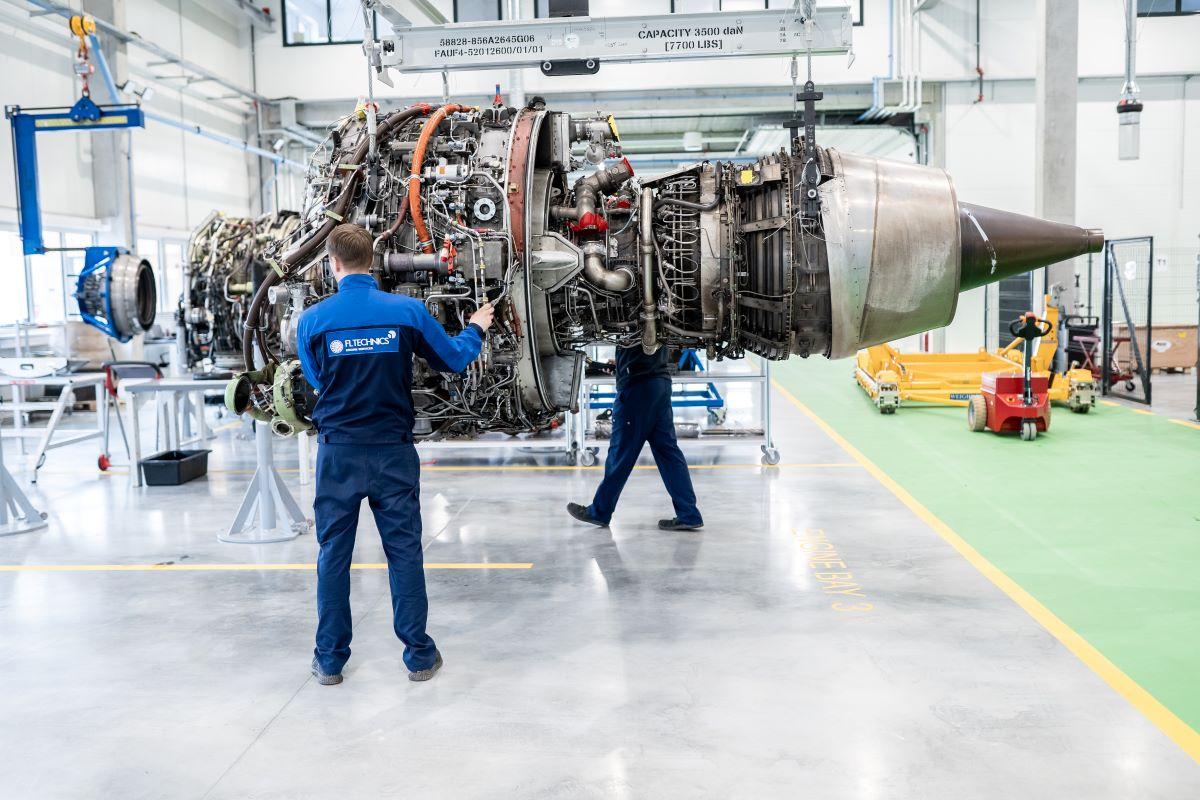
Another area of particular interest is AI-assisted troubleshooting, where systems can guide engineers through diagnostic processes by suggesting possible causes and checks. Currently, maintenance technicians consult resources like manuals and maintenance history records when faced with a scenario involving troubleshooting. They then follow step-by-step diagnostic procedures outlined in approved documentation to address the issue.
All in all, this process is time-consuming. With AI-assisted systems, maintenance histories and related documentation could be rapidly analyzed, thereby eliminating the time spent by personnel finding the relevant records. AI would assist in helping engineers identify likely causes faster and also suggest potential troubleshooting steps.

Alaska Goes Global: How Hawaiian Airlines Changed the Carrier’s Future
Regardless of how AI may facilitate maintenance procedures, the main safety-critical work is still done by humans. The technician still diagnoses the issue, performs the work, and signs off the aircraft, but AI can reduce the time spent searching through documentation or narrowing down possible causes.
Humans Still Own the Decision
However, with tight regulations, there is only so much firms can do while remaining within the bounds of certification. Most importantly, the final decision – be it repair, inspection, or modification – must ultimately be verified and signed off by a certified human engineer. Accountability remains firmly on humans, as in aviation, even one small error can bring with it a disastrous price to pay.
Lapinskas put this plainly, “Because of the very strict regulation of aircraft maintenance, you cannot implement these AI tools easily […] AI can only help with providing documentation and information. But at the end of the day, the human makes the final decision to do this or to do that.”
However, this does not mean AI lacks value. On the contrary, FL Technics is actively exploring ways to integrate AI into its operations, albeit in a supportive capacity.

FL Technics’ approach to AI adoption has been deliberately decentralized. Instead of relying solely on top-down initiatives, the company encourages employees at all levels to experiment with AI tools and identify potential use cases.
“We are talking to our people. We are encouraging them to use AI where they can,” he says.
FL Technics regularly evaluates new technologies by inviting vendors to demonstrate their solutions in real operational environments, whether it be in hangars, line maintenance stations, or back-office settings.
This way, the team can observe and evaluate how AI can best support their business and procedures. While AI will not take the place of human engineers, the company eagerly seeks out the tool as a practical solution to support workflows.
A 777 on Four Wheels? Inside One Superfan’s Mission to Celebrate His Favorite Airline
AI as an Amplifier, Not a Replacement
Looking back on his 12-year career, Mr. Lapinskas expresses gratitude for the journey he’s taken: “When people told me I would stay in aviation forever, I was not sure. Now I completely agree.”
The reasons are both practical and aspirational. Aviation is inherently global, offering opportunities to work across cultures and regions. With this, as Lapinskas puts it, “There’s always something new, and always something to learn.” At the same time, the industry is defined by constant evolution, making each new challenge another opportunity to adapt and grow.

And with the global MRO market valued at over $120 billion, the potential for growth remains substantial despite the growing threat of artificial intelligence. As Lapinskas emphasizes, FL Technics will leverage the tool alongside growing its own human expertise – not in place of it.
The company will use AI to further strengthen its capabilities and continue innovating to provide practical and effective solutions to its many worldwide customers. FL Technics remains hungry for growth, and as long as this hunger remains insatiable, Lapinskas could not have phrased it better: “The sky is the limit."
Qantas Grounds Plane After Passengers Report Bedbug Bites on Flight » Who Is Accountable When an AI Air Traffic Tool Gets It Wrong? » Why the A-10 Warthog's Nose Gear Is Offset to the Right »

Comments (0)
Add Your Comment
TAGS
STORIES FL Technics MRO Interview CEO Maintenance AI Artificial IntelligenceRECENTLY PUBLISHED
 This Week in Aviation: The 10 Stories That Mattered Most
From major airline developments to aircraft updates and industry shifts, this weekly recap highlights the ten most-read aviation stories from the week of October 11.
INFORMATIONAL
READ MORE »
This Week in Aviation: The 10 Stories That Mattered Most
From major airline developments to aircraft updates and industry shifts, this weekly recap highlights the ten most-read aviation stories from the week of October 11.
INFORMATIONAL
READ MORE »
 GPS Jamming Is Now a Daily Airline Problem. Here Is How Bad It Has Gotten
GPS jamming and spoofing are disrupting airline navigation across Europe, the Middle East and South Asia. Explore how widespread GNSS interference threatens flight safety, affects airline operations, and what pilots and regulators are doing to manage the growing risk.
INFORMATIONAL
READ MORE »
GPS Jamming Is Now a Daily Airline Problem. Here Is How Bad It Has Gotten
GPS jamming and spoofing are disrupting airline navigation across Europe, the Middle East and South Asia. Explore how widespread GNSS interference threatens flight safety, affects airline operations, and what pilots and regulators are doing to manage the growing risk.
INFORMATIONAL
READ MORE »
 Who Is Accountable When an AI Air Traffic Tool Gets It Wrong?
Who is liable when an AI air traffic control tool gets it wrong? The FAA’s SMART system faces scrutiny over safety testing, controller oversight, and legal accountability as lawmakers question its use in U.S. airspace.
INFORMATIONAL
READ MORE »
Who Is Accountable When an AI Air Traffic Tool Gets It Wrong?
Who is liable when an AI air traffic control tool gets it wrong? The FAA’s SMART system faces scrutiny over safety testing, controller oversight, and legal accountability as lawmakers question its use in U.S. airspace.
INFORMATIONAL
READ MORE »
More than just headlines.
Get unlimited ad-free access to in-depth aviation news, premium stories, and exclusive insights other sites don't cover.
- Ad-free browsing on AeroXplorer
- Unlimited access to premium and exclusive articles
- Higher photo upload limits & commissions on sales
- Free access to Jetstream Magazine on higher tiers
- Ad-free browsing
- Sell aviation photos with 60% commission
- First week free!
- Everything in Basic+
- Unlimited premium articles
- Sell aviation photos with 70% commission
- Free Digital subscription to Jetstream Magazine
- First week free!
- Everything in Basic+ and Pro
- Sell aviaiton photos with 80% commission
- Early access to exclusive stories
- Free Digital+Print subscription to Jetstream Magazine