
Airbus workers across Spain walked off the job this week, launching a nationwide strike that could disrupt aircraft production and delivery schedules at one of Europe's largest aerospace manufacturers.
The industrial action, called by major Spanish unions, targets working conditions, pay structures, and what employees describe as stalled negotiations with company management. Workers at Airbus plants throughout the country joined the walkout, affecting operations at facilities that produce components for commercial jets, military aircraft, and space systems.

What Sparked the Walkout
Union representatives point to months of failed talks with Airbus over a new collective agreement. The unions want salary improvements, better job stability, and stronger protections for workers as the company pushes to ramp up production.
Airbus has been racing to meet a large backlog of orders, particularly for its A320 family of single-aisle jets. That pressure has trickled down to the shop floor, where workers say staffing levels and workloads have become sticking points in the dispute.
The strike affects Airbus operations across multiple Spanish sites, including plants that manufacture parts for the A320, A330, and A350 programs, along with facilities tied to the company's defense and space division.

Only Way Out: Private Aviation in a Region at War
Risk to Aircraft Deliveries
The timing raises concerns for Airbus, which has committed to ambitious delivery targets for 2026. The manufacturer aims to hand over roughly 820 commercial aircraft this year, a goal that requires steady output from its supply chain and assembly sites.
Spain plays a significant role in that network. The country hosts key production for the A320 family's horizontal tail planes and other structural components, along with final assembly work for certain military platforms. Any prolonged disruption in Spanish operations could ripple through Airbus facilities in France, Germany, and beyond.
Industry analysts have warned that the aerospace giant already faces tight margins in meeting its production ramp-up plans. Supply chain constraints, engine shortages from suppliers, and labor issues have all weighed on delivery schedules in recent years.
Union Demands
The main Spanish unions organizing the strike want Airbus to address several issues. These include wage increases that keep pace with inflation, guarantees on job security as the company restructures parts of its business, and clearer commitments on hiring practices at Spanish sites.
Workers have also raised concerns about how the company distributes workloads and manages shift patterns at plants operating near full capacity. Union leaders argue that current conditions place too much strain on employees who have delivered strong results for the company during a period of growing demand.
The unions have signaled that further industrial action could follow if talks with management fail to produce results. That prospect leaves Airbus facing a potentially extended labor dispute at a critical moment for its commercial aircraft business.
Airbus Response
Airbus acknowledged the strike and said it remains open to continuing negotiations with worker representatives. The company said it would work to limit any impact on customers and production timelines while talks continue.
The manufacturer has emphasized its commitment to Spanish operations, which employ thousands of workers across the country. Airbus has invested heavily in its Spanish facilities in recent years, particularly as it expands production of newer aircraft variants.
Broader Industry Context
The Spanish strike follows a period of labor tension across the European aerospace sector. Workers at various plants have pushed back against production demands as manufacturers race to clear order backlogs built up during the pandemic recovery.
Airbus competitor Boeing has faced its own labor challenges in the United States, including a lengthy machinist strike that hit its commercial aircraft output. Those disruptions have highlighted how dependent modern aerospace manufacturing remains on skilled labor and stable workforce relations.
For Airbus, maintaining production momentum matters not just for meeting customer deliveries but also for its financial performance. The company generates the bulk of its revenue from commercial aircraft sales, and delays can push payments and profits into later quarters.
What Comes Next
Talks between Airbus and Spanish unions are expected to continue in the coming days, though neither side has signaled a clear path to resolution. The unions have kept open the option of additional strike days if progress stalls.
Customers watching the situation include major airlines with pending orders for A320neo and A350 aircraft. Any significant delays could force carriers to adjust fleet plans and schedules, particularly those planning to introduce new capacity ahead of peak travel periods.
Airbus has weathered labor disputes before without major long-term damage to its production goals. Still, the current strike arrives at a moment when the company has little room for setbacks as it works to hit its delivery targets and maintain its lead over Boeing in the commercial aviation market.
British Airways Flight to Chicago Forces Emergency Descent After Cabin Pressure Failure » Delta Passenger Arrested After Allegedly Stealing Airport Tug » Frontier Airlines Flight Attendant Restrains Passenger Who Lunged for Cabin Door During Atlanta Jet Bridge Delay »

Comments (0)
Add Your Comment
TAGS
NEWS Airbus Strike Employees Labor union A320 A330 A350RECENTLY PUBLISHED
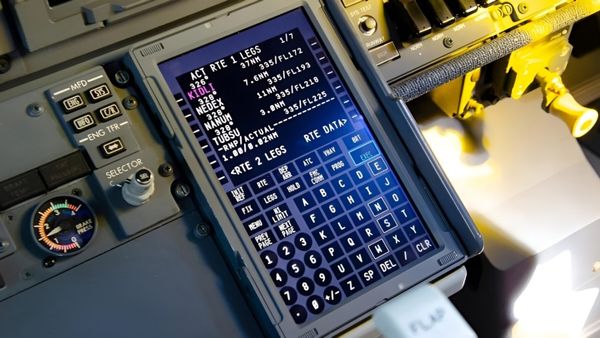 Boeing's Touchscreen Flight Controls for 737 Draw Sharp Criticism from Pilots
Boeing's plan to introduce Touchscreen Control Display Units on the 737 has sparked backlash from pilots who warn of safety and usability concerns.
NEWS
READ MORE »
Boeing's Touchscreen Flight Controls for 737 Draw Sharp Criticism from Pilots
Boeing's plan to introduce Touchscreen Control Display Units on the 737 has sparked backlash from pilots who warn of safety and usability concerns.
NEWS
READ MORE »
 Southwest Airlines Blames Brief System Outage for Boarding Delays and Checked Bag Disruptions
Southwest Airlines confirms a brief technology outage disrupted boarding and checked bag operations, forcing gate agents to process travelers manually.
NEWS
READ MORE »
Southwest Airlines Blames Brief System Outage for Boarding Delays and Checked Bag Disruptions
Southwest Airlines confirms a brief technology outage disrupted boarding and checked bag operations, forcing gate agents to process travelers manually.
NEWS
READ MORE »
 Southwest Airlines Considers Boeing 787 Order for Long-Haul International Expansion
Southwest Airlines is evaluating the Boeing 787 Dreamliner as it explores a shift into long-haul international flying, sources tell Reuters.
NEWS
READ MORE »
Southwest Airlines Considers Boeing 787 Order for Long-Haul International Expansion
Southwest Airlines is evaluating the Boeing 787 Dreamliner as it explores a shift into long-haul international flying, sources tell Reuters.
NEWS
READ MORE »
More than just headlines.
Get unlimited ad-free access to in-depth aviation news, premium stories, and exclusive insights other sites don't cover.
- Ad-free browsing on AeroXplorer
- Unlimited access to premium and exclusive articles
- Higher photo upload limits & commissions on sales
- Free access to Jetstream Magazine on higher tiers
- Ad-free browsing
- Sell aviation photos with 60% commission
- First week free!
- Everything in Basic+
- Unlimited premium articles
- Sell aviation photos with 70% commission
- Free Digital subscription to Jetstream Magazine
- First week free!
- Everything in Basic+ and Pro
- Sell aviaiton photos with 80% commission
- Early access to exclusive stories
- Free Digital+Print subscription to Jetstream Magazine