
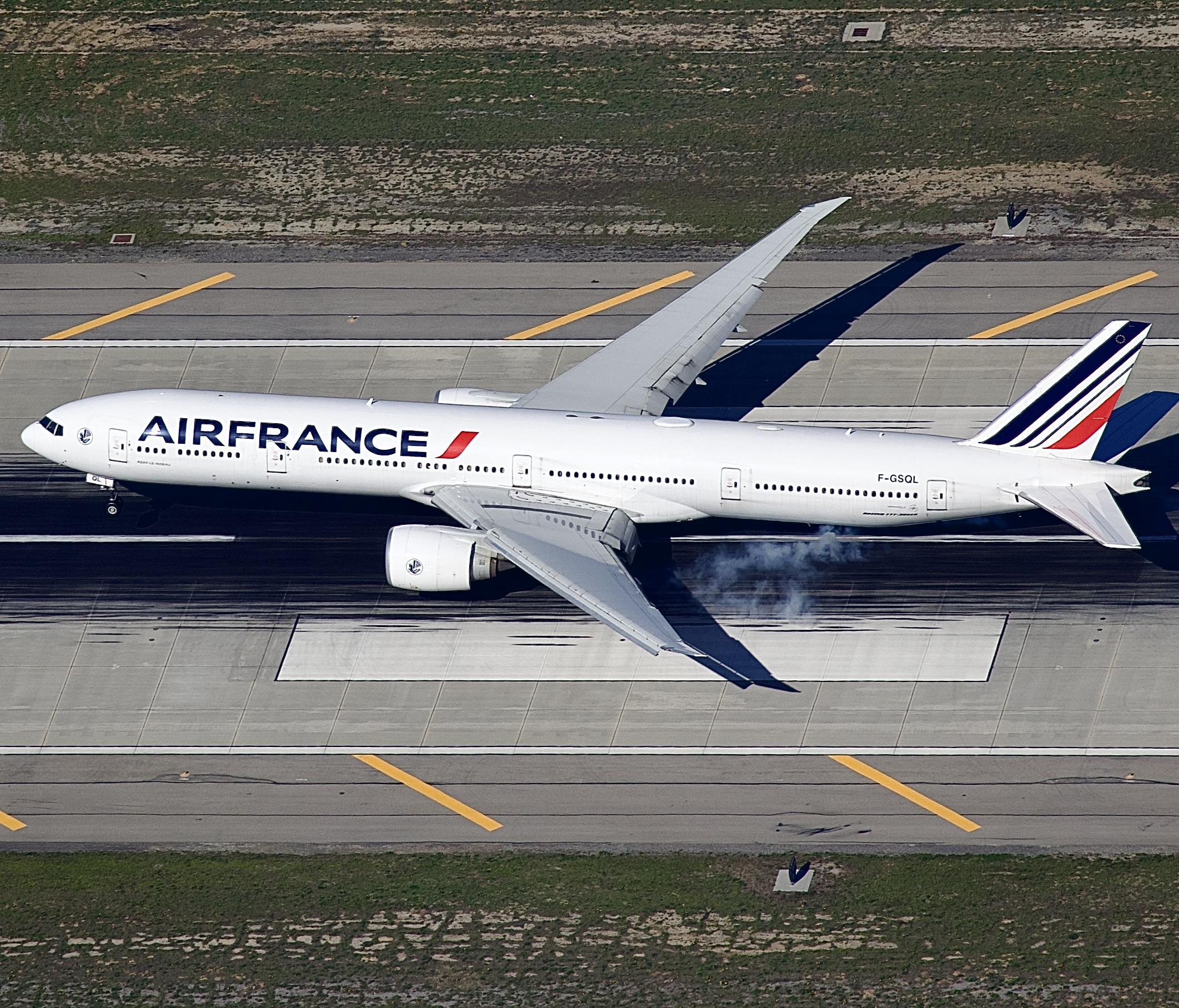

A Gulfstream G650ER business jet crossed onto an active runway at Los Angeles International Airport against a clear air traffic control instruction, forcing the crew of a fully loaded Air France Boeing 777-300ER to execute a high-speed rejected takeoff, one of the most demanding and rarely used emergency manoeuvres in commercial aviation. The close call on the evening of April 8, 2026, is now under Federal Aviation Administration investigation, and it arrived on a night that would expose worrying vulnerabilities at one of America's busiest airports.
What Happened on Runway 24L
The incident occurred around 6:15 p.m. on Wednesday, April 8 and involved Air France Flight 25, which was preparing to depart for Paris Charles de Gaulle Airport. According to the FAA, air traffic controllers canceled the aircraft's takeoff clearance after a separate jet crossed onto the active runway without permission.
According to ATC recordings reviewed by NBC4, air traffic controllers in the LAX control tower could be heard explaining to the pilot of the Air France flight that a Gulfstream jet had crossed past the hold short line, onto the runway and into the path of the Boeing 777. The Gulfstream G650ER had just landed at LAX after a short flight from San Francisco International Airport. After landing, air traffic controllers instructed the pilot to hold short of runway 24L, to which the Gulfstream pilot is heard acknowledging on recordings. However, the aircraft crossed the hold short line and entered the path of the departing Air France 777.

Photo: AeroXplorer/ Dylan Kappel
The Air France Crew's Response
Audio recordings from air traffic control reveal that the Air France crew was already accelerating for departure when runway warning lights alerted the pilots to a potential incursion. The crew immediately rejected the takeoff while under power, bringing the aircraft to a safe stop.
The Air France pilot could be heard on air traffic control audio recordings reviewed by NBC4 rejecting its takeoff while under power on the runway after being alerted to an incursion by runway warning lights.
Pilots aboard the Air France flight were alerted to the incursion through runway warning lights. They immediately rejected the takeoff and brought the aircraft to a safe stop. Once the runway was cleared, flight AF25 lined up again and departed without further incident, arriving in Paris approximately 9 hours and 57 minutes later at 1:42 pm local time.
The Cockpit’s Next Revolution: When the Co-Pilot Is a Computer
The Aircraft Involved
The aircraft involved, registered as F-GZNP, is an 11-year-old Boeing 777-328ER delivered to Air France in April 2015 and leased from Japanese firm JP Lease Products and Services. It is configured to carry 312 passengers across four cabins: four first class, 60 business, 44 premium economy, and 204 economy seats. The aircraft is powered by two General Electric GE90-115B engines. At its maximum takeoff weight of around 352 tonnes, stopping a 777-300ER at speed demands enormous braking force, and the manoeuvre places significant stress on tyres, brakes, and structure, a testament to how seriously the crew treated the threat.

A Second Incident the Same Night
The Air France near-miss was not an isolated event. Just an hour after the Air France and Gulfstream incident, a Frontier Airlines flight also had a close call at LAX, when the pilot of the Airbus A321 had to slam on the aircraft's brakes as two service trucks got in the ultra-low-cost carrier's path. This incident has also been referred to the FAA and remains under investigation.
The Frontier pilot's own words captured on ATC audio left no ambiguity about the severity of the moment. "It was real close. The closest I have ever seen," he said in audio posted by ATC.com. Frontier Airlines responded in a statement, saying: "We thank our crew for their vigilance and professionalism."
Aviation safety expert Steve Arroyo, a longtime United Airlines pilot, offered sobering context: these kinds of incidents happen daily on taxiways across the country but don't normally get any attention because the collision is avoided.
The Broader Safety Context
Both LAX incidents occurred against a backdrop of heightened national scrutiny over runway and taxiway safety. On March 22, an Air Canada jet carrying 76 people collided with a fire truck while landing at New York's LaGuardia Airport, killing both pilots and injuring dozens of people. In that crash, an air traffic controller cleared the fire truck to cross the runway less than 20 seconds beforehand, then seconds later frantically called for the fire truck to stop.
Aviation safety analyst Van Cleave noted the critical distinction between the two scenarios:
"It is not a circumstance like we saw in LaGuardia, where you had vehicles that were responding to an emergency, that were crossing an active runway, that were under direct air traffic control."
Retired naval aviator Sinclair drew an equally pointed conclusion:
“In my 20 years of naval aviation, a lot of lessons learned were written in blood, i.e., we had fatalities. Here is a perfect example of a get-out-of-jail-free lesson learned. Nobody was hurt.”
What the Investigation Must Determine
The FAA's probe into the April 8 Air France incident will centre on one core question: why did the Gulfstream G650ER crew acknowledge a hold short instruction and then disregard it entirely? Runway hold short instructions are among the most fundamental and unambiguous commands in aviation phraseology. Acknowledging a clearance and then proceeding anyway suggests either a catastrophic lapse in situational awareness, a breakdown in crew coordination aboard the business jet, or possible distraction during the post-landing rollout phase, a period when crews can be at their most vulnerable following the transition from active flight to ground operations.
Following the event, LAX implemented increased communication protocols between air traffic control and ground personnel, enhanced surveillance systems for real-time runway monitoring, and additional training sessions focused on runway incursion prevention for pilots and ground crews.
NBC4 reached out to Air France and the reported owner of the Gulfstream involved in the early Wednesday evening incident, but had yet to receive a response.

Photo: AerXplorer/ Thomas Tse
The Runway Safety Record at LAX
April 8 was not the first time LAX has been the scene of a serious runway incursion. The airport's history includes a December 2024 incident in which Key Lime Air Flight 563 proceeded onto an active runway despite being instructed to hold short, requiring urgent ATC intervention. The repeat pattern underscores a structural challenge at large, complex airports: ground vehicles operating in the vicinity of moving aircraft must yield to planes, which are typically moving only about 15 mph.
Despite that, incursions continue to occur, often because ground crews and transient aircraft operators do not have the same procedural familiarity as line airline crews operating the same hub routes daily.
What distinguishes the April 8 Air France incident is that the intruding aircraft was piloted by professionals who explicitly confirmed they had understood the instruction. That acknowledgement, followed by a runway crossing, is precisely the kind of breakdown that accident investigators dread most, because it renders the system's final checkpoint meaningless. The FAA investigation continues.
Riyadh Air Relocates New Boeing 787 Dreamliners Away From Capital Amid Houthi Missile Threat » FlyUSA Opens 50,000-Square-Foot Owner-Exclusive Hangar and Lounge at Tampa International Airport » NetJets Expands US Footprint With Three New Private Terminals and Larger Palm Beach Facility »

Comments (0)
Add Your Comment
TAGS
NEWS Air France LAX Runway Incursion Gulfstream G650ER Boeing 777-300ER Takeoff FAA Investigation Runway Safety Los Angeles Airport Frontier Airlines Aviation Safety Air Traffic Control Flight AF25 Bizjet Safety Airport Ground SafetyRECENTLY PUBLISHED
 FlyUSA Opens 50,000-Square-Foot Owner-Exclusive Hangar and Lounge at Tampa International Airport
FlyUSA has opened a 50,000-square-foot private hangar and lounge at Tampa International Airport, serving aircraft owners and charter clients.
NEWS
READ MORE »
FlyUSA Opens 50,000-Square-Foot Owner-Exclusive Hangar and Lounge at Tampa International Airport
FlyUSA has opened a 50,000-square-foot private hangar and lounge at Tampa International Airport, serving aircraft owners and charter clients.
NEWS
READ MORE »
 Federal Grand Jury Indicts Passenger Duct-Taped to Seat on American Airlines Flight
A passenger restrained with duct tape after a violent outburst on an American Airlines flight to Newark faces federal charges and up to 20 years in prison.
NEWS
READ MORE »
Federal Grand Jury Indicts Passenger Duct-Taped to Seat on American Airlines Flight
A passenger restrained with duct tape after a violent outburst on an American Airlines flight to Newark faces federal charges and up to 20 years in prison.
NEWS
READ MORE »
 JetBlue Opens Sales for BlueFirst, Its First Domestic First Class Cabin
JetBlue begins selling seats in its new BlueFirst domestic first class cabin, with service starting in 2026 on select transcontinental routes.
NEWS
READ MORE »
JetBlue Opens Sales for BlueFirst, Its First Domestic First Class Cabin
JetBlue begins selling seats in its new BlueFirst domestic first class cabin, with service starting in 2026 on select transcontinental routes.
NEWS
READ MORE »
More than just headlines.
Get unlimited ad-free access to in-depth aviation news, premium stories, and exclusive insights other sites don't cover.
- Ad-free browsing on AeroXplorer
- Unlimited access to premium and exclusive articles
- Higher photo upload limits & commissions on sales
- Free access to Jetstream Magazine on higher tiers
- Ad-free browsing
- Sell aviation photos with 60% commission
- First week free!
- Everything in Basic+
- Unlimited premium articles
- Sell aviation photos with 70% commission
- Free Digital subscription to Jetstream Magazine
- First week free!
- Everything in Basic+ and Pro
- Sell aviaiton photos with 80% commission
- Early access to exclusive stories
- Free Digital+Print subscription to Jetstream Magazine