Delta Air Lines Chief Executive Ed Bastian is defending his company's decision to partner with Amazon's LEO rather than Elon Musk's Starlink for the airline's next generation of in-flight Wi-Fi, citing cost as the deciding factor.
Speaking publicly about the partnership announced earlier this month, Bastian made clear that price drove the choice.
Delta plans to begin rolling out the Amazon-powered service in 2028, replacing or supplementing its current connectivity providers as the airline expands free Wi-Fi access across its fleet.

Tại sao Delta chọn Amazon
Bastian addressed the decision directly when asked why the carrier chose Amazon's satellite network over Starlink.
Starlink already powers in-flight internet for competitors including United Airlines, Hawaiian Airlines, and Qatar Airways.
JetBlue is the only other major carrier to have sided with Amazon LEO, having signed up for the service in 2025 as Amazon's launch airline partner for in-flight connectivity.
Bastian added that Amazon offered Delta a more attractive financial package, a meaningful consideration given that Delta provides Wi-Fi free of charge to SkyMiles members.
The economics matter.
Free in-flight internet is no longer a perk reserved for premium cabins.
Delta announced free Wi-Fi for SkyMiles members in 2023, and the airline has since worked to extend that benefit across more of its aircraft.
Every dollar saved on bandwidth flows directly to the bottom line.
Amazon LEO Versus Starlink
Amazon's Project Kuiper is a low Earth orbit (LEO) satellite constellation designed to compete directly with SpaceX's Starlink.
Amazon plans to deploy more than 3,200 satellites as part of the network, though the system is still in earlier stages of deployment compared to Starlink, which already operates thousands of satellites in orbit.
That gap raises a practical question.
Starlink offers a proven product today.
Amazon's LEO is still building out its infrastructure.
Bastian acknowledged the timing but indicated Delta is comfortable waiting for the network to mature before launching service in 2028.
The airline is not abandoning its current providers in the meantime.
Delta works with Viasat and Hughes for its existing in-flight connectivity, and those relationships will continue as the airline transitions.

Tính toán kinh doanh chứ không phải chính trị
Some observers speculated that Delta's choice reflected concerns about Musk's polarizing public profile.
Bastian rejected that interpretation.
The decision came down to the contract terms Amazon offered, not the personalities involved.
That framing matters for an airline that serves a broad customer base and tries to avoid political entanglements.
By emphasizing cost rather than controversy, Bastian kept the conversation focused on operational economics.
The partnership also reflects the deeper relationship between Delta and Amazon.
The two companies have collaborated on other initiatives, and Delta uses Amazon Web Services for portions of its technology infrastructure.
Extending that relationship into satellite connectivity fits a broader pattern.
Hành khách có thể mong đợi điều gì
For travelers, the practical impact remains years away.
Delta's current Wi-Fi service, powered by Viasat on most mainline aircraft, will continue serving passengers in the meantime.
The Amazon LEO-powered upgrade is expected to deliver faster speeds and more reliable connections, particularly on long-haul international flights where existing systems often struggle.
Delta has positioned free Wi-Fi as a core part of its customer experience strategy.
The airline believes connectivity is now a baseline expectation rather than a premium feature, and it has invested accordingly.
Choosing the lower-cost provider allows the company to sustain that free model without absorbing unsustainable expenses.
{{REC}}
Bối cảnh cạnh tranh
United Airlines took the opposite approach, signing with Starlink last year and beginning installations on its regional fleet.
United executives have praised the speed and quality of the Starlink service, suggesting passengers will notice the difference immediately.
The split between major U.S. carriers sets up a real-world comparison.
United bets on the established Starlink network, while Delta wagers on Amazon's emerging alternative at a better price.
Passengers, ultimately, will judge which approach delivers the better experience.
For now, Bastian is comfortable with his choice.
The math worked, the partnership made sense, and Delta secured terms that support its free Wi-Fi commitment.
Whether Amazon LEO delivers on its promise by 2028 is the question that remains open.
Máy Bay Khu Vực American Airlines Tuyên Bố Khẩn Cấp Về Nhiên Liệu Sau Ba Lần Hạ Cánh Thất Bại » British Airways Bị Kiện Vì Chấn Thương Đầu, Nhưng Câu Chuyện Thực Ra Phức Tạp Hơn » FAA Nới Lỏng, Nhưng Không Bỏ, Hạn Chế Hạ Cánh Song Song Của SFO »

Comments (0)
Add Your Comment
SHARE
TAGS
TIN TứC Delta Amazon Amazon LEO Starlink Wi-Fi trên máy bayRECENTLY PUBLISHED
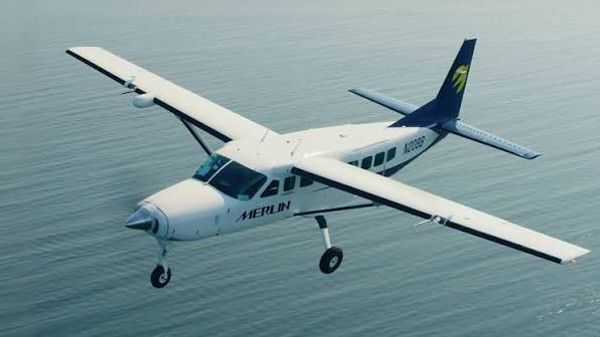 Merlin Labs được New Zealand chấp thuận lộ trình chứng nhận hệ thống bay dùng AI
Cơ quan quản lý hàng không của New Zealand đã chấp nhận kế hoạch chứng nhận của Merlin Labs cho hệ thống tự động hóa bay dựa trên AI trên máy bay Cessna Caravan.
Tin tức
READ MORE »
Merlin Labs được New Zealand chấp thuận lộ trình chứng nhận hệ thống bay dùng AI
Cơ quan quản lý hàng không của New Zealand đã chấp nhận kế hoạch chứng nhận của Merlin Labs cho hệ thống tự động hóa bay dựa trên AI trên máy bay Cessna Caravan.
Tin tức
READ MORE »
 Tai nạn trực thăng gần đảo Sifnos của Greece khiến ba hành khách thiệt mạng
Một trực thăng tư nhân đã rơi xuống biển gần đảo Sifnos của Greece, khiến ba người trên trực thăng thiệt mạng, theo các nhà chức trách của Greece.
Tin tức
READ MORE »
Tai nạn trực thăng gần đảo Sifnos của Greece khiến ba hành khách thiệt mạng
Một trực thăng tư nhân đã rơi xuống biển gần đảo Sifnos của Greece, khiến ba người trên trực thăng thiệt mạng, theo các nhà chức trách của Greece.
Tin tức
READ MORE »
 Xâm nhập đường băng tại Sân bay Guarulhos, São Paulo: Máy bay của American và Delta cắt ngang đường của LATAM A320 khi bắt đầu chạy đà cất cánh
Một vụ xâm nhập đường băng nghiêm trọng tại Sân bay Guarulhos, São Paulo liên quan đến chiếc LATAM A320 bắt đầu chạy đà cất cánh khi chưa được cấp phép trong lúc các máy bay của American và Delta băng qua.
Tin tức
READ MORE »
Xâm nhập đường băng tại Sân bay Guarulhos, São Paulo: Máy bay của American và Delta cắt ngang đường của LATAM A320 khi bắt đầu chạy đà cất cánh
Một vụ xâm nhập đường băng nghiêm trọng tại Sân bay Guarulhos, São Paulo liên quan đến chiếc LATAM A320 bắt đầu chạy đà cất cánh khi chưa được cấp phép trong lúc các máy bay của American và Delta băng qua.
Tin tức
READ MORE »