Ground support equipment has advanced steadily toward autonomy: baggage carts and pushback tractors, among others, are being designed to operate with minimal human intervention. Yet the aircraft itself – the single most valuable and structurally sensitive asset on the ramp – is still almost universally towed under direct human control. That disparity is instructive, pointing to where the true technical and operational barriers to automation actually lie.
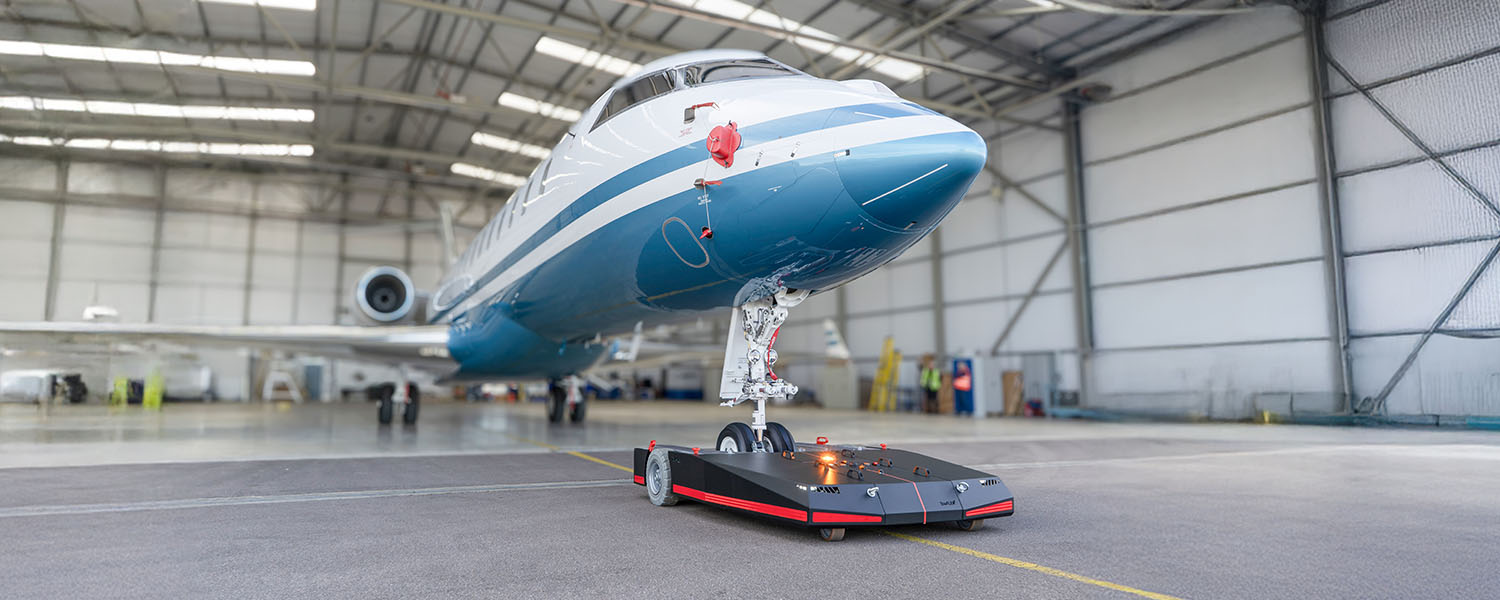
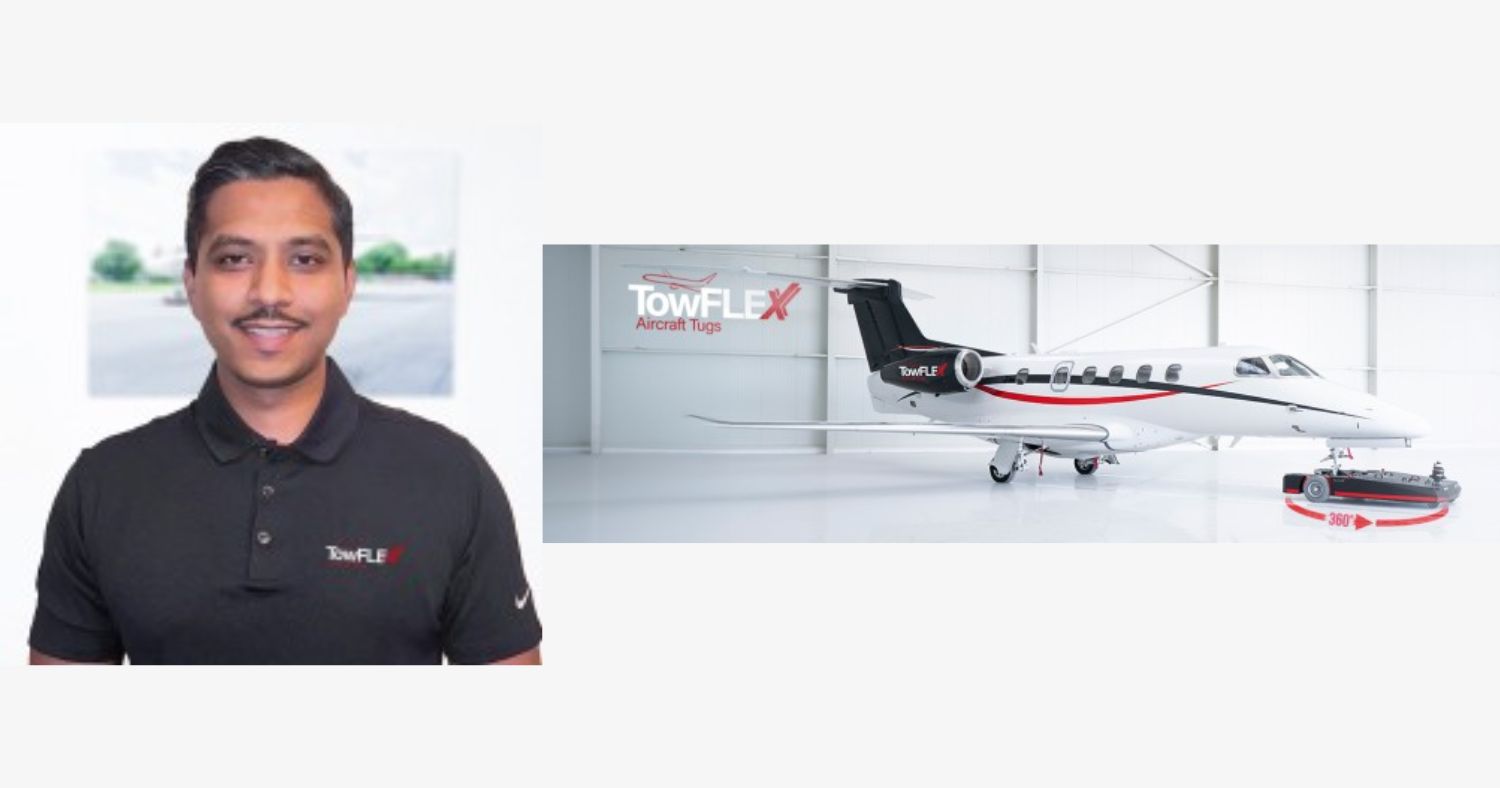
TowFLEXX builds remote-controlled electric tugs used to move aircraft on ramps and inside hangars, with equipment operating across commercial, military, and business aviation. As CEO, Junaid “Jay” Mukhtar has spent years watching automation reshape ground support equipment from inside a company actively developing the technology.
As airports and ground handlers increasingly evaluate autonomous ground support equipment, Mukhtar believes that the technology is coming, albeit with an uneven rollout.
In conversation with AeroXplorer, Mukhtar shared his belief that autonomous GSE implementation would be staggered, moving from the simplest, lowest-risk tasks to the most complex and highest-stakes one: moving the aircraft itself.
Baggage and ground maintenance lead the way
When asked which corner of ground support – baggage handling, cargo transportation, towing, or inspection – is closest to real-world autonomy in the next one to three years, Mukhtar pointed first to baggage handling, and to an unglamorous cousin: airfield ground maintenance. He recalled a military facility that had already begun experimenting with autonomous mowing and snow-clearing within geofenced areas, alongside early baggage-cart automation. He likened it to the Roomba vacuums that map a room and clean it without supervision.
The logic, he explained, comes down to predictability and stakes. Autonomous luggage tractors and transport systems move slowly, follow largely fixed routes, and share a fairly uniform configuration across the fleet. This implies that autonomy within baggage carts follows more generalized standards. For example, baggage carts could be relatively uniform in size, so technology could be widespread. By contrast, mowing and snow-clearing equipment can sometimes operate within isolated or geofenced areas with little or no other traffic. Both provide comparatively controlled environments for testing, although they remain safety-critical operations.
What's actually driving adoption
On the forces pushing the industry toward automation, Mukhtar described them as compounding. But he kept returning to a specific framing: automation's job isn't to remove people; it's to reduce workload and mitigate the consequences of human error. He offered a concrete example – oversteering a nose landing gear beyond its allowable limits, which can cause significant damage – an error that can cause thousands of dollars in damage. The question TowFLEXX asks, he said, isn't how to eliminate the operator, but what safeguards prevent that kind of error in the first place.
That philosophy shows up directly in TowFLEXX's product design. On selected configurations, TowFLEXX offers an optional LiDAR-based system designed to detect potential obstructions and, when activated, slow or stop the tug. Mukhtar was careful to distinguish this from full autonomy: it's a safety layer, not a replacement for the operator. Put simply, such systems allow for an additional layer of situational awareness during the operation, where viewing a situation from multiple angles can improve operational safety.
He also made a staffing-efficiency case for remote operation that goes beyond safety alone. A typical three-person tow crew consisting of one person driving the tug and two spotting from the wingtips leaves the driver fixed in place, able to watch only what's directly ahead. Untethering that operator from the equipment via remote control turns three people into three moving sets of eyes instead of one fixed set and two roaming sets, and may reduce crew demand in certain applications, subject to aircraft manuals, operator procedures, and airport requirements.
Why towing is the hard case
Mukhtar's central argument was that towing is a fundamentally harder autonomy problem than the rest of ground support, and he didn't hedge on why: aircraft aren't standardized the way baggage carts are. A Cessna 172 and a Gulfstream G550 differ enormously in size, nosewheel configuration, and handling characteristics – even within a single aircraft type, setup can vary.
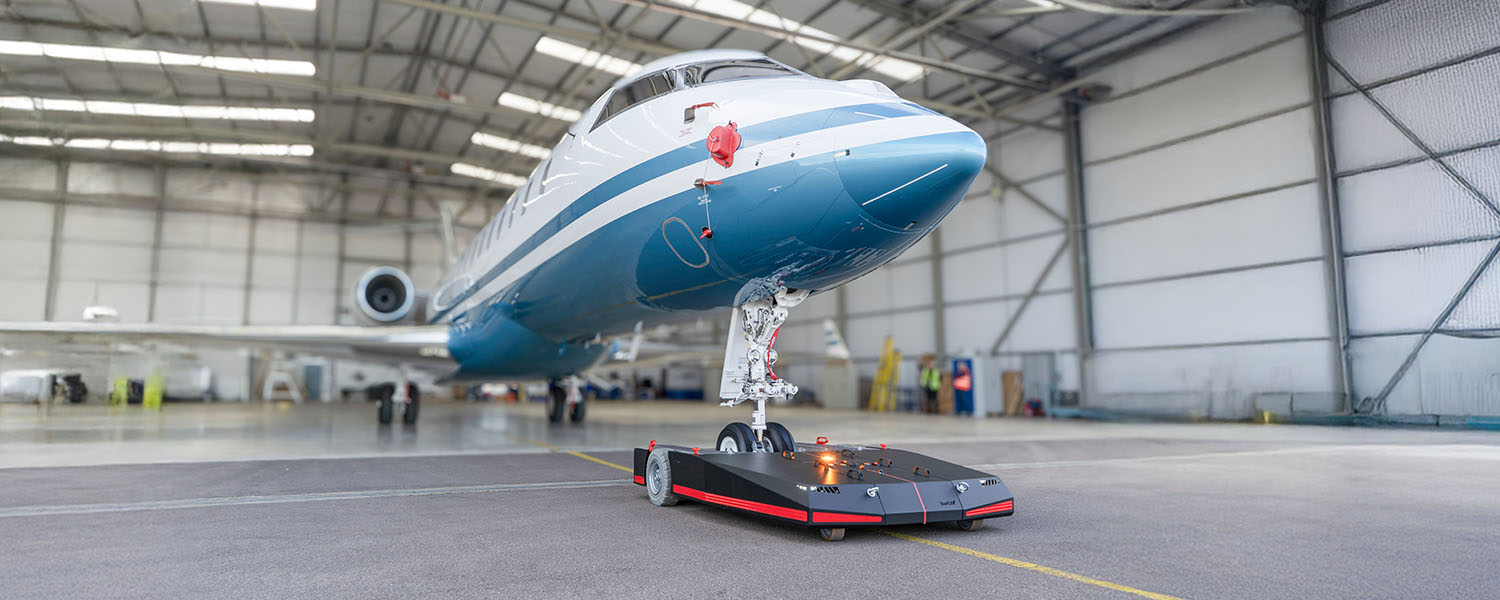
Traditional towbar equipment adds complexity because different aircraft may require different towbars. The towbarless TF5 eliminates that requirement through adjustable nosewheel adapters that accommodate a broad range of nosewheel sizes and configurations. Setup and verification still require operator input, highlighting why greater automation will require continued development and validation.
His conclusion: full autonomy in towing requires mechanically adaptable hardware, validated aircraft interfaces, and reliable perception and control – not software alone. Software can adjust a nosewheel adapter that's designed to be adjustable, he said, but it can't walk over and swap a towbar. Until the hardware itself is more universally adaptable, full autonomy in towing has a hardware ceiling, not just a software one.
TowFLEXX’s approach to greater automation begins with operator-assistance features rather than full autonomy. One intermediate capability is line assistance, a camera-guided system that supports path guidance by following marked routes while leaving operational decisions and control with the operator. Mukhtar views this as part of a gradual progression: as operating environments are mapped, and camera and LiDAR-based systems are validated across defined applications, additional functions may be automated while maintaining appropriate human oversight.
The Cockpit’s Next Revolution: When the Co-Pilot Is a Computer
Scale changes the calculus, too
Mukhtar was equally direct that autonomy will not roll out uniformly across operating environments. Testing should begin in controlled, lower-complexity settings before expanding into dense, mixed-traffic operations. He contrasted TowFLEXX’s home base in New Castle, Delaware, with nearby Philadelphia International to illustrate how traffic density and operational complexity, not airport size alone, change the risk calculus.
TowFLEXX’s product development approach reflects a deliberate balance between automation and reliability. The company uses different nosewheel capture systems across its product range, including semi-automatic and fully automatic systems, and evaluates additional automation against reliability, maintainability, and operational requirements. For Mukhtar, new technology must provide a clear operational benefit without introducing unnecessary complexity.
Taken together, Mukhtar’s view offers a measured perspective on autonomous ground handling: more predictable, lower-complexity applications are likely to advance first, while aircraft towing may progress more gradually because of the variation among aircraft and the greater level of operational validation required. Until these systems are sufficiently developed and proven, human oversight remains a central part of the safety architecture.
How Delivery Delays Are Reshaping Aviation Sourcing » This Week in Aviation: The 10 Stories That Mattered Most » FAA Nears Final Approval of Boeing 737 MAX 10 as Certification Review Concludes »

Comments (0)
Add Your Comment
TAGS
STORIES TowFLEXX TowFLEXX Inc CEO Aircraft Towing Towing Towbarless Automation TF5 Autonomous Towing GSE. Autonomous Ground Operations Ground OperationsRECENTLY PUBLISHED
 American Airlines Boeing 787 Makes Emergency Landing at O'Hare After Brake Issue, One Hospitalized
An American Airlines Boeing 787 makes an emergency landing to Chicago O'Hare after a brake problem.
NEWS
READ MORE »
 British Airways Finishes Starlink Wi-Fi Rollout Across Its A350 Fleet
British Airways has installed SpaceX's Starlink Wi-Fi on every Airbus A350 in its fleet, offering passengers free high-speed internet on long-haul flights.
NEWS
READ MORE »
 How Delivery Delays Are Reshaping Aviation Sourcing
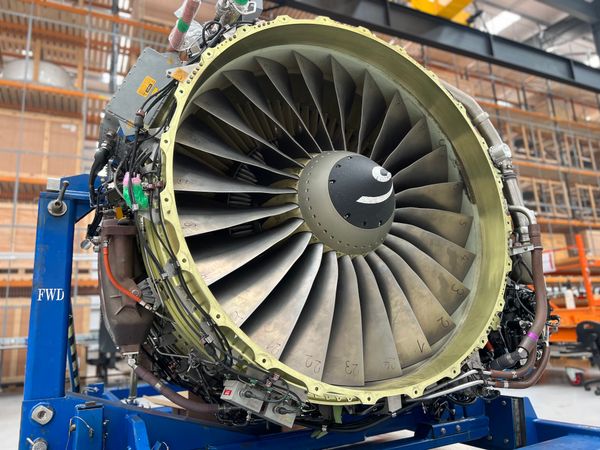
When Boeing and Airbus can't deliver new aircraft fast enough, someone has to keep the old ones flying. That reality, playing out across airline fleets and MRO shops worldwide, is fueling what industry insiders are now calling a defining moment for the aviation aftermarket.
STORIES
READ MORE »
More than just headlines.
Get unlimited ad-free access to in-depth aviation news, premium stories, and exclusive insights other sites don't cover.
- Ad-free browsing on AeroXplorer
- Unlimited access to premium and exclusive articles
- Higher photo upload limits & commissions on sales
- Free access to Jetstream Magazine on higher tiers
- Ad-free browsing
- Sell aviation photos with 60% commission
- First week free!
- Everything in Basic+
- Unlimited premium articles
- Sell aviation photos with 70% commission
- Free Digital subscription to Jetstream Magazine
- First week free!
- Everything in Basic+ and Pro
- Sell aviaiton photos with 80% commission
- Early access to exclusive stories
- Free Digital+Print subscription to Jetstream Magazine