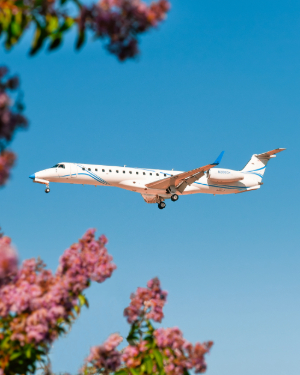
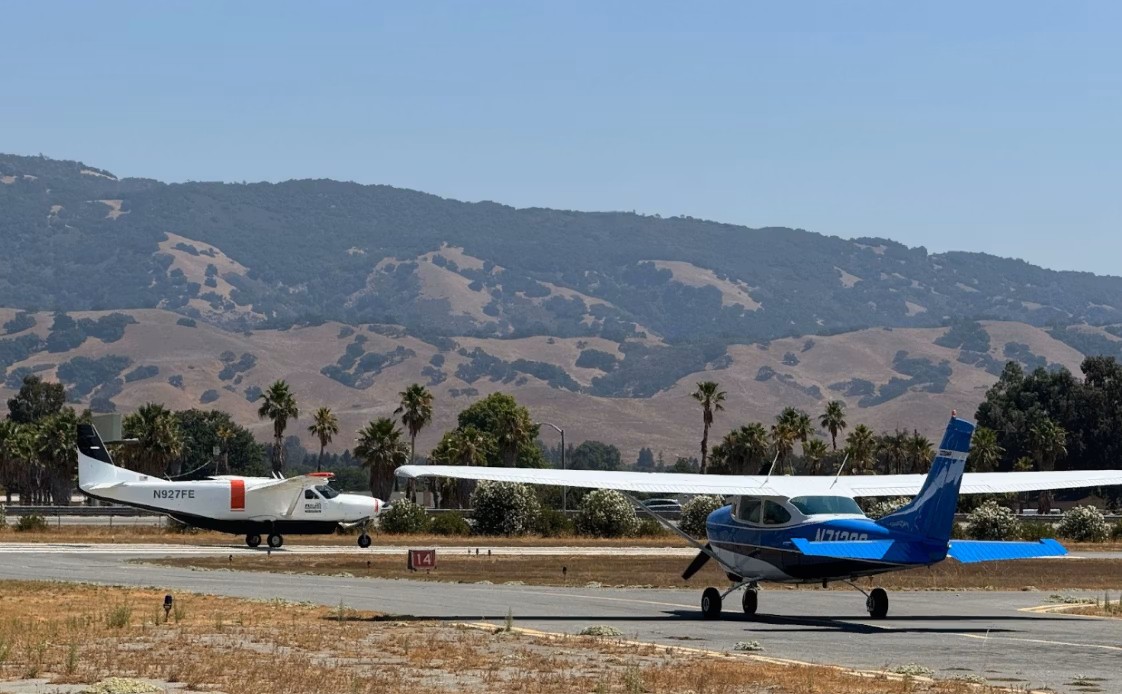
Aviation safety is entering a digital renaissance as the Federal Aviation Administration (FAA) accelerates the validation of its next-generation collision avoidance logic. Today, April 7, 2026, the agency confirmed that recent flight test campaigns involving Remotely Piloted Aircraft (RPA) have successfully demonstrated the "detect and avoid" (DAA) capabilities of ACAS X, the sophisticated successor to the decades-old Traffic Alert and Collision Avoidance System (TCAS II).
By utilizing high-endurance RPAs as primary testbeds, the FAA is gathering unprecedented data on how autonomous systems interact with crewed traffic in the National Airspace System (NAS). This transition represents a fundamental shift from a rigid, rule-based safety net to a flexible, probabilistic model designed to handle the increasingly crowded skies of the 2020s.
The Evolution from TCAS to ACAS X
For nearly forty years, TCAS II has been the gold standard for preventing mid-air collisions. However, its "if-then" logic was designed for a simpler era. ACAS X (Airborne Collision Avoidance System X) utilizes a numeric look-up table generated through a process called Markov Decision Process (MDP) optimization.
Unlike its predecessor, ACAS X can be tailored to specific aircraft types through several variants:
- ACAS Xa: The "active" version for traditional crewed aircraft.
- ACAS Xu: Designed specifically for large uncrewed systems (RPAs).
- ACAS sXu: Optimized for small drones and Urban Air Mobility (UAM) vehicles.
“The ACAS X family of systems provides a significant safety increase by reducing the frequency of unnecessary alerts while providing more effective guidance during actual conflict scenarios,” an FAA Technical Center lead researcher stated during a briefing this morning. “By using remotely piloted platforms for these stress tests, we can safely fly encounter geometries that would be too high-risk for crewed evaluation flights.”
RPAs as the Perfect Testing Proxy
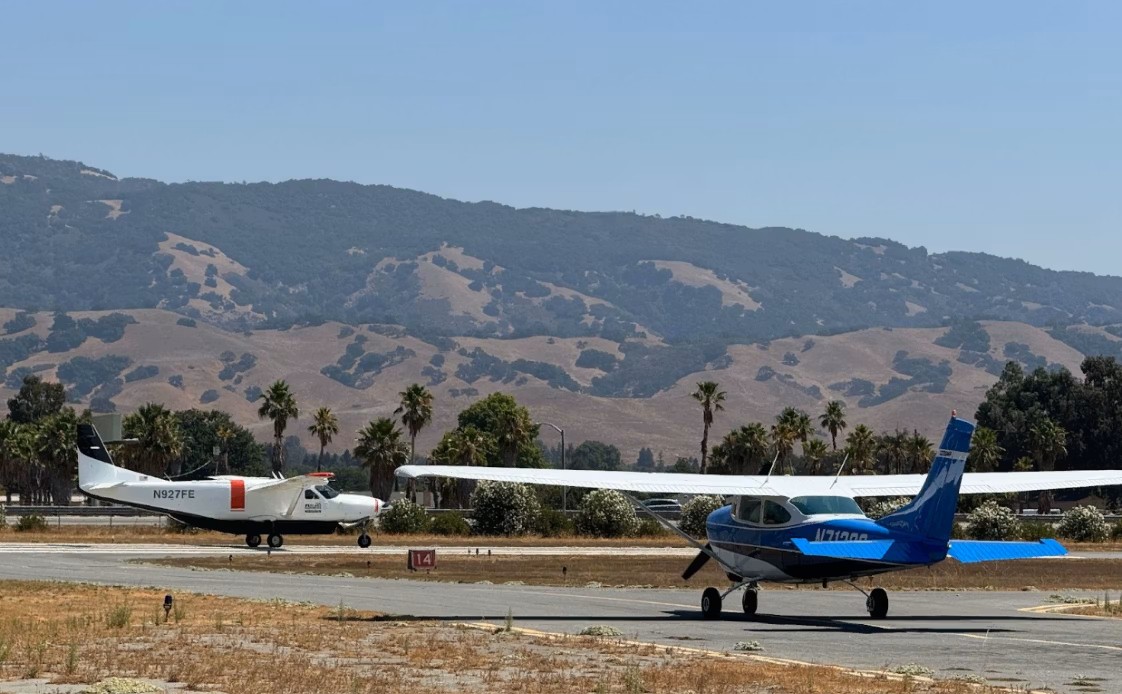
The use of heavy RPAs, such as the General Atomics MQ-9B SkyGuardian, has been instrumental in these trials. These aircraft are equipped with a suite of sensors, including Active Electronically Scanned Array (AESA) radars and ADS-B In/Out, which feed into the ACAS Xu logic.
During the latest round of testing at the William J. Hughes Technical Center, the RPA was subjected to "blind" encounters where non-cooperative aircraft, those not broadcasting their position, approached from various vectors. The ACAS Xu system was tasked with autonomously calculating a "Resolution Advisory" (RA) to maintain safe separation.

How AI Quietly Became the Backbone of Today’s Aviation Industry
Technical Superiority and Resolution Logic
The brilliance of ACAS X lies in its ability to account for uncertainty. While TCAS II operates on a set of fixed rules, ACAS X calculates the "cost" of various maneuvers to find the optimal path. The logic is defined by the value function $V(s)$, which represents the expected safety and operational utility of being in a specific state :
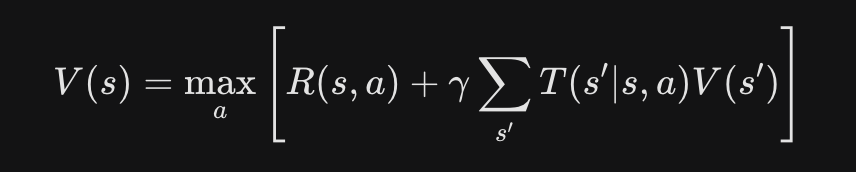
In this formula, R(s, a)is the immediate reward of an action, and T(s' | s, a) is the probability of transitioning to a new state s'. This allows the system to be much quieter in busy terminal areas while remaining hyper-vigilant in the open sky.
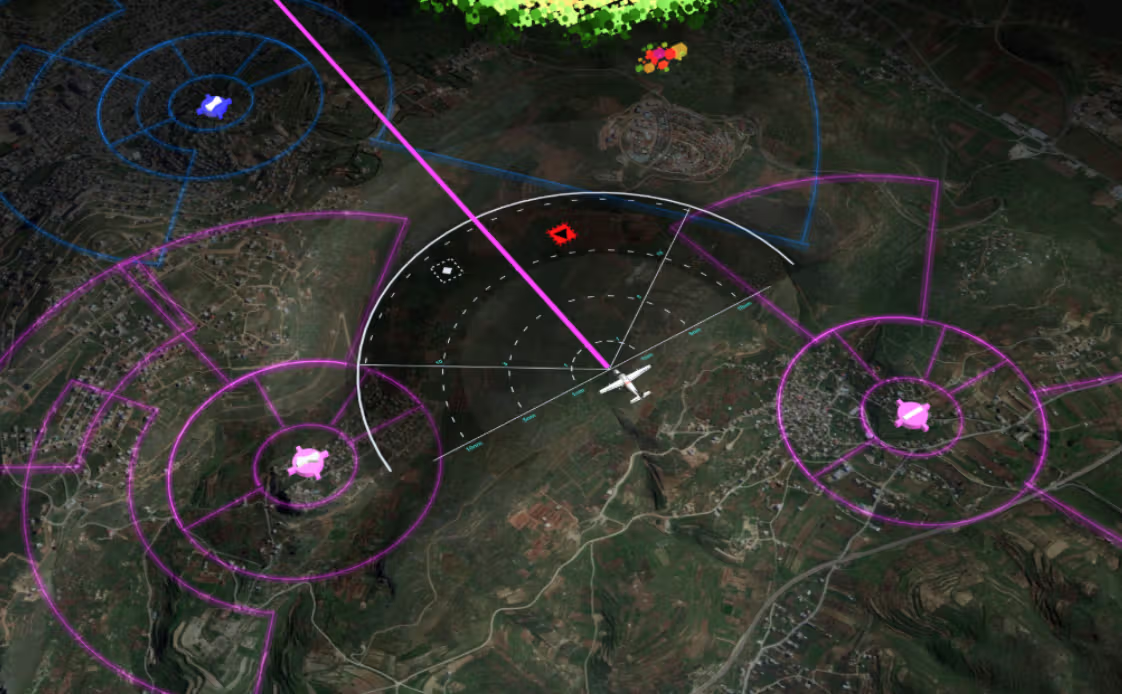
Recent ACAS X Flight Test Milestones
The following table outlines the officially published flight test operations conducted leading up to today's update.
| Flight No. | Route | Departure Time | Arrival Time | Duration | Operating Days |
|---|---|---|---|---|---|
| TEST-XU-01 | Gray Butte Field (CA) - Mojave | 08:00 AM | 11:30 AM | 3h 30m | Tue, Wed |
| FAA-NAS-22 | Atlantic City (ACY) - Restricted | 10:15 AM | 01:45 PM | 3h 30m | Monday |
| COLL-AV-09 | Grand Forks (GFK) - North Hills | 09:00 AM | 02:00 PM | 5h 00m | Thursday |
| SKY-G-114 | Yuma Proving Ground - Local | 06:30 AM | 04:30 PM | 10h 00m | Mon, Fri |
Official Perspectives
The industry is watching closely as the FAA moves toward full certification.
“The integration of ACAS Xu into our uncrewed platforms is a critical milestone for the industry,” said a spokesperson for the uncrewed flight test division. “We are not just testing a new piece of software; we are building the foundation for a future where crewed and uncrewed aircraft share the sky without a second thought for safety.”
As the testing phase wraps up later this year, the FAA expects to issue updated Technical Standard Orders (TSOs) that will mandate the eventual phase-out of legacy TCAS in favor of the ACAS X family. For the passengers of 2026, this means a quieter cockpit and a significantly more robust shield against the unthinkable.
Aegis Air Bets on By-the-Seat Private Jet Flights From Miami to Caracas » Archer's Midnight eVTOL Completes Piloted Flights Across San Francisco Bay Area » British Airways Finishes Starlink Wi-Fi Rollout Across Its A350 Fleet »

Comments (0)
Add Your Comment
TAGS
NEWS FAA ACASX Aviation Safety RPA Drones Aerospace Engineering Mid Air CollisionRECENTLY PUBLISHED
 American Airlines Boeing 787 Makes Emergency Landing at O'Hare After Brake Issue, One Hospitalized
An American Airlines Boeing 787 makes an emergency landing to Chicago O'Hare after a brake problem.
NEWS
READ MORE »
American Airlines Boeing 787 Makes Emergency Landing at O'Hare After Brake Issue, One Hospitalized
An American Airlines Boeing 787 makes an emergency landing to Chicago O'Hare after a brake problem.
NEWS
READ MORE »
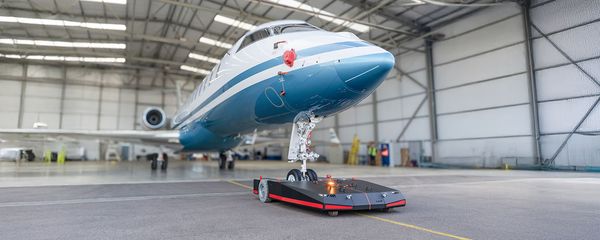 Why Aircraft Towing May Be One of the Last Frontiers of Autonomous Ground Operations
Ground support equipment has advanced steadily toward autonomy: baggage carts and pushback tractors, among others, are being designed to operate with minimal human intervention. Yet the aircraft itself – the single most valuable and structurally sensitive asset on the ramp – is still almost universally towed under direct human control.
STORIES
READ MORE »
Why Aircraft Towing May Be One of the Last Frontiers of Autonomous Ground Operations
Ground support equipment has advanced steadily toward autonomy: baggage carts and pushback tractors, among others, are being designed to operate with minimal human intervention. Yet the aircraft itself – the single most valuable and structurally sensitive asset on the ramp – is still almost universally towed under direct human control.
STORIES
READ MORE »
 British Airways Finishes Starlink Wi-Fi Rollout Across Its A350 Fleet
British Airways has installed SpaceX's Starlink Wi-Fi on every Airbus A350 in its fleet, offering passengers free high-speed internet on long-haul flights.
NEWS
READ MORE »
British Airways Finishes Starlink Wi-Fi Rollout Across Its A350 Fleet
British Airways has installed SpaceX's Starlink Wi-Fi on every Airbus A350 in its fleet, offering passengers free high-speed internet on long-haul flights.
NEWS
READ MORE »
More than just headlines.
Get unlimited ad-free access to in-depth aviation news, premium stories, and exclusive insights other sites don't cover.
- Ad-free browsing on AeroXplorer
- Unlimited access to premium and exclusive articles
- Higher photo upload limits & commissions on sales
- Free access to Jetstream Magazine on higher tiers
- Ad-free browsing
- Sell aviation photos with 60% commission
- First week free!
- Everything in Basic+
- Unlimited premium articles
- Sell aviation photos with 70% commission
- Free Digital subscription to Jetstream Magazine
- First week free!
- Everything in Basic+ and Pro
- Sell aviaiton photos with 80% commission
- Early access to exclusive stories
- Free Digital+Print subscription to Jetstream Magazine