


WASHINGTON, D.C. — Aviation pioneers and federal regulators are navigating a pivotal crossroads as the United States manoeuvres to replace its ageing radar-based infrastructure with a digital, satellite-driven architecture. As of February 5, 2026, the Federal Aviation Administration (FAA) is accelerating its transition toward a fully integrated "Future ATC System," a move aimed at resolving the chronic delays and capacity constraints that have plagued the National Airspace System (NAS) for decades.
Technological transformation is no longer a distant goal for the FAA; it is a current operational mandate. According to a landmark analysis by AIN Online, the journey toward a modernised Air Traffic Control (ATC) system has shifted from a series of disjointed upgrades to a cohesive strategy known as Trajectory-Based Operations (TBO). This system moves away from traditional “vectoring”, where controllers provide headings to pilots, to a model where aircraft fly precise, pre-negotiated four-dimensional paths.
The "once and future" nature of this system reflects a bridge between the foundational radar technology of the 20th century and a highly automated, data-rich environment. As reported in the latest industry updates, this transition is critical to managing the influx of New Entrants, including Unmanned Aircraft Systems (UAS) and Advanced Air Mobility (AAM) vehicles, which are expected to share the skies with commercial airliners by the end of this decade.

Photo: AI Gen. Gemini

How AI Quietly Became the Backbone of Today’s Aviation Industry
The Shift to Trajectory-Based Operations
Central to the 2026 modernisation push is the full-scale deployment of Data Communications (Data Comm). By replacing traditional voice instructions with digital text transmissions, the FAA is reducing the risk of "read-back" errors and frequency congestion.
“The move to TBO is about more than just technology; it’s about a fundamental shift in how we manage the sky,” noted a senior FAA official in a recent industry briefing. The goal is to allow aircraft to fly the most efficient routes possible, saving millions of gallons of fuel and reducing carbon emissions, a key pillar of the aviation industry’s "Net Zero 2050" commitment.
Addressing the Human Element and Controller Shortages
Despite the technological strides, the "Future ATC System" faces a significant hurdle: a critical shortage of certified professional air traffic controllers. The National Air Traffic Controllers Association (NATCA) has repeatedly warned that technology cannot fully replace human oversight in a high-density environment.
FAA Administrator Michael Whitaker has been vocal about the need for a dual-track approach that pairs innovation with aggressive hiring. Reflecting on the current state of the NAS, Whitaker recently stated:
“We are focused on safe, efficient operations today while we build the foundation for the next generation of flight. The future of the NAS depends on our ability to integrate new technologies like AI and machine learning while ensuring our workforce has the tools and training they need to succeed.”

Future System Architecture and Key Milestones
The following table outlines the current status of the FAA’s most critical modernisation programs as of early February 2026:
| Program Component | Current Status | Primary Function |
|---|---|---|
| Data Comm | 95% Airport Deployment | Digital clearance and re-routing via text |
| ADS-B Out | Full Mandate Compliance | Satellite-based tracking for precise separation |
| TBO (Phase II) | Active Implementation | Strategic management of 4D flight paths |
| SWIM | Operational Expansion | Cloud-based data sharing across stakeholders |
| AAM Integration | Initial Corridor Testing | Safely merging electric "air taxis" into the NAS |
Challenges of a "Once and Future" System
The term "once and future" aptly describes the paradox of American ATC. While the U.S. remains the world leader in aviation safety, the pace of technological adoption has often been stymied by inconsistent federal funding and the sheer complexity of upgrading a system that "never sleeps."
Critics of the current pace argue that without a stable, multi-year funding cycle, the U.S. risks falling behind international peers who have moved toward privatised or corporatised ATC models. However, the FAA maintains that the public-private partnership model currently in place is the most robust way to ensure safety remains the ultimate priority.
As the industry looks toward 2030, the focus remains on "scalability." The future system must be able to handle not only the 45,000 daily flights currently operating in the U.S. but also the projected doubling of air traffic over the next twenty years.
Airbus Invests £150 Million to Convert Former A380 Wing Factory for A321neo Production » FAA Deploys AI System to Cut Flight Delays at Washington-Area Airports » Cabin Fumes Send Delta Passengers To Hospital, Force Flight To Divert To Honolulu »

Comments (0)
Add Your Comment
TAGS
STORIES ATC Modernisation FAA Aviation Tech NATCA Sustainability Net Zero 2050RECENTLY PUBLISHED
 UAE Suspends Iranian Airline Flights to Comply With US Sanctions, Triggering Retaliatory Airspace Ban From Tehran
The UAE has halted all Iranian carrier operations to comply with reimposed US sanctions, prompting Iran to bar Emirati airlines from its airspace.
NEWS
READ MORE »
UAE Suspends Iranian Airline Flights to Comply With US Sanctions, Triggering Retaliatory Airspace Ban From Tehran
The UAE has halted all Iranian carrier operations to comply with reimposed US sanctions, prompting Iran to bar Emirati airlines from its airspace.
NEWS
READ MORE »
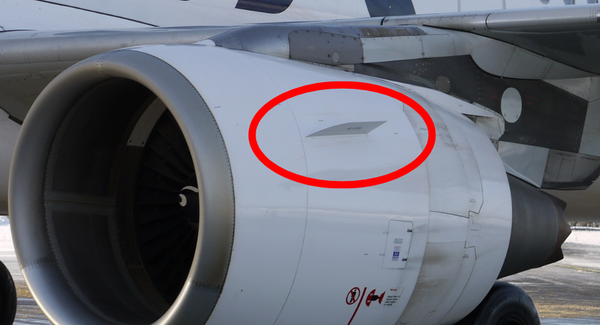 What Are Strakes? The Aerodynamic Fins Attached on an Aircraft's Fuselage
A look at how aircraft strakes quietly shape airflow, improve stability, and enhance aerodynamic performance.
INFORMATIONAL
READ MORE »
What Are Strakes? The Aerodynamic Fins Attached on an Aircraft's Fuselage
A look at how aircraft strakes quietly shape airflow, improve stability, and enhance aerodynamic performance.
INFORMATIONAL
READ MORE »
 BETA Technologies Begins Electric Aircraft Operations in North Carolina to Support Rural Healthcare Access
BETA Technologies launches its ALIA CTOL electric aircraft in North Carolina under a FAA program aimed at improving rural healthcare logistics.
NEWS
READ MORE »
BETA Technologies Begins Electric Aircraft Operations in North Carolina to Support Rural Healthcare Access
BETA Technologies launches its ALIA CTOL electric aircraft in North Carolina under a FAA program aimed at improving rural healthcare logistics.
NEWS
READ MORE »
More than just headlines.
Get unlimited ad-free access to in-depth aviation news, premium stories, and exclusive insights other sites don't cover.
- Ad-free browsing on AeroXplorer
- Unlimited access to premium and exclusive articles
- Higher photo upload limits & commissions on sales
- Free access to Jetstream Magazine on higher tiers
- Ad-free browsing
- Sell aviation photos with 60% commission
- First week free!
- Everything in Basic+
- Unlimited premium articles
- Sell aviation photos with 70% commission
- Free Digital subscription to Jetstream Magazine
- First week free!
- Everything in Basic+ and Pro
- Sell aviaiton photos with 80% commission
- Early access to exclusive stories
- Free Digital+Print subscription to Jetstream Magazine