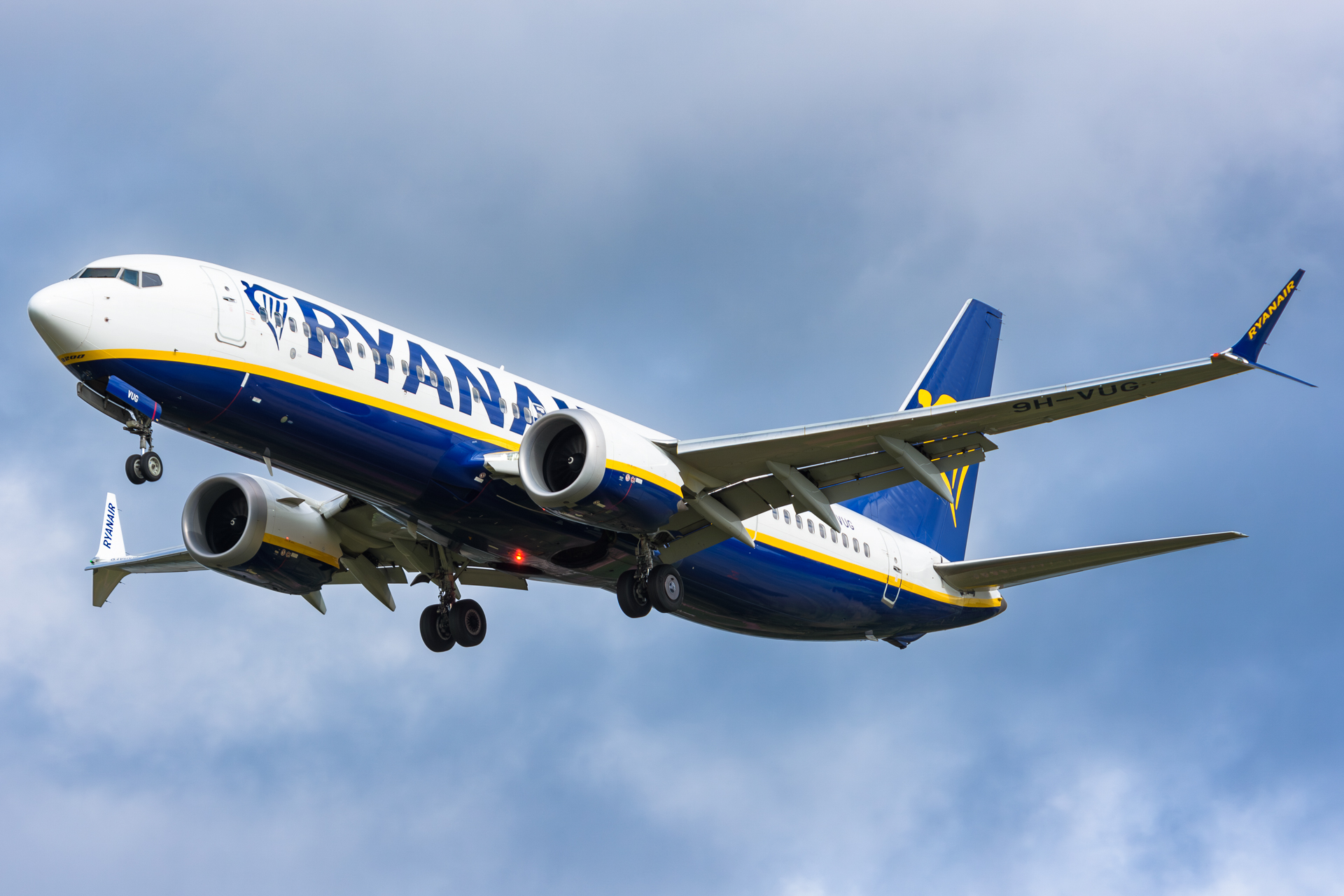

A Ryanair flight bound for Dublin returned to Porto late Tuesday after the captain transmitted the international hijack alert code, triggering an emergency response from Portuguese authorities before the aircraft ultimately completed its journey hours later.
Flight FR7073 departed Francisco Sá Carneiro Airport in Porto at around just before 11PM on Tuesday, September 22, bound for Dublin, Ireland, when the crew squawked 7500, the transponder code used worldwide to signal unlawful interference or a hijacking situation. The Boeing 737, reported by some outlets to be a 737 MAX 8, turned back and landed safely at its point of origin roughly 37 minutes after departure.

What Prompted the Alert
According to reports, a 48-year-old woman handed a flight attendant several sheets of paper shortly after takeoff, claiming that three people were following her, and asked that the note be passed to the pilot. The captain transmitted the 7500 code as the aircraft climbed through around 12,000 feet, prompting air traffic control to clear surrounding airspace and provide radar vectors for an immediate return to Porto.
What the Hijack Code Means
Pilots use a four-digit transponder code to communicate with air traffic control. The 7500 code tells controllers on the ground that the flight deck believes the aircraft has been hijacked or is under some form of unlawful interference. Once transmitted, an automated visual and audible alarm triggers on controllers' radar panels, and the signal sets off a chain of security protocols involving airport police, civil aviation authorities, and emergency response teams, which typically seek to confirm the alert before notifying national defense and law enforcement agencies.
In this case, the alert prompted a full activation of Porto airport's security procedures, with emergency services prepared for the aircraft's arrival.
Roughly two hours after landing, the aircraft departed Porto again for Dublin and completed the flight without further incident, arriving about two hours and 33 minutes later than originally scheduled. No injuries were reported at any point during the incident.
Ryanair's Response
A Ryanair spokesperson confirmed the incident, saying the flight returned to Porto shortly after take-off “due to a false security report, which was quickly resolved” before the flight continued to Dublin following a two hour and 33 minute delay.

Why Pilots Return Rather Than Continue
When a flight crew suspects a security threat, standard procedure calls for landing at the nearest suitable airport as quickly as possible. Returning to the departure airport often makes sense because ground crews, emergency responders, and the airline's own staff are already in place. It also avoids taking a potentially compromised aircraft into busier airspace or unfamiliar territory.
Transmitting the 7500 code discreetly alerts controllers without alerting anyone who might be causing a threat inside the cabin. Controllers then coordinate with military and civilian agencies to prepare for arrival, while typically seeking to rule out accidental input before escalating the response.

How AI Quietly Became the Backbone of Today’s Aviation Industry
Industry Context
False or precautionary hijack alerts have occurred before when crews acted out of caution based on passenger behavior, suspicious items, or communication issues. Aviation regulators treat every such transmission as genuine until it can be resolved, given the severity of what the code represents.
Ryanair, Europe's largest carrier by passenger numbers, operates hundreds of daily flights across the continent. Passengers affected by the delay can contact Ryanair directly for information on compensation, though the airline has characterized the incident as resolved.
Why Do Pilots Turn Off Cabin Lights During Takeoff and Landing? The Real Safety Reason Explained » FAA Equipment Outage Grounds Flights at Newark, JFK and Philadelphia Airports » Why Ice Is So Dangerous for Aircraft, and How Anti-Icing Systems Stop It »

Comments (0)
Add Your Comment
TAGS
NEWS OPO DUB Porto Dublin Ryanair FR7073 Flight 7073 RyanairRECENTLY PUBLISHED
 UAE Suspends Iranian Airline Flights to Comply With US Sanctions, Triggering Retaliatory Airspace Ban From Tehran
The UAE has halted all Iranian carrier operations to comply with reimposed US sanctions, prompting Iran to bar Emirati airlines from its airspace.
NEWS
READ MORE »
UAE Suspends Iranian Airline Flights to Comply With US Sanctions, Triggering Retaliatory Airspace Ban From Tehran
The UAE has halted all Iranian carrier operations to comply with reimposed US sanctions, prompting Iran to bar Emirati airlines from its airspace.
NEWS
READ MORE »
 What Are Strakes? The Aerodynamic Fins Attached on an Aircraft's Fuselage
A look at how aircraft strakes quietly shape airflow, improve stability, and enhance aerodynamic performance.
INFORMATIONAL
READ MORE »
What Are Strakes? The Aerodynamic Fins Attached on an Aircraft's Fuselage
A look at how aircraft strakes quietly shape airflow, improve stability, and enhance aerodynamic performance.
INFORMATIONAL
READ MORE »
 BETA Technologies Begins Electric Aircraft Operations in North Carolina to Support Rural Healthcare Access
BETA Technologies launches its ALIA CTOL electric aircraft in North Carolina under a FAA program aimed at improving rural healthcare logistics.
NEWS
READ MORE »
BETA Technologies Begins Electric Aircraft Operations in North Carolina to Support Rural Healthcare Access
BETA Technologies launches its ALIA CTOL electric aircraft in North Carolina under a FAA program aimed at improving rural healthcare logistics.
NEWS
READ MORE »
More than just headlines.
Get unlimited ad-free access to in-depth aviation news, premium stories, and exclusive insights other sites don't cover.
- Ad-free browsing on AeroXplorer
- Unlimited access to premium and exclusive articles
- Higher photo upload limits & commissions on sales
- Free access to Jetstream Magazine on higher tiers
- Ad-free browsing
- Sell aviation photos with 60% commission
- First week free!
- Everything in Basic+
- Unlimited premium articles
- Sell aviation photos with 70% commission
- Free Digital subscription to Jetstream Magazine
- First week free!
- Everything in Basic+ and Pro
- Sell aviaiton photos with 80% commission
- Early access to exclusive stories
- Free Digital+Print subscription to Jetstream Magazine