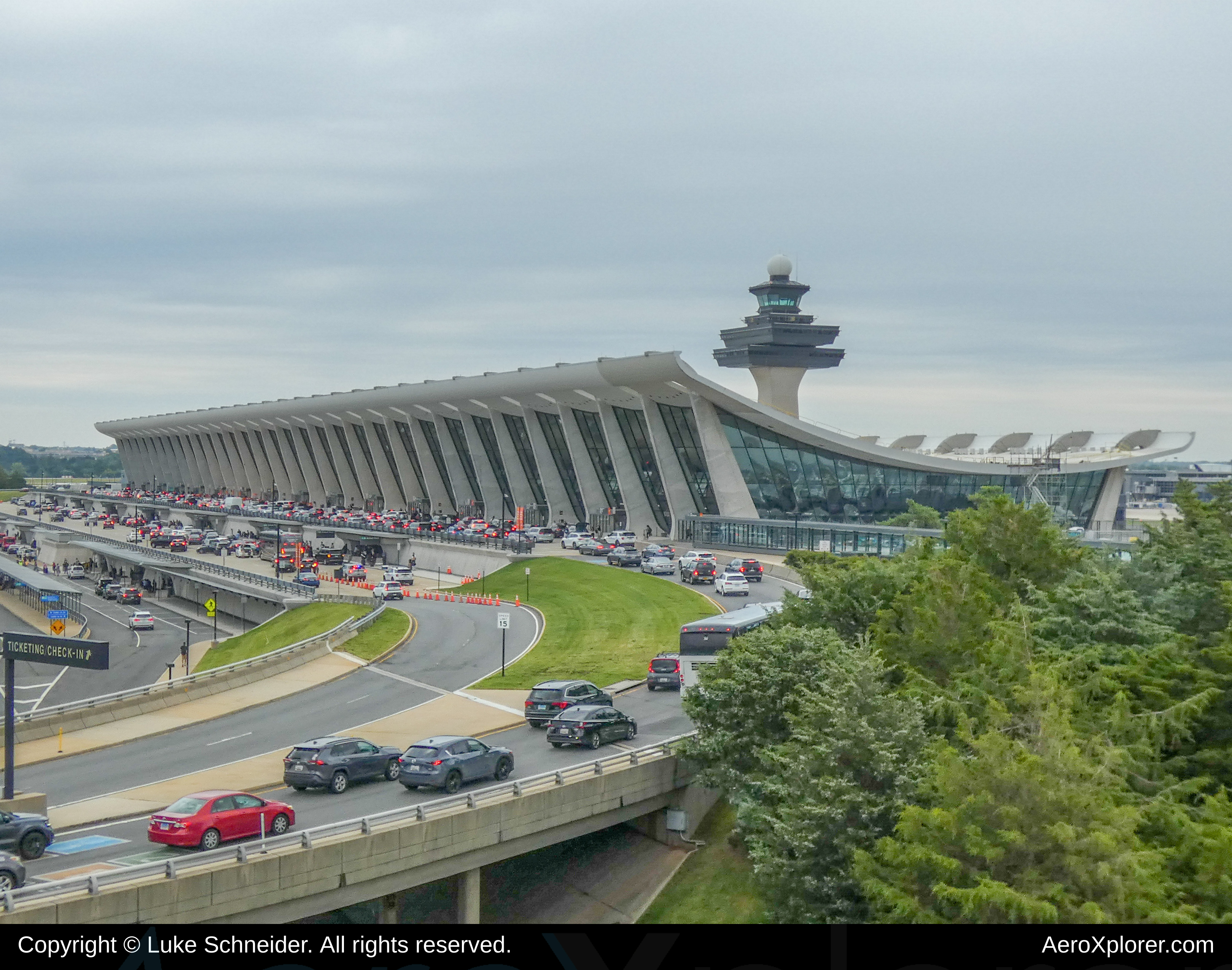

The Federal Aviation Administration has begun rolling out an artificial intelligence (AI) tool designed to help air traffic controllers reduce flight delays at the three major airports serving the Washington region. The technology arrives as travelers continue to face some of the worst congestion in the country at Ronald Reagan Washington National Airport, Washington Dulles International Airport, and Baltimore/Washington International Thurgood Marshall Airport.
The system uses machine learning to analyze weather patterns, air traffic flow, airport capacity, and other operational data. It then suggests routing adjustments to controllers who manage arrivals and departures across the crowded airspace surrounding the nation's capital. Human controllers retain final authority over every decision. The AI functions as an advisory tool rather than an autonomous decision-maker.
How the Tool Works
The FAA developed the Strategic Management of Airspace, Routes, and Trajectories (SMART) platform to address a persistent problem. Controllers currently rely on experience, radar displays, and verbal coordination to sequence aircraft during periods of heavy demand or bad weather. When storms roll through the mid-Atlantic corridor or when traffic volumes spike, the manual process can create bottlenecks that ripple across the national aviation network.
The new tool ingests real-time information and models likely outcomes based on historical data. Controllers see recommendations displayed on their screens and can accept, modify, or ignore them. Agency officials describe the approach as a way to give controllers a clearer picture of what the next several hours might look like, allowing them to make proactive adjustments rather than reactive ones.
The rollout begins with the Washington region because of its complexity. The three commercial airports share airspace with military installations, restricted zones around federal buildings, and general aviation traffic. Any small disruption tends to cascade quickly.

Why Washington
Reagan National in particular has struggled with capacity issues. The airport sits along the Potomac River and operates under strict noise and security restrictions that limit how controllers can sequence arrivals. Congress has added flights to Reagan's schedule in recent years despite objections from the FAA and airlines that argued the airport was already operating near its ceiling.
A midair collision in January between an American Airlines regional jet and an Army helicopter near Reagan National killed 67 people and prompted a broad review of operations in the region. Since that accident, the FAA has implemented new restrictions on helicopter traffic near the airport and taken additional steps to reduce the risk of conflicts between commercial and military aircraft.
Delays at the three Washington airports have consistently ranked among the highest in the country. Passengers regularly experience ground stops, extended taxi times, and rerouted flights during summer thunderstorm season and winter weather events.
Agency Rationale
FAA leaders have emphasized that the technology is meant to support controllers rather than replace them. The agency has faced a persistent controller shortage that has strained facilities across the country. Training a new controller can take several years, and the workforce pipeline has struggled to keep pace with retirements and attrition.
By giving existing controllers better tools, the FAA hopes to squeeze more efficiency out of the current system while it works to expand hiring. The agency has announced plans to hire thousands of new controllers over the coming years and to modernize aging equipment at facilities nationwide.
The Washington deployment serves as a test case. If the tool performs as expected, the FAA plans to expand its use to other congested regions including New York, Chicago, and the Southern California basin. Each of those areas presents its own operational challenges, but the underlying problem of coordinating high volumes of traffic through limited airspace is similar.

How AI Quietly Became the Backbone of Today’s Aviation Industry

Industry Response
Airlines have long pushed for modernization of the air traffic control system. Carriers argue that outdated technology and procedures cost the industry billions of dollars each year in wasted fuel, crew time, and passenger goodwill. Trade groups representing the major U.S. airlines have expressed support for the FAA's efforts to introduce artificial intelligence into operations, though they have also cautioned that technology alone cannot solve structural problems such as understaffing.
Labor representatives for controllers have generally supported the tool as long as it remains advisory. The National Air Traffic Controllers Association has emphasized that any technology introduced into the system must be thoroughly tested and that controllers must retain decision-making authority. Union leaders have voiced concern about workload in recent years and have argued that new tools should reduce stress rather than add to it.
What Passengers Can Expect
Travelers flying in and out of the Washington area are unlikely to notice the technology directly. The changes happen behind the scenes at radar facilities and control towers. If the tool works as designed, passengers should experience fewer delays, shorter holding patterns, and more predictable arrival times, particularly during periods of bad weather.
The FAA has not published specific targets for delay reduction associated with the Washington rollout. Agency officials have said they will monitor performance closely over the coming months and adjust the system based on controller feedback and operational results.
The deployment marks one of the more visible examples of federal aviation authorities embracing artificial intelligence for core operational functions. Other countries, including several in Europe, have experimented with similar tools. The Washington launch positions the United States to catch up with and potentially surpass those efforts if the technology proves reliable in one of the world's most complex airspaces.
How One Tech Entrepreneur Is Solving Private Aviation’s Million-Dollar Puzzle » United Airlines Takes Delivery of First Aircraft Powered by Pratt & Whitney's GTF Advantage Engine » Super Puma Firefighting Helicopter Crashes at Yosemite, Killing Both Pilots »

Comments (0)
Add Your Comment
TAGS
NEWS FAA Artificial Intelligence Flight Delays Washington DC Airports Air Traffic Management Aviation Technology DCA Airport Efficiency Aviation News ATC InnovationRECENTLY PUBLISHED
 UAE Suspends Iranian Airline Flights to Comply With US Sanctions, Triggering Retaliatory Airspace Ban From Tehran
The UAE has halted all Iranian carrier operations to comply with reimposed US sanctions, prompting Iran to bar Emirati airlines from its airspace.
NEWS
READ MORE »
UAE Suspends Iranian Airline Flights to Comply With US Sanctions, Triggering Retaliatory Airspace Ban From Tehran
The UAE has halted all Iranian carrier operations to comply with reimposed US sanctions, prompting Iran to bar Emirati airlines from its airspace.
NEWS
READ MORE »
 What Are Strakes? The Aerodynamic Fins Attached on an Aircraft's Fuselage
A look at how aircraft strakes quietly shape airflow, improve stability, and enhance aerodynamic performance.
INFORMATIONAL
READ MORE »
What Are Strakes? The Aerodynamic Fins Attached on an Aircraft's Fuselage
A look at how aircraft strakes quietly shape airflow, improve stability, and enhance aerodynamic performance.
INFORMATIONAL
READ MORE »
 BETA Technologies Begins Electric Aircraft Operations in North Carolina to Support Rural Healthcare Access
BETA Technologies launches its ALIA CTOL electric aircraft in North Carolina under a FAA program aimed at improving rural healthcare logistics.
NEWS
READ MORE »
BETA Technologies Begins Electric Aircraft Operations in North Carolina to Support Rural Healthcare Access
BETA Technologies launches its ALIA CTOL electric aircraft in North Carolina under a FAA program aimed at improving rural healthcare logistics.
NEWS
READ MORE »
More than just headlines.
Get unlimited ad-free access to in-depth aviation news, premium stories, and exclusive insights other sites don't cover.
- Ad-free browsing on AeroXplorer
- Unlimited access to premium and exclusive articles
- Higher photo upload limits & commissions on sales
- Free access to Jetstream Magazine on higher tiers
- Ad-free browsing
- Sell aviation photos with 60% commission
- First week free!
- Everything in Basic+
- Unlimited premium articles
- Sell aviation photos with 70% commission
- Free Digital subscription to Jetstream Magazine
- First week free!
- Everything in Basic+ and Pro
- Sell aviaiton photos with 80% commission
- Early access to exclusive stories
- Free Digital+Print subscription to Jetstream Magazine