
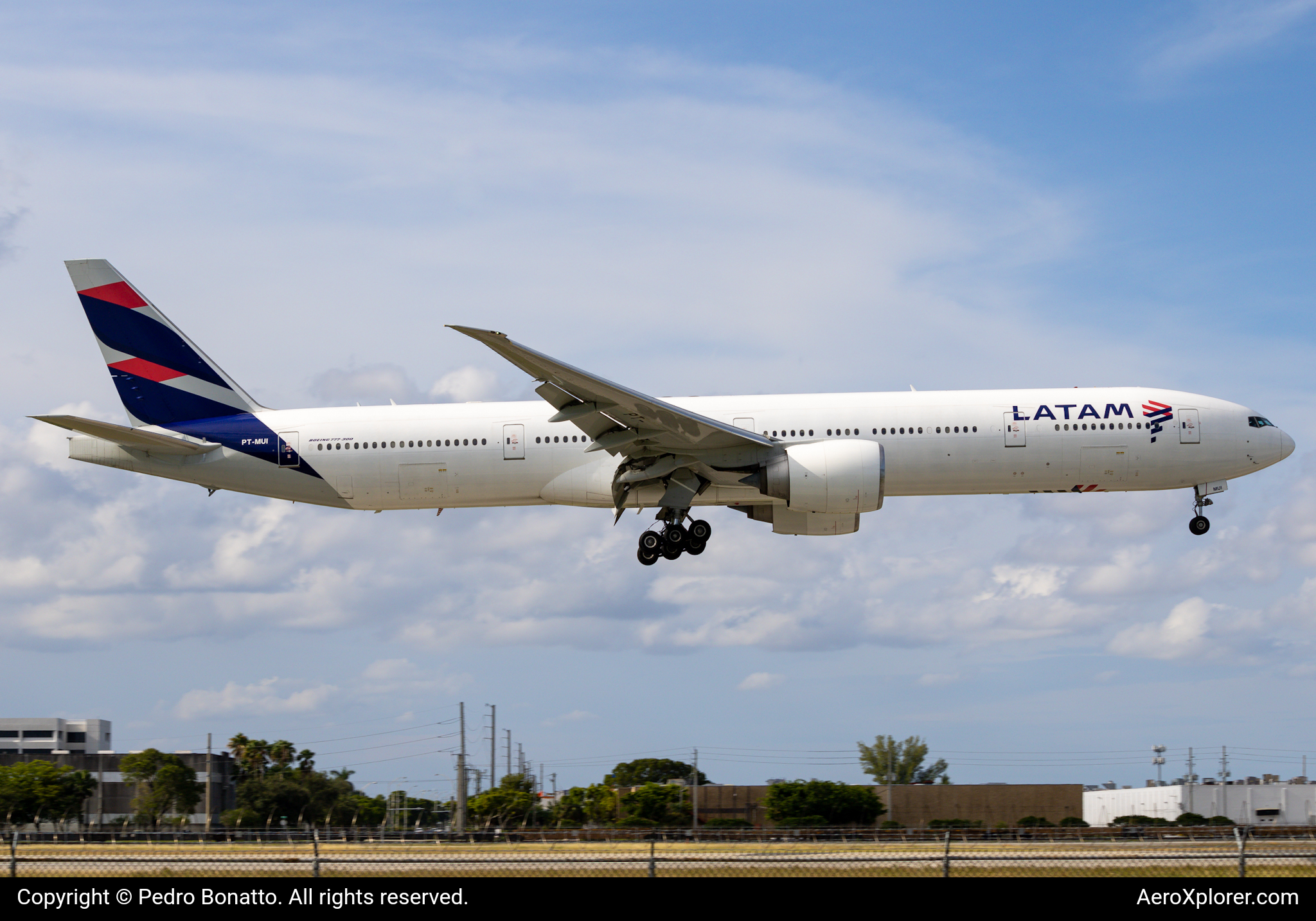

MILAN, ITALY — Aviation safety investigators have finalised their analysis of the high-profile tail-strike involving a LATAM Airlines Boeing 777-300ER, confirming that a staggering 100-ton weight miscalculation was the primary catalyst for the accident. The findings, released by Italy’s National Agency for the Safety of Flight (ANSV) as of February 2026, detail how a simple data entry error by an experienced flight crew led to a prolonged and damaging runway scrape at Milan Malpensa Airport (MXP).
Technical reports indicate that the July 2024 accident, in which the aircraft’s tail dragged across the asphalt for more than 700 meters, stemmed from a gross weight discrepancy that fundamentally invalidated the aircraft’s takeoff performance. During the preparation for Flight LA8073 to São Paulo, the crew entered a takeoff weight into their Electronic Flight Bags (EFBs) that was approximately 100 metric tons lower than the actual figure.
The error occurred when the line-training captain miscalculated the gross weight by incorrectly handling the fuel figures. According to the ANSV report:
“The result, 228.8 tonnes instead of the correct 328.4 tonnes, was verbally announced and subsequently used by both pilots.”

The Mechanics of a Near-Disaster
Because both pilots utilised the same erroneous 228.8-ton figure in their independent performance tools, the cross-check appeared to confirm the data, effectively masking the mistake. This led the onboard computers to calculate a rotation speed (Vr) of 149 knots, significantly lower than the 181 knots actually required for a fully loaded Boeing 777-300ER.
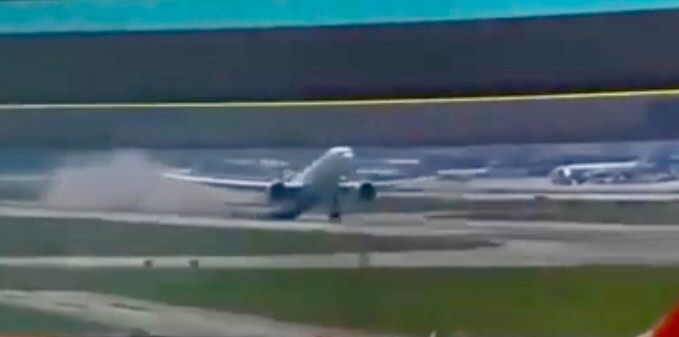
As the aircraft accelerated down Runway 35L, the pilot attempted to rotate at the prescribed (but incorrect) speed. The aircraft, being 100 tons heavier than the flight systems assumed, failed to lift off and instead pitched up until the aft fuselage struck the runway. Surveillance footage and flight data recorders confirm the tail remained in contact with the ground for 723 meters, carving a furrow up to 6 centimetres deep into the runway surface.

HEKLA: Icelandair Retires Hekla Aurora After 31 Years in the Skies
The "V-Speeds Unavailable" Warning
Investigators highlighted a critical moment during the pre-flight phase when the Flight Management Computer (FMC) triggered a “V-speeds unavailable” message. This occurred because the entered weight was so low that the calculated speeds fell outside the aircraft's safe operating envelope for the available runway length. However, the crew did not identify the underlying cause of the message and proceeded with the departure.
The situation was eventually corrected in the air after the cruise captain, sitting in the jumpseat, intervened.
“The cruise captain, observing the situation, ordered the selection of full takeoff thrust 12 seconds after rotation began.”
This manual override provided the necessary energy for the aircraft to finally climb away, clearing the opposite end of the runway by a mere 155 feet.
Impacted Flight Operations and Incident Summary
The following table summarises the specific flight details and operational impact resulting from the weight calculation error and subsequent airframe damage:
| Flight No. | Route | Departure Time | Arrival Time | Duration | Operating Days |
|---|---|---|---|---|---|
| LA8073 | MXP (Milan) – GRU (São Paulo) | 11:26 AM | 12:37 PM (Return) | 1h 11m | Incident Flight |
| LA9540 | GRU (São Paulo) – VCV (Victorville) | 04:23 AM | 10:49 AM | 10h 26m | Ferry/Repair Flight |
Note: Following the incident, the aircraft (Registration: PT-MUG) was grounded for approximately seven months for extensive structural repairs before returning to service.
Lessons in Cockpit Automation and Verification
The ANSV’s final report serves as a stark reminder of the "garbage in, garbage out" principle in modern glass cockpits. Despite having three pilots on the flight deck, including an instructor, the discrepancy of 30 knots in rotation speed went unnoticed until the physical strike occurred.
The agency has recommended that airlines implement more robust independent verification steps, suggesting that crews should manually compare EFB-generated speeds against standardised "paper" charts or previous experience to spot such massive outliers.
Delta Aircraft Isolated at Ben Gurion Airport Following Bomb Threat » Why the A-10 Warthog's Nose Gear Is Offset to the Right » Power Bank Fire in Overhead Bin Forces IndiGo A321neo to Divert »

Comments (0)
Add Your Comment
TAGS
STORIES LATAM Boeing 777-300ER Milan Malpensa Aviation SafetyRECENTLY PUBLISHED
 This Week in Aviation: The 10 Stories That Mattered Most
From major airline developments to aircraft updates and industry shifts, this weekly recap highlights the ten most-read aviation stories from the week of October 11.
INFORMATIONAL
READ MORE »
This Week in Aviation: The 10 Stories That Mattered Most
From major airline developments to aircraft updates and industry shifts, this weekly recap highlights the ten most-read aviation stories from the week of October 11.
INFORMATIONAL
READ MORE »
 GPS Jamming Is Now a Daily Airline Problem. Here Is How Bad It Has Gotten
GPS jamming and spoofing are disrupting airline navigation across Europe, the Middle East and South Asia. Explore how widespread GNSS interference threatens flight safety, affects airline operations, and what pilots and regulators are doing to manage the growing risk.
INFORMATIONAL
READ MORE »
GPS Jamming Is Now a Daily Airline Problem. Here Is How Bad It Has Gotten
GPS jamming and spoofing are disrupting airline navigation across Europe, the Middle East and South Asia. Explore how widespread GNSS interference threatens flight safety, affects airline operations, and what pilots and regulators are doing to manage the growing risk.
INFORMATIONAL
READ MORE »
 Who Is Accountable When an AI Air Traffic Tool Gets It Wrong?
Who is liable when an AI air traffic control tool gets it wrong? The FAA’s SMART system faces scrutiny over safety testing, controller oversight, and legal accountability as lawmakers question its use in U.S. airspace.
INFORMATIONAL
READ MORE »
Who Is Accountable When an AI Air Traffic Tool Gets It Wrong?
Who is liable when an AI air traffic control tool gets it wrong? The FAA’s SMART system faces scrutiny over safety testing, controller oversight, and legal accountability as lawmakers question its use in U.S. airspace.
INFORMATIONAL
READ MORE »
More than just headlines.
Get unlimited ad-free access to in-depth aviation news, premium stories, and exclusive insights other sites don't cover.
- Ad-free browsing on AeroXplorer
- Unlimited access to premium and exclusive articles
- Higher photo upload limits & commissions on sales
- Free access to Jetstream Magazine on higher tiers
- Ad-free browsing
- Sell aviation photos with 60% commission
- First week free!
- Everything in Basic+
- Unlimited premium articles
- Sell aviation photos with 70% commission
- Free Digital subscription to Jetstream Magazine
- First week free!
- Everything in Basic+ and Pro
- Sell aviaiton photos with 80% commission
- Early access to exclusive stories
- Free Digital+Print subscription to Jetstream Magazine