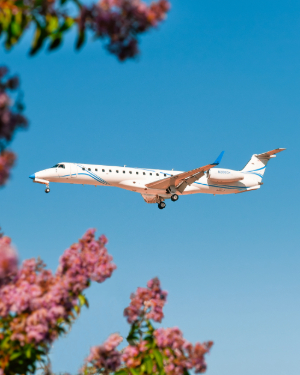
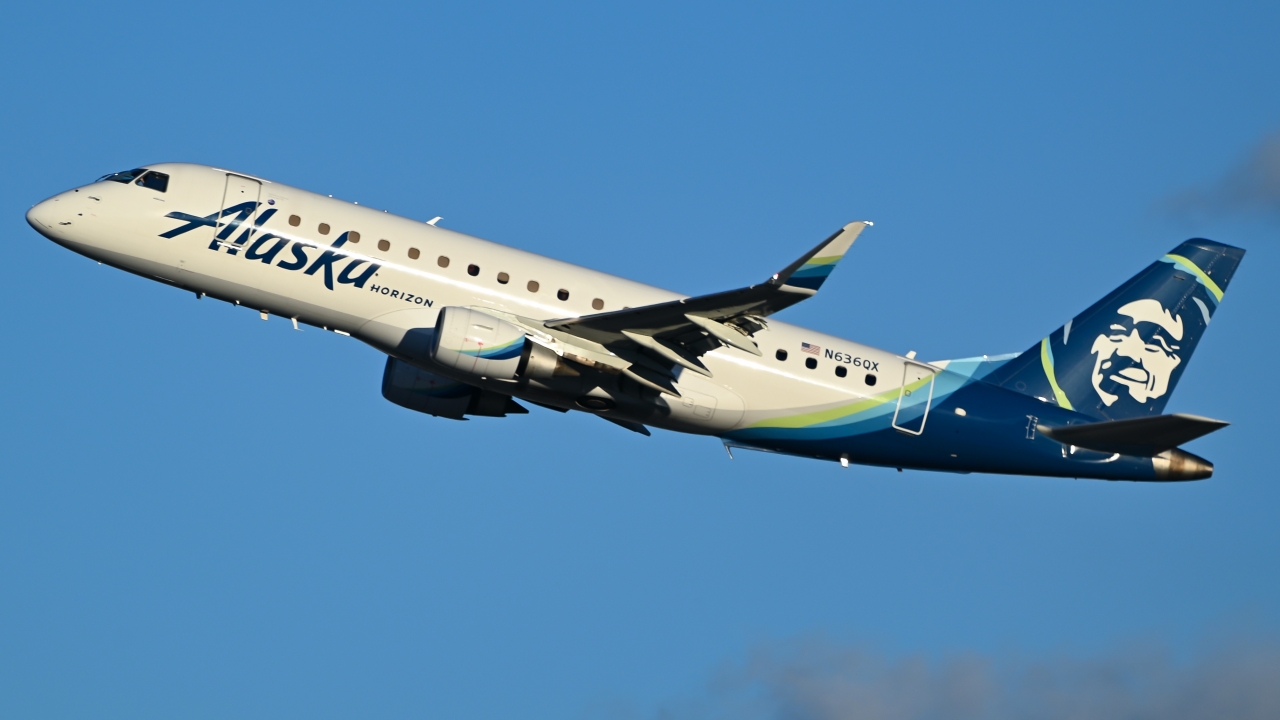

PORTLAND, OR – The aviation community and the public are getting a chilling, firsthand look at the moments of near-catastrophe aboard Alaska Airlines Flight 2059 (operated by Horizon Air). Newly released cockpit voice recordings (CVR), made public in early January 2026 following the conclusion of legal proceedings, capture the exact moment off-duty pilot Joseph Emerson attempted to shut down the aircraft's engines mid-flight.
The recordings provide a visceral account of the confusion and rapid response that prevented a mass-casualty event on the October 22, 2023, flight from Everett to San Francisco.
“I’m Not Okay”
The audio, obtained through public records requests following Emerson’s late-2025 sentencing, reveals a haunting exchange between the flight crew and Emerson, who was occupying the cockpit’s "jump seat."
In the transcript, Emerson can be heard breathing heavily before stating clearly: “I’m not okay.” Initially, the captain, misunderstanding the severity of the situation, replied, “You’re okay?” Emerson immediately corrected him, more forcefully this time: “I’m not okay.” Seconds later, the audio captures the sound of a physical struggle as Emerson lunges for the two red fire suppression T-handles.
The T-handles, located on the overhead panel, are designed to cut off fuel flow to the engines in the event of an on-board fire. If fully deployed, they would have turned the Embraer 175 into a high-altitude glider.

Timeline of the Incident
Flight AS2059
| Time (approx) | Event | Details |
|---|---|---|
| 05:45 PM | Departure | Flight 2059 departs Everett (PAE) for San Francisco (SFO). |
| 06:15 PM | Initial Distress | Emerson tells the crew, "I'm not okay." |
| 06:16 PM | Engine Shutdown Attempt | Emerson reaches for T-handles; pilots physically restrain him. |
| 06:17 PM | Emergency Declared | Pilots radio ATC: "We've got a jump seater who tried to shut our engines off." |
| 06:30 PM | Diversion | Flight begins emergency descent into Portland International (PDX). |
| 06:42 PM | Safe Landing | Aircraft lands safely; Emerson is taken into custody by Port of Portland Police. |
Game Day: The Unseen Operation Behind College Sports Travel
The "Dream State" and Psychedelic Influence
Subsequent investigations and Emerson's own testimony revealed that the veteran pilot was suffering from a profound mental health crisis exacerbated by the use of psilocybin ("magic mushrooms") two days prior. Emerson told investigators he had not slept for over 40 hours and believed he was stuck in a "dream" from which he needed to wake up.
"I thought I was dying. I thought pulling those handles would wake me up," Emerson stated during his 2025 trial. "I had no intention of hurting anyone; I just wanted to be home."
Medical experts later identified that Emerson may have been suffering from Hallucinogen Persisting Perception Disorder (HPPD), a rare condition where the effects of psychedelics can cause dissociative "flashbacks" long after the substance has left the bloodstream.
Why Emerson Was in the Jump Seat
At the time of Flight 2059, Joseph Emerson was legally authorized to occupy the cockpit jump seat under long-standing FAA regulations governing reciprocal cockpit access. As a current, credentialed airline pilot employed by a Part 121 carrier, Emerson met all baseline requirements: valid airman certificates, current medical certification, and employment verification. Under FAA policy, pilots traveling off-duty may request jump-seat access for commuting or repositioning, subject to identity verification and the captain’s final approval.
Critically, no drug or alcohol testing is conducted at the gate for jump-seat access, nor is there a psychological screening component beyond the pilot’s existing medical certification. Emerson had not tested positive for any prohibited substances, had no disqualifying medical flags on record, and, by all outward appearances, presented as a professional crewmember. Investigators later confirmed that neither the operating crew nor the gate staff had any indication of impairment prior to departure.
Legal Conclusion and Industry Reform
In December 2025, the legal saga concluded with a federal judge sentencing Emerson to time served and five years of probation. The sentence was seen by many as a landmark decision, balancing the severity of the act with the clear evidence of a mental health breakdown.
The incident has sparked a massive overhaul in how the FAA and airlines approach pilot mental health. Emerson has since become an advocate for reform, launching a nonprofit aimed at allowing pilots to seek help for depression and grief without the immediate fear of losing their medical certification.
- January 5: An earlier version of this article did not fully explain how Joseph Emerson was authorized to occupy the cockpit jump seat on Alaska Airlines Flight 2059. The article has been updated to clarify this context.
Lufthansa Wins Bid for 44.9% Stake in TAP Air Portugal, Edging Out Air France-KLM » JetBlue Opens Sales for BlueFirst, Its First Domestic First Class Cabin » Why Did Some Air India A320s Have Extra Wheels? Bogie Gear Explained »

Comments (1)
 Bill
I would imagine that Emerson lost his pilot's license. But whether he did or didn't should have be noted in the summary of the judge's sentence.
Bill
I would imagine that Emerson lost his pilot's license. But whether he did or didn't should have be noted in the summary of the judge's sentence.
Add Your Comment
TAGS
NEWS Alaska Aviation Safety Pilot Mental Health Horizon Air NTSB Cockpit Voice RecordingsRECENTLY PUBLISHED
 JetBlue Opens Sales for BlueFirst, Its First Domestic First Class Cabin
JetBlue begins selling seats in its new BlueFirst domestic first class cabin, with service starting in 2026 on select transcontinental routes.
NEWS
READ MORE »
JetBlue Opens Sales for BlueFirst, Its First Domestic First Class Cabin
JetBlue begins selling seats in its new BlueFirst domestic first class cabin, with service starting in 2026 on select transcontinental routes.
NEWS
READ MORE »
 Southwest Overhauls Rapid Rewards and How it Affects You
Southwest Airlines is expanding its Rapid Rewards program with new redemption options, tier benefits, and status perks. Here's what it means for you.
NEWS
READ MORE »
Southwest Overhauls Rapid Rewards and How it Affects You
Southwest Airlines is expanding its Rapid Rewards program with new redemption options, tier benefits, and status perks. Here's what it means for you.
NEWS
READ MORE »
 Qantas Grounds Plane After Passengers Report Bedbug Bites on Flight
Qantas pulled an aircraft from service after passengers reported bedbug bites during flight QF5.
NEWS
READ MORE »
Qantas Grounds Plane After Passengers Report Bedbug Bites on Flight
Qantas pulled an aircraft from service after passengers reported bedbug bites during flight QF5.
NEWS
READ MORE »
More than just headlines.
Get unlimited ad-free access to in-depth aviation news, premium stories, and exclusive insights other sites don't cover.
- Ad-free browsing on AeroXplorer
- Unlimited access to premium and exclusive articles
- Higher photo upload limits & commissions on sales
- Free access to Jetstream Magazine on higher tiers
- Ad-free browsing
- Sell aviation photos with 60% commission
- First week free!
- Everything in Basic+
- Unlimited premium articles
- Sell aviation photos with 70% commission
- Free Digital subscription to Jetstream Magazine
- First week free!
- Everything in Basic+ and Pro
- Sell aviaiton photos with 80% commission
- Early access to exclusive stories
- Free Digital+Print subscription to Jetstream Magazine