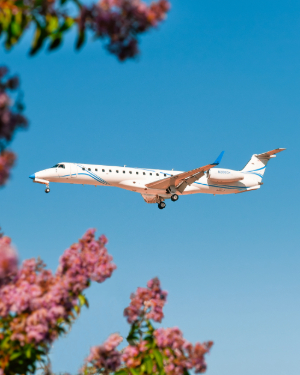
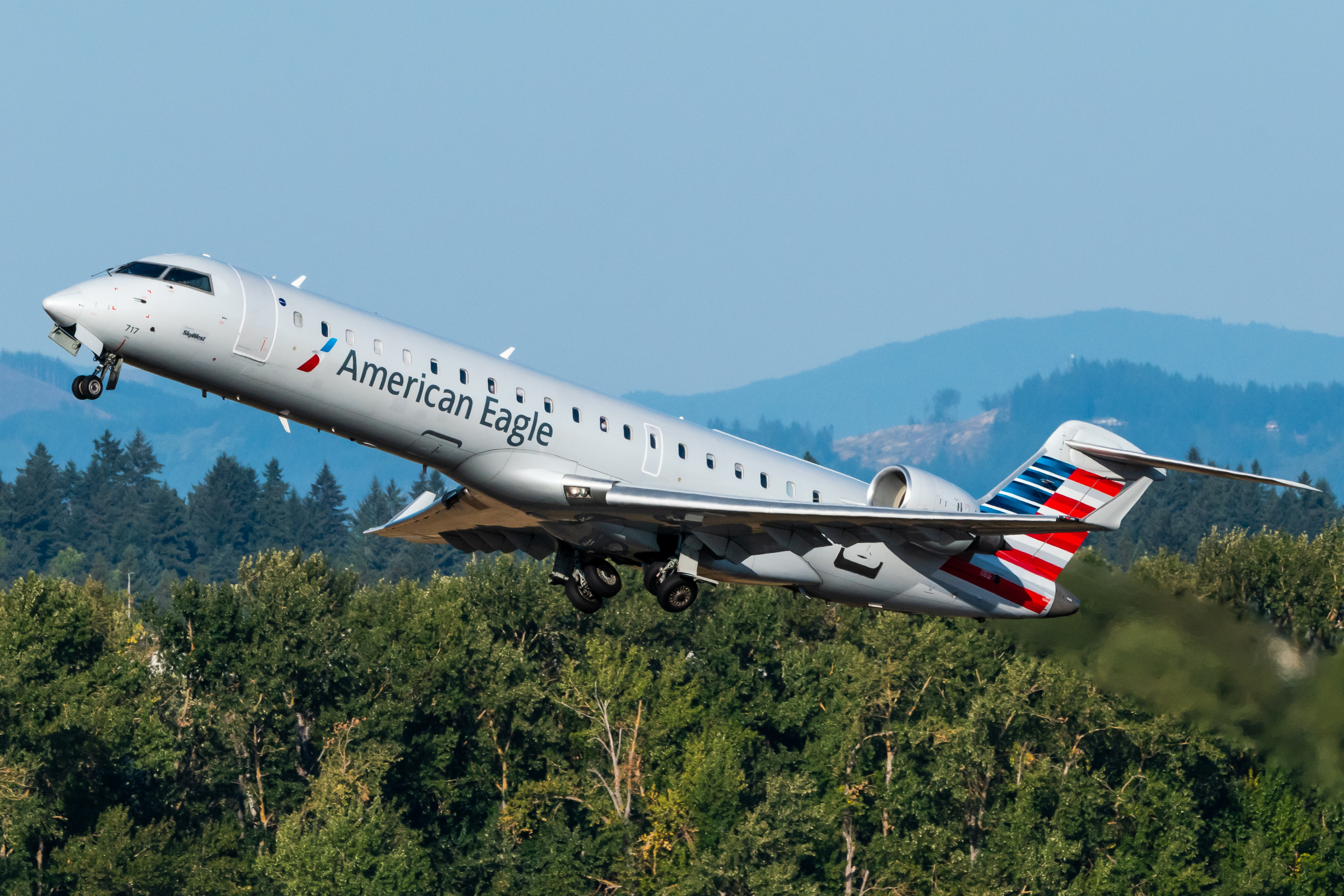

According to the Air Transport Action Group's Waypoint 2050 study released in September 2020, "a range of actions" will be required to assist reduce aviation emissions. Alternative-fuel sources or new technology, such as hydrogen-powered aircraft concepts, are one of several ways to reduce the aviation sector's climate impact. To enact change, widespread industry collaboration must be required.

Aiming to achieve lower fuel consumption and CO2 emissions, American Airlines announced its investment in ZeroAvia, a developer of hydrogen-electric powertrain technology that aims to “drive emissions-free flying." The amount invested has not yet been disclosed, and the company refuses to clarify which regional aircraft American Airlines plans to convert to hydrogen power. On the other hand, American Airlines seeks to order up to 100 hydrogen-electric engines to power regional jet aircraft with zero emissions, as part of a Memorandum of Understanding.
Hydrogen has the same energy level as kerosene, providing comparable range and performance to current generation aircraft, and allowing for the potential to reduce CO2 emissions from aviation by up to 50%.
Presently, ZeroAvia's primary objective is to receive specific approvals for its ground-breaking propulsion technology, which will open the door for hydrogen-electric engines to be used in the future regional aircraft market.
The hydrogen pioneer company has revealed its various hydrogen-electric engine types and is getting ready to launch test flights for its ZA600 powertrain with a modified Dornier 228. Slated for commercial use by 2024, the ZA600 intends to support up a range of 9 to 19-seat aircraft, has a range of up to 300 miles, and runs on hydrogen gas. According to the firm, the larger powerplant ZA2000, will utilize liquid hydrogen and be ready for sale in 2026. This engine option is the likely option for American Airlines, capable of supporting aircraft with up to 80 passengers on routes and a range of up to 700 miles.
Founder and CEO of ZeroAvia Val Miftakhov discussed the partnership with American Airlines and commercializing emission-free flying powered by hydrogen, in a statement. "Having support from the world’s largest airline is a strong indication of the progress we’re making on the development of hydrogen-electric, zero-emission flight. We are focused on delivering sustainable travel, and are delighted that American, a visionary leader in the industry, sees ZeroAvia as a part of the future of aviation."

American Airlines has pledged to reduce greenhouse gas emissions to zero by 2050, and its partnership with ZeroAvia could help boost this goal. In the medium term, American Airlines is trying to promote the use of sustainable aviation fuel, and the Fort Worth, Texas-based airline's 2035 emissions reduction objectives have been validated by the Science Based Targets Initiative.
Similarly, United Airlines announced an investment in ZeroAvia last year, placing an order of 100 hydroelectric engines and acquiring a stake in the engineering corporation. The announcement of an engine order with American Airlines propels ZeroAvia in the North American market, as rising fuel costs pose a challenge to regional carriers in the United States and around the world.
US Moves to Accelerate Aircraft Certification Citing Competition from China's Aviation Industry » The $30 Billion Question: Why America's Air Traffic Control Overhaul Keeps Getting More Expensive » United Express Flight Returns to Houston After Cockpit Windshield Shatters Mid-Flight »

Comments (0)
Add Your Comment
TAGS
NEWS American Airlines American Air ZeroAvia Engine Hydrogen HydroelectricRECENTLY PUBLISHED
 IATA's New Passenger Data Shows Global Air Travel Demand Shrinking for the First Time This Year
Global air travel just hit a reverse that has not been seen in months -- the numbers point to something more interesting than a simple slowdown.
INFORMATIONAL
READ MORE »
IATA's New Passenger Data Shows Global Air Travel Demand Shrinking for the First Time This Year
Global air travel just hit a reverse that has not been seen in months -- the numbers point to something more interesting than a simple slowdown.
INFORMATIONAL
READ MORE »
 The $30 Billion Question: Why America's Air Traffic Control Overhaul Keeps Getting More Expensive
The U.S. government is seeking $30 billion more to modernize America’s aging air traffic control system. Explore the rising $42.5 billion price tag, GAO oversight concerns, and where the new funding would go.
INFORMATIONAL
READ MORE »
The $30 Billion Question: Why America's Air Traffic Control Overhaul Keeps Getting More Expensive
The U.S. government is seeking $30 billion more to modernize America’s aging air traffic control system. Explore the rising $42.5 billion price tag, GAO oversight concerns, and where the new funding would go.
INFORMATIONAL
READ MORE »
 Embraer Posts Record 66 Aircraft Deliveries in Q3 2026 as Commercial Jets Climb 10%
Embraer delivered 66 aircraft in Q3 2026, its strongest third quarter on record, with commercial jets up 10% and business jets rising 41%.
NEWS
READ MORE »
Embraer Posts Record 66 Aircraft Deliveries in Q3 2026 as Commercial Jets Climb 10%
Embraer delivered 66 aircraft in Q3 2026, its strongest third quarter on record, with commercial jets up 10% and business jets rising 41%.
NEWS
READ MORE »
More than just headlines.
Get unlimited ad-free access to in-depth aviation news, premium stories, and exclusive insights other sites don't cover.
- Ad-free browsing on AeroXplorer
- Unlimited access to premium and exclusive articles
- Higher photo upload limits & commissions on sales
- Free access to Jetstream Magazine on higher tiers
- Ad-free browsing
- Sell aviation photos with 60% commission
- First week free!
- Everything in Basic+
- Unlimited premium articles
- Sell aviation photos with 70% commission
- Free Digital subscription to Jetstream Magazine
- First week free!
- Everything in Basic+ and Pro
- Sell aviaiton photos with 80% commission
- Early access to exclusive stories
- Free Digital+Print subscription to Jetstream Magazine