For all the promise of additive manufacturing, the first step is quite tedious.
Before a single layer of material is deposited, engineers must first design the part in CAD, using tools like SolidWorks, Siemens NX, or Autodesk Fusion 360. Even when working off of an existing component, this means hours of work from specially-trained engineers designing and re-designing a part until the file is ready to prepare.
Add in additional checks to ensure missing features are patched, components are watertight, and specified tolerances are upheld, and now a seemingly straightforward process has become a manual, expertise-heavy project. And this tedious workflow is only exacerbated when parts are irregularly shaped or lacking their original design files.
Only then can a part be sent into a preparation software, where it is sliced into layers and translated into machine-readable instructions. And at this stage, if further imperfections are found, the part must be sent back for the design process to start again.
Considering the highly variable mission profiles of aircraft nowadays, it is uncommon for two parts to fail in identical ways. Sure, FEA can predict failure profiles to some extent, but the empirical results will always be different. Thus, this process needs to be followed for every single part individually, exponentially increasing the cost of time and money.
One company is reinventing this process, enabling faster part reconstruction and, in doing so, opening up new possibilities for industrial repair at scale.
Scan, Don’t Model
Enter FormAlloy, a San Diego-based metal additive manufacturing firm reinventing how metal parts are designed, repaired, and manufactured.
The company leverages Directed Energy Deposition (DED) technology, a technique that uses a focused energy source – such as a laser or an electric beam – to melt material as it is guided through a nozzle. Think of it as a conventional PLA-based 3D printer, except the filament is metal rather than plastic.
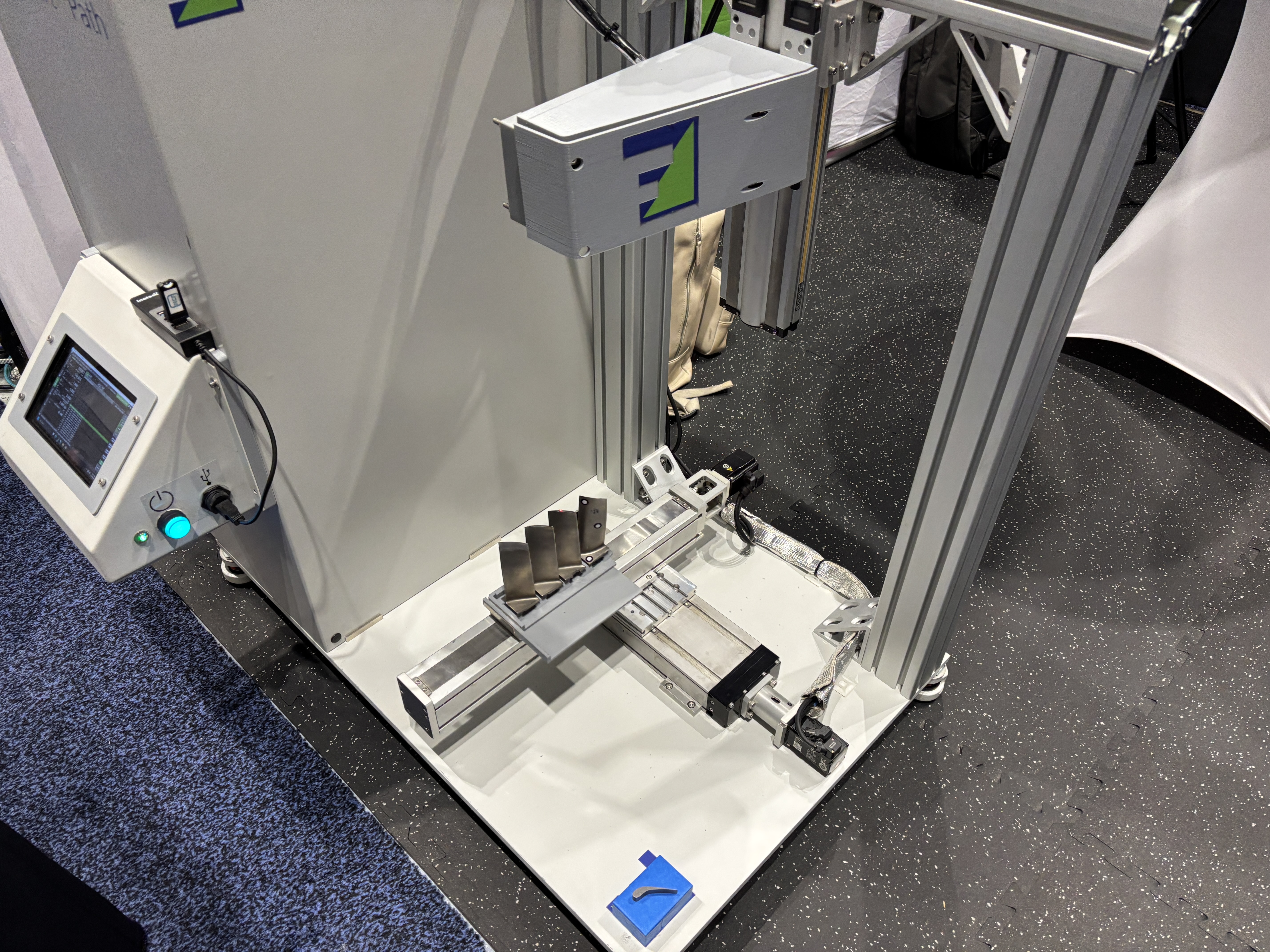
In conversation with AeroXplorer, FormAlloy CEO Melanie Lang shared more about her company’s technology, and how it is saving headaches for businesses around the country.
FormAlloy manufactures three DED systems, ranging in build volume from 300mm x 300mm x 300mm (approximately 1ft x 1ft x 1ft) up to 2m x 2m x 2m (approximately 6.5ft x 6.5ft x 6.5ft). Through FormAlloy’s proprietary software, the material is deposited precisely where it’s needed. But what sets the company apart is how it determines where that is.
“You don’t necessarily have to have a 3D model.” Lang explained. “We've developed a technology that can simply scan the component that needs to be repaired and automatically generate that toolpath, then automatically start repairing onto that surface.”
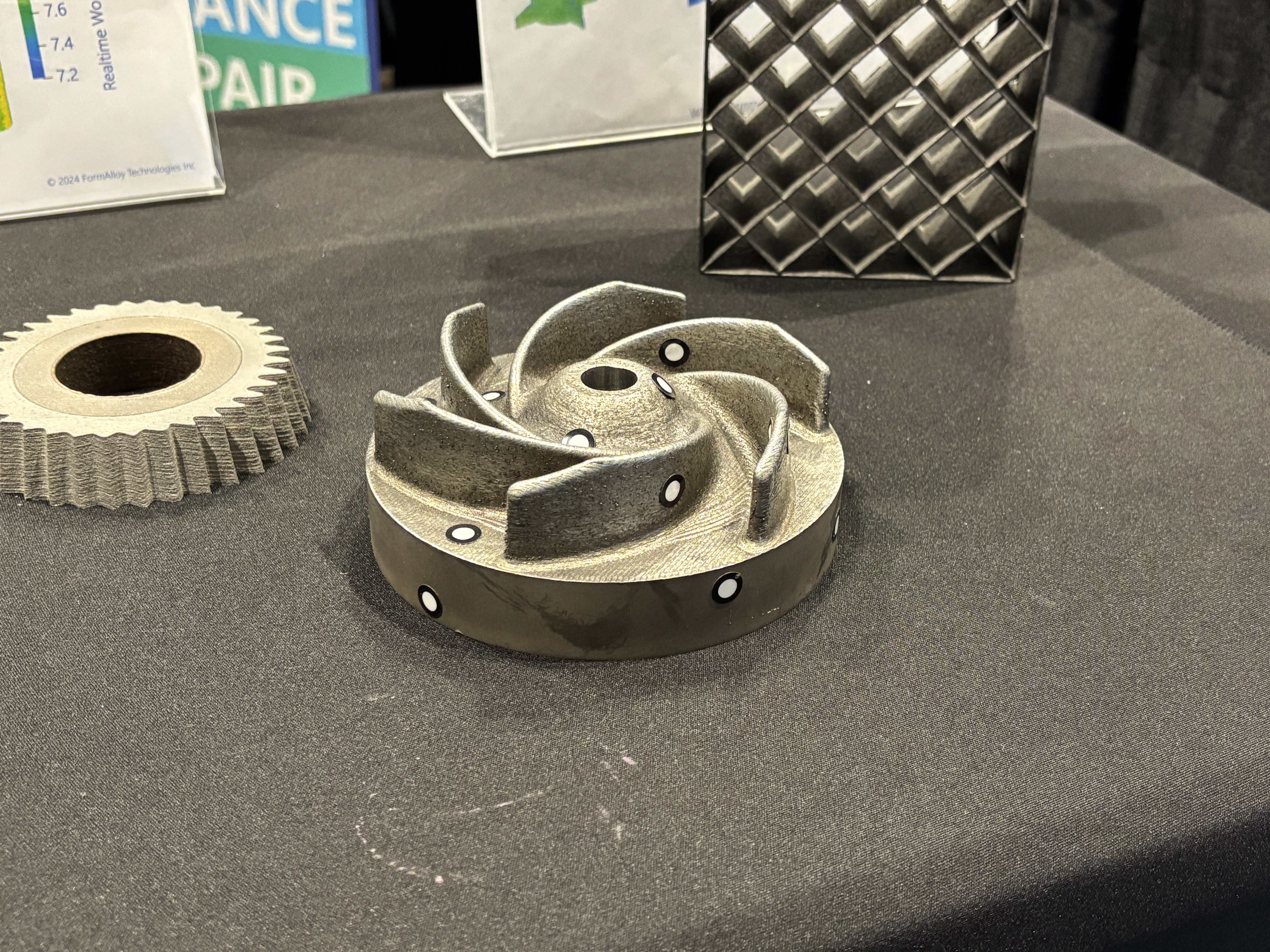
Rather than requiring engineers to reverse-engineer a worn component into a CAD file, FormAlloy’s systems can scan the component directly and automatically generate a toolpath. From there, the machine begins depositing material to bring the part back to its required specifications, without the need for any manual modeling.
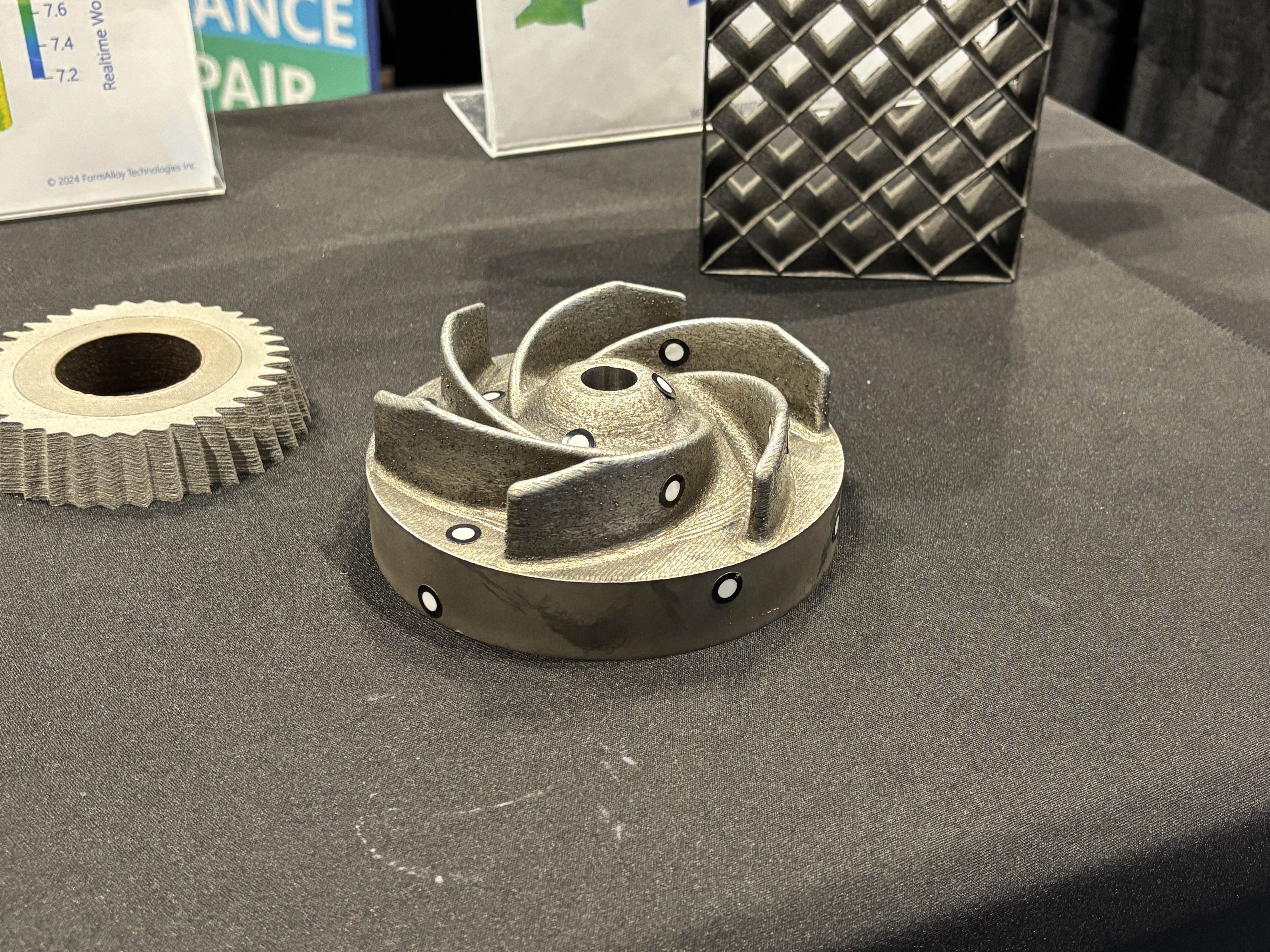
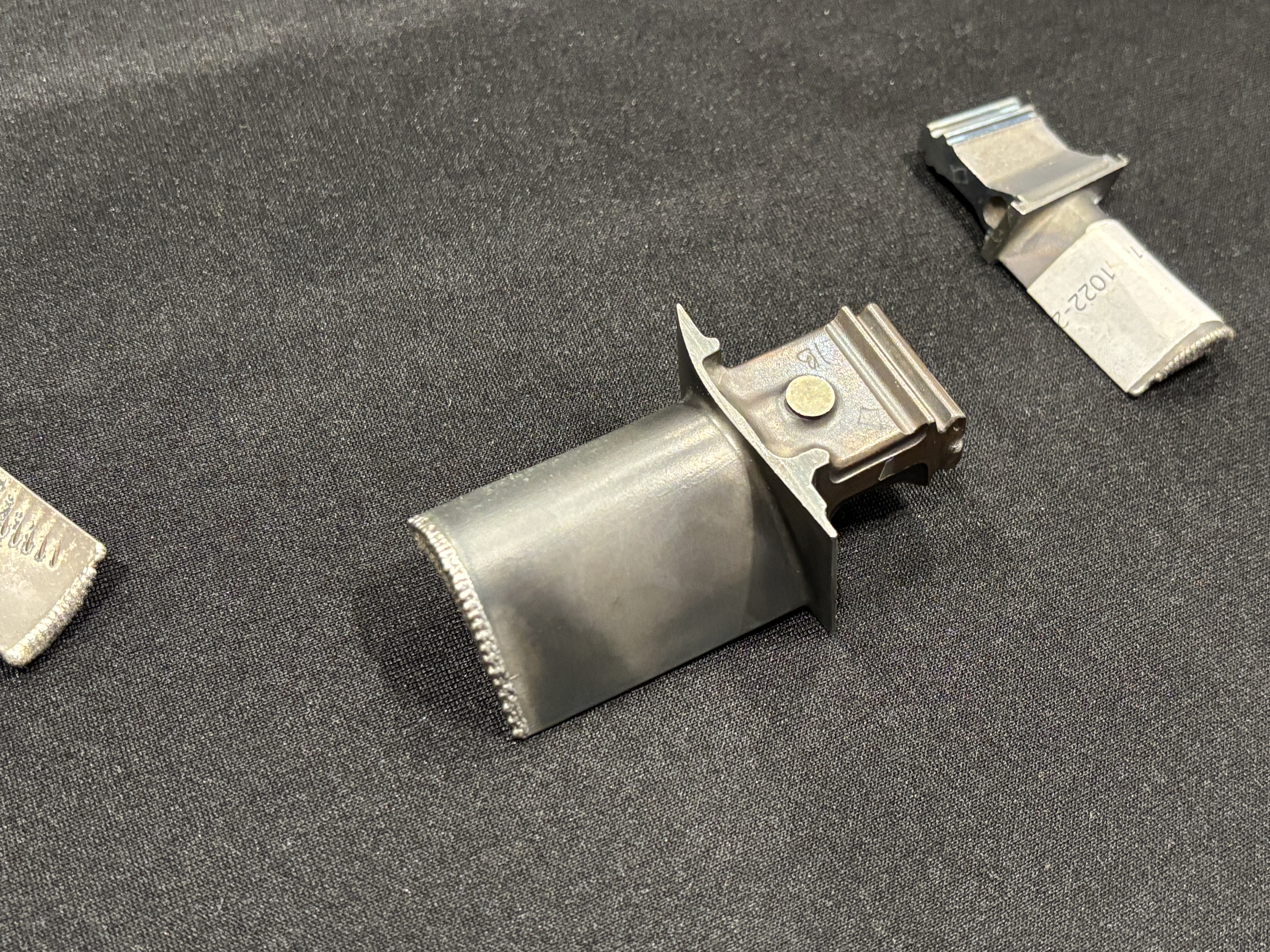
The implications of this are significant. Turbine blades, for example, are notoriously expensive to replace, and are typically repaired today using manual welding processes, where trained engineers build material back up to tolerance by hand. FormAlloy’s solution automates this process.
Lang shared, “A lot of times these parts that are being repaired are being repaired with a manual weld repair. So someone is welding manually, and then they're trying to build it back up to tolerance. So just like that welder knows, ‘I have to lay down 10 layers,’ or ‘I have to lay down 20 millimeters,’ we would have to tell the machine that as well. We have to tell it what the dimensions should be.”
Handling Variability
In a live demonstration, Lang showed the system processing an array of four turbine blades, with one of them being placed incorrectly. The point was to prove that the system didn’t assume uniformity. Each blade is scanned individually, and the system generates an independent toolpath for each one, accounting for variations in wear pattern, geometry, positioning, and more.
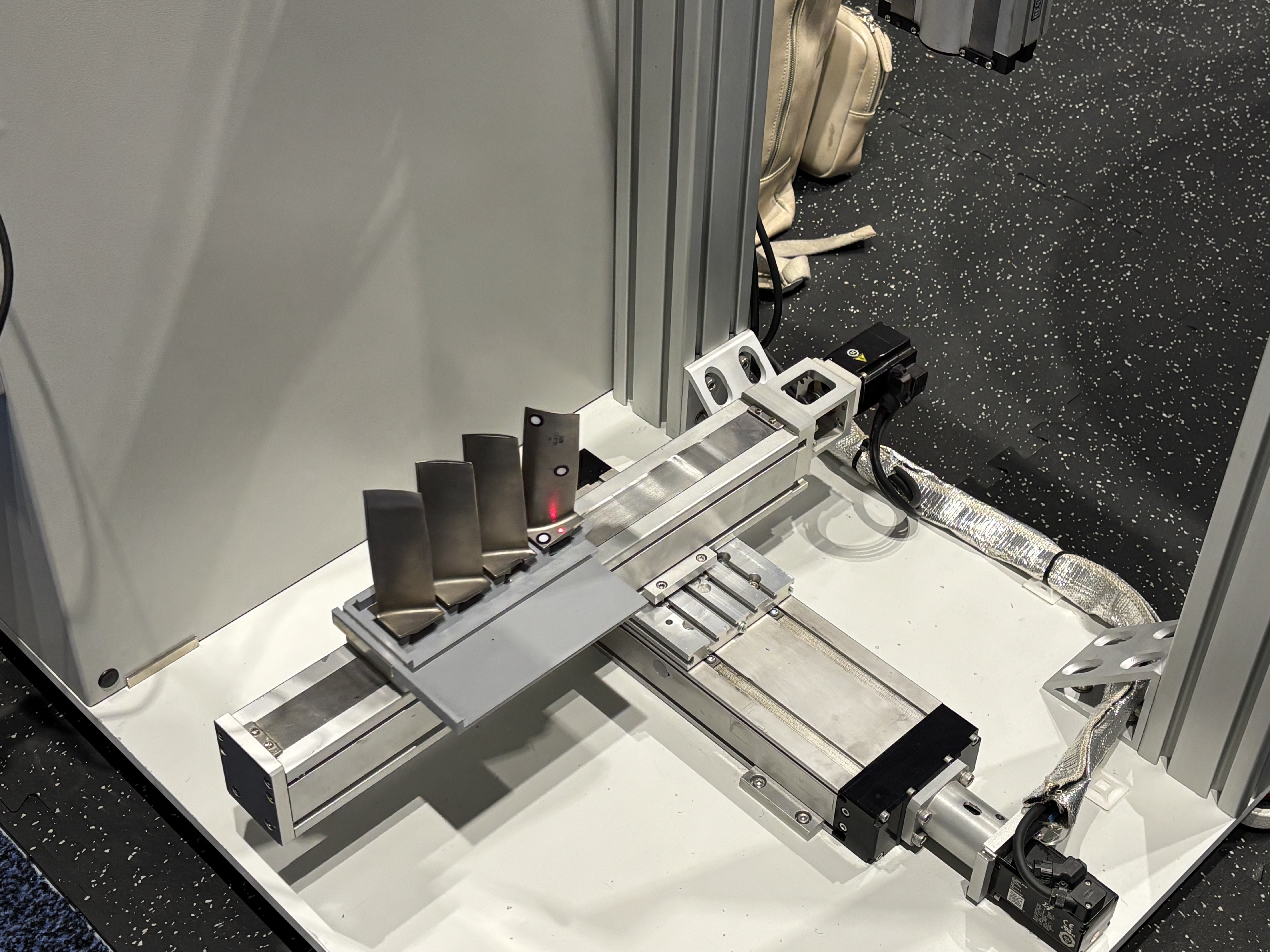
But, Lang mentioned, for applications where parts are uniform (such as adding coatings to new components) the system can replicate a single toolpath across an array, using the scanner primarily for alignment and feature detection.
Certification
Perhaps the most technically nuanced point Lang made was that the geometry is only a small part of the requirements. While important, another large part of the equation lies with maintaining specified tolerances, which cannot be overstated. What use is a part if it cannot perform reliably in real-world applications?

Analysis: How Spirit Airlines Changed Airline Pricing, then Paid the Price
This distinction, Lang argues, is where many repair processes fall short. And it’s what sets FormAlloy apart from its competition.
“You also need to look at the size and shape and temperature of the melt pool that you’re generating and keep that very consistent, because that’s what keeps the material properties constant,” she explained. “How that part will perform depends on how it's made and what is happening with the temperature gradients in the part and the cooling rates. And those are things that we control to make sure that not only do they look the same, but they also perform the same.”
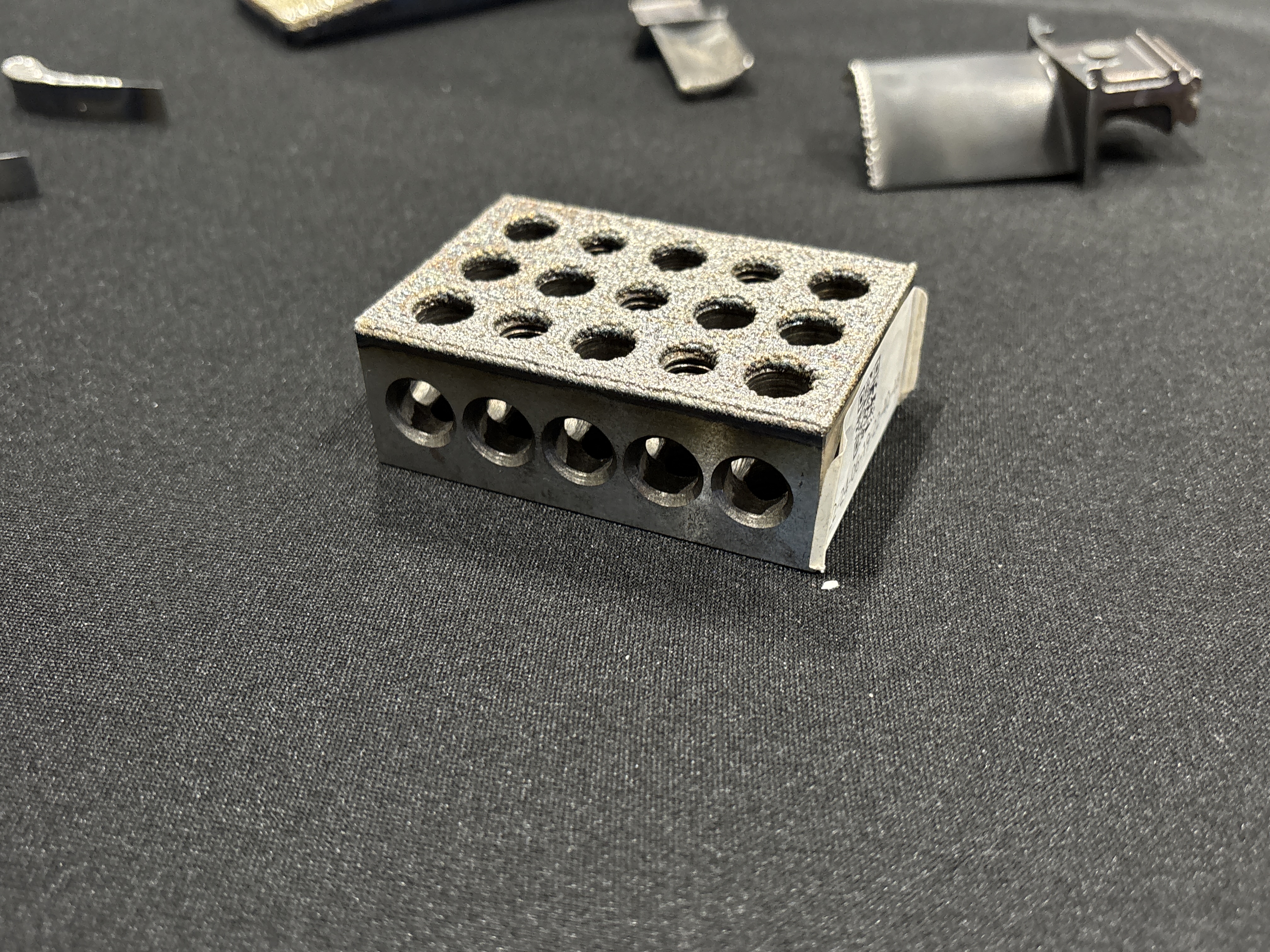
This, along with the company’s DED Smart Control, makes parts manufactured by FormAlloy’s products more easily certifiable. In fact, this Smart Control technology can be used directly in the certification process, collecting information about temperature gradients, bead sizes, and cooling speeds to ensure material properties are identical to their original counterparts.
A New Workflow
FormAlloy is making a compelling case that the industrial additive manufacturing industry has been ignoring for decades. In the past, innovation has largely started with the printing process itself, but what if the model doesn’t exist?
By innovating with the part first, and pairing scan-to-print capabilities with data-driven part fabrication, FormAlloy is compressing a multi-day workflow into mere hours.
In doing so, FormAlloy is moving toward a future where additive manufacturing now prioritizes intelligent restoration, rather than perfect prints. And for companies focused on long-term wins, this is what matters more.
American Airlines 737 Diverts to Chicago O'Hare After Suspected Cabin Fire » FlyUSA Opens 50,000-Square-Foot Owner-Exclusive Hangar and Lounge at Tampa International Airport » FAA Orders Engine Repairs on Airbus A380 Fleet After Uncontained Failure »
Comments (0)
Add Your Comment
TAGS
INFORMATIONAL Interview FormAlloy Additive Manufacturing MRORECENTLY PUBLISHED
 The End of Lufthansa's Four-Engine Era as Its Last Airbus A340-600 Lands in Frankfurt for the Final Time After 23 Years
Porter Airlines expands its international network from London, Ontario, deploying the Embraer E195-E2 on new routes for Canadian travelers.
NEWS
READ MORE »
The End of Lufthansa's Four-Engine Era as Its Last Airbus A340-600 Lands in Frankfurt for the Final Time After 23 Years
Porter Airlines expands its international network from London, Ontario, deploying the Embraer E195-E2 on new routes for Canadian travelers.
NEWS
READ MORE »
 Rolls-Royce Launches Serial Production of Pearl 10X Engine for Dassault's Falcon 10X
Rolls-Royce begins serial production of its Pearl 10X engine, powering Dassault's upcoming Falcon 10X ultra-long-range business jet.
NEWS
READ MORE »
Rolls-Royce Launches Serial Production of Pearl 10X Engine for Dassault's Falcon 10X
Rolls-Royce begins serial production of its Pearl 10X engine, powering Dassault's upcoming Falcon 10X ultra-long-range business jet.
NEWS
READ MORE »
 Austrian Airlines Flight Diverts to Sofia Under Fighter Escort After Bomb Threat
An Austrian Airlines flight from Tel Aviv to Vienna made an emergency landing in Sofia, Bulgaria, on Sunday, October 18, after a bomb threat against the aircraft.
NEWS
READ MORE »
Austrian Airlines Flight Diverts to Sofia Under Fighter Escort After Bomb Threat
An Austrian Airlines flight from Tel Aviv to Vienna made an emergency landing in Sofia, Bulgaria, on Sunday, October 18, after a bomb threat against the aircraft.
NEWS
READ MORE »
More than just headlines.
Get unlimited ad-free access to in-depth aviation news, premium stories, and exclusive insights other sites don't cover.
- Ad-free browsing on AeroXplorer
- Unlimited access to premium and exclusive articles
- Higher photo upload limits & commissions on sales
- Free access to Jetstream Magazine on higher tiers
- Ad-free browsing
- Sell aviation photos with 60% commission
- First week free!
- Everything in Basic+
- Unlimited premium articles
- Sell aviation photos with 70% commission
- Free Digital subscription to Jetstream Magazine
- First week free!
- Everything in Basic+ and Pro
- Sell aviaiton photos with 80% commission
- Early access to exclusive stories
- Free Digital+Print subscription to Jetstream Magazine