
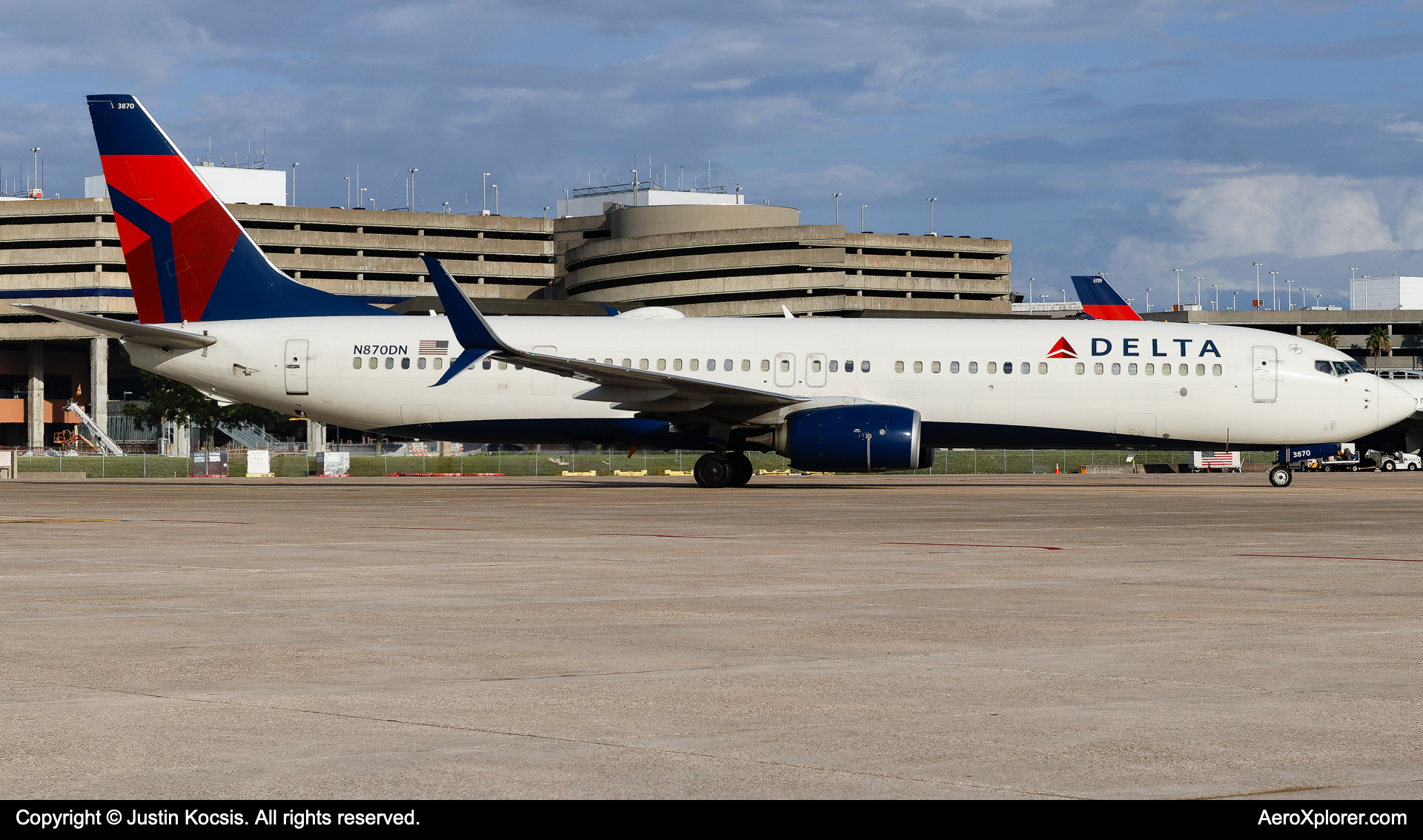

A class action lawsuit filed in a New York district court on May 1, 2026 has placed Delta Air Lines at the centre of one of the most pointed consumer protection challenges in recent US aviation history, accusing the Atlanta-based carrier of deliberately designing its cancellation website to push passengers who purchased fully refundable tickets toward an inferior, expiring electronic credit rather than the cash refund they contractually paid a premium to receive. The suit, brought by New York City resident Svetlana Sky, alleges that Delta's conduct constitutes the use of "dark patterns", a term used to describe user interface designs engineered to manipulate consumer choices, and that the behaviour meets the Federal Trade Commission's own definition of illegal activity.
What the Lawsuit Alleges
Delta Air Lines is using 'dark patterns' to deceive passengers who purchased fully refundable tickets at a premium to accept an expiring e-credit that allows the Atlanta-based carrier to profit unjustly from its deception, a new class action lawsuit against the airline alleges. The lawsuit is being brought by a New York City resident, appropriately named Svetlana Sky, who believes that the claim against Delta could easily exceed $5 million for plaintiffs in the New York area alone.
The lawsuit, which was filed in a New York district court on May 1, accuses Delta of breach of contract and violations of New York business law, as well as negligent misrepresentation and unjust enrichment.
The central mechanism of the alleged deception is specific and precise. When canceling a flight, Delta customers are presented with a web page where the e-credit option is already pre-selected and occupies the entire viewable area. Passengers who want cash rather than e-credit need to deselect this option and scroll down to choose the full refund.
In the complaint, Svetlana explained the consumer's reasonable expectation in purchasing such a ticket:
"For a consumer, including Plaintiff, who purchased a fully refundable fare, the ordinary and reasonable understanding is that cancelling the ticket constitutes the request to refund the unused refundable portion – nothing more is required to refund the full purchase price to the original form of payment."

The FTC's "Tricks and Traps" Framework
In the suit filed, the Plaintiff has made clear that such practice by the airline constitutes what the Federal Trade Commission defines as "illegal activity using tricks and traps to hide information."
According to the lawsuit, this constitutes "illegal activity [...] using 'tricks and traps' to hide information, including cancellation options, 'buried on pages beyond the initial offer page'."
The FTC has been actively targeting dark pattern practices across industries, and the language from Svetlana's complaint maps directly onto the agency's enforcement framework. By citing the FTC definition, the plaintiff positions Delta's cancellation interface not as a design inconvenience but as a deliberate commercial strategy that crosses into the territory of consumer fraud.
Delta's Own Internal Valuation Contradicts Its Refund Presentation
Perhaps the most commercially revealing element of the complaint is its use of Delta's own pricing structure as evidence of the disparity between the two refund options.
"Delta recognizes a substantial economic difference between cash-equivalent credits and carrier-limited travel credits. In fact, Delta values a cash refund at twice – 2x – the value of an e-credit on its own platform," the complaint states.
The practical mechanism behind this valuation difference is explained directly in the filing. Delta's e-credits expire just one year after they have been issued. A passenger who receives an e-credit and fails to use it within twelve months has, in effect, allowed Delta to retain money it received for a flight that was never operated, a transfer of value from consumer to corporation that the complaint characterises as unjust enrichment.
The complaint identifies precisely how the disparity manifests in Delta's own product offerings: the valuation difference is the key distinction between a Delta Main Classic ticket, which gives passengers e-credit in the event of cancellation, and a Main Extra ticket, which costs more and is "fully refundable." Customers who paid the premium specifically to avoid e-credits, the suit argues, are then being presented with a default that delivers exactly what they paid extra not to receive.
Alaska Goes Global: How Hawaiian Airlines Changed the Carrier’s Future
The DOT Regulatory Context
The lawsuit arrives against a backdrop of regulatory reform that was specifically intended to prevent this type of situation from arising. Before the end of the Biden administration's term, the Department of Transportation changed refund rules for passengers on a significantly delayed or canceled flight, forcing airlines to automatically offer a full refund when a passenger decided to abandon their travel and cancel their ticket. Until the rule change, it was up to airlines to decide when passengers were entitled to a refund due to a 'significant change' to their itinerary, resulting in wildly differing rights for passengers depending on which airline they chose to fly with.
A key point in this ruling was that, for the first time among US airlines, there was a set definition for what could be considered a significant delay or change to service, with the DoT stating that, for domestic services, it is a change in flight times of three hours or more, while for international services, it would be a change exceeding six hours.
The lawsuit's focus is, however, on a different category of cancellation, not a DOT-triggered refund right arising from airline-initiated disruption, but the exercise of a contractual cash refund right that the passenger had specifically purchased. That distinction matters: the DOT rule change covers involuntary disruption scenarios; Svetlana's complaint targets what happens when a passenger voluntarily cancels a ticket they paid extra to make fully refundable.

Not Delta Alone
The complaint's targeting of Delta does not mean the practice is unique to the carrier. Delta isn't the only airline using this particular "shady" strategy. As one Reddit user in the discussion wrote, "It's super shady, and a lot of companies do this."
Like Delta Air Lines, both American and United Airlines have been accused of tricking passengers into accepting credit despite being eligible for full cash refunds. Canadian airlines have also fallen under scrutiny for their cancellation policies.
Social media has amplified the pattern of complaints. A Reddit user commented on a post on the popular subreddit r/delta, stating, "I bought a ticket from Asia to NA. Requested a refund within 24 hours, and DL provided the refund through eCredit, even though I paid through credit card, and expected a refund back to the credit card."
The Stakes Beyond the Dollar Figure
The $5 million estimate for New York plaintiffs alone is significant. As a class action, the lawsuit could in principle encompass every Delta customer who purchased a fully refundable fare and received an e-credit default instead of a cash refund, a pool that is potentially very large given the scale of Delta's operations and the frequency with which passengers cancel refundable tickets on the carrier's network.
More broadly, the case is a test of whether an airline's interface design choices constitute a contractual breach when they systematically route customers away from a benefit they demonstrably paid for. If the court finds in the plaintiff's favour, it could set a precedent that forces US carriers to redesign their cancellation flows to default to the passenger's contractual entitlement rather than the airline's preferred outcome. That would be a structural change with consequences well beyond Delta's refund policies, and well beyond New York.
Why Did Some Air India A320s Have Extra Wheels? Bogie Gear Explained » Why Engine Lease Rates Are Still Climbing as Values Level Off » Power Bank Fire in Overhead Bin Forces IndiGo A321neo to Divert »

Comments (0)
Add Your Comment
TAGS
NEWS Delta Air Lines Airline Refund Lawsuit Svetlana Sky Dark Patterns E-Credit Dispute FTC Tricks Traps Passenger Rights DOT Refund Rules Class Action 2026 New York Lawsuit Airline Consumer Rights Fully Refundable Ticket Delta Class Action Airline Accountability FlightsRECENTLY PUBLISHED
 JetBlue Opens Sales for BlueFirst, Its First Domestic First Class Cabin
JetBlue begins selling seats in its new BlueFirst domestic first class cabin, with service starting in 2026 on select transcontinental routes.
NEWS
READ MORE »
JetBlue Opens Sales for BlueFirst, Its First Domestic First Class Cabin
JetBlue begins selling seats in its new BlueFirst domestic first class cabin, with service starting in 2026 on select transcontinental routes.
NEWS
READ MORE »
 Southwest Overhauls Rapid Rewards and How it Affects You
Southwest Airlines is expanding its Rapid Rewards program with new redemption options, tier benefits, and status perks. Here's what it means for you.
NEWS
READ MORE »
Southwest Overhauls Rapid Rewards and How it Affects You
Southwest Airlines is expanding its Rapid Rewards program with new redemption options, tier benefits, and status perks. Here's what it means for you.
NEWS
READ MORE »
 Qantas Grounds Plane After Passengers Report Bedbug Bites on Flight
Qantas pulled an aircraft from service after passengers reported bedbug bites during flight QF5.
NEWS
READ MORE »
Qantas Grounds Plane After Passengers Report Bedbug Bites on Flight
Qantas pulled an aircraft from service after passengers reported bedbug bites during flight QF5.
NEWS
READ MORE »
More than just headlines.
Get unlimited ad-free access to in-depth aviation news, premium stories, and exclusive insights other sites don't cover.
- Ad-free browsing on AeroXplorer
- Unlimited access to premium and exclusive articles
- Higher photo upload limits & commissions on sales
- Free access to Jetstream Magazine on higher tiers
- Ad-free browsing
- Sell aviation photos with 60% commission
- First week free!
- Everything in Basic+
- Unlimited premium articles
- Sell aviation photos with 70% commission
- Free Digital subscription to Jetstream Magazine
- First week free!
- Everything in Basic+ and Pro
- Sell aviaiton photos with 80% commission
- Early access to exclusive stories
- Free Digital+Print subscription to Jetstream Magazine