
Cosmic Aerospace, a startup developing an electric aircraft, raised $4.5 million in funding earlier this month. The company is currently working on the aircraft's design after building and successfully testing its engine.

Background and Product
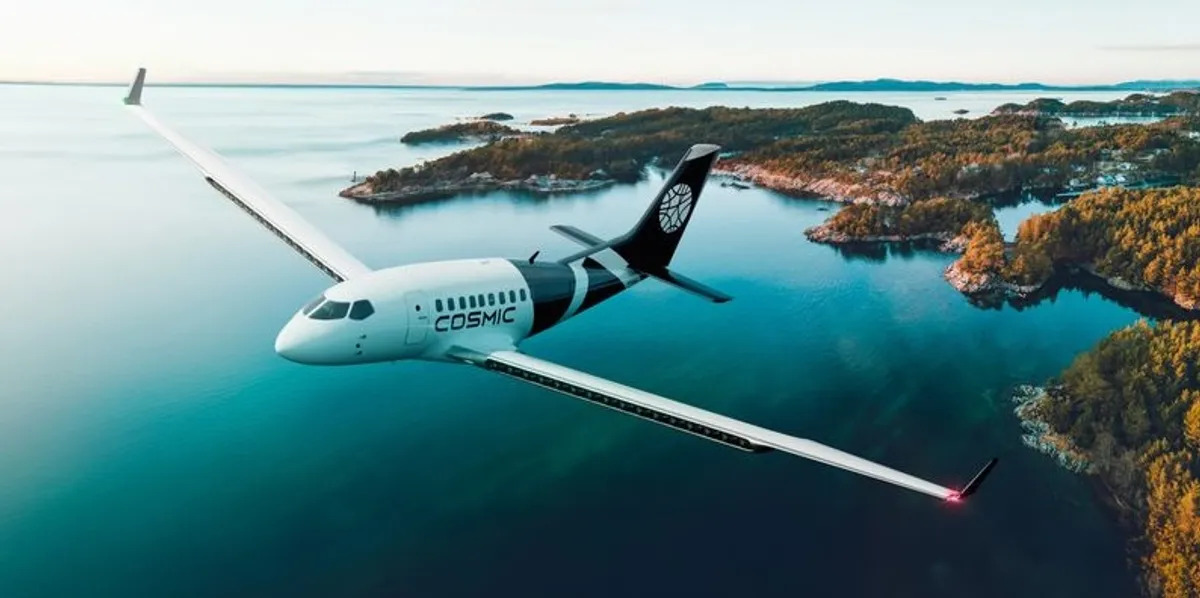
Cosmic Aerospace is an aerospace startup that aims to facilitate air travel without carbon emissions. The company was founded by people with extensive experience in the aerospace industry. Cosmic plans to build the world's first electric aircraft with a maximum range of 1,000 kilometers (621 miles). This aircraft can fly much farther than the electric planes currently on the market.
Cosmic's aircraft, the Cosmic Skylark, will have a similar range to traditional commercial jets with lower costs and more environmental benefits. The Cosmic Skylark can accommodate 24 passengers and three crew members on short-haul flights powered completely by electricity. The plane's high range is possible due to its propulsion system, unique wing design, lightweight structure, and the ability to operate on today's batteries.
Cosmic is focusing on creating an efficient airframe and propulsion system design that does not require advances in electric batteries. The drawback with electric aviation is that batteries are not yet advanced enough to operate large electric aircraft with hundreds of passengers across long distances. Batteries are low in energy density, meaning storing enough electric energy at a low enough weight for long-haul commercial flights is impossible.
.jpg)
Many aviation stakeholders are using sustainable aviation fuel (SAF) to decarbonize their flight operations. Although SAF can reduce carbon dioxide (CO₂) emissions by up to 80 percent, hydrogen and electric aircraft can also reduce aviation's environmental impact. The International Energy Agency (IEA) estimated that aviation comprised approximately 2% of global CO₂ emissions in 2022. The industry has adopted a goal of reaching net zero emissions by 2050.
Cosmic decided to design a more efficient aircraft instead of waiting decades for batteries to become advanced enough for the widespread adoption of electric aviation. The company has already built and tested the engine for the Cosmic Skylark. Cosmic plans to operate its full-scale demonstrator's first flight in 2026 and initiate commercial service by 2030.
.jpg)
$4.5 Million in Seed Funding
On February 6, Cosmic Aerospace raised $4.5 million in seed funding to develop its product further. The seed round involved companies investing in climate tech and deep tech startups. Pale Blue Dot, a venture capital (VC) firm focused on climate tech, led the seed round. Other VC firms that participated in the financing include Aera VC, Possible Ventures, and Syndicate One.
Joel Larsson, General Partner and Co-Founder at Pale Blue Dot, said about the seed round:
"We are incredibly impressed by the pragmatic development approach the team at Cosmic has demonstrated and are convinced that this is the right way forward to enable a truly meaningful decarbonization of aviation. We are excited to back Cosmic and believe the team has what it takes to lead the aviation industry into a sustainable future."
.jpg)
Future Plans
Cosmic has outlined multiple future plans aside from finishing the development of the Cosmic Skylark. The company plans to establish partnerships with airlines and other aviation-related entities to get its product out to more customers. Cosmic also aims to receive certification from the European Union Aviation Safety Agency (EASA) for its aircraft in the coming years. Although Cosmic is based near Denver, its engine development facility is at Limburg Regional Airport near Brussels.
4th vs 5th Generation Fighter Jets: How Fighter Jets Have Evolved » United 777 Diverts to Dublin After Cockpit Windscreen Cracks Over the Atlantic » Boeing's Touchscreen Flight Controls for 737 Draw Sharp Criticism from Pilots »
Comments (1)
 Randy Orr
another misinformation piece. 1. Batteries will never be light enough to be useful in aircraft. So electric aircraft are a technology going nowhere. 2. electricity in most places is generated by fossil fuels. So electric aircraft are not 'without carbon emissions". 3. SAf can reduce carbon emissions by 'up to' 80%, but as the fuel is based on carbon sources, it does not. - in fact it might increase the carbon footprint.
The big story here is someone wasted 4.5 million dollars.
Randy Orr
another misinformation piece. 1. Batteries will never be light enough to be useful in aircraft. So electric aircraft are a technology going nowhere. 2. electricity in most places is generated by fossil fuels. So electric aircraft are not 'without carbon emissions". 3. SAf can reduce carbon emissions by 'up to' 80%, but as the fuel is based on carbon sources, it does not. - in fact it might increase the carbon footprint.
The big story here is someone wasted 4.5 million dollars.
Add Your Comment
TAGS
NEWS Cosmic Aerospace Belgium Colorado Electric Aviation Electric Aircraft Future Innovation Technology Sustainable Aviation Sustainability FinanceRECENTLY PUBLISHED
 Saab Weighs Canadian GlobalEye Production Line to Match Growing Surveillance Aircraft Orders
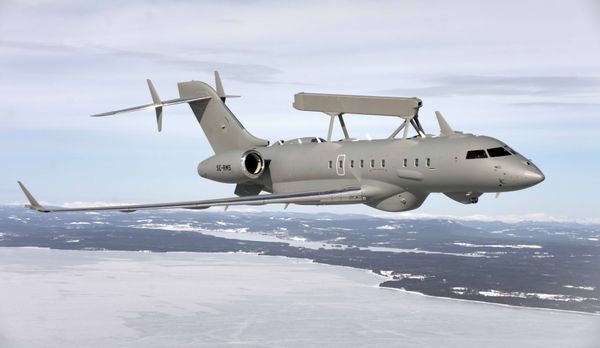
Saab is considering establishing GlobalEye production in Canada as demand for the airborne early warning aircraft climbs across NATO nations.
NEWS
READ MORE »
Saab Weighs Canadian GlobalEye Production Line to Match Growing Surveillance Aircraft Orders
Saab is considering establishing GlobalEye production in Canada as demand for the airborne early warning aircraft climbs across NATO nations.
NEWS
READ MORE »
 Lawmakers Press FAA to Suspend AI Air Traffic Control Tool at Washington-Area Airports
Senators and union leaders urge the FAA to pause an AI-driven air traffic management tool at DC airports, citing safety concerns.
NEWS
READ MORE »
Lawmakers Press FAA to Suspend AI Air Traffic Control Tool at Washington-Area Airports
Senators and union leaders urge the FAA to pause an AI-driven air traffic management tool at DC airports, citing safety concerns.
NEWS
READ MORE »
 Lufthansa Wins Bid for 44.9% Stake in TAP Air Portugal, Edging Out Air France-KLM
Portugal selects Lufthansa as preferred buyer for a 44.9% stake in TAP Air Portugal, beating competing offers from Air France-KLM and IAG.
NEWS
READ MORE »
Lufthansa Wins Bid for 44.9% Stake in TAP Air Portugal, Edging Out Air France-KLM
Portugal selects Lufthansa as preferred buyer for a 44.9% stake in TAP Air Portugal, beating competing offers from Air France-KLM and IAG.
NEWS
READ MORE »
More than just headlines.
Get unlimited ad-free access to in-depth aviation news, premium stories, and exclusive insights other sites don't cover.
- Ad-free browsing on AeroXplorer
- Unlimited access to premium and exclusive articles
- Higher photo upload limits & commissions on sales
- Free access to Jetstream Magazine on higher tiers
- Ad-free browsing
- Sell aviation photos with 60% commission
- First week free!
- Everything in Basic+
- Unlimited premium articles
- Sell aviation photos with 70% commission
- Free Digital subscription to Jetstream Magazine
- First week free!
- Everything in Basic+ and Pro
- Sell aviaiton photos with 80% commission
- Early access to exclusive stories
- Free Digital+Print subscription to Jetstream Magazine