


Private jet passengers want their catering service tailored to suit their preferences, which might include breakfast, lunch, or even specific diet plans. However, fulfilling passenger preferences involves many considerations beyond choosing the menu, arranging delivery, and making sure passengers like what is being offered.
Each aircraft is unique and may have varying capabilities with regard to storage, heating capabilities, and overall galley equipment available for preparing and heating meals on board. A hot dinner plate that would be ideal in the context of a business class cabin could become a problem for the crew operating a small private jet aircraft.
This is why communication between crews and private jet catering providers should begin before the menu is finalized. Understanding passenger preferences is only part of the conversation. Caterers also need to know what the aircraft can accommodate, how the crew intends to serve the food and whether any operational limitations could affect the experience.

Establishing clear expectations from the beginning allows both parties to make informed decisions, recommend alternatives when necessary and avoid complications once catering reaches the aircraft.
Start with a conversation, not just an order
The most frequent mistake made during catering arrangements relates to a crew assuming that the company knows the capabilities of the aircraft and can suggest the best solutions.
The aircraft model tells little regarding the presence of a proper galley and its equipment. Aircraft configurations may vary greatly within the same class, including storage capacity, presence of a proper oven or heater, or other considerations critical for the service.
Crews should communicate their needs clearly instead of providing passenger preferences exclusively. Information shared with a catering service will include:
- What equipment does the aircraft have and whether there are specific limitations regarding storage equipment?
- How many passengers need catering
- What meals need to be served and when are they scheduled
- Any additional information regarding passenger preferences such as a special diet plan.
Communication should flow both ways, whereas the catering service informs the crew of possible limitations related to the aircraft’s capabilities.
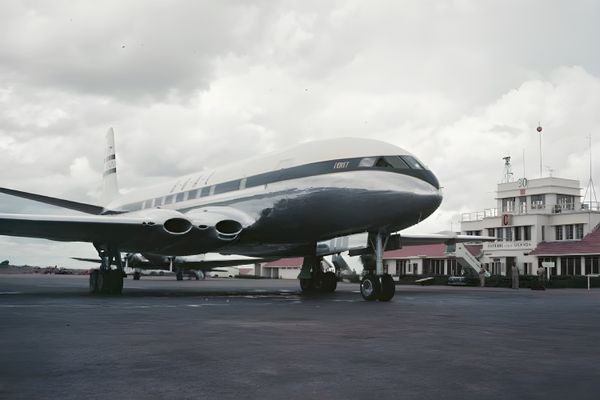
The Shape of Disaster: The Plane That Kept Falling Apart Mid-Air
If a passenger wishes to receive fresh fish cooked, but the aircraft does not have proper reheating capabilities, the crew and catering provider should discuss how it is feasible. The aim is to explore viable solutions for accommodating passenger wishes and making reasonable recommendations.
Galley size should influence menu decisions
How much room you have inside the galley is a significant operational restriction for catering arrangements. Light jets, like the Cessna Citation CJ3 or Embraer Phenom 300, may have less equipment for preparing hot meals compared to larger long-haul private jets featuring a dedicated galley equipped with ovens and additional space.
An order for six passengers might include starters, main courses, desserts, beverages and individual dietary selections. Without sufficient storage, even a relatively straightforward menu can become difficult to manage.

Crews should communicate available storage dimensions and any restrictions on container sizes. Catering providers can then recommend packaging and portion arrangements suited to the aircraft.
For instance, an elaborate presentation requiring oversized containers may be impractical in a compact galley. Agreeing on smaller containers or alternative presentation methods before preparation begins can preserve the passenger experience while simplifying onboard service.
Refrigeration requires realistic expectations
Fresh food products may be delivered for passengers in private aviation, but it requires a proper storage arrangement onboard and prior discussion.
There are some private aviation planes without proper storage facilities and relying instead on insulated containers. If you fly with your customers to remote locations, temperature control may pose an issue during delivery arrangements. You might wish to share your concerns regarding catering delivery beforehand.
The following points may be mentioned:
- Does the plane provide onboard refrigerators?
- When does the meal need to be delivered?
- How soon will the food be consumed?

Catering providers should discuss delivery schedules carefully, especially if the order comes from a distant city or airport location and might require extra delivery preparations. Discuss the limitations beforehand, allowing both sides to find the best solution. These solutions should be discussed prior to confirming your order.
Reheating capabilities can determine the menu
Serving hot meals on board is challenging due to limited capabilities within the onboard galley. Each aircraft features certain options for reheating meals, including conventional ovens, microwave cooking appliances, and even no heaters at all.
It is critical to communicate your options regarding reheating meals to the catering provider first. There are different menus and different types of dishes prepared in specific ways. While pasta may retain its qualities during reheating, other products could become soggy or dry out.

Only Way Out: Private Aviation in a Region at War
Discussing realistic passenger expectations allows to find the best menu to satisfy everyone’s wishes despite the limitations regarding heating options.
Passenger numbers and service timing matter
Your galley equipment capacity determines the ability to serve meals on time and prepare several portions of heated meals simultaneously. Your private jet may be equipped with an oven capable of reheating two hot meals, yet eight people will be waiting until the end of the second batch before starting to eat.
In addition to equipment restrictions, it is crucial to consider how much time you spend on a particular leg. Short flights do not leave much room for serving multi-course menus, and catering should be discussed accordingly to avoid inconvenience and confusion later.
Communication between the crew members and the catering provider will ensure that all relevant details are discussed and taken into account. You will have enough time to arrange an appropriate menu and avoid issues with the passenger service experience.
Packaging and presentation should be agreed in advance
Presentation is important, but packaging must also be practical for the aircraft.
Larger trays, excessive boxes, and oversized packages make life more complicated instead of facilitating food service. In some cases, you might discover the problem once catering arrives, affecting the passenger experience negatively.

It is also recommended to agree on how the food will be stored onboard and how you will organize your meal service based on passenger preferences. Food packaging will impact the process significantly, and catering providers should communicate any limitations. Labeling food according to passenger preferences will also ease a pilot’s or flight attendant’s job immensely.
Remote airports make communication even more important
Traveling to remote airports makes the discussion and arrangement more complicated than ever due to multiple operational constraints, including lack of qualified specialists, limited catering services locally, and restricted logistics.
If you fly out of a distant destination where there is little chance to find a proper supplier of fresh ingredients and cook meals according to the order received, these constraints must be discussed prior to placing the order. Similarly, food might need to be delivered via intermediate airports or transported ahead of the arrival of the crew to prepare meals according to passenger expectations.
Multilegged flights require separate planning. Catering providers need information about your plans regarding the stopover destination. Sometimes, it makes sense to obtain catering services at separate airports rather than carrying the food across multiple stops.
The best catering experience begins on the ground
Private jet catering is often judged by food quality and presentation. Yet successful service depends just as much on the coordination taking place before departure.
A well-equipped galley offers flexibility, but even the most sophisticated aircraft cannot compensate for unclear instructions, unsuitable packaging or unrealistic expectations.

Ten Minutes to Manhattan: Inside Joby’s Air Taxi Ambitions
Likewise, a light jet with limited catering facilities can provide an excellent passenger experience when the menu is planned around the aircraft’s capabilities.
For crews, this means sharing more than a menu and delivery time. For catering providers, it means understanding the aircraft, asking relevant questions and recommending alternatives when necessary.
Ultimately, the goal is not simply to deliver the food passengers request. It is to ensure that crews have everything needed to serve it properly, at the right time and to the expected standard.
British Airways Finishes Starlink Wi-Fi Rollout Across Its A350 Fleet » Jet2 Boeing 737 Veers Off Birmingham Airport Runway During Landing » American Airlines Boeing 787 Makes Emergency Landing at O'Hare After Brake Issue, One Hospitalized »

Comments (0)
Add Your Comment
TAGS
INFORMATIONAL SkyDine Aircraft Catering Considerations pilots Travel Part 135RECENTLY PUBLISHED
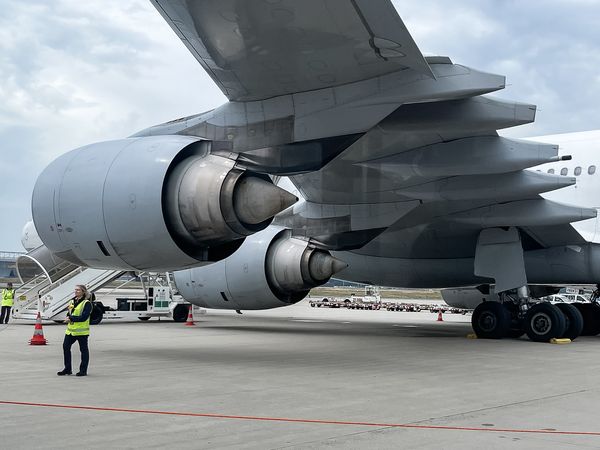 So Long, A340: One Last Flight on Lufthansa’s Airbus A340-600
When the bus doors opened on the Frankfurt apron, two four-engine Airbuses were waiting in the gray morning light. On the left was D-AIFF, the last A340-300 delivered new to Lufthansa. On the right was D-AIHZ, Lufthansa’s final A340-600, and the aircraft that would carry me to New York.
TRIP REPORTS
READ MORE »
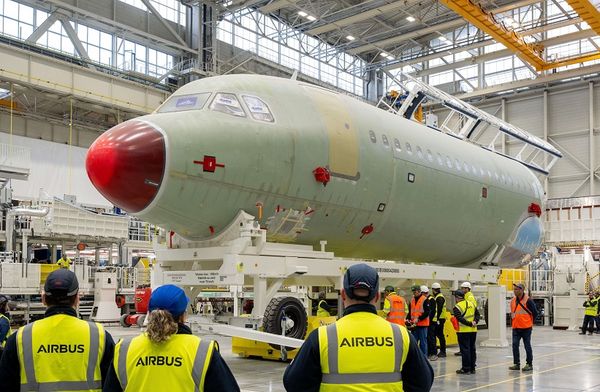 Why Airbus Needs 323 Deliveries in Three Months to Hit Its 2026 Target
Airbus needs 323 aircraft deliveries in the final quarter of 2026 to hit its annual target of 870 jets. With supply chain shortages, A321neo quality issues, and a demanding year-end production schedule, can Airbus meet its delivery target while keeping airlines on track?
INFORMATIONAL
READ MORE »
 SAF's Uncomfortable Math: Availability, Price Premiums, Mandates, and Who Actually Pays
Sustainable aviation fuel is expected to carry the industry most of the way to net zero by 2050. It remains the only real substitute for fossil jet fuel that can be used in today's aircraft without requiring major engine redesigns. Yet in 2026, SAF still made up just 0.8% of global jet fuel use, a sliver that nonetheless cost airlines billions of dollars to buy.
INFORMATIONAL
READ MORE »
More than just headlines.
Get unlimited ad-free access to in-depth aviation news, premium stories, and exclusive insights other sites don't cover.
- Ad-free browsing on AeroXplorer
- Unlimited access to premium and exclusive articles
- Higher photo upload limits & commissions on sales
- Free access to Jetstream Magazine on higher tiers
- Ad-free browsing
- Sell aviation photos with 60% commission
- First week free!
- Everything in Basic+
- Unlimited premium articles
- Sell aviation photos with 70% commission
- Free Digital subscription to Jetstream Magazine
- First week free!
- Everything in Basic+ and Pro
- Sell aviaiton photos with 80% commission
- Early access to exclusive stories
- Free Digital+Print subscription to Jetstream Magazine