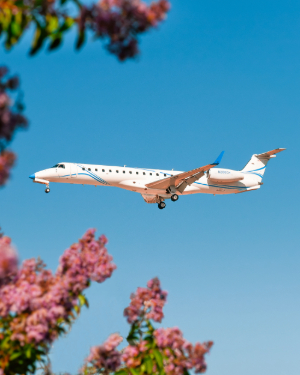


Aviation has a decarbonization pathway, but it’s not cheap.
Sustainable aviation fuel is expected to carry the industry most of the way to net zero by 2050. It remains the only real substitute for fossil jet fuel that can be used in today's aircraft without requiring major engine redesigns. Yet in 2026, SAF still made up just 0.8% of global jet fuel use, a sliver that nonetheless cost airlines billions of dollars to buy. The fuel that's supposed to fix aviation's climate problem remains scarce, expensive, and nowhere close to the volumes the industry actually needs.
IATA puts the 2050 requirement at roughly 500 million tons of SAF a year. Production in 2026 sits at about 2.4 million tons, a gap of more than 200 times current output, with just 24 years to close it.
More Feed, Less Speed
The instinct is to treat this as a raw-materials story: not enough used cooking oil, not enough biomass lying around to fuel every long-haul flight on Earth. But it's not quite right. IATA's own 2025 feedstock study found global sustainable feedstock potential is sufficient to cover aviation's 2050 needs. The bottleneck isn't the theoretical supply of raw material; it's converting that material into commercially viable fuel at anything close to the scale required.
Building a SAF refinery takes years and hundreds of millions of dollars. Feedstock has to be collected, sorted, and moved through logistics chains that mostly don't exist yet, while producers compete for capital, land, and the same waste oils that biodiesel plants already want. This, not a lack of raw material, is why SAF output has crept up by a few hundred thousand tons a year instead of doubling every twelve months.
Ten Minutes to Manhattan: Inside Joby’s Air Taxi Ambitions
Fueling the Price Gap
The refinery bottleneck shows up directly in the price. SAF cost roughly 3 times as much as conventional jet fuel in 2024. By 2025, prices ranged from roughly twice conventional jet fuel to as much as five times, depending on the market, and airlines absorbed a combined $2.9 billion premium on the 1.9 million tons available that year. In 2026, that additional cost climbs to $4.3 billion, for a fuel that still covers less than one percent of total demand.

Most of the premium traces back to infrastructure that hasn't caught up. Production runs are small, so there's no economy of scale. Feedstocks are themselves expensive and contested. The technology is still maturing, certification adds cost and time, and in markets with mandates, suppliers layer compliance fees on top of the base price to hedge against regulatory risk. Strip away the environmental framing, and what's left is a fuel-procurement problem: a product in short supply, sold into a market legally required to buy it.
Mandates Created Demand, Not Supply
Regulators walked straight into that tension. The EU's ReFuelEU Aviation rule requires a 2% SAF blend starting in 2025, climbing sharply over the coming decades. The UK runs a parallel mandate. The logic behind both is simple: force demand, and supply will eventually follow.
IATA's read on how that's played out is blunter. The airline body argues European mandates have driven up airline costs substantially without a matching jump in SAF capacity, pointing to what it calls oligopolistic supply chains, where a handful of suppliers can pass compliance costs straight through to airlines with little competitive pressure pushing prices back down. Mandate-first creates certainty for whoever eventually builds a refinery, but it also means airlines are paying premiums for fuel that barely exists yet, a bet the industry is currently living through in real time.

Trucks vs. Jets
Even where supply does exist, aviation isn't the only buyer. SAF's feedstocks – used cooking oil, agricultural waste, animal fats – also feed renewable diesel, biodiesel, and decarbonization efforts across other industries entirely. Every ton of waste oil that goes into a truck's fuel tank is a ton that doesn't go into a jet's.
E-SAF sharpens the competition further. Made by combining captured CO2 with hydrogen produced from renewable electricity, it's the synthetic fuel IATA expects to eventually supply roughly 200 million of the 500 million tons needed by 2050, a massive ask, given how little of it exists today. The EU and UK have mandated around 0.6 million tons of e-SAF capacity by 2030, while global capacity currently operating or under construction sits at about 0.02 million tons, spread across a single active site.
Meeting the mandate would require roughly 20 commercial-scale refineries built from a starting point of one. E-SAF also carries a steeper cost multiple, as high as 12 times conventional jet fuel, and needs enormous volumes of renewable power and green hydrogen that shipping, heavy industry, and road transport all want just as badly – the same scarce electricity supply, split more ways.
Who Actually Pays?
The refinery gap, the price premium, the mandates, the feedstock competition: all of it funnels down to one practical question. Strip the SAF debate to its core, and there are really only four candidates to absorb the cost. Airlines can eat the premium and take the margin hit, or pass it to passengers through higher fares. Governments can subsidize production or offer tax credits, which ultimately means taxpayers carry part of the load. Producers and their investors can accept lower near-term returns, which tends to slow new investment rather than speed it up.

No version of this makes the cost simply disappear. Someone absorbs the production premium, the infrastructure buildout, the compliance overhead, and the risk that a given technology doesn't pan out.
Pay Now or Pay More
For airlines, this is less a policy debate than a decision to make today. Treat SAF like a procurement problem, not a sustainability line item; long-term offtake agreements give airlines price certainty that spot-market buying never will. Look past the headline SAF price, since market premiums, compliance fees, logistics, and certification can all sit on top of the base production cost. Don't bet on a single feedstock or pathway, since bio-based SAF, waste-oil SAF, and e-SAF each carry different cost curves and different supply risks. And where airlines have a voice in policy debates, there's a case for pushing production incentives ahead of consumption mandates, not because mandates are wrong in principle, but because demanding a product before the supply chain can deliver it tends to raise prices faster than it raises output.
The Bill for Net Zero
Aviation's SAF challenge was never really a technology problem; the chemistry works, and airlines that have already flown on SAF blends have proven as much. What's still unresolved is an allocation problem, an investment problem, and ultimately a cost-sharing problem: whether policymakers, producers, airlines, and passengers can build an economic system that actually finances the transition, rather than one that just makes an already-scarce fuel more expensive to buy.
The industry can, in theory, produce the volumes net zero requires. Deciding who pays, how much, and when is the part still being fought over in boardrooms and parliaments.
Jet2 Boeing 737 Veers Off Birmingham Airport Runway During Landing » Why Airbus Needs 323 Deliveries in Three Months to Hit Its 2026 Target » So Long, A340: One Last Flight on Lufthansa’s Airbus A340-600 »

Comments (0)
Add Your Comment
TAGS
INFORMATIONAL SAF Sustainability Sustainable Aviation Fuels EURECENTLY PUBLISHED
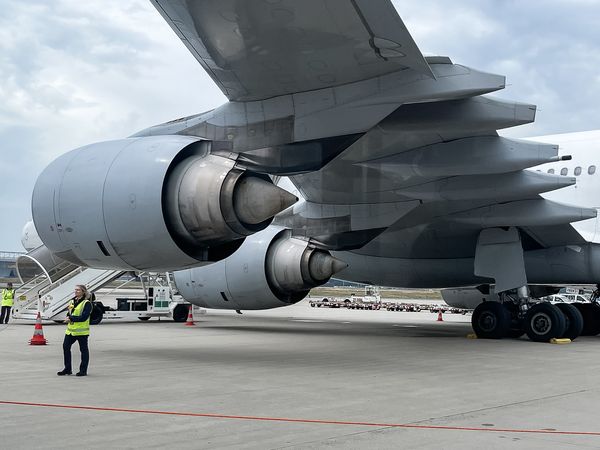 So Long, A340: One Last Flight on Lufthansa’s Airbus A340-600
When the bus doors opened on the Frankfurt apron, two four-engine Airbuses were waiting in the gray morning light. On the left was D-AIFF, the last A340-300 delivered new to Lufthansa. On the right was D-AIHZ, Lufthansa’s final A340-600, and the aircraft that would carry me to New York.
TRIP REPORTS
READ MORE »
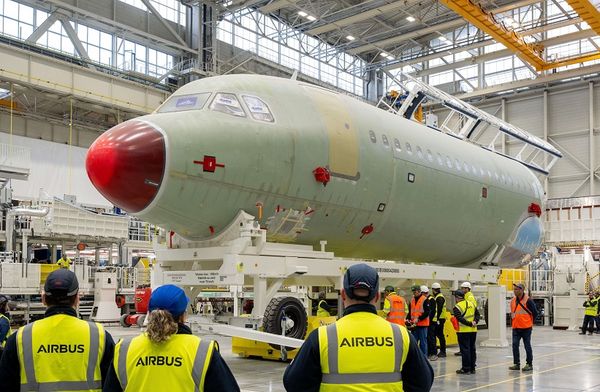 Why Airbus Needs 323 Deliveries in Three Months to Hit Its 2026 Target
Airbus needs 323 aircraft deliveries in the final quarter of 2026 to hit its annual target of 870 jets. With supply chain shortages, A321neo quality issues, and a demanding year-end production schedule, can Airbus meet its delivery target while keeping airlines on track?
INFORMATIONAL
READ MORE »
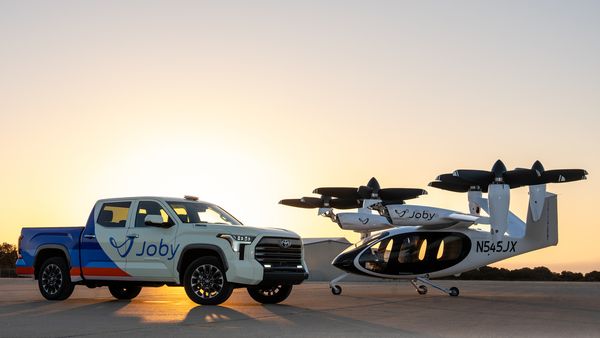 Ten Minutes to Manhattan: Inside Joby’s Air Taxi Ambitions
Meet the Joby aircraft, a battery-powered electric vertical takeoff and landing (eVTOL) vehicle built primarily from carbon-fiber composites. Six electric motors drive six five-bladed propellers, while four battery packs supply the power needed to fly without producing direct exhaust emissions.
INFORMATIONAL
READ MORE »
More than just headlines.
Get unlimited ad-free access to in-depth aviation news, premium stories, and exclusive insights other sites don't cover.
- Ad-free browsing on AeroXplorer
- Unlimited access to premium and exclusive articles
- Higher photo upload limits & commissions on sales
- Free access to Jetstream Magazine on higher tiers
- Ad-free browsing
- Sell aviation photos with 60% commission
- First week free!
- Everything in Basic+
- Unlimited premium articles
- Sell aviation photos with 70% commission
- Free Digital subscription to Jetstream Magazine
- First week free!
- Everything in Basic+ and Pro
- Sell aviaiton photos with 80% commission
- Early access to exclusive stories
- Free Digital+Print subscription to Jetstream Magazine