Published in the Fall 2026 issue of Jetstream Magazine.
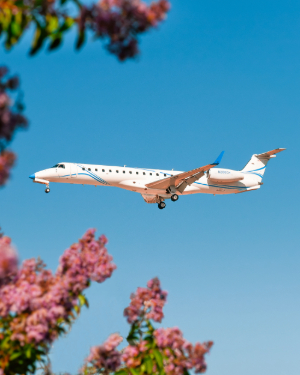
By conventional commercial measures, the Airbus A340-600 was a disappointment. Only 97 examples were delivered, and its four-engine operating costs became increasingly difficult to justify as more efficient twin-engine aircraft entered service. Yet the A340-600 remains one of Airbus’s most recognizable products, particularly among aviation enthusiasts. Its extraordinarily long, comparatively narrow fuselage earned it the nickname “the flying pencil.”

Most of the type's best-known operators – Virgin Atlantic, Etihad, Iberia, China Eastern, and more – have now retired it. By the start of 2026, only three passenger operators remained. By October 2026, Lufthansa, the type's largest operator, is set to retire its final A340-600s, leaving just Mahan Air and Conviasa still flying the aircraft.
Born at the End of the Four-Engine Era
In the 1970s, increasingly capable variants of the L-1011, DC-10, and 747 began entering service, able to fly farther with high passenger loads. In response, Airbus recognized the need to create a competitor in the long-haul market. Building on the widebody fuselage cross-section introduced by the A300, Airbus began studying larger aircraft for medium- and long-haul markets. Two new aircraft would emerge from this study: a shorter-range aircraft called the A300B9 and a four-engine, longer-range aircraft called the A300B11. In the 1980s, Airbus further developed these aircraft, renaming the projects to the TA9 and TA11. These projects eventually led to what we now know as the Airbus A330 and A340.

The TA11 would be built and flown first, so Airbus had initially planned to call it the A330 – the next logical number in the sequence. However, Airbus's marketing department thought it would make more sense to have the four-engine aircraft carry the name "A340". The A300B11 was released as the A340, with the A330 taking to the skies soon after.
Airbus had designed the A340 to be the A330's "big brother" – the twin-engine A330 was aimed at medium- and long-range markets where two engines offered an economic advantage, while the four-engine A340 was intended for longer routes that remained constrained by the ETOPS rules of the era. But as ETOPS approvals expanded and engine reliability improved, twin-engine aircraft became practical across a much larger share of the long-haul network, eroding the four-engine A340’s principal operational advantage.
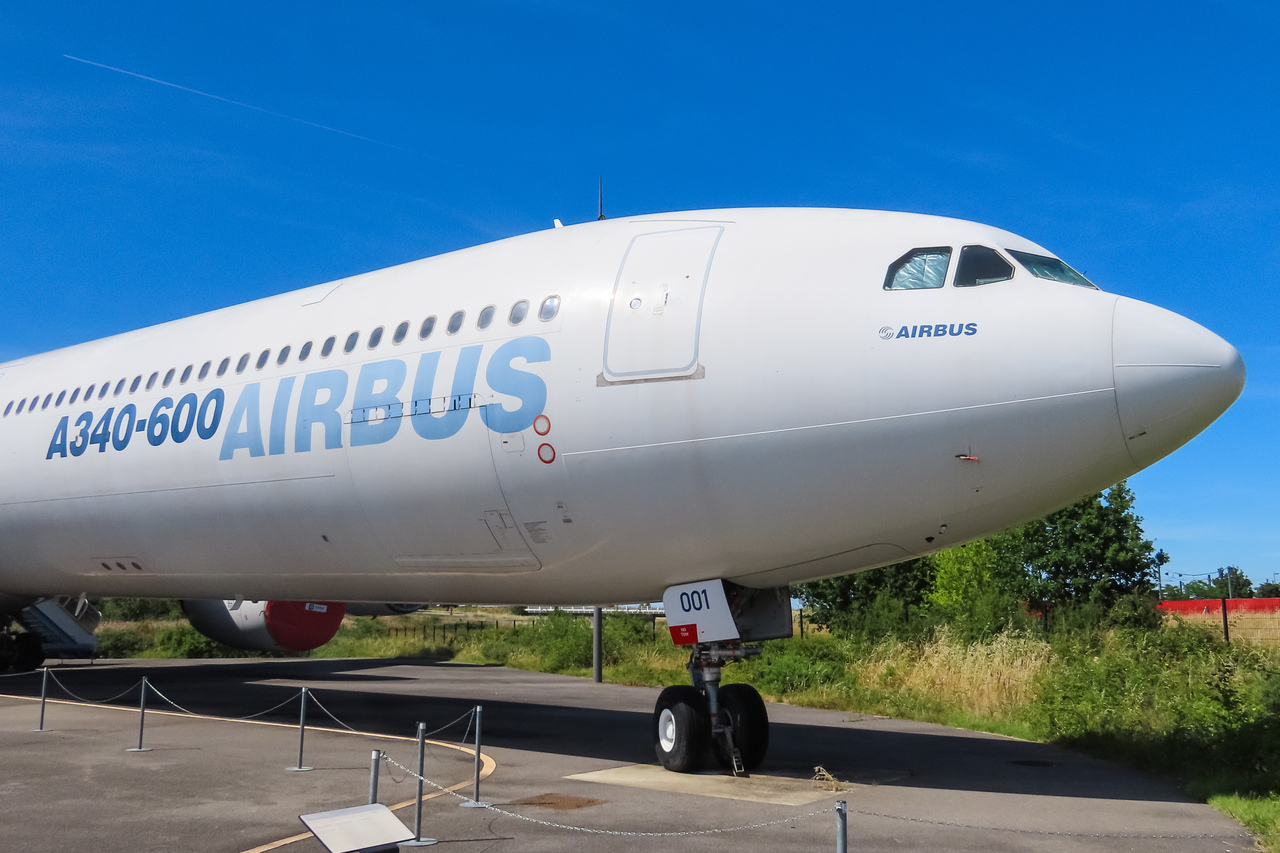
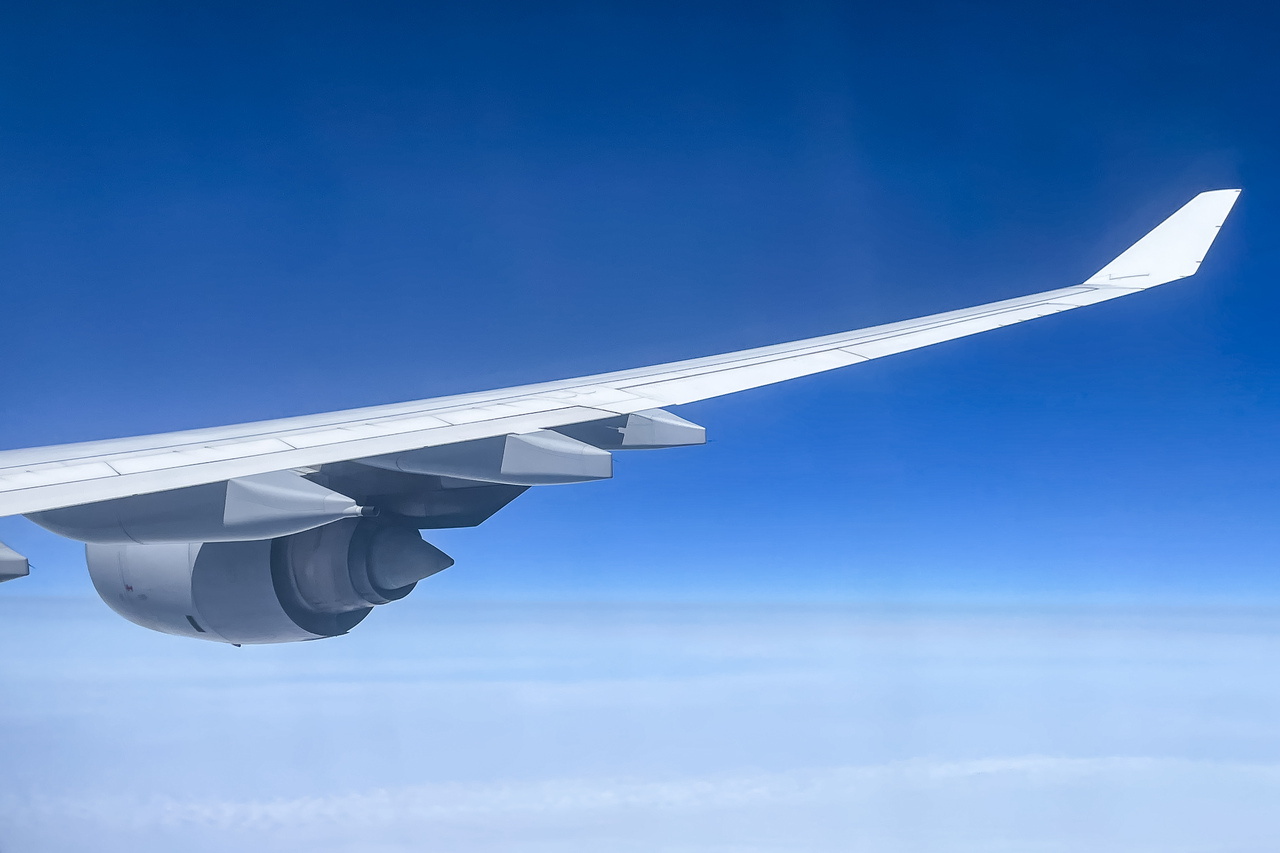
The manufacturer responded with the substantially revised A340-500 and A340-600, launched in 1997. Both used more powerful Rolls-Royce Trent 500 engines and a larger, strengthened wing. The -500 prioritized ultra-long-range flying, while the much longer -600 was designed to carry more passengers and compete with Boeing’s 747-400 and, eventually, the 777-300ER.
Two Decades in Lufthansa Colors
Airbus delivered 97 A340-600s in total, with around a quarter of all -600s built being delivered to Lufthansa. By the time Lufthansa fully retires the type in October 2026, the A340-600 will have served the airline for nearly 23 years, having entered the fleet in November 2003.
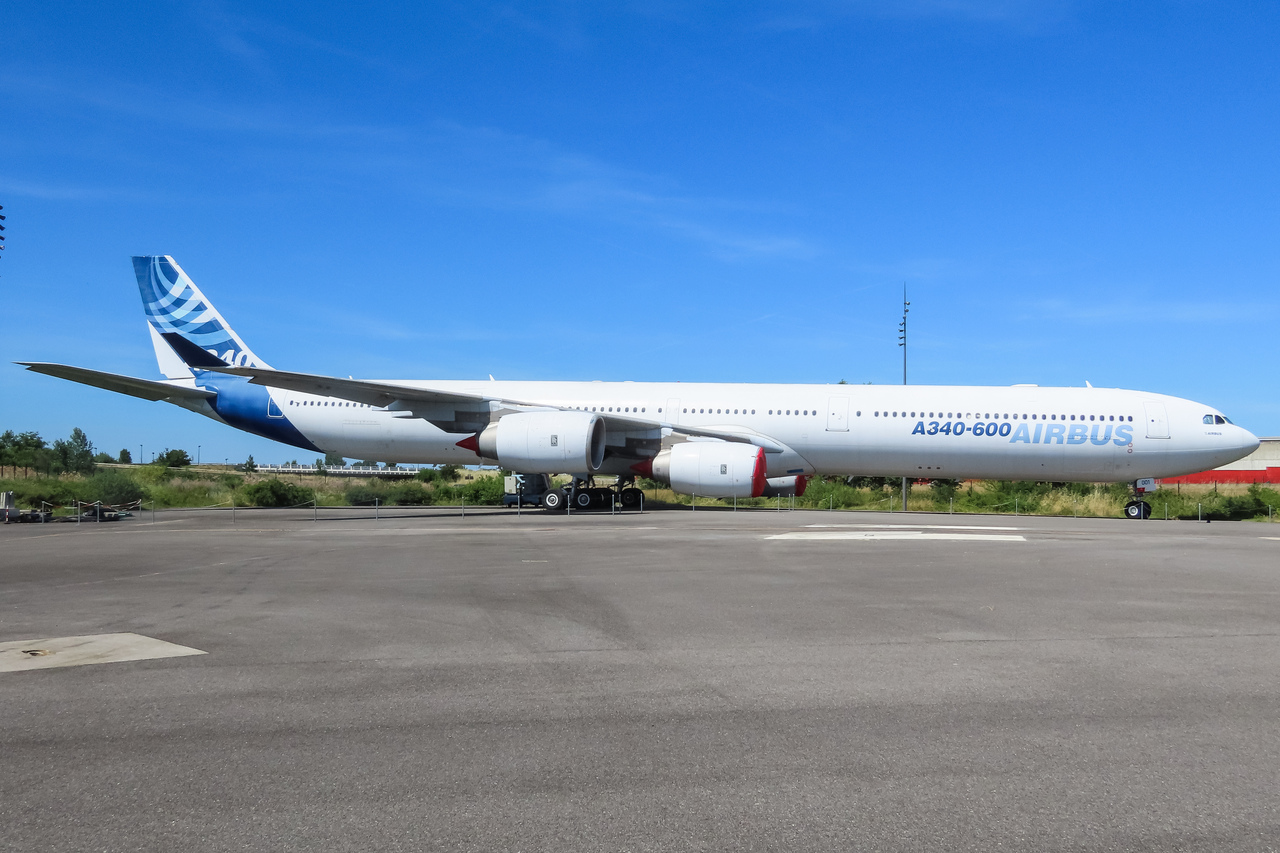
Lufthansa inaugurated the A340-600 on its Santiago, Chile route in 2003, and has since operated the type to all five continents in the airline’s network, such as Vancouver, Toronto, Guangzhou, Riyadh, Shanghai, Osaka, Tokyo, São Paulo, Caracas, Tel Aviv, Delhi, and more. Over the years, the type flew to destinations as close as Tel Aviv – just four hours from Frankfurt – and as far as the nearly 15-hour trek to Santiago, Chile (via Buenos Aires), fittingly the same route on which its Lufthansa career began.
Beginning in late 2006, Lufthansa received higher-weight A340-600s, commonly identified as the A340-600X, which offered additional fuel capacity and range. But with more modern and efficient widebody aircraft joining Lufthansa’s fleet — such as the Airbus A350, Boeing 787, and expected Boeing 777-9 — the A340’s niche as a long-range widebody no longer offers a significant benefit for the airline.
Lufthansa reduced its A340-600 fleet from 24 to 19 in 2016, aligning with the arrival of its first A350-900. In 2025, Lufthansa sold five A340-600s to Universal Sky Carrier, a German charter airline. USC is one of the last remaining A340-600 operators and flies the aircraft on charters and on behalf of other airlines such as Surinam Airways. At the time of publishing, the Lufthansa A340-600 fleet currently sits at four, and the type is expected to fully retire by late October 2026.
| Registration | Type | First flight | Retired | Status |
| D-AIHA | A340-642 | 08/08/2003 | December 2018 | Scrapped |
| D-AIHB | A340-642 | 10/10/2003 | February 2020 | Stored |
| D-AIHC | A340-642 | 23/10/2003 | April 2020 | Stored |
| D-AIHD | A340-642 | 26/11/2003 | April 2020 | Stored |
| D-AIHE | A340-642 | 18/11/2003 | April 2020 | Scrapped |
| D-AIHF | A340-642 | 13/01/2004 | March 2020 | Stored |
| D-AIHH | A340-642 | 20/01/2004 | May 2020 | Stored |
| D-AIHI | A340-642 | 06/02/2004 | December 2025 | Stored |
| D-AIHK | A340-642 | 16/04/2004 | May 2020 | Stored |
| D-AIHL | A340-642 | 04/05/2004 | May 2020 | Stored |
| D-AIHM | A340-642 | 17/07/2006 | November 2016 | Scrapped |
| D-AIHN | A340-642 | 01/09/2006 | April 2016 | Scrapped |
| D-AIHO | A340-642 | 10/11/2006 | April 2016 | Scrapped |
| D-AIHP | A340-642X | 08/11/2006 | July 2025 | Universal Sky Carrier |
| D-AIHQ | A340-642X | 03/01/2007 | March 2016 | Scrapped |
| D-AIHR | A340-642X | 30/01/2007 | November 2016 | Scrapped |
| D-AIHS | A340-642X | 05/03/2007 | February 2017 | Scrapped |
| D-AIHT | A340-642X | 03/04/2008 | March 2025 | Universal Sky Carrier |
| D-AIHU | A340-642X | 06/05/2008 | April 2025 | Universal Sky Carrier |
| D-AIHV | A340-642X | 05/03/2008 | January 2025 | Universal Sky Carrier |
| D-AIHW | A340-642X | 03/12/2008 | N/A | Retired |
| D-AIHX | A340-642X | 27/01/2009 | N/A | Retired |
| D-AIHY | A340-642X | 27/02/2009 | N/A | Retired |
| D-AIHZ | A340-642X | 14/04/2009 | N/A | Retired |
One Last Flight Across the Atlantic
In response to the COVID-19 pandemic in 2020, Lufthansa announced the complete retirement of its A340-600 fleet. However, Lufthansa later reactivated several aircraft as long-haul demand recovered and deliveries of replacement widebodies remained delayed. Lufthansa recently removed the A340-600 from its 2026–27 northern-winter flying schedule – what airlines call the “Northern Winter” season, which refers to the Northern Hemisphere’s winter months. Lufthansa’s final scheduled passenger A340-600 service is currently planned for October 18, 2026, although aircraft assignments remain subject to change. Repositioning flights are expected to follow before the end of the IATA summer season.
Realizing the time pressure, I decided to book a trip to Germany to catch a ride on one of these increasingly rare and iconic aircraft. With routes disappearing rapidly and the fleet diminishing, my options were limited. Lufthansa did operate the A340-600s on its Frankfurt to Hong Kong route, which would have been an easy connection from my home in Australia, but sadly the A340 was switched off this route in late October 2025, in favor of the airline’s A350-900. As of June 2026, the A340-600s were only regularly used on routes to two countries: Saudi Arabia and the United States. With Lufthansa’s Saudi services affected by the regional conflict, the practical alternative was one of the aircraft’s remaining transatlantic assignments: Frankfurt to New York JFK.
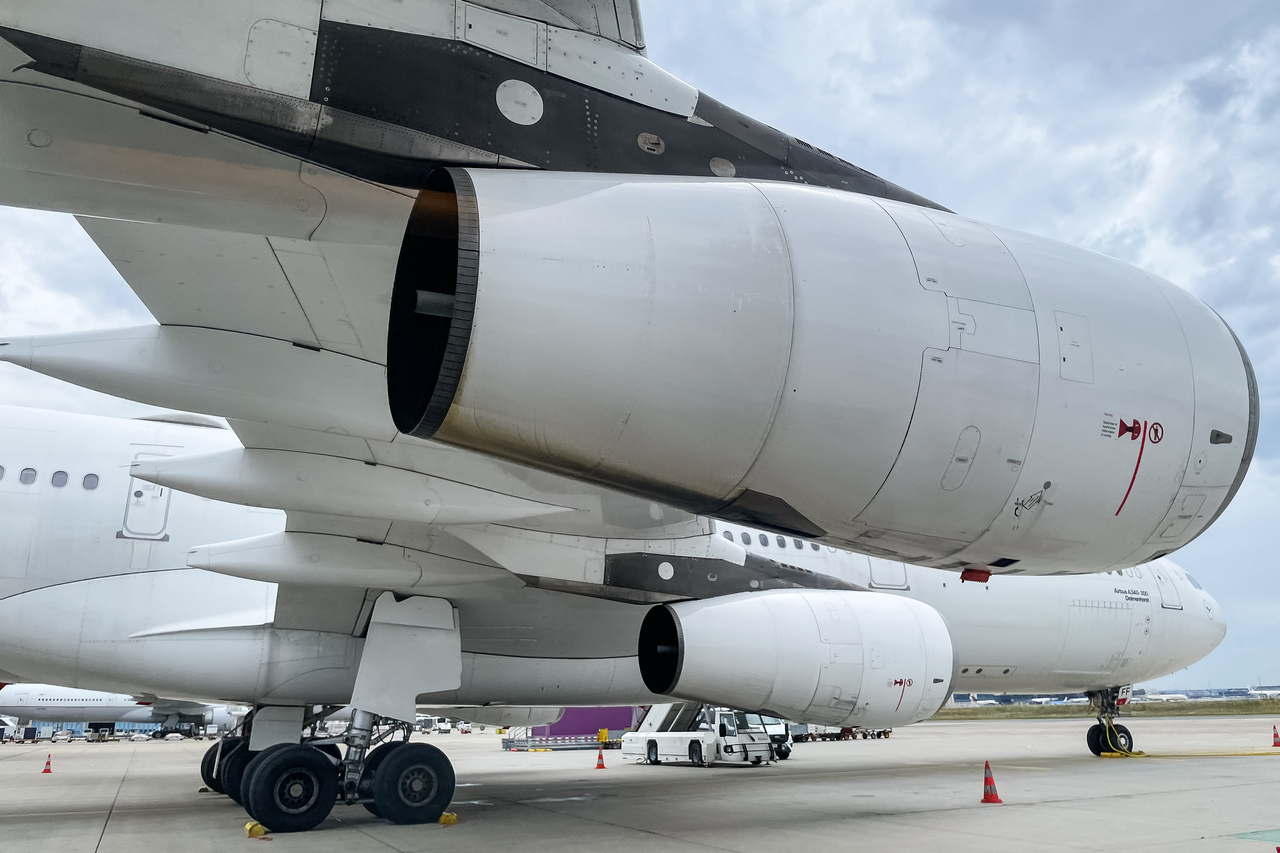
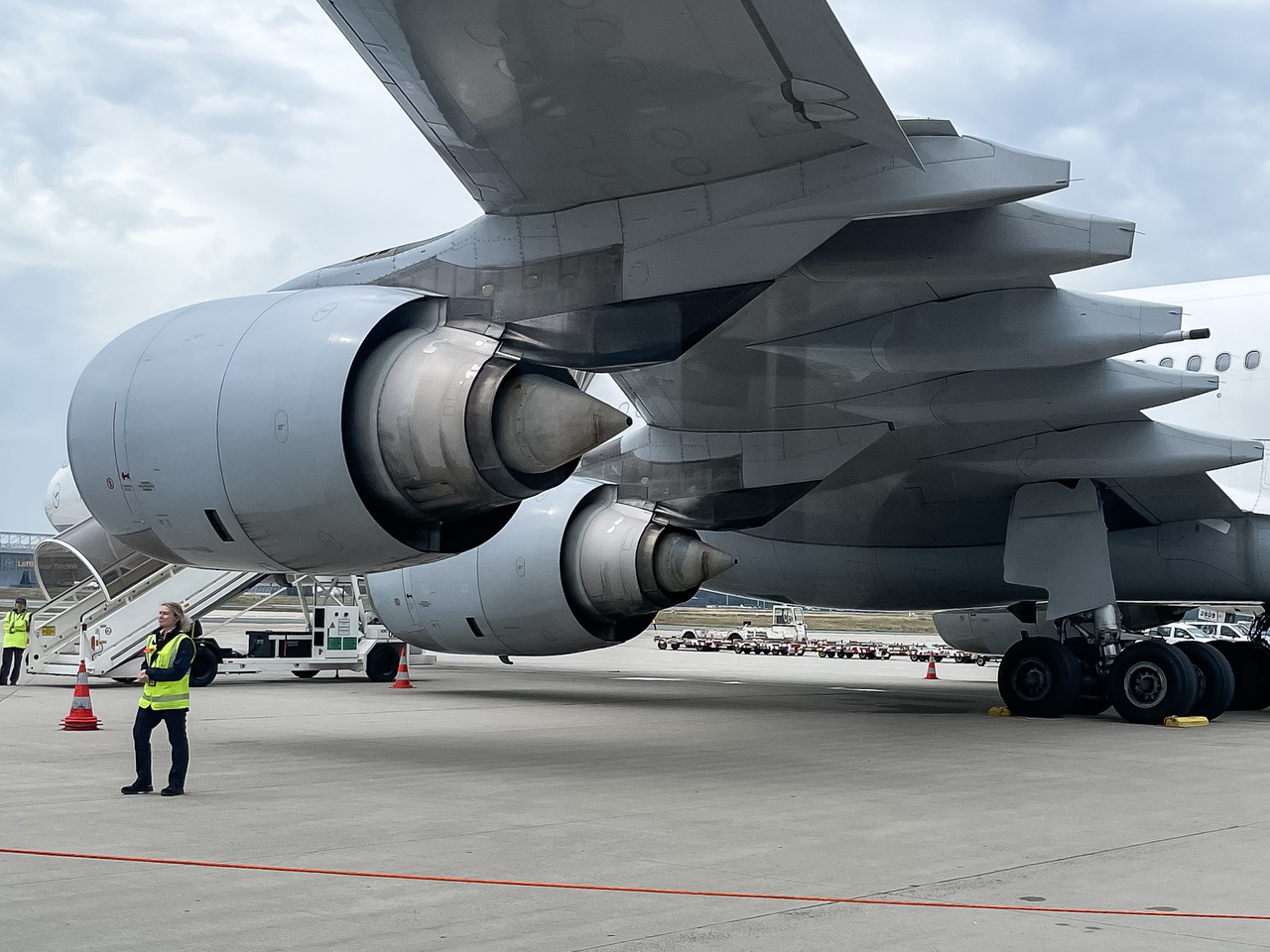
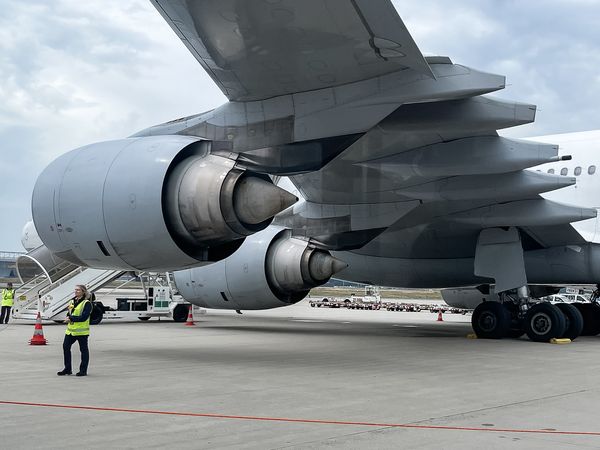
Flying into Frankfurt the day prior, I stayed the night at the local “b’mine Hotel”, which offers excellent views of the arrivals at Germany’s busiest airport. In the morning, I made the short trip to Terminal 1, Frankfurt’s oldest and largest terminal. When the bus dropped me off at the remote stand, I was left breathless, staring at the beautiful A340-600, parked alongside a Lufthansa A340-300. Both of these aircraft were the “last of their kind” for Lufthansa: D-AIFF to my left was the last A340-300 delivered new to Lufthansa, while D-AIHZ to my right was the last A340-600 for the airline.
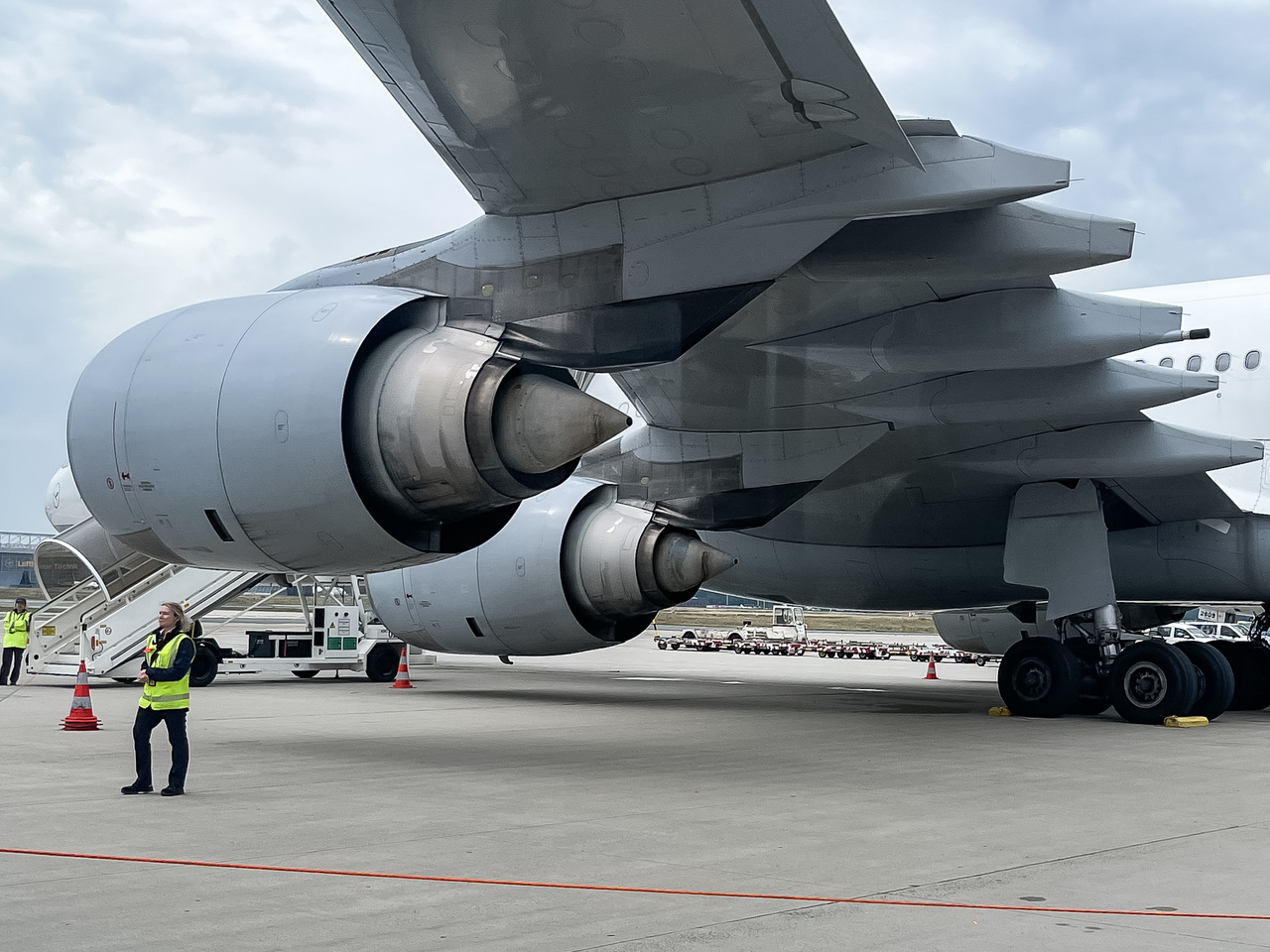
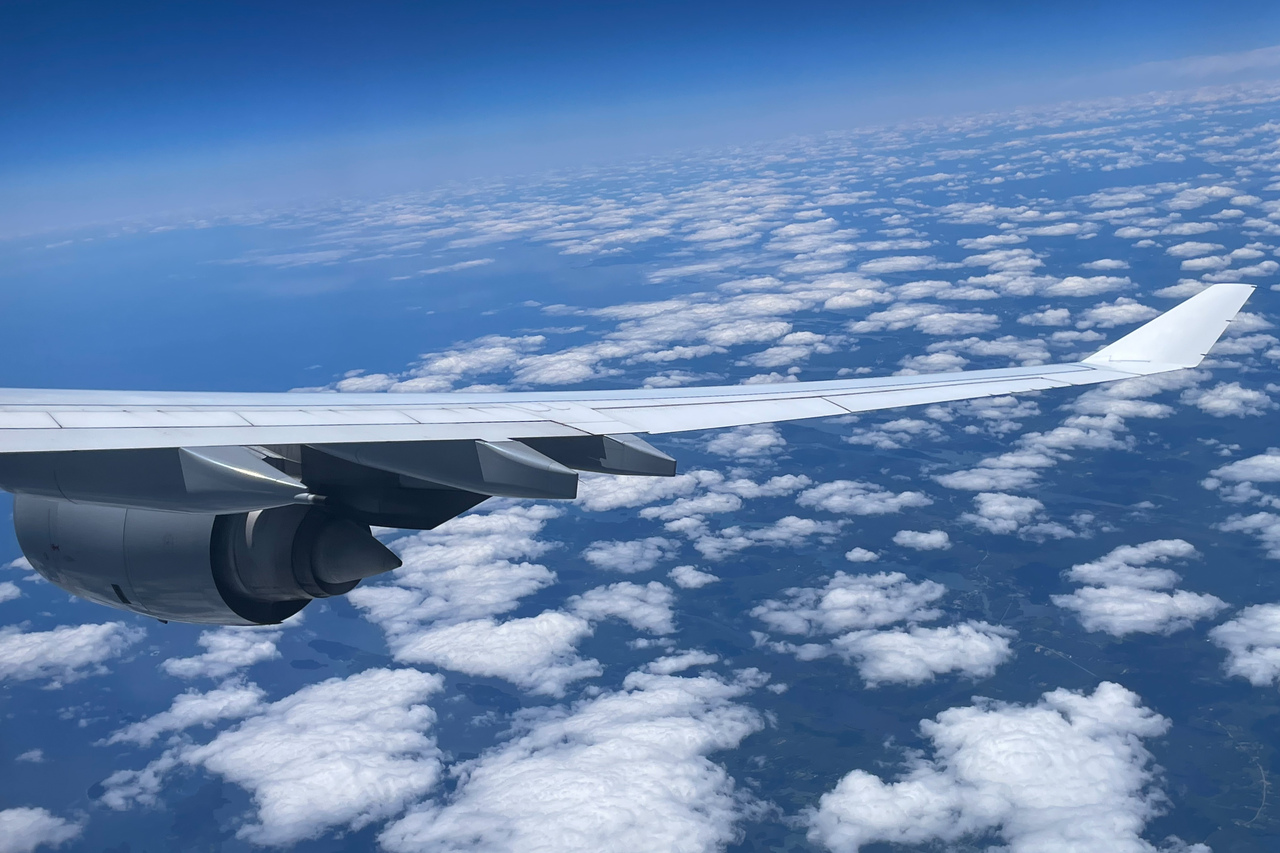
Taking off with condensation streaming off the wings on this cloudy day, I opened the entertainment system’s trivia game before walking through the cabin. Lufthansa has configured its A340-600 fleet with a very premium-heavy layout: just 281 passenger seats are installed in an aircraft certified to fit up to 475. The Economy cabin doesn’t start until aft of the wings, and with only 189 Economy seats installed, it felt less crowded than a denser widebody layout. The A340’s narrow eight-abreast fuselage — a carryover from its original lineage as an A300 derivative — makes the plane feel less crowded than other widebodies like the A350 or A380.
During my exploration around the cabin, I came across a feature that has made the Airbus A340-600 famous among avgeeks and frequent flyers alike: the downstairs lavatory area. To maximize main-deck seating, the A340-600 was designed with an optional downstairs area. While some airlines used this space as a crew rest area (the A330/A340 is too small to have an upstairs crew rest area like most other widebodies), Lufthansa instead elected to install five of the aircraft’s ten lavatories here. This design feature gives passengers a rare chance to visit the lower deck of an airliner during flight, an area normally only reserved for cargo containers, avionics equipment, and landing gear. This also allows more room on the main deck for seating, moving queues away from the main aisles.
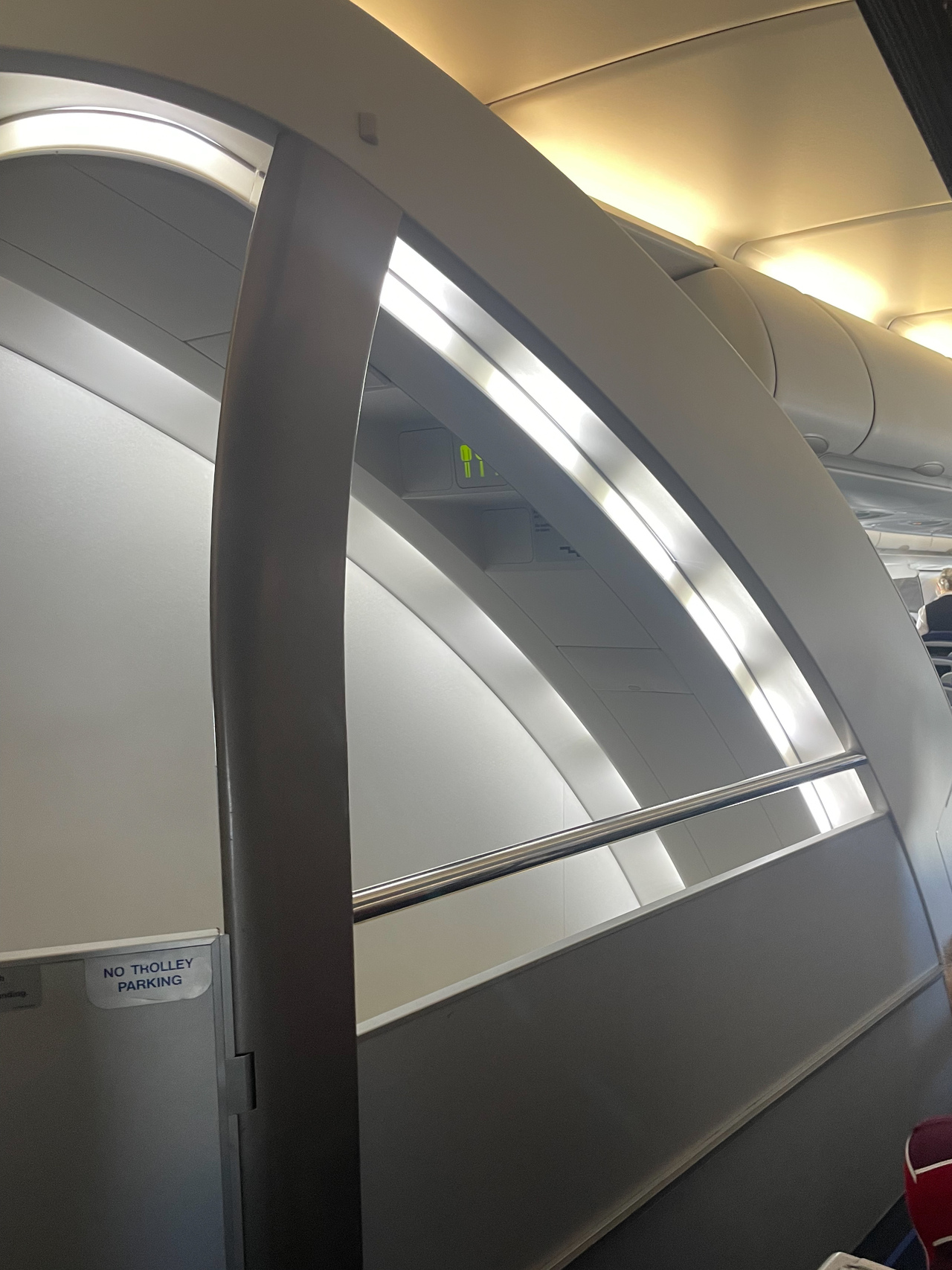
Landing in New York on time, we pulled into the gate alongside an Air Serbia A330-200 with the special “Nikola Tesla” livery. After a brief visit to the cockpit, I stepped off D-AIHZ and continued through immigration.
The Legacy Lives On
The A340-600 arrived at the edge of one era and survived into another. It was designed when four engines still signaled freedom on long overwater routes, then outlived that logic long enough to become a rarity. As I left D-AIHZ at JFK, its commercial shortcomings mattered less than the unmistakable silhouette waiting outside the terminal: four engines, an impossibly long fuselage and one final summer of scheduled service.
American Airlines Boeing 787 Makes Emergency Landing at O'Hare After Brake Issue, One Hospitalized » Phillips 66 Aviation Donates $23,928 to CAN in Support of Cancer Patient Flights » SAF's Uncomfortable Math: Availability, Price Premiums, Mandates, and Who Actually Pays »

Comments (0)
Add Your Comment
TAGS
TRIP REPORTS Lufthansa Airbus Airbus A340-600 Farewell Flight Retired AircraftRECENTLY PUBLISHED
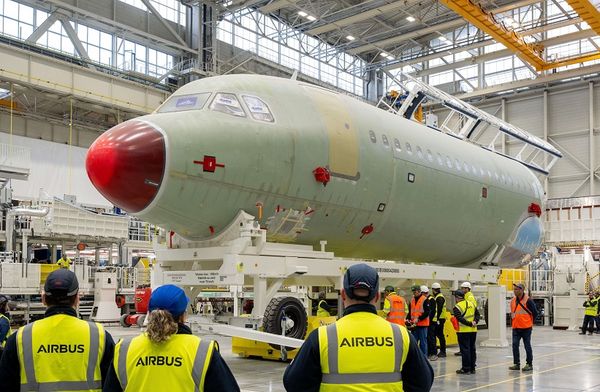 Why Airbus Needs 323 Deliveries in Three Months to Hit Its 2026 Target
Airbus needs 323 aircraft deliveries in the final quarter of 2026 to hit its annual target of 870 jets. With supply chain shortages, A321neo quality issues, and a demanding year-end production schedule, can Airbus meet its delivery target while keeping airlines on track?
INFORMATIONAL
READ MORE »
 SAF's Uncomfortable Math: Availability, Price Premiums, Mandates, and Who Actually Pays
Sustainable aviation fuel is expected to carry the industry most of the way to net zero by 2050. It remains the only real substitute for fossil jet fuel that can be used in today's aircraft without requiring major engine redesigns. Yet in 2026, SAF still made up just 0.8% of global jet fuel use, a sliver that nonetheless cost airlines billions of dollars to buy.
INFORMATIONAL
READ MORE »
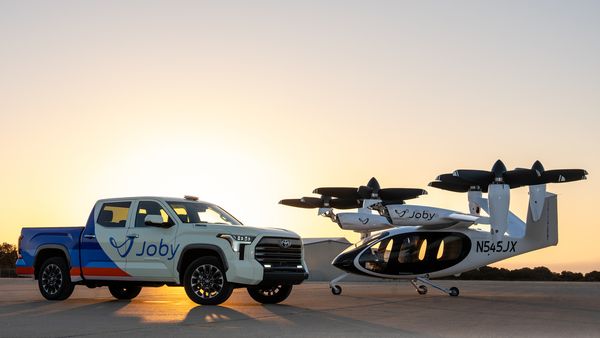 Ten Minutes to Manhattan: Inside Joby’s Air Taxi Ambitions
Meet the Joby aircraft, a battery-powered electric vertical takeoff and landing (eVTOL) vehicle built primarily from carbon-fiber composites. Six electric motors drive six five-bladed propellers, while four battery packs supply the power needed to fly without producing direct exhaust emissions.
INFORMATIONAL
READ MORE »
More than just headlines.
Get unlimited ad-free access to in-depth aviation news, premium stories, and exclusive insights other sites don't cover.
- Ad-free browsing on AeroXplorer
- Unlimited access to premium and exclusive articles
- Higher photo upload limits & commissions on sales
- Free access to Jetstream Magazine on higher tiers
- Ad-free browsing
- Sell aviation photos with 60% commission
- First week free!
- Everything in Basic+
- Unlimited premium articles
- Sell aviation photos with 70% commission
- Free Digital subscription to Jetstream Magazine
- First week free!
- Everything in Basic+ and Pro
- Sell aviaiton photos with 80% commission
- Early access to exclusive stories
- Free Digital+Print subscription to Jetstream Magazine