


Airbus and MTU Aero Engines have announced plans to establish a joint venture dedicated to developing and commercializing a fully electric hydrogen fuel-cell powertrain for aviation. The move signals a concrete step by two of Europe's most influential aerospace players toward decarbonizing commercial flight, though the path to certification and market entry remains long.
The partnership brings together Airbus, the world's largest commercial aircraft manufacturer, and MTU Aero Engines, Germany's leading engine maker. Both companies have spent years investigating hydrogen as a viable alternative to kerosene, and the new entity consolidates their engineering resources under a single structure focused specifically on fuel-cell propulsion.
What the Joint Venture Will Do
According to the announcement, the joint venture will design, develop, produce, and market a hydrogen fuel-cell powertrain intended for future aircraft. Unlike hydrogen combustion, which burns the fuel in a modified gas turbine, fuel-cell systems generate electricity through a chemical reaction between hydrogen and oxygen. That electricity then powers electric motors driving the propellers or fans. The only byproduct is water vapor.
The two companies have collaborated on hydrogen technologies before. Airbus has pursued its ZEROe program, which explores multiple hydrogen propulsion concepts, while MTU has advanced its Flying Fuel Cell concept, a project the company has publicly discussed for several years. The joint venture consolidates these parallel workstreams into a shared commercial vehicle.
Both partners describe fuel-cell propulsion as particularly suited to regional and short-haul aircraft, where energy density requirements are lower than on long-haul routes. The technology could serve as a stepping stone toward broader hydrogen adoption across commercial fleets.

Timeline and Strategic Context
Airbus previously targeted 2035 as the entry-into-service date for its first hydrogen-powered commercial aircraft under the ZEROe initiative. However, earlier in 2025, the company acknowledged that the timeline would need to be extended, citing slower-than-anticipated development of hydrogen infrastructure, regulatory frameworks, and supply chains. The new joint venture reflects a recalibrated but still committed approach to hydrogen propulsion.
MTU brings deep expertise in propulsion system integration, high-efficiency components, and the certification processes required for commercial engines. Airbus contributes aircraft-level integration knowledge, systems engineering capabilities, and its established position as an airframer. The complementarity is deliberate, and it addresses one of the persistent challenges in aerospace innovation, namely the difficulty of aligning propulsion development with airframe design cycles.

The Cockpit’s Next Revolution: When the Co-Pilot Is a Computer
Why Fuel Cells, and Why Now
Commercial aviation accounts for roughly 2 to 3% of global carbon dioxide emissions, a figure that continues to grow as passenger demand recovers and expands. Sustainable aviation fuels, or SAF, remain the primary near-term decarbonization lever, but production capacity and cost constraints limit their scalability. Battery-electric aircraft, meanwhile, face fundamental energy density limitations that restrict them to very short missions and small payloads.
Hydrogen fuel cells occupy a middle position. They offer higher energy density than batteries and produce no direct carbon emissions when the hydrogen itself is generated from renewable sources. The technology has matured rapidly in automotive and heavy-duty transport applications, and aerospace developers now see an opportunity to adapt those advances to flight-specific requirements, including weight, altitude performance, and reliability.
Challenges remain substantial. Cryogenic hydrogen storage requires new tank designs and thermal management systems. Fuel-cell stacks must deliver aviation-grade power density while withstanding vibration, pressure changes, and long operational cycles. Airport infrastructure for hydrogen refueling does not yet exist at commercial scale.
Industrial and Regulatory Implications
The joint venture positions Europe as a leading region for hydrogen aviation development. Both Airbus and MTU benefit from public and private investment in hydrogen technology across Germany, France, and other European Union member states. The European Union's broader decarbonization agenda, including the RefuelEU Aviation regulation, creates policy pressure for airlines to reduce emissions and rewards early movers in low-carbon technology.
For airlines and lessors, the announcement offers a longer-term signal that hydrogen propulsion remains on the industry roadmap, even as timelines shift. Fleet planners weighing purchases over the next two decades will need to consider how hydrogen-capable aircraft might enter their networks, what infrastructure investments airports will require, and how operating costs will compare with SAF-powered conventional jets.
Suppliers across the aerospace ecosystem, including tank manufacturers, cryogenic component specialists, electric motor developers, and power electronics firms, stand to benefit from a structured commercialization pathway. The joint venture provides a clearer customer for these emerging capabilities than research programs alone could offer.
What Comes Next
The formation of the joint venture is subject to regulatory approvals and the completion of standard closing conditions. Once established, the entity will operate as a dedicated business focused on maturing the fuel-cell powertrain toward flight demonstration and, eventually, certification. Neither company has disclosed a specific target aircraft or entry-into-service date under the new structure.
For aerospace professionals watching the sector, the announcement reinforces a broader trend. Major original equipment manufacturers are increasingly forming targeted partnerships to share risk, pool intellectual property, and accelerate development of technologies that neither company could bring to market alone within a reasonable timeframe. Hydrogen propulsion, given its technical complexity and infrastructure dependencies, exemplifies the case for such collaboration.
The Airbus and MTU joint venture will not deliver a certified aircraft in the near term. What it does deliver is a clearer commercial framework for one of aviation's most ambitious decarbonization bets, and a signal that hydrogen remains firmly on the industry's engineering agenda.
Aviation Fuel Prices Hit Six-Month High in September » Riyadh Airport Closed After Reported Ballistic Missile Strike on Saudia Airbus Jet » Southwest Airlines Considers Boeing 787 Order for Long-Haul International Expansion »

Comments (0)
Add Your Comment
TAGS
NEWS Airbus MTU Aero Engines Hydrogen Propulsion Fuel-Cell Technology Sustainable Aviation Joint Venture Aviation Innovation Zero-Emission Flight Aircraft Engines Green AviationRECENTLY PUBLISHED
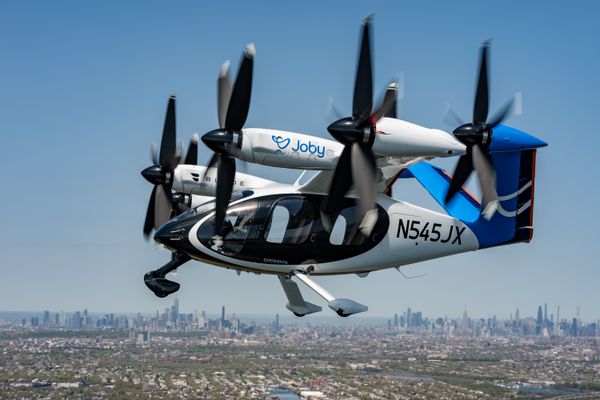 This Week in Aviation: The 10 Stories That Mattered Most
From major airline developments to aircraft updates and industry shifts, this weekly recap highlights the ten most-read aviation stories from the week of October 04.
INFORMATIONAL
READ MORE »
This Week in Aviation: The 10 Stories That Mattered Most
From major airline developments to aircraft updates and industry shifts, this weekly recap highlights the ten most-read aviation stories from the week of October 04.
INFORMATIONAL
READ MORE »
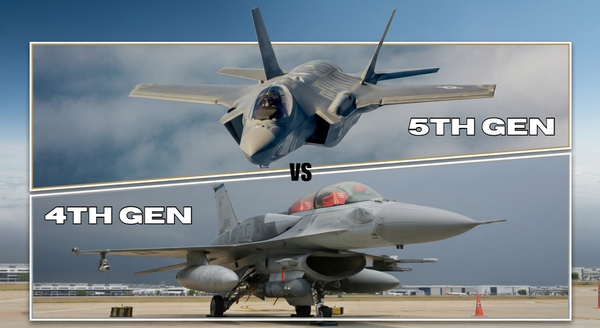 4th vs 5th Generation Fighter Jets: How Fighter Jets Have Evolved
A look at what separates fourth- and fifth-generation fighter jets, from stealth and sensor fusion to combat capability and cost.
INFORMATIONAL
READ MORE »
4th vs 5th Generation Fighter Jets: How Fighter Jets Have Evolved
A look at what separates fourth- and fifth-generation fighter jets, from stealth and sensor fusion to combat capability and cost.
INFORMATIONAL
READ MORE »
 United 777 Diverts to Dublin After Cockpit Windscreen Cracks Over the Atlantic
A United Airlines Boeing 777 bound for Milan made a steep descent and diverted to Dublin after its cockpit windscreen cracked mid-flight.
NEWS
READ MORE »
United 777 Diverts to Dublin After Cockpit Windscreen Cracks Over the Atlantic
A United Airlines Boeing 777 bound for Milan made a steep descent and diverted to Dublin after its cockpit windscreen cracked mid-flight.
NEWS
READ MORE »
More than just headlines.
Get unlimited ad-free access to in-depth aviation news, premium stories, and exclusive insights other sites don't cover.
- Ad-free browsing on AeroXplorer
- Unlimited access to premium and exclusive articles
- Higher photo upload limits & commissions on sales
- Free access to Jetstream Magazine on higher tiers
- Ad-free browsing
- Sell aviation photos with 60% commission
- First week free!
- Everything in Basic+
- Unlimited premium articles
- Sell aviation photos with 70% commission
- Free Digital subscription to Jetstream Magazine
- First week free!
- Everything in Basic+ and Pro
- Sell aviaiton photos with 80% commission
- Early access to exclusive stories
- Free Digital+Print subscription to Jetstream Magazine