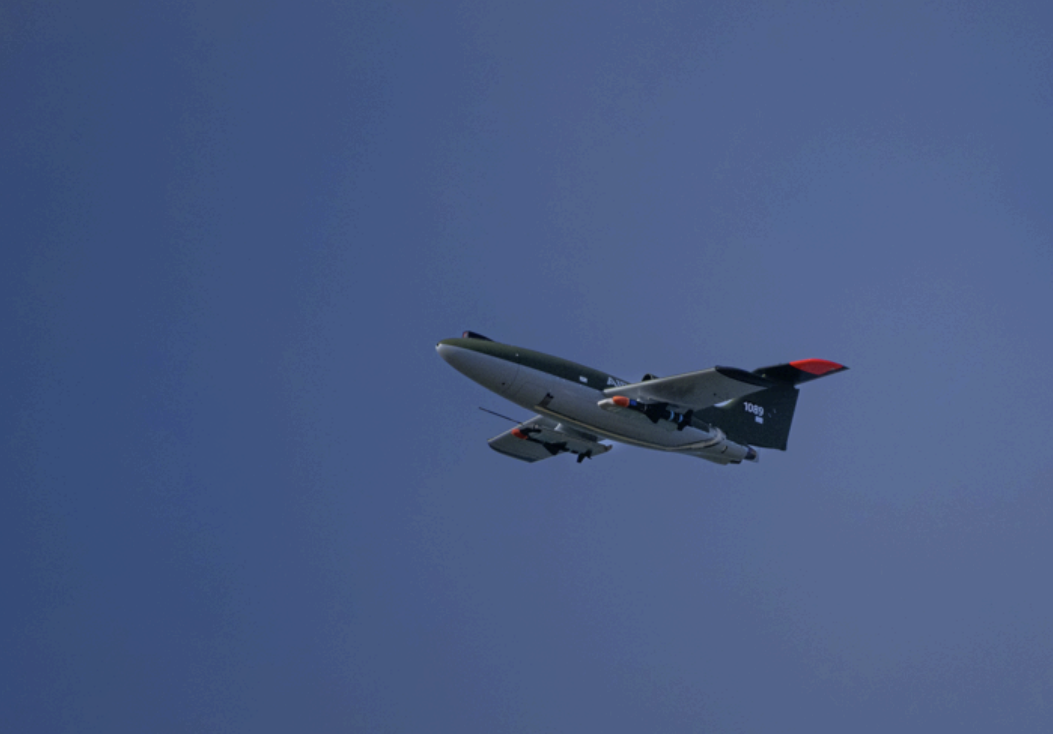
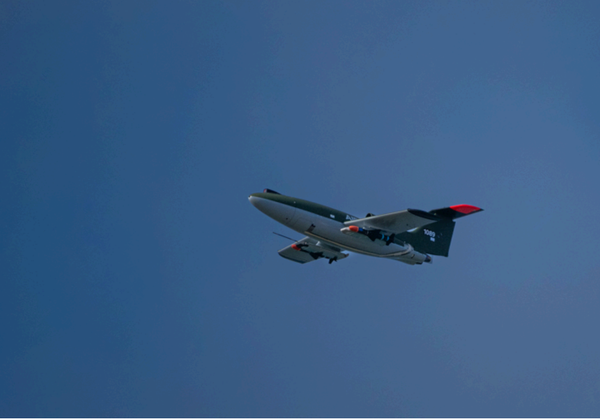
European air defense reached a defining milestone this morning as the Airbus "Bird of Prey" uncrewed interceptor successfully completed its maiden demonstration flight. In a high-stakes simulation conducted at a military training range in northern Germany, the autonomous system proved it could not only fly but "hunt," successfully neutralizing a simulated kamikaze drone threat using a new class of ultra-lightweight missiles.
The demonstration, which took place just nine months after the project’s inception, marks a paradigm shift in how modern militaries approach the growing threat of one-way attack (OWA) drones. Developed under a compressed timeline, the Bird of Prey is a reusable, jet-powered interceptor designed to flip the "cost curve" of air defense, offering an affordable solution to mass aerial threats that have traditionally required multi-million dollar surface-to-air missiles to stop.
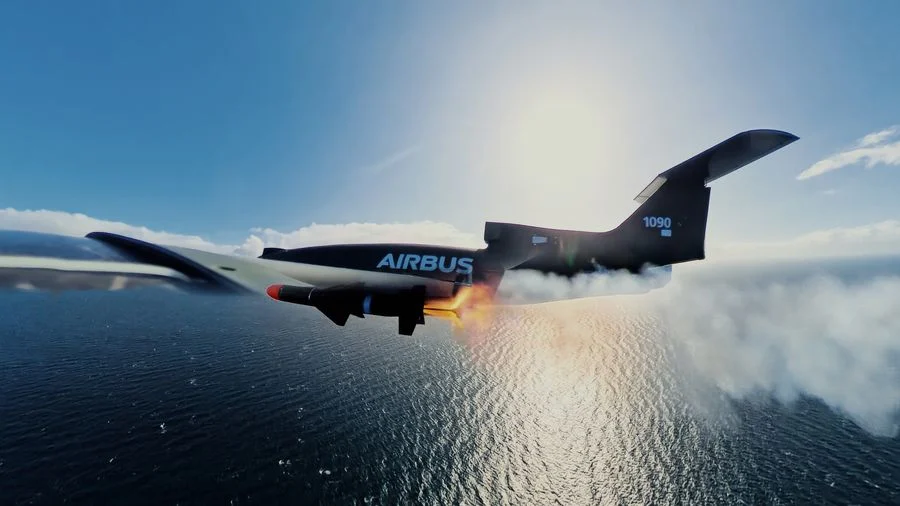
Photo: Airbus
The Anatomy of an Aerial Hunt
During the mission, the Bird of Prey, based on a heavily modified Airbus Do-DT25 airframe, demonstrated full autonomy in its search and classification phases. Operating within a realistic mission scenario, the system's onboard sensors detected and classified a medium-sized target drone without human intervention. Once the threat was confirmed, the "human-in-the-loop" operator authorized the engagement, leading to a successful strike.
The interceptor was equipped with the Mark I guided missile, a product of a strategic partnership with the Estonian defense startup Frankenburg Technologies. Weighing less than 2 kilograms and measuring just 65 centimeters, the Mark I is currently the lightest guided air-to-air interceptor in the world.
“Against the current geopolitical and military backdrop, defending against kamikaze drones is a tactical priority that urgently needs to be tackled,” said Mike Schoellhorn, CEO of Airbus Defence and Space.
“With our Bird of Prey and Frankenburg's affordable Mark I missiles, we are providing armed forces with an effective, cost-efficient interceptor, filling a crucial capability gap in today's asymmetric conflict theatres. The integration of Bird of Prey into Airbus' air defence battle management suite IBMS acts as a force multiplier.”

How AI Quietly Became the Backbone of Today’s Aviation Industry
Reshaping the Cost of Air Defense
The strategic value of the Bird of Prey lies in its economic viability. While traditional air defense systems often expend interceptors costing hundreds of thousands of dollars to down drones worth only a few thousand, the Bird of Prey is designed for volume. The operational version is expected to carry up to eight Mark I missiles, allowing a single reusable drone to clear a swarm of threats in a single sortie.
“This is a defining step for modern air defence,” noted Kusti Salm, CEO of Frankenburg Technologies.
“Together with Airbus, it marks the first integration of a new class of low-cost, mass-manufacturable interceptor missiles onto a drone, creating a new cost curve for air defense and enabling defence against mass aerial threats at a fundamentally different scale.”
The system is designed to integrate seamlessly into NATO’s layered air defense architecture. By utilizing Airbus’ Integrated Battle Management System (IBMS), the Bird of Prey acts as a mobile, airborne building block that complements existing radar and missile networks, providing a flexible and rapid response to uncrewed aerial systems (UAS).
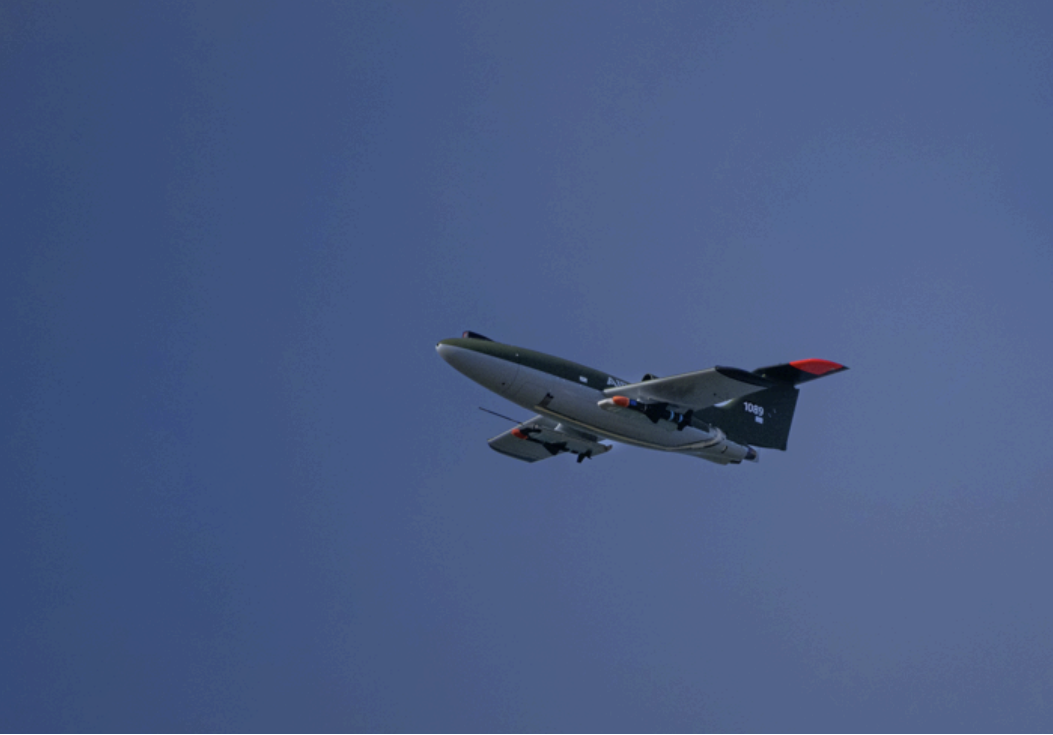
Photo: Airbus
Bird of Prey Demo Log
The following details pertain to the milestone flight operation conducted on March 30, 2026.
| Flight No. | Departure Time | Arrival Time | Duration | Operating Days |
|---|---|---|---|---|
| AGILE-BOP-01 | 09:35 AM | 10:12 AM | 37 mins | March 30, 2026 |
| AGILE-BOP-02* | 02:15 PM | 02:50 PM | 35 mins | Planned (April 2026) |
*Projected subsequent test flights as part of the 2026 maturation program.
Airbus and Frankenburg Technologies plan to continue rigorous testing throughout the remainder of 2026, including flights with live warheads to further operationalize the platform. The companies aim to have the system ready for potential customers by early 2027.
What the September NATS outage teaches passengers about flight compensation » Lawmakers Press FAA to Suspend AI Air Traffic Control Tool at Washington-Area Airports » Saab Weighs Canadian GlobalEye Production Line to Match Growing Surveillance Aircraft Orders »

Comments (0)
Add Your Comment
TAGS
NEWS Airbus Bird Of Prey Drone Interception Defense Technology Frankenburg Technologies Military UAV Drones UAS Military TechRECENTLY PUBLISHED
 FAA Nears Final Approval of Boeing 737 MAX 10 as Certification Review Concludes
The FAA has completed its final review of the Boeing 737 MAX 10, with certification expected as soon as next week after years of delays.
NEWS
READ MORE »
FAA Nears Final Approval of Boeing 737 MAX 10 as Certification Review Concludes
The FAA has completed its final review of the Boeing 737 MAX 10, with certification expected as soon as next week after years of delays.
NEWS
READ MORE »
 United and Air Canada Push to Expand Joint Venture Amid Cross-Border Travel Strains
United Airlines and Air Canada plan to add routes to their joint venture as political tensions dampen travel demand between the two countries.
NEWS
READ MORE »
United and Air Canada Push to Expand Joint Venture Amid Cross-Border Travel Strains
United Airlines and Air Canada plan to add routes to their joint venture as political tensions dampen travel demand between the two countries.
NEWS
READ MORE »
 Why the A-10 Warthog's Nose Gear Is Offset to the Right
Why the A-10 Warthog’s nose wheel sits off-center, and how its massive GAU-8 Avenger cannon dictated the aircraft’s design.
INFORMATIONAL
READ MORE »
Why the A-10 Warthog's Nose Gear Is Offset to the Right
Why the A-10 Warthog’s nose wheel sits off-center, and how its massive GAU-8 Avenger cannon dictated the aircraft’s design.
INFORMATIONAL
READ MORE »
More than just headlines.
Get unlimited ad-free access to in-depth aviation news, premium stories, and exclusive insights other sites don't cover.
- Ad-free browsing on AeroXplorer
- Unlimited access to premium and exclusive articles
- Higher photo upload limits & commissions on sales
- Free access to Jetstream Magazine on higher tiers
- Ad-free browsing
- Sell aviation photos with 60% commission
- First week free!
- Everything in Basic+
- Unlimited premium articles
- Sell aviation photos with 70% commission
- Free Digital subscription to Jetstream Magazine
- First week free!
- Everything in Basic+ and Pro
- Sell aviaiton photos with 80% commission
- Early access to exclusive stories
- Free Digital+Print subscription to Jetstream Magazine