

Three passengers on Alaska Airlines Flight 1812, which had an incident involving a door plug blowing off mid-flight in January, are suing the airline and Boeing for $1 billion. The case includes negligence for allegedly ignoring the signs of an impending incident.

The Case
A release announcing the lawsuit states:
"This experience jeopardized the lives of the 174 passengers and six crew members that were on board. For those reasons, the lawsuit seeks substantial punitive damages... for what was a preventable incident."
The suit also seeks damages for the passengers onboard the Boeing 737 Max 9 aircraft. The Federal Aviation Administration (FAA) grounded the plane following the incident. The blowout ended in uncontrolled decompression, and oxygen masks were deployed before the jet returned to Portland International Airport (PDX).
On behalf of Kyle Rinker, Amanda Strickland, and Kevin Kwok, the complaint was filed on February 20 in Multnomah County, Oregon. The lawsuit mentioned:
"As a direct result of the frightful, death-threatening failure of the Boeing aircraft, Mr. Kwok, Mr. Rinker, and Ms. Strickland suffered severe mental, emotional, and psychological injuries, including post-traumatic stress, and physical injuries."
It also states that the pressure change inside the cabin "caused some passengers' ears to bleed."

The lawsuit was filed by Jonathan W. Johnson, LLC, an aviation law firm based in Atlanta. The firm stated in a news release that it hopes "to hold Boeing accountable for its negligence which had caused extreme panic, fear, and post-traumatic stress." The blowout on flight 1282 has been mentioned as "a preventable incident," which has put the lives of the passengers onboard on the incident's day, and the other manufactured aircraft by Boeing that had similar defects found under detailed examination.
The lawsuit also states, "the defects in manufacturing impacted numerous other aircraft and threatened the lives of the passengers on all Boeing 737 Max 9 aircraft." Flight 1282 is "just one terrible chapter in the evolving story of Boeing and Alaska Airlines placing profits above safety."
While the aircraft was six minutes into its flight to California, at 16,000 feet (4,877 meters), one of the exit doors came loose. The gaping hole in the side of the plane, which was carrying 174 passengers and six crew members, has caused great distraught. Although the aircraft landed safely, various passengers suffered minor injuries and lost belongings that were sucked out of the hole in the plane. According to a passenger onboard named Kelly Barlett, one teenage passenger had his shirt ripped off by the high effect of the wind.

The preliminary results of an examination by the National Transportation and Safety Board found four key bolts missing from the aircraft that were supposed to secure the exit door. The report states: "Four bolts that prevent upward movement of the MED plug were missing before the MED plug moved upward off the stop pads."
After the accident results, Alaska Airlines and United Airlines canceled flights on Boeing 737 MAX 9 planes as the investigations have started. The FAA ultimately ordered a temporary global grounding of all Boeing 737 Max 9 jets for "immediate inspection" since both airlines stated that they had found loose hardware on grounded planes of that model.
The investigation aims to determine whether Boeing "failed to ensure" that its aircraft "were in condition for safe operation in compliance with FAA regulations." The agency stated, "The incident should have never happened and it cannot happen again," in January, adding, "The FAA is continuing to support the National Transportation Safety Board's investigation into Jan. 5 door plug incident."

Boeing is also facing another lawsuit brought by passengers in Alaska, which states:
"The violence of the event bruised the bodies of some," the lawsuit alleges. "The cockpit door blew open and a flight attendant rushed to try to close it. The pressure change made ears bleed and combined with low oxygen, loud wind noise and traumatic stress made heads ache severely. Passengers were shocked, terrorized, and confused, thrust into a waking nightmare, hoping they would live long enough to walk the earth again."
Alaska Airlines has not been named as a defendant in that suit. Boeing is facing challenging days with deadlines, inspections, and lawsuits. The company has been facing serious outcomes from the incidents. The pressure is increasing with the 90-day deadline of the FAA and the disrupted passengers seeking compensation.
Ryanair Boeing 737 Aborts Takeoff at Alicante Airport, Civil Aviation Commission Launches Investigation » Why Statistics Matters for Future Aviation Professionals » Alaska Airlines Sets Sights on Final Major U.S. Carrier Takeover While Building Global Seattle Hub »

Comments (0)
Add Your Comment
TAGS
NEWS Boeing Lawsuit Alaska Airlines Investigation Incident Legal Government FAA Federal Aviation Administration Boeing 737 MAX 9 737 MAX 9RECENTLY PUBLISHED
 IATA's New Passenger Data Shows Global Air Travel Demand Shrinking for the First Time This Year
Global air travel just hit a reverse that has not been seen in months -- the numbers point to something more interesting than a simple slowdown.
INFORMATIONAL
READ MORE »
IATA's New Passenger Data Shows Global Air Travel Demand Shrinking for the First Time This Year
Global air travel just hit a reverse that has not been seen in months -- the numbers point to something more interesting than a simple slowdown.
INFORMATIONAL
READ MORE »
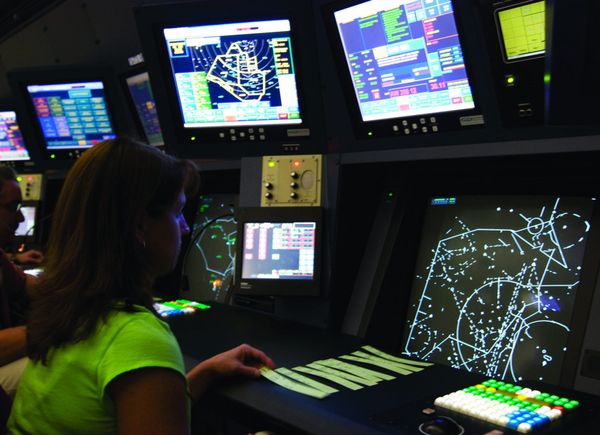 The $30 Billion Question: Why America's Air Traffic Control Overhaul Keeps Getting More Expensive
The U.S. government is seeking $30 billion more to modernize America’s aging air traffic control system. Explore the rising $42.5 billion price tag, GAO oversight concerns, and where the new funding would go.
INFORMATIONAL
READ MORE »
The $30 Billion Question: Why America's Air Traffic Control Overhaul Keeps Getting More Expensive
The U.S. government is seeking $30 billion more to modernize America’s aging air traffic control system. Explore the rising $42.5 billion price tag, GAO oversight concerns, and where the new funding would go.
INFORMATIONAL
READ MORE »
 Embraer Posts Record 66 Aircraft Deliveries in Q3 2026 as Commercial Jets Climb 10%
Embraer delivered 66 aircraft in Q3 2026, its strongest third quarter on record, with commercial jets up 10% and business jets rising 41%.
NEWS
READ MORE »
Embraer Posts Record 66 Aircraft Deliveries in Q3 2026 as Commercial Jets Climb 10%
Embraer delivered 66 aircraft in Q3 2026, its strongest third quarter on record, with commercial jets up 10% and business jets rising 41%.
NEWS
READ MORE »
More than just headlines.
Get unlimited ad-free access to in-depth aviation news, premium stories, and exclusive insights other sites don't cover.
- Ad-free browsing on AeroXplorer
- Unlimited access to premium and exclusive articles
- Higher photo upload limits & commissions on sales
- Free access to Jetstream Magazine on higher tiers
- Ad-free browsing
- Sell aviation photos with 60% commission
- First week free!
- Everything in Basic+
- Unlimited premium articles
- Sell aviation photos with 70% commission
- Free Digital subscription to Jetstream Magazine
- First week free!
- Everything in Basic+ and Pro
- Sell aviaiton photos with 80% commission
- Early access to exclusive stories
- Free Digital+Print subscription to Jetstream Magazine