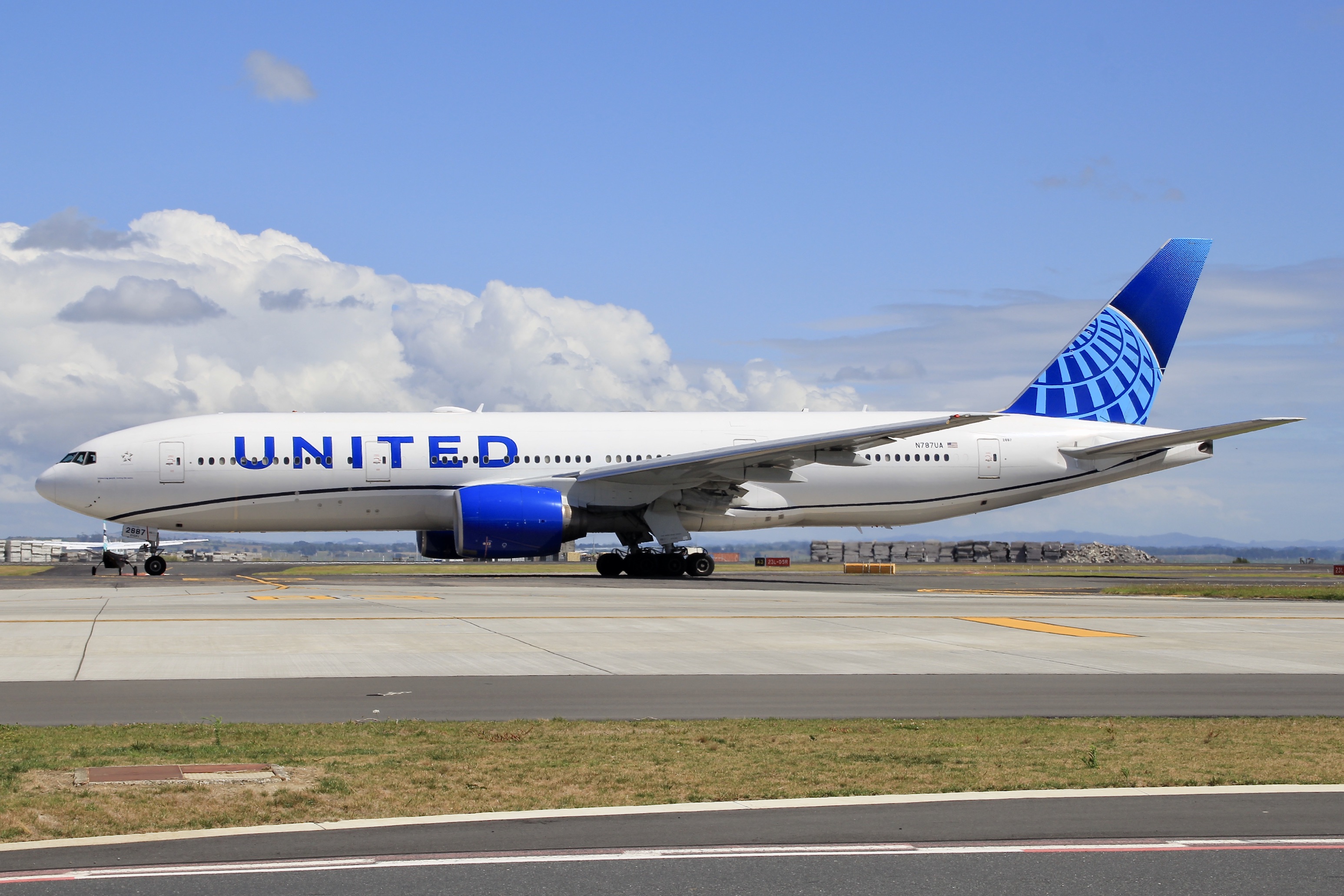

United Airlines has reached a notable milestone in its connectivity overhaul, completing the prototype installation of SpaceX's Starlink internet system on one of its Boeing 777 widebody aircraft. The carrier confirmed the achievement in early June, signaling that its ambitious plan to equip the entire mainline fleet with low Earth orbit satellite Wi-Fi is moving from regional jets to long-haul international aircraft.
What the Installation Means for the 777 Program
The Boeing 777 represents the backbone of United's international operations, flying routes from hubs such as San Francisco, Newark, Houston, and Chicago to destinations across Asia, Europe, the Middle East, and Oceania. Until now, passengers on these long flights have contended with legacy satellite connectivity systems that struggled to deliver consistent performance, particularly over polar routes and remote oceanic airspace.
Starlink's low Earth orbit constellation changes the equation. The system promises speeds reportedly reaching up to 250 Mbps per aircraft, enabling streaming, video calls, and gaming at altitudes where traditional geostationary satellite systems falter. United's chief executive Scott Kirby has previously described the upgrade as transformational for the passenger experience, particularly on flights lasting 10 to 15 hours.

From Regional Jets to Widebodies
United began rolling out Starlink on its United Express regional fleet in May 2025, starting with two-cabin Embraer E175 aircraft operated by SkyWest. The carrier has been installing the equipment at a steady pace to equip the entire two-cabin regional fleet by the end of 2025. Mainline narrowbody and widebody aircraft are the next phase.
The prototype installation on the Boeing 777 is a significant engineering exercise. Widebody aircraft present different aerodynamic, electrical, and structural considerations than the regional jets that received the first installations. United engineers worked with SpaceX to validate antenna placement, cabin distribution architecture, and integration with existing in-flight entertainment systems before moving to fleetwide deployment.
According to the carrier, the installation took approximately 10 hours, a dramatic reduction compared with the multi-day downtime required for legacy connectivity systems. That efficiency matters because it minimizes the revenue impact of pulling aircraft out of service for retrofits.

Only Way Out: Private Aviation in a Region at War
Free Service for All Passengers
United has committed to offering the Starlink service free of charge to all passengers, regardless of cabin class. Access requires enrollment in the airline's MileagePlus loyalty program, a strategic move that should accelerate sign-ups while delivering a service most competitors still treat as a premium add-on. Delta Air Lines offers free Wi-Fi through T-Mobile, while American Airlines has signaled interest in following suit but has not committed to fleetwide free access.
The economics make sense for United. Connectivity has become a key differentiator for business travelers, and the cost of Starlink hardware and bandwidth is significantly lower than legacy alternatives. Free service also encourages higher engagement with United's app and onboard portal, opening new advertising and ancillary revenue opportunities.

Why the Timing Matters
United is racing to complete its connectivity transformation ahead of summer 2026 international travel demand, which industry analysts expect to remain robust. Passengers booking long-haul tickets increasingly factor in onboard Wi-Fi quality, particularly business travelers who view flight time as productive working hours rather than dead time.
The carrier plans to equip approximately two aircraft per week with Starlink during peak installation activity, working through its narrowbody fleet of Boeing 737s and Airbus A320 family aircraft alongside the widebody Boeing 777, 787, and 767 fleets. United operates roughly 96 Boeing 777 aircraft, making the widebody program a substantial undertaking on its own.
Looking Ahead
The completion of the prototype installation triggers the next phase of certification and validation flights. Regulatory sign-off from the Federal Aviation Administration is required before the service can be activated for commercial passenger use on the 777 fleet. United expects passengers to begin experiencing Starlink on Boeing 777 international flights later in 2026, though the carrier has not committed to a specific in-service date for the widebody type.
For aviation enthusiasts and frequent international travelers, the prototype installation marks the moment when truly modern connectivity finally arrives on the routes where it has been most conspicuously absent. The trans-Pacific crossing, the polar route to Asia, and the long Atlantic legs to Africa and the Middle East have long been digital dead zones. That is about to change.
Chicago Midway Loses One of Its Four Runways for a Month After Jet Blast Damages a Key Safety System » Why Aircraft Towing May Be One of the Last Frontiers of Autonomous Ground Operations » Virgin Atlantic Launches Nonstop Heathrow-Phuket Flights »

Comments (0)
Add Your Comment
TAGS
NEWS United Airlines Starlink SpaceX Boeing 777 In-Flight Wi-Fi Internet Connectivity Broadband Service Fleet Modernization Long-Haul Flights Passenger Experience Aviation Technology Wireless Connectivity Boeing Widebody Satellite Internet Technology Integration Cabin Innovation Flight Operations Crew Connectivity Premium Service Competitive Advantage Low Earth Orbit Connectivity Solution MileagePlus Members First Installation Satellite Technology Aviation Industry Airline Operations Service Enhancement Internet Service Wireless Technology System Installation Fleet UpgradesRECENTLY PUBLISHED
 American Airlines Boeing 787 Makes Emergency Landing at O'Hare After Brake Issue, One Hospitalized
An American Airlines Boeing 787 makes an emergency landing to Chicago O'Hare after a brake problem.
NEWS
READ MORE »
American Airlines Boeing 787 Makes Emergency Landing at O'Hare After Brake Issue, One Hospitalized
An American Airlines Boeing 787 makes an emergency landing to Chicago O'Hare after a brake problem.
NEWS
READ MORE »
 Why Aircraft Towing May Be One of the Last Frontiers of Autonomous Ground Operations
Ground support equipment has advanced steadily toward autonomy: baggage carts and pushback tractors, among others, are being designed to operate with minimal human intervention. Yet the aircraft itself – the single most valuable and structurally sensitive asset on the ramp – is still almost universally towed under direct human control.
STORIES
READ MORE »
Why Aircraft Towing May Be One of the Last Frontiers of Autonomous Ground Operations
Ground support equipment has advanced steadily toward autonomy: baggage carts and pushback tractors, among others, are being designed to operate with minimal human intervention. Yet the aircraft itself – the single most valuable and structurally sensitive asset on the ramp – is still almost universally towed under direct human control.
STORIES
READ MORE »
 British Airways Finishes Starlink Wi-Fi Rollout Across Its A350 Fleet
British Airways has installed SpaceX's Starlink Wi-Fi on every Airbus A350 in its fleet, offering passengers free high-speed internet on long-haul flights.
NEWS
READ MORE »
British Airways Finishes Starlink Wi-Fi Rollout Across Its A350 Fleet
British Airways has installed SpaceX's Starlink Wi-Fi on every Airbus A350 in its fleet, offering passengers free high-speed internet on long-haul flights.
NEWS
READ MORE »
More than just headlines.
Get unlimited ad-free access to in-depth aviation news, premium stories, and exclusive insights other sites don't cover.
- Ad-free browsing on AeroXplorer
- Unlimited access to premium and exclusive articles
- Higher photo upload limits & commissions on sales
- Free access to Jetstream Magazine on higher tiers
- Ad-free browsing
- Sell aviation photos with 60% commission
- First week free!
- Everything in Basic+
- Unlimited premium articles
- Sell aviation photos with 70% commission
- Free Digital subscription to Jetstream Magazine
- First week free!
- Everything in Basic+ and Pro
- Sell aviaiton photos with 80% commission
- Early access to exclusive stories
- Free Digital+Print subscription to Jetstream Magazine