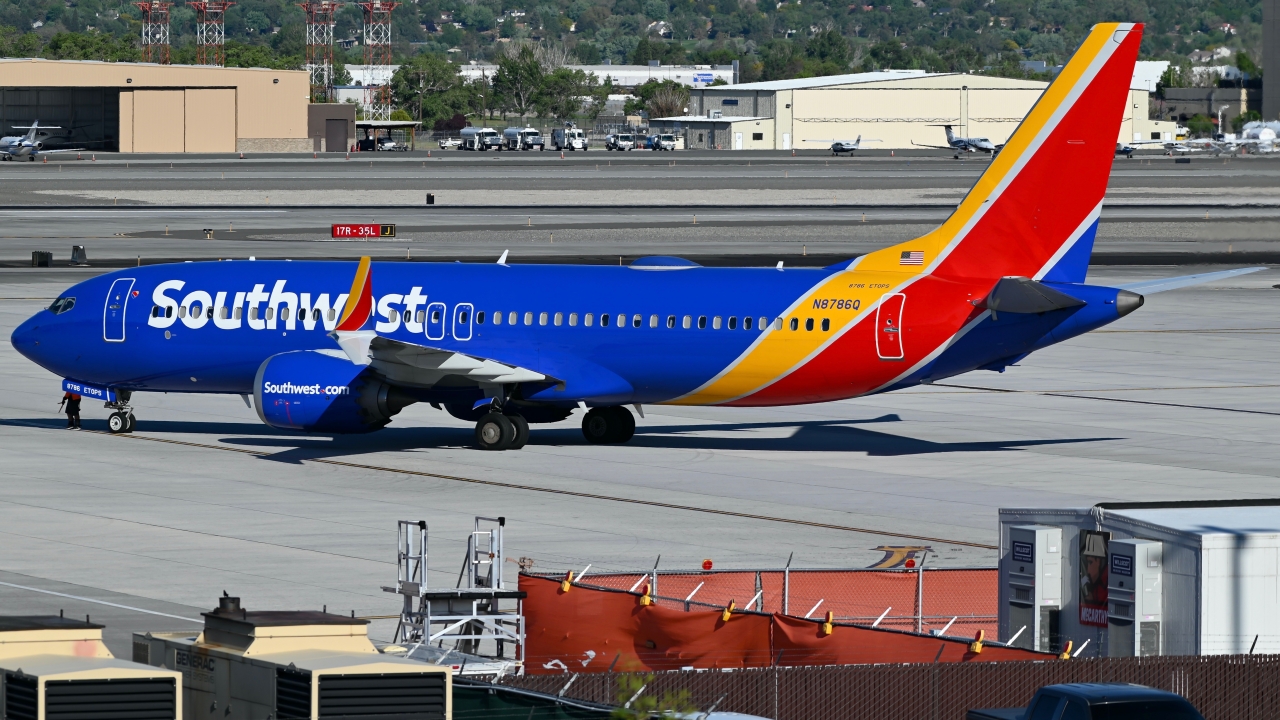

When Southwest Airlines needed jet fuel for its California operations at the peak of this year's supply crisis, it did not wait for a pipeline or a truck – it chartered a ship. The Dallas-based carrier revealed this week that it transported 12.6 million gallons of jet fuel from Houston to Los Angeles by sea earlier this year, becoming the first time in the airline's history that it had resorted to marine shipping to secure its fuel supply.

From Houston to Los Angeles by Sea
The shipment was disclosed by Southwest CFO Tom Doxey in comments to CNBC, who explained that the vessel arrived in Los Angeles on May 28, having sailed from Houston and transited the Panama Canal en route to the West Coast. The 12.6 million gallons on board represented approximately 2.23% of the 564 million gallons Southwest consumed during the entire second quarter of 2026 – a relatively small proportion, but one that Doxey described as critically timed.
It brought like a week's supply to the West Coast at a time when supply was most constricted – when it was most at risk,
Doxey told CNBC.
The decision to ship fuel by boat was driven by acute supply concerns on the West Coast, where California in particular had emerged as a pressure point during the broader national fuel crisis sparked by the conflict in Iran.
The state's greater reliance on foreign fuel imports left it more exposed than other parts of the country when Middle Eastern supply chains were disrupted, driving prices sharply higher and raising genuine concerns about continuity of supply for carriers operating there.
How Southwest Worked Around the Jones Act
The seaborne shipment also involved a notable regulatory dimension. Normally, shipping goods between US ports on non-US-flagged vessels is prohibited under the Jones Act – a century-old maritime law requiring such trade to be carried on American-built, American-flagged, and American-crewed ships. Southwest was able to work around that requirement because the Jones Act had been waived in March 2026 amid the Iran-related disruption to shipping, allowing the airline to charter a foreign vessel for the Houston-to-Los Angeles journey without violating federal law.
The waiver, while rarely invoked, is a tool available to the federal government in times of national emergency or significant supply chain disruption, and the fuel crisis triggered by the Iran conflict qualified on both counts.
Southwest's Finances: Stronger Than Rivals, But Fuel Still Bites
Despite the extraordinary fuel procurement measures, Southwest Airlines has performed relatively well financially compared to some of its peers. The carrier's second-quarter profit rose 9% and revenue climbed 16.4% year-over-year – a considerably stronger performance than several of its competitors, who have seen profits collapse under the weight of surging fuel costs.
Southwest spent nearly $900 million more on fuel in the second quarter of 2026 than in the same period of 2025. The carrier has partially mitigated this impact by raising fares, which has been the primary lever available to airlines across the industry to offset the cost spike. However, the fuel bill is expected to weigh more heavily on third-quarter results. Southwest's Q3 adjusted earnings forecast of $0.50 to $0.75 per share fell below the analyst consensus of $0.82, signaling that the pain is not over.
The Cockpit’s Next Revolution: When the Co-Pilot Is a Computer
A Broader Industry Crisis
The Southwest shipment is a striking illustration of how far airlines have been forced to go to secure their operations during one of the most volatile fuel environments the industry has ever experienced.
Smaller carriers proved particularly vulnerable. BeOnd, the Maldivian premium airline, suspended all scheduled flights in April until the late-October IATA season change.
For Southwest, chartering a ship to bring fuel was an unconventional solution to an unprecedented problem. It worked, but the fact that it was necessary at all speaks to just how fundamentally the Iran conflict has disrupted the systems that keep commercial aviation in the air.
American Airlines 737 Diverts to Chicago O'Hare After Suspected Cabin Fire » Phillips 66 Aviation Donates $23,928 to CAN in Support of Cancer Patient Flights » Austrian Airlines Flight Diverts to Sofia Under Fighter Escort After Bomb Threat »

Comments (0)
Add Your Comment
TAGS
NEWS Southwest Southwest Airlines SWA Jet FuelRECENTLY PUBLISHED
 American Airlines Boeing 787 Makes Emergency Landing at O'Hare After Brake Issue, One Hospitalized
An American Airlines Boeing 787 makes an emergency landing to Chicago O'Hare after a brake problem.
NEWS
READ MORE »
American Airlines Boeing 787 Makes Emergency Landing at O'Hare After Brake Issue, One Hospitalized
An American Airlines Boeing 787 makes an emergency landing to Chicago O'Hare after a brake problem.
NEWS
READ MORE »
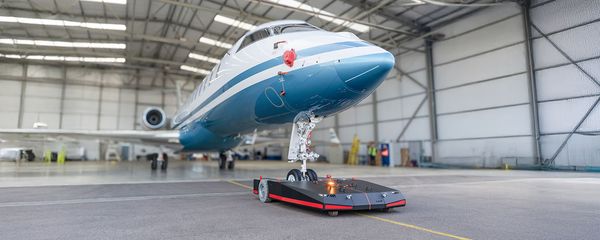 Why Aircraft Towing May Be One of the Last Frontiers of Autonomous Ground Operations
Ground support equipment has advanced steadily toward autonomy: baggage carts and pushback tractors, among others, are being designed to operate with minimal human intervention. Yet the aircraft itself – the single most valuable and structurally sensitive asset on the ramp – is still almost universally towed under direct human control.
STORIES
READ MORE »
Why Aircraft Towing May Be One of the Last Frontiers of Autonomous Ground Operations
Ground support equipment has advanced steadily toward autonomy: baggage carts and pushback tractors, among others, are being designed to operate with minimal human intervention. Yet the aircraft itself – the single most valuable and structurally sensitive asset on the ramp – is still almost universally towed under direct human control.
STORIES
READ MORE »
 British Airways Finishes Starlink Wi-Fi Rollout Across Its A350 Fleet
British Airways has installed SpaceX's Starlink Wi-Fi on every Airbus A350 in its fleet, offering passengers free high-speed internet on long-haul flights.
NEWS
READ MORE »
British Airways Finishes Starlink Wi-Fi Rollout Across Its A350 Fleet
British Airways has installed SpaceX's Starlink Wi-Fi on every Airbus A350 in its fleet, offering passengers free high-speed internet on long-haul flights.
NEWS
READ MORE »
More than just headlines.
Get unlimited ad-free access to in-depth aviation news, premium stories, and exclusive insights other sites don't cover.
- Ad-free browsing on AeroXplorer
- Unlimited access to premium and exclusive articles
- Higher photo upload limits & commissions on sales
- Free access to Jetstream Magazine on higher tiers
- Ad-free browsing
- Sell aviation photos with 60% commission
- First week free!
- Everything in Basic+
- Unlimited premium articles
- Sell aviation photos with 70% commission
- Free Digital subscription to Jetstream Magazine
- First week free!
- Everything in Basic+ and Pro
- Sell aviaiton photos with 80% commission
- Early access to exclusive stories
- Free Digital+Print subscription to Jetstream Magazine