
Sydney Airport, Australia’s busiest aviation hub, was just hours from a total shutdown of all departing flights last Friday due to a sudden shortage of available air traffic controllers. The September 12 crisis emerged after a group of "key" departure controllers called in sick, which compelled Airservices Australia – the government authority in charge of managing airspace – to consider halting all departures between 3:30 pm and 4 pm, an unprecedented measure.
Airservices Australia alerted airlines and passengers at 10 am, informing them that all departures would be restricted to a four-minute interval instead of the usual 60 aircraft per hour. The severe clampdown sent airlines into a spin with fans flocking to attend NRL and AFL finals games over the weekend.

Only an hour before the intended break, a critical gap was filled, not by an on-duty controller but one who was off duty, averting potential critical disruptions for thousands of passengers.
“The staff crisis meant we had to a departure cap for most of the day, running at just 15 take-offs per hour, which is a quarter of the normal capacity,” confirmed an Airservices Australia spokesperson.
Arrivals were not disrupted, but the possibility of a complete departure freeze hung in the air until the last minute. The incident exposes persistent vulnerabilities in Australia’s air traffic control infrastructure.
Airservices Australia now has around 1,050 controllers nationwide, a decrease of almost 20% from pre-pandemic numbers for the government entity that manages air traffic control for airlines, while total aircraft movements have fallen only about 6.5%.

The gap is partially due to a retirement incentive program implemented in 2021 that saw 140 veteran controllers leave their jobs, scaling back the number of available staff who could cover tougher shifts.
Peter McGuane, secretary of Civil Air, the union representing controllers, said, “Air traffic controllers are not interchangeable. They’re rated for specific functions, and you can’t simply transplant one controller into another position for which they’re not rated.”
It would take up to two years of classroom learning and supervised practical work in the field to train a new controller, making quick fixes impossible.
Airservices announced to hire 85 new controllers around the country this year, but union leaders say that’s a fraction of what is required to bring staffing back to safe levels.

The fatigue, burnout, and high overtime loads facing controllers are now routine aspects of ATC work, posing safety risks, not to mention the fear of yet another last-minute emergency.
While the shutdown was narrowly averted last Friday, the episode has reignited discussion over financing, workforce policies, and priorities for vital publicly owned infrastructure like air traffic control.
KLM Brings Starlink Internet to Long-Haul Flights » Boeing's Touchscreen Flight Controls for 737 Draw Sharp Criticism from Pilots » Qantas Grounds Plane After Passengers Report Bedbug Bites on Flight »

Comments (0)
Add Your Comment
TAGS
NEWS Air Traffic Control ATC Sydney Airport Australia Airservices AustraliaRECENTLY PUBLISHED
 Qantas Grounds Plane After Passengers Report Bedbug Bites on Flight
Qantas pulled an aircraft from service after passengers reported bedbug bites during flight QF5.
NEWS
READ MORE »
Qantas Grounds Plane After Passengers Report Bedbug Bites on Flight
Qantas pulled an aircraft from service after passengers reported bedbug bites during flight QF5.
NEWS
READ MORE »
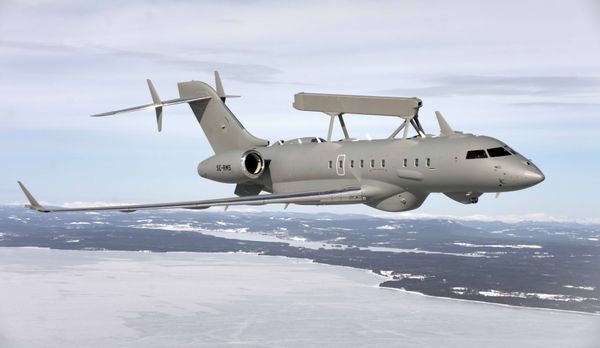 Saab Weighs Canadian GlobalEye Production Line to Match Growing Surveillance Aircraft Orders
Saab is considering establishing GlobalEye production in Canada as demand for the airborne early warning aircraft climbs across NATO nations.
NEWS
READ MORE »
Saab Weighs Canadian GlobalEye Production Line to Match Growing Surveillance Aircraft Orders
Saab is considering establishing GlobalEye production in Canada as demand for the airborne early warning aircraft climbs across NATO nations.
NEWS
READ MORE »
 Lawmakers Press FAA to Suspend AI Air Traffic Control Tool at Washington-Area Airports
Senators and union leaders urge the FAA to pause an AI-driven air traffic management tool at DC airports, citing safety concerns.
NEWS
READ MORE »
Lawmakers Press FAA to Suspend AI Air Traffic Control Tool at Washington-Area Airports
Senators and union leaders urge the FAA to pause an AI-driven air traffic management tool at DC airports, citing safety concerns.
NEWS
READ MORE »
More than just headlines.
Get unlimited ad-free access to in-depth aviation news, premium stories, and exclusive insights other sites don't cover.
- Ad-free browsing on AeroXplorer
- Unlimited access to premium and exclusive articles
- Higher photo upload limits & commissions on sales
- Free access to Jetstream Magazine on higher tiers
- Ad-free browsing
- Sell aviation photos with 60% commission
- First week free!
- Everything in Basic+
- Unlimited premium articles
- Sell aviation photos with 70% commission
- Free Digital subscription to Jetstream Magazine
- First week free!
- Everything in Basic+ and Pro
- Sell aviaiton photos with 80% commission
- Early access to exclusive stories
- Free Digital+Print subscription to Jetstream Magazine