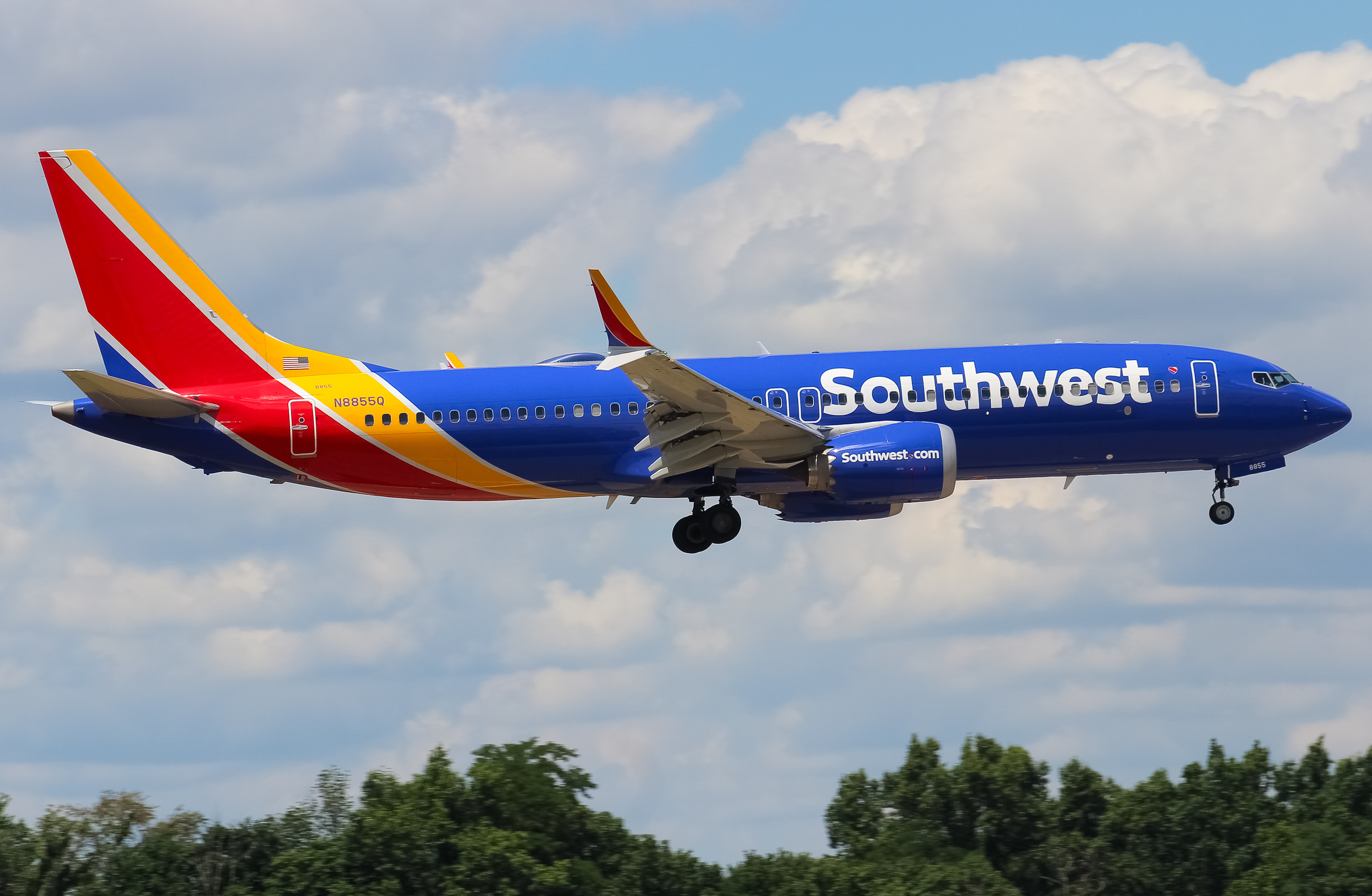

Southwest Airlines has reversed a short-lived policy that reserved the cockpit jumpseat exclusively for off-duty flight attendants, restoring access to all non-revenue employees seeking to commute or travel on fully booked flights. The decision marks a significant win for ground staff, pilots from other carriers, and corporate employees, but it has provoked sharp criticism from cabin crew who argue the airline has stripped them of a hard-fought benefit.
The Dallas-based carrier had introduced the flight attendant-only restriction earlier in the year following pressure from the Transport Workers Union (TWU) Local 556, which represents Southwest's cabin crew. Union leaders had argued that flight attendants, who frequently commute long distances to their base airports, deserved priority access to the cockpit jumpseat when cabin seats were unavailable. For a brief period, the policy delivered exactly that.
Now, Southwest has walked back the rule, reopening the flight deck jumpseat to all eligible non-revenue travelers under the airline's standard boarding priority system. According to the carrier, the reversal aligns Southwest with industry-wide norms and restores parity across employee groups who rely on standby travel.

Why Southwest Changed Course
Southwest has not publicly detailed every factor behind the reversal, but the airline indicated that limiting cockpit jumpseat access to a single workgroup created operational inefficiencies and inequities among employees. Pilots from other airlines, who depend on reciprocal jumpseat agreements to commute to work, were among those most affected by the previous restriction. Industry jumpseat agreements operate on mutual access, and any carrier that limits availability risks straining those arrangements with partner airlines.
Ground operations staff, customer service agents, mechanics, and corporate employees had also lost a travel option they had relied on for years. With Southwest flights running at high load factors, the cabin jumpseat alone often proved insufficient for the volume of non-revenue travelers attempting to position themselves for work or personal travel.
The carrier's leadership ultimately determined that broader access better served the overall workforce and aligned with the collaborative culture Southwest has long promoted.
Flight Attendants Voice Strong Opposition
The reaction from cabin crew has been swift and pointed. Flight attendants who had welcomed the original policy as recognition of their commuting challenges now view the reversal as a betrayal. Many took to internal forums and social media to express frustration, arguing that they had secured the exclusive access through union negotiation and that management had unilaterally undone that progress.
Cabin crew members have noted that flight attendants often face tighter scheduling margins than other employee groups. Missing a commute can result in a missed assignment, lost pay, and disciplinary consequences. Pilots have access to the flight deck jumpseat under federal aviation regulations regardless of internal policy, which leaves flight attendants more dependent on cabin seats or, when available, the cockpit jumpseat.
Some flight attendants have expressed concern that the reversal signals diminished respect for cabin crew priorities at a time when contract negotiations and workplace conditions remain sensitive topics across the industry.
Alaska Goes Global: How Hawaiian Airlines Changed the Carrier’s Future
The Jumpseat System Explained
For readers less familiar with non-revenue travel mechanics, the jumpseat refers to auxiliary seating in both the cockpit and cabin used by crew members during flights. In the cockpit, the jumpseat is typically reserved for pilots conducting check rides, federal inspectors, or off-duty pilots commuting to work under the Cockpit Access Security System (CASS). Cabin jumpseats are used by working flight attendants during taxi, takeoff, and landing.
When all revenue seats are occupied, airlines often permit non-revenue travelers, including off-duty employees and their eligible guests, to occupy jumpseats under specific conditions. Policies vary by carrier, but most major US airlines extend cockpit jumpseat privileges beyond pilots when permitted by the captain and when the traveler holds appropriate credentials.
Southwest's brief experiment with restricting cockpit jumpseat access to flight attendants only stood out as an unusual departure from industry practice.

Broader Implications for Employee Travel
The reversal restores Southwest's non-revenue travel program to a more conventional structure, which should ease commuting burdens for thousands of employees across departments. Pilots from partner airlines who rely on reciprocal jumpseat agreements will also benefit, as Southwest's previous restriction had raised concerns about whether other carriers might retaliate by limiting Southwest pilots' access to their flight decks.
For flight attendants, the path forward remains uncertain. The TWU Local 556 has not publicly outlined whether it intends to challenge the reversal through grievance procedures or contract negotiations, but the union's response in the coming weeks will likely shape how the dispute evolves.
Industry observers note that jumpseat policies often become flashpoints during periods of labor tension. With Southwest navigating ongoing operational changes, including the introduction of assigned seating and other commercial adjustments, internal workforce dynamics remain a sensitive area for management.
What Comes Next
Southwest has signaled that the new policy is final for now, though the carrier has acknowledged employee feedback and indicated it will continue to monitor how the program functions in practice. Flight attendants seeking changes will likely need to pursue them through their union and the collective bargaining process rather than through direct appeals to management.
For non-revenue travelers across Southwest's employee base, the practical effect is immediate. The cockpit jumpseat is once again available to those who qualify under standard non-revenue boarding procedures, restoring a travel option that many had quietly relied on for years.
American Airlines 737 Diverts to Chicago O'Hare After Suspected Cabin Fire » Why Does the Boeing 777-300ER Have Black Lines on Its Wings? » The End of Lufthansa's Four-Engine Era as Its Last Airbus A340-600 Lands in Frankfurt for the Final Time After 23 Years »

Comments (8)
 orlandocfi
Just to be clear, this policy is only referring to CABIN jumpseats, not cockpit. The cockpit jumpseats are NOT available to flight attendants and nonrevs. This article is full of misinformation and really should be taken down and heavily edited for accuracy.
Jetfixer6
Amen, So much wrong information in this article
Betty
Thank you for answering. Learn something new every day!
CAPTAIN-747
Let us be clear, access to the Jumpseat is a Privilege and not a right. For Flight Attendants to have access to the cockpit jumpseat now is just that, a privilege, because years ago they were not allowed in the cockpit jumpseat. The jumpseat is a scare commodity, since in the B737 there is only 1 seat, UAL in the "old" days would have 2, but that, I believe, is not the case these days.
The Flight Attendants should just stop crying about this matter, but they won't.
Jetfixer6
The policy has nothing to do with the flight deck/cockpit, which is why this article should be taken down. The subject policy is "Employee" non rev's using the flight attendant seats when the cabin was full. This is not a welcome thing by the flight attendants and never has been. For a short time and now reversed, the flight attendant's were able to get this policy changed. It has since been reversed to allow an "Employee" non rev to sit with them. AT NO POINT EVER, ON ANY AIRLINE, WAS A FLIGHT ATTENDANT or nonrev, ALLOWED TO SIT IN THE FLIGHT DECK!!! Pilots and AMT's are only allowed per FAA part 121. And, there are two additional "Jump" seats in a 737 flight deck. They are called 1st and 2nd observer seats per the Boeing 737 flight manual.
orlandocfi
The vast majority of Southwest 737s have two cockpit jump seats, none of which are available for use by flight attendants and nonrevs on a part 121 flight.
Betty Goss
Not being an airline employee, I don't understand all this squabble about who gets to sit in the jump seats! Are there more jump seats that we can't see from the passenger seat area? I have only seen flight attendants using what I would call jump seats when taking off and landing. These seats are the ones facing the passengers that pull down on those two occasions.
CAPTAIN-747
Hi Betty,
Yes there are jumpseats in the cockpit and depending on the type of aircraft there can be up to 3 jumpseats. In the case of Southwest's B737's they only have 1.
orlandocfi
Just to be clear, this policy is only referring to CABIN jumpseats, not cockpit. The cockpit jumpseats are NOT available to flight attendants and nonrevs. This article is full of misinformation and really should be taken down and heavily edited for accuracy.
Jetfixer6
Amen, So much wrong information in this article
Betty
Thank you for answering. Learn something new every day!
CAPTAIN-747
Let us be clear, access to the Jumpseat is a Privilege and not a right. For Flight Attendants to have access to the cockpit jumpseat now is just that, a privilege, because years ago they were not allowed in the cockpit jumpseat. The jumpseat is a scare commodity, since in the B737 there is only 1 seat, UAL in the "old" days would have 2, but that, I believe, is not the case these days.
The Flight Attendants should just stop crying about this matter, but they won't.
Jetfixer6
The policy has nothing to do with the flight deck/cockpit, which is why this article should be taken down. The subject policy is "Employee" non rev's using the flight attendant seats when the cabin was full. This is not a welcome thing by the flight attendants and never has been. For a short time and now reversed, the flight attendant's were able to get this policy changed. It has since been reversed to allow an "Employee" non rev to sit with them. AT NO POINT EVER, ON ANY AIRLINE, WAS A FLIGHT ATTENDANT or nonrev, ALLOWED TO SIT IN THE FLIGHT DECK!!! Pilots and AMT's are only allowed per FAA part 121. And, there are two additional "Jump" seats in a 737 flight deck. They are called 1st and 2nd observer seats per the Boeing 737 flight manual.
orlandocfi
The vast majority of Southwest 737s have two cockpit jump seats, none of which are available for use by flight attendants and nonrevs on a part 121 flight.
Betty Goss
Not being an airline employee, I don't understand all this squabble about who gets to sit in the jump seats! Are there more jump seats that we can't see from the passenger seat area? I have only seen flight attendants using what I would call jump seats when taking off and landing. These seats are the ones facing the passengers that pull down on those two occasions.
CAPTAIN-747
Hi Betty,
Yes there are jumpseats in the cockpit and depending on the type of aircraft there can be up to 3 jumpseats. In the case of Southwest's B737's they only have 1.
Add Your Comment
TAGS
NEWS Southwest Airlines Cockpit Jumpseat Flight Attendants Crew Safety Workplace Safety Union Relations Labor Dispute Aviation Security Cockpit Access Policy Change Employee Benefits Cabin Crew Labor Backlash Union Opposition Work RulesRECENTLY PUBLISHED
 American Airlines Boeing 787 Makes Emergency Landing at O'Hare After Brake Issue, One Hospitalized
An American Airlines Boeing 787 makes an emergency landing to Chicago O'Hare after a brake problem.
NEWS
READ MORE »
American Airlines Boeing 787 Makes Emergency Landing at O'Hare After Brake Issue, One Hospitalized
An American Airlines Boeing 787 makes an emergency landing to Chicago O'Hare after a brake problem.
NEWS
READ MORE »
 Why Aircraft Towing May Be One of the Last Frontiers of Autonomous Ground Operations
Ground support equipment has advanced steadily toward autonomy: baggage carts and pushback tractors, among others, are being designed to operate with minimal human intervention. Yet the aircraft itself – the single most valuable and structurally sensitive asset on the ramp – is still almost universally towed under direct human control.
STORIES
READ MORE »
Why Aircraft Towing May Be One of the Last Frontiers of Autonomous Ground Operations
Ground support equipment has advanced steadily toward autonomy: baggage carts and pushback tractors, among others, are being designed to operate with minimal human intervention. Yet the aircraft itself – the single most valuable and structurally sensitive asset on the ramp – is still almost universally towed under direct human control.
STORIES
READ MORE »
 British Airways Finishes Starlink Wi-Fi Rollout Across Its A350 Fleet
British Airways has installed SpaceX's Starlink Wi-Fi on every Airbus A350 in its fleet, offering passengers free high-speed internet on long-haul flights.
NEWS
READ MORE »
British Airways Finishes Starlink Wi-Fi Rollout Across Its A350 Fleet
British Airways has installed SpaceX's Starlink Wi-Fi on every Airbus A350 in its fleet, offering passengers free high-speed internet on long-haul flights.
NEWS
READ MORE »
More than just headlines.
Get unlimited ad-free access to in-depth aviation news, premium stories, and exclusive insights other sites don't cover.
- Ad-free browsing on AeroXplorer
- Unlimited access to premium and exclusive articles
- Higher photo upload limits & commissions on sales
- Free access to Jetstream Magazine on higher tiers
- Ad-free browsing
- Sell aviation photos with 60% commission
- First week free!
- Everything in Basic+
- Unlimited premium articles
- Sell aviation photos with 70% commission
- Free Digital subscription to Jetstream Magazine
- First week free!
- Everything in Basic+ and Pro
- Sell aviaiton photos with 80% commission
- Early access to exclusive stories
- Free Digital+Print subscription to Jetstream Magazine