

A significant share of airline passengers remain unaware of one of aviation's most basic safety rules: when cabin crew order an emergency evacuation, you must leave every personal item behind. New research from the International Air Transport Association suggests this knowledge gap could cost lives.
According to a survey by IATA, nearly four in ten passengers failed to correctly identify that they should leave all personal belongings behind during an evacuation. The finding has alarmed safety officials, who say the seconds lost to retrieving bags from overhead bins can determine whether passengers survive a post-crash fire or runway incident.
Why Every Second Matters
Aircraft certification rules require manufacturers to demonstrate that a full plane can be evacuated in 90 seconds using only half the available exits. That standard assumes passengers move quickly toward the doors without stopping. When travelers pause to grab carry-on luggage, the entire evacuation slows, blocking aisles and putting everyone at risk.
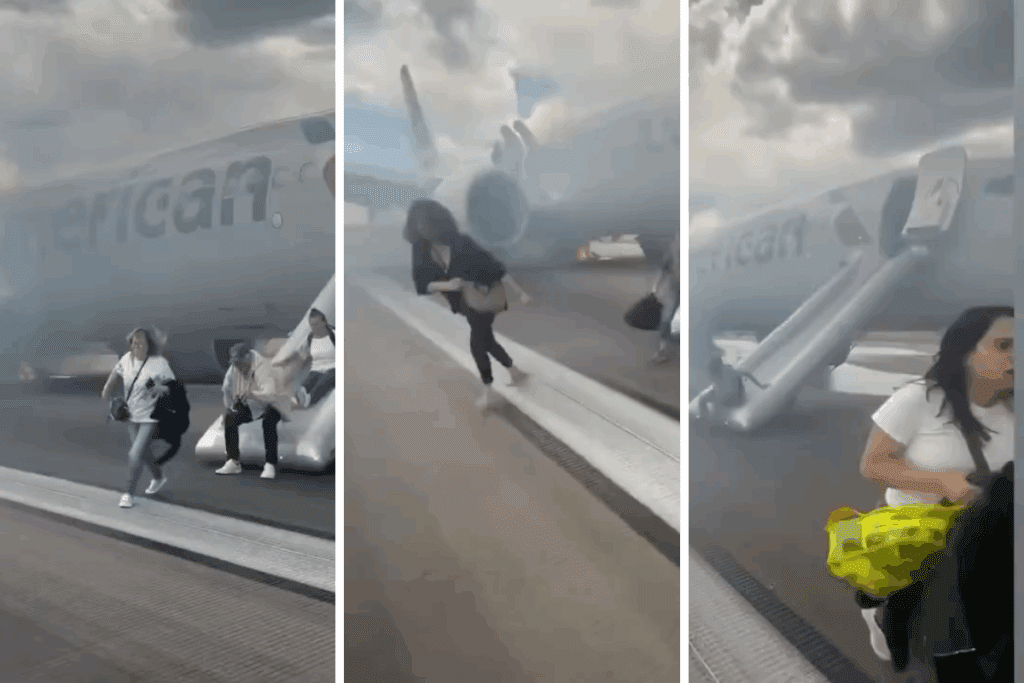
Investigators have repeatedly documented this behavior at real accident sites. Photos from evacuations in recent years show passengers stepping onto escape slides clutching suitcases, backpacks, and duty-free bags. Beyond the time cost, hard-edged luggage can puncture inflatable slides, rendering them unusable for the passengers still inside.
The Survey Findings
The IATA research examined passenger attitudes and knowledge across a range of safety topics. Among the most concerning results, approximately 39 percent of respondents were unaware of the rule requiring them to leave possessions behind. Many travelers said they would instinctively reach for phones, wallets, or passports before heading for the exit.
That instinct, safety experts say, reflects a broader problem with how passengers absorb pre-flight safety briefings. Cabin crew across the industry have long reported that travelers tune out the standard demonstration, assuming the information does not apply to them.
A Push for Lockable Overhead Bins
To address the issue, IATA is exploring whether overhead storage compartments could be locked automatically during such scenarios. The concept would prevent passengers from opening bins to retrieve bags once an evacuation order is given, removing the temptation entirely.
Implementing lockable bins across global fleets would require coordination among aircraft manufacturers, regulators, and airlines. Boeing and Airbus would need to certify the new mechanisms, and existing aircraft might require retrofitting. The cost and timeline remain unclear, but IATA has warned that if passenger behavior does not dramatically change, it will begin campaigning for the introduction of lockable overhead bins – secured shut during taxi, takeoff, and landing, and only released once the aircraft is safely at the gate.

What Passengers Should Know
Aviation safety authorities offer clear guidance for travelers. If cabin crew order an evacuation, leave everything at your seat. That includes laptops, handbags, phones, and travel documents. Items can be replaced. The time spent retrieving them cannot.
Wear practical footwear during takeoff and landing, since high heels can damage evacuation slides and slow your movement. Count the rows between your seat and the nearest exits, including the one behind you, in case smoke obscures visibility. Listen to the safety briefing even if you fly frequently, as procedures vary by aircraft type.
Once outside the aircraft, move away from the fuselage and follow crew instructions. Do not attempt to return for personal items under any circumstances.

How AI Quietly Became the Backbone of Today’s Aviation Industry
The Broader Safety Picture
Commercial aviation remains one of the safest forms of transportation, with fatal accidents rare relative to the volume of flights operated each year. When incidents do occur, however, survival often depends on how quickly passengers can exit the aircraft. Studies of past accidents have shown that delays of even a few seconds in the evacuation process can dramatically reduce survival rates, particularly when fire is involved.
The IATA findings underscore a persistent challenge for the industry. Decades of safety briefings, signage, and public messaging have not eliminated the impulse many travelers feel to protect their belongings during a crisis. Whether through new technology, stricter enforcement, or more effective communication, regulators and airlines now face renewed pressure to close the gap between what passengers know and what they need to do when seconds count.
US State Department Warns of Threats to Airlines and Airports in Saudi Arabia Following Deadly Houthi Attacks » British Airways Flight to Chicago Forces Emergency Descent After Cabin Pressure Failure » British Airways Unveils World's Largest Business Class Cabin With 106 Seats Aboard Refurbished A380 Fleet »

Comments (3)
 Cheryl
Passengers don't even try to pay attention to the safety briefings. They are more interested in scrolling on their phones. Nobody thinks an accident will ever happen to them. And if it does, they'll sue the airline. It is the mentality of people nowadays. If you are worried about how to get your belongings after the accident, you're worried about the wrong thing. How about worry about surviving the accident. I have seen people in the emergency exit rows that were clearly unable to help if there was an accident. And people who would clearly be the ones who are in that row just to be the first ones out, with their stuff. We need to enforce people to pay attention to the briefings, and fine those who don't follow rules. It is a privilege to be able to fly. Not a right as most people think!
AliBee
Because nobody pays attention to the Safety Demonstration provided before every takeoff.
Lee Robida
I’m reaching out because I feel it’s important to discuss how personal items like passports and essential medications are handled during emergencies. It would be wonderful if airlines could provide more clear and helpful communication regarding how they plan to reunite passengers with their property.
I truly value safety above all else, but I believe we can work together to ensure the flying public feels supported and informed during these stressful times. I appreciate you taking the time to listen to these concerns and look forward to seeing how the airlines, can improve this experience for everyone.
Trust is the bottom line here, the airlines need to earn back the trust of the flying public, that is their bread & butter to some part.
Cheryl
Passengers don't even try to pay attention to the safety briefings. They are more interested in scrolling on their phones. Nobody thinks an accident will ever happen to them. And if it does, they'll sue the airline. It is the mentality of people nowadays. If you are worried about how to get your belongings after the accident, you're worried about the wrong thing. How about worry about surviving the accident. I have seen people in the emergency exit rows that were clearly unable to help if there was an accident. And people who would clearly be the ones who are in that row just to be the first ones out, with their stuff. We need to enforce people to pay attention to the briefings, and fine those who don't follow rules. It is a privilege to be able to fly. Not a right as most people think!
AliBee
Because nobody pays attention to the Safety Demonstration provided before every takeoff.
Lee Robida
I’m reaching out because I feel it’s important to discuss how personal items like passports and essential medications are handled during emergencies. It would be wonderful if airlines could provide more clear and helpful communication regarding how they plan to reunite passengers with their property.
I truly value safety above all else, but I believe we can work together to ensure the flying public feels supported and informed during these stressful times. I appreciate you taking the time to listen to these concerns and look forward to seeing how the airlines, can improve this experience for everyone.
Trust is the bottom line here, the airlines need to earn back the trust of the flying public, that is their bread & butter to some part.
Add Your Comment
TAGS
NEWS IATA Emergency Evacuations Emergency Lockable Overhead BinsRECENTLY PUBLISHED
 4th vs 5th Generation Fighter Jets: How Fighter Jets Have Evolved
A look at what separates fourth- and fifth-generation fighter jets, from stealth and sensor fusion to combat capability and cost.
INFORMATIONAL
READ MORE »
4th vs 5th Generation Fighter Jets: How Fighter Jets Have Evolved
A look at what separates fourth- and fifth-generation fighter jets, from stealth and sensor fusion to combat capability and cost.
INFORMATIONAL
READ MORE »
 United 777 Diverts to Dublin After Cockpit Windscreen Cracks Over the Atlantic
A United Airlines Boeing 777 bound for Milan made a steep descent and diverted to Dublin after its cockpit windscreen cracked mid-flight.
NEWS
READ MORE »
United 777 Diverts to Dublin After Cockpit Windscreen Cracks Over the Atlantic
A United Airlines Boeing 777 bound for Milan made a steep descent and diverted to Dublin after its cockpit windscreen cracked mid-flight.
NEWS
READ MORE »
 Boeing's Touchscreen Flight Controls for 737 Draw Sharp Criticism from Pilots
Boeing's plan to introduce Touchscreen Control Display Units on the 737 has sparked backlash from pilots who warn of safety and usability concerns.
NEWS
READ MORE »
Boeing's Touchscreen Flight Controls for 737 Draw Sharp Criticism from Pilots
Boeing's plan to introduce Touchscreen Control Display Units on the 737 has sparked backlash from pilots who warn of safety and usability concerns.
NEWS
READ MORE »
More than just headlines.
Get unlimited ad-free access to in-depth aviation news, premium stories, and exclusive insights other sites don't cover.
- Ad-free browsing on AeroXplorer
- Unlimited access to premium and exclusive articles
- Higher photo upload limits & commissions on sales
- Free access to Jetstream Magazine on higher tiers
- Ad-free browsing
- Sell aviation photos with 60% commission
- First week free!
- Everything in Basic+
- Unlimited premium articles
- Sell aviation photos with 70% commission
- Free Digital subscription to Jetstream Magazine
- First week free!
- Everything in Basic+ and Pro
- Sell aviaiton photos with 80% commission
- Early access to exclusive stories
- Free Digital+Print subscription to Jetstream Magazine