
A fuel tank does not need liquid fuel to be dangerous. The real risk sits above it, in the empty space filled with vapor and oxygen. Modern airliners address that risk with a system most passengers never think about, one that quietly replaces the air in that space with nitrogen instead.
Why Fuel Tanks Needed a Fix
The case for fuel tank inerting was made in the worst way possible. The 1996 TWA Flight 800 accident killed all 230 people aboard a Boeing 747, traced to an electrical spark igniting fuel vapor inside one of the aircraft's tanks.

The FAA responded by requiring manufacturers to reduce the flammability exposure of gases inside fuel tanks going forward. The logic behind it comes straight from the basic fire triangle: fire needs fuel, heat, and oxygen together, and removing any one of the three stops combustion before it starts. Fuel and heat are difficult to eliminate from a tank sitting beneath a jet engine, so manufacturers go after the third variable instead. Nitrogen, chemically inert at room temperature, displaces the oxygen in a tank's vapor space, known as the ullage, until there simply isn't enough oxygen left for a spark to ignite anything.
A Requirement, Not an Option
This isn't a feature airlines get to choose. In the United States, nitrogen blanketing of aircraft fuel tanks has been mandatory since 2017, which makes the technology a standard part of how every modern commercial aircraft is certified and operated today.
Boeing's Version: The 737 NG Nitrogen Generation System
On the Boeing 737 NG, the Nitrogen Generation System pulls hot bleed air from the aircraft's left pneumatic manifold and runs it through a fairly involved sequence before any of it reaches the center fuel tank. A shutoff valve controls the incoming air and closes automatically if overpressure shows up. From there the air passes through an ozone converter, which catalytically reduces ozone to oxygen to protect the components downstream, then through a heat exchanger and a modulating ram air valve that bring it down to the right temperature.
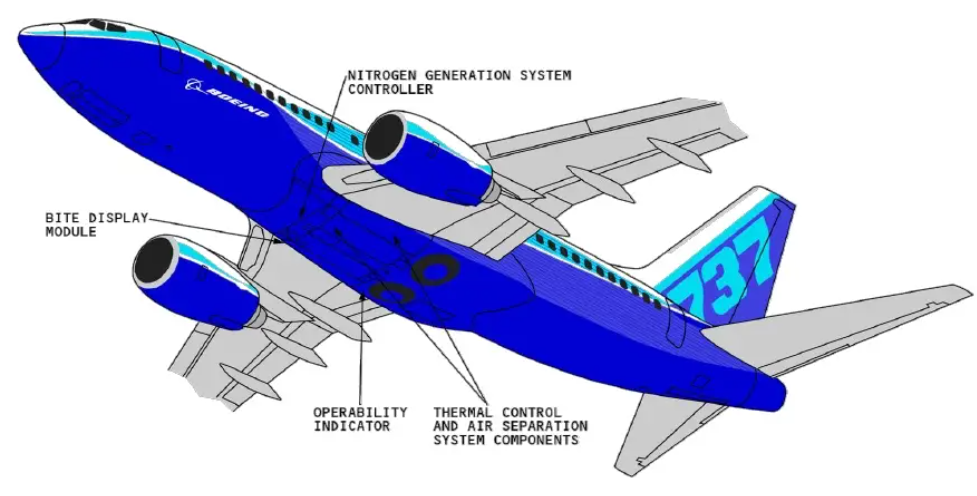
A filter stage strips out contaminants before the air ever reaches the Air Separation Module, the actual core of the system, which drops the oxygen content low enough that combustion becomes impossible. What comes out the other side, nitrogen-enriched air, gets regulated and fed straight into the center tank, while thermal switches and overtemperature shutoff valves stand by in case anything runs too hot or too high-pressure. A controller keeps watch over the whole process.
Airbus's Version: CSAS and IGGS on the A320
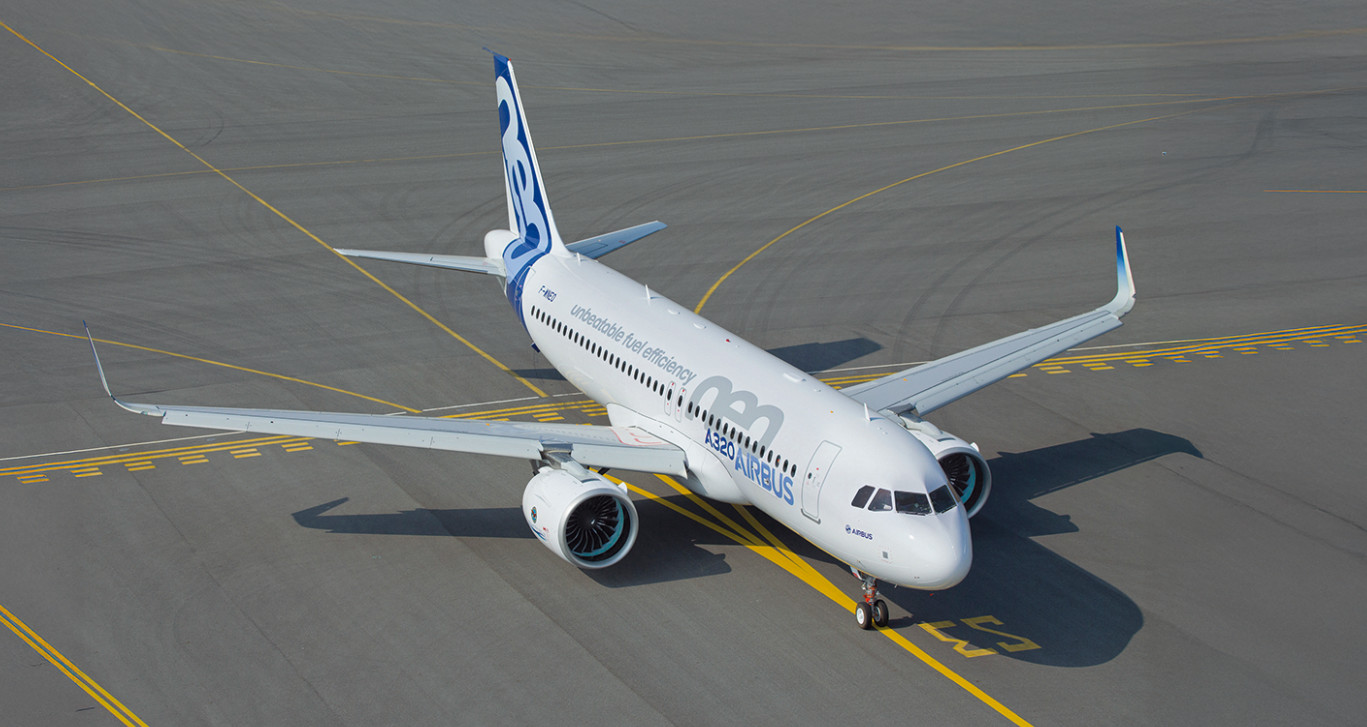
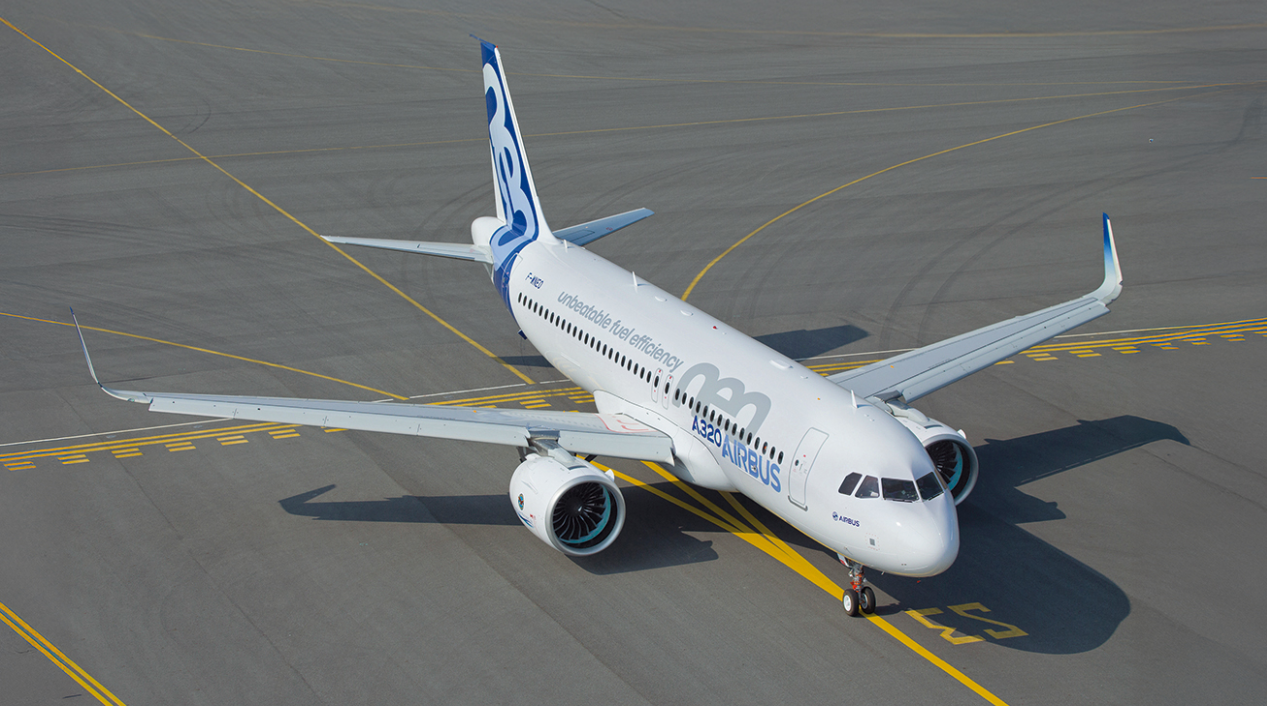
Airbus gets to the same place through a different architecture, split across two subsystems. The Conditioned Service Air System, under ATA Chapter 21, takes hot bleed air and runs it through an isolation valve, an ozone converter, and a heat exchanger to get it to the right temperature, pressure, and flow. That conditioned air then feeds into the Inert Gas Generation System, under ATA Chapter 47, where it passes through a double ultra-low particle filter and its own Air Separation Module.
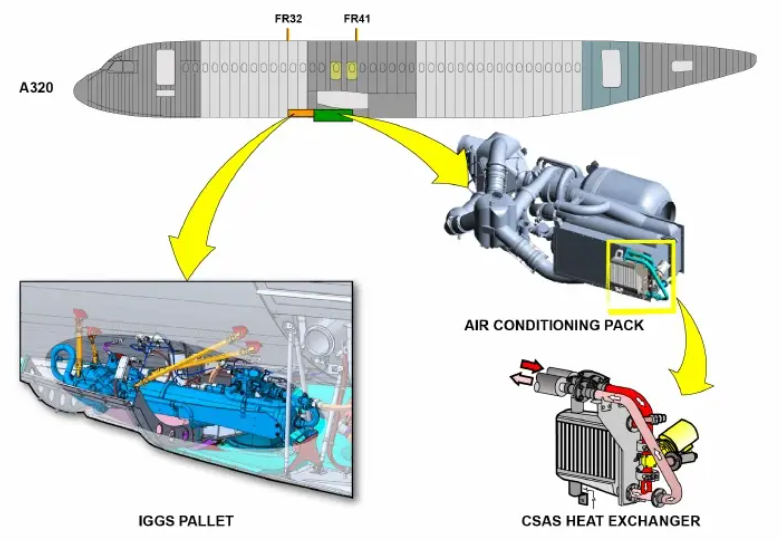
The module splits the stream in two: nitrogen-enriched air heads into the center tank through a dual flow shutoff valve that can modulate between low, mid, and high settings depending on whether the aircraft is climbing, approaching, or descending, while oxygen-enriched air gets vented overboard. An oxygen sensor keeps tabs on the nitrogen-enriched air's purity the whole time, and none of it needs a human touch. The system runs automatically and stays off entirely while the aircraft sits on the ground. Airbus calls a tank properly inert once the average oxygen concentration at sea level drops below 12%.

Analysis: How Spirit Airlines Changed Airline Pricing, then Paid the Price
Two Manufacturers, One Shared Principle
Boeing and Airbus landed on the same solution through completely different component layouts and naming conventions, but strip away the labels and both systems are doing the same thing: take hot, oxygen-rich bleed air, strip enough oxygen out of it through an Air Separation Module, and push the leftover nitrogen-enriched air into the space where a fire would otherwise have a chance to start.
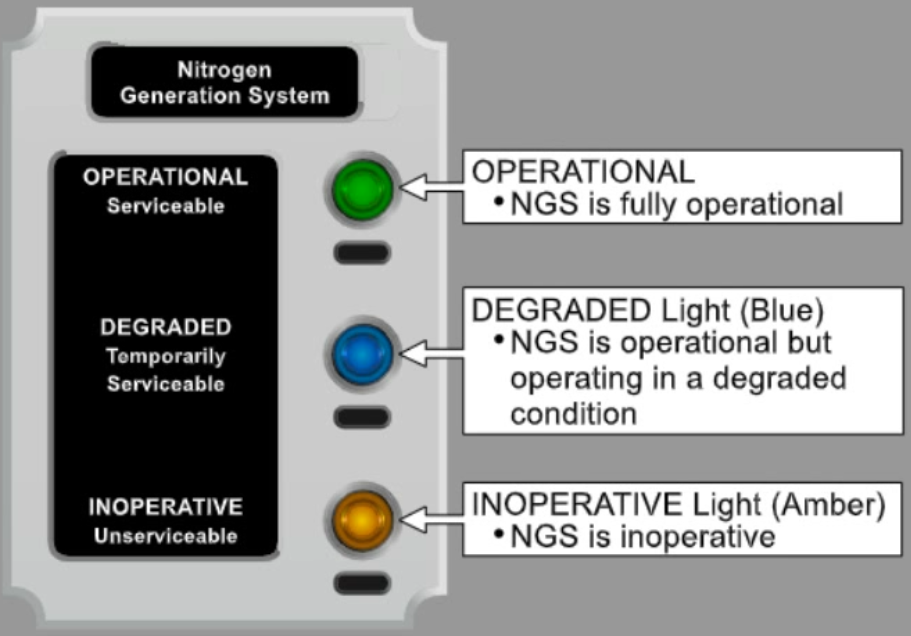
What began as a direct response to one catastrophic accident is now a quiet, fully automated safeguard running on nearly every commercial jet built since.
Airbus Uncovers Coating Flaw on A321neo Fuselage Stringers, Threatening September Delivery Targets » This Week in Aviation: The 10 Stories That Mattered Most » US Moves to Accelerate Aircraft Certification Citing Competition from China's Aviation Industry »

Comments (0)
Add Your Comment
TAGS
INFORMATIONAL Airliner Fuel tanks Boeing Airbus Inerting system TWA 800 IGGS NGSRECENTLY PUBLISHED
 Debris Field Discovered in Search for Missing Air Ambulance Carrying Six People
Search crews have located a debris field while hunting for a missing air ambulance that vanished during a flight from Bermuda to Boston with six aboard.
NEWS
READ MORE »
Debris Field Discovered in Search for Missing Air Ambulance Carrying Six People
Search crews have located a debris field while hunting for a missing air ambulance that vanished during a flight from Bermuda to Boston with six aboard.
NEWS
READ MORE »
 How Does a B-2 Spirit Fly Without a Tail?
How the B-2 Spirit flies without a tail or vertical stabilizer.
INFORMATIONAL
READ MORE »
How Does a B-2 Spirit Fly Without a Tail?
How the B-2 Spirit flies without a tail or vertical stabilizer.
INFORMATIONAL
READ MORE »
 IATA's New Passenger Data Shows Global Air Travel Demand Shrinking for the First Time This Year
Global air travel just hit a reverse that has not been seen in months -- the numbers point to something more interesting than a simple slowdown.
INFORMATIONAL
READ MORE »
IATA's New Passenger Data Shows Global Air Travel Demand Shrinking for the First Time This Year
Global air travel just hit a reverse that has not been seen in months -- the numbers point to something more interesting than a simple slowdown.
INFORMATIONAL
READ MORE »
More than just headlines.
Get unlimited ad-free access to in-depth aviation news, premium stories, and exclusive insights other sites don't cover.
- Ad-free browsing on AeroXplorer
- Unlimited access to premium and exclusive articles
- Higher photo upload limits & commissions on sales
- Free access to Jetstream Magazine on higher tiers
- Ad-free browsing
- Sell aviation photos with 60% commission
- First week free!
- Everything in Basic+
- Unlimited premium articles
- Sell aviation photos with 70% commission
- Free Digital subscription to Jetstream Magazine
- First week free!
- Everything in Basic+ and Pro
- Sell aviaiton photos with 80% commission
- Early access to exclusive stories
- Free Digital+Print subscription to Jetstream Magazine