
The views expressed in this article are those of the author and do not reflect the editorial positions of AeroXplorer.
Yesterday, I arrived at Hong Kong airport more than 15 hours before my flight. I did this on purpose; I wanted time to handle anything unexpected. Due to shipping delays and tight timelines, I had to hand-deliver copies of Jetstream Magazine, and I had never crossed the border from China to Hong Kong with commercial goods before. Fortunately, the border crossing went smoothly.
What I didn’t expect, however, was Delta’s own staff disagreeing with its own website just hours later.
A Lot to Ship
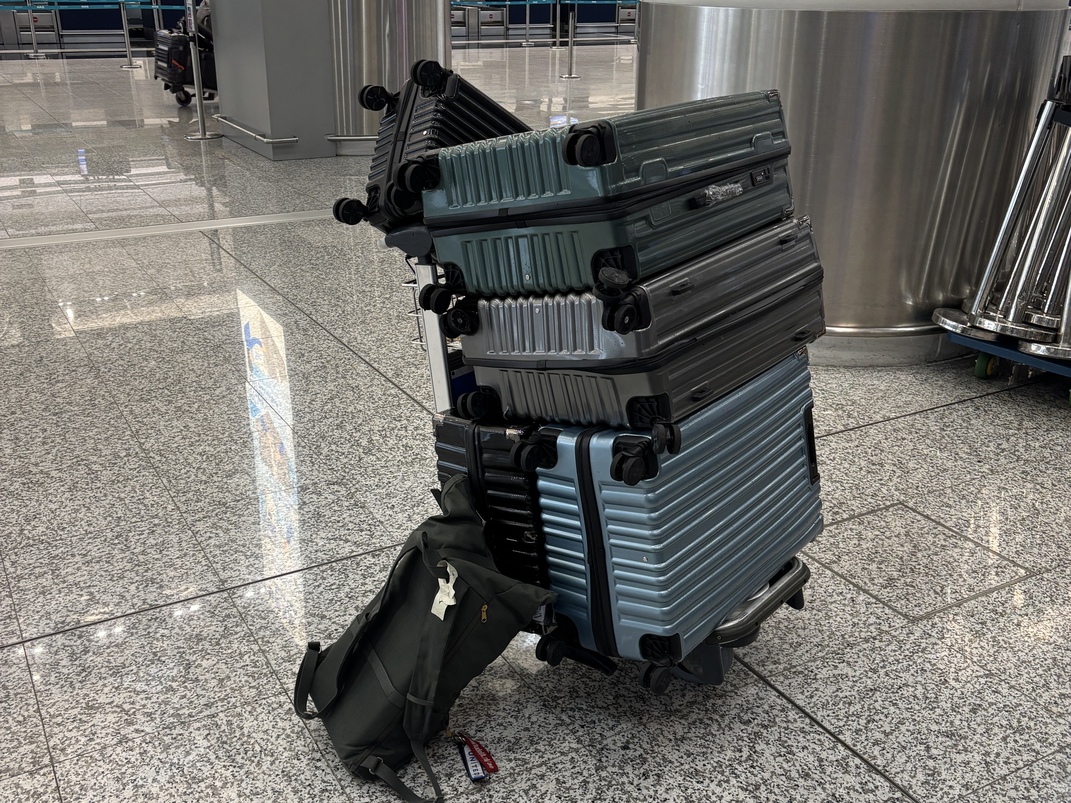
I had about 200 kilograms to ship. Upon searching, I found Delta’s policy to be very generous; like ANA, the airline accepts bags up to 45 kg (100 lbs), albeit with overage fees. But the fees weren’t as bad as other airlines on the route.
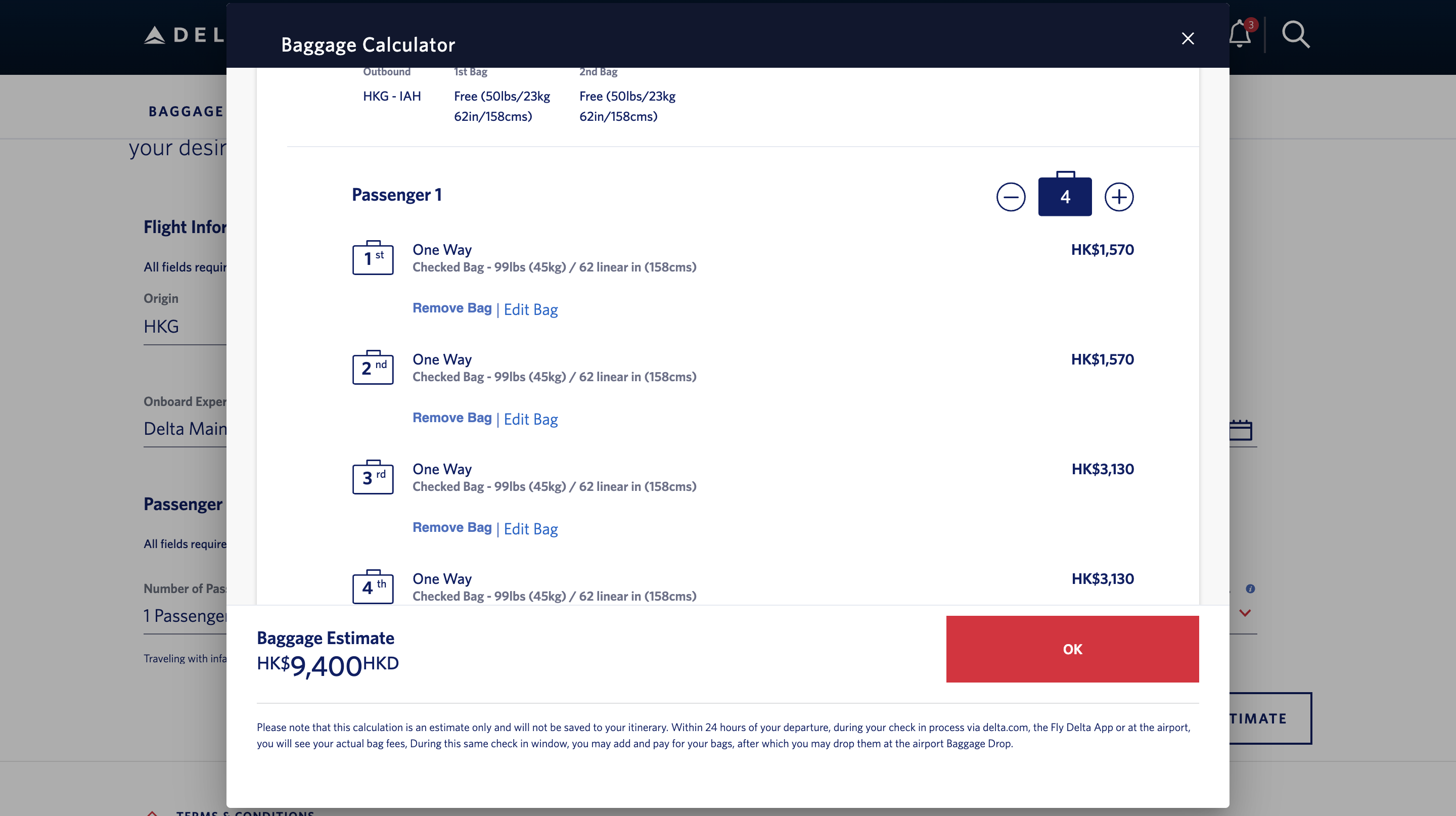
I even used Delta’s online baggage calculator to check the total fee estimate: $9,400 HKD ($1,200 USD) — not bad, considering the factory wanted $2,500 USD to ship it themselves.
So, last week, I booked the ticket: DL88 from Hong Kong to Los Angeles, then onwards to Houston. I had split my 200kg into four 45kg checked bags, with the remaining 20kg split between my carry-on and backpack.
“You Can’t Do That”
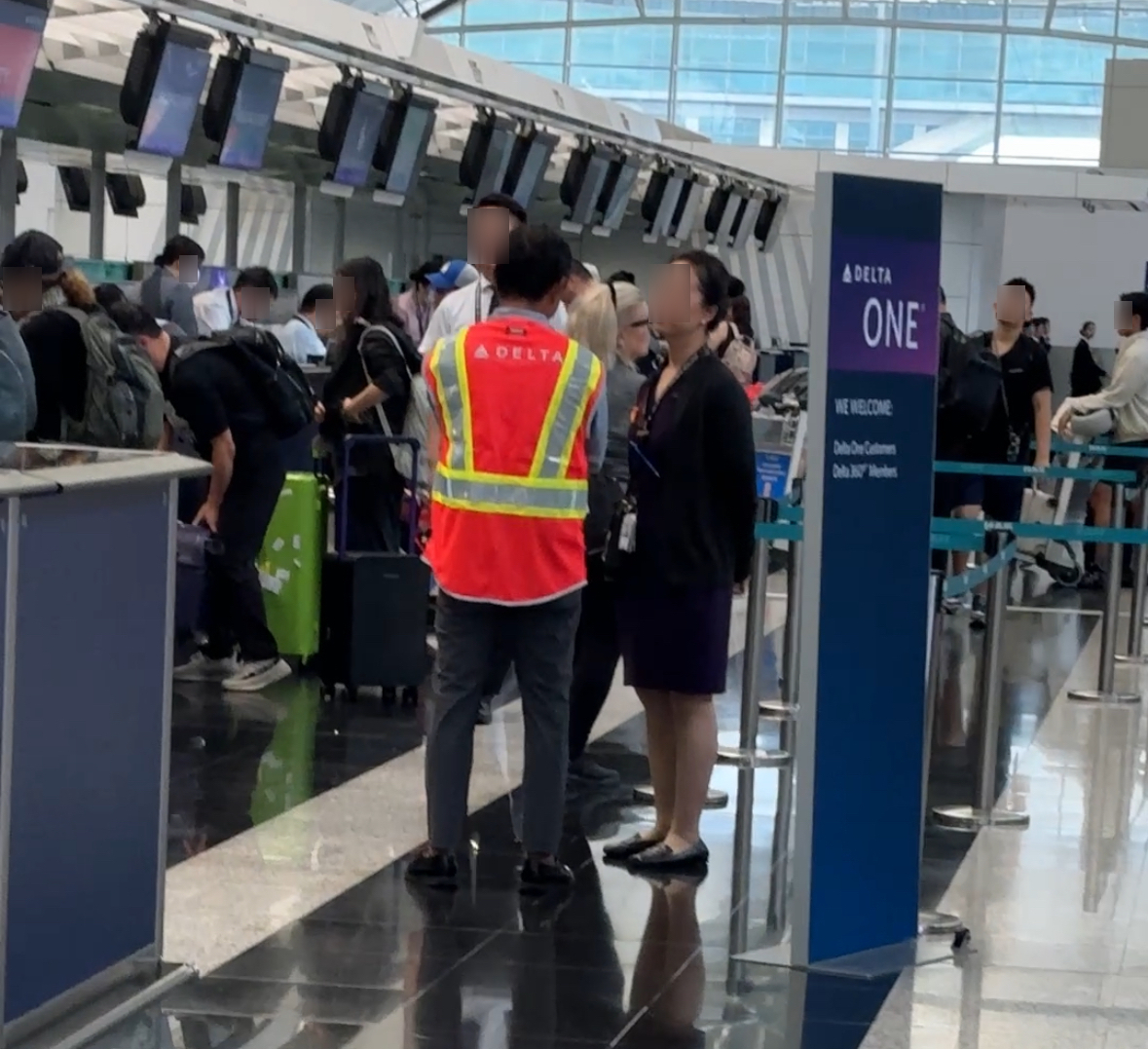
I arrived at the counter at 5am, early enough that if anything went wrong, I would be able to sort it before the baggage check closed at 8:25. But once I arrived at the counter, something was off.
Rather than printing the tag, the agent had a confused look on her face. She waved over her supervisor and motioned to the number on the scale. He, too, seemed surprised.
“44kg is too heavy; we can’t accept this,” he said.
I was a bit confused. I spent weeks reviewing airline luggage rules and found Delta’s 45kg policy to be quite forgiving, albeit a bit expensive. Nevertheless, I was certain that it existed.
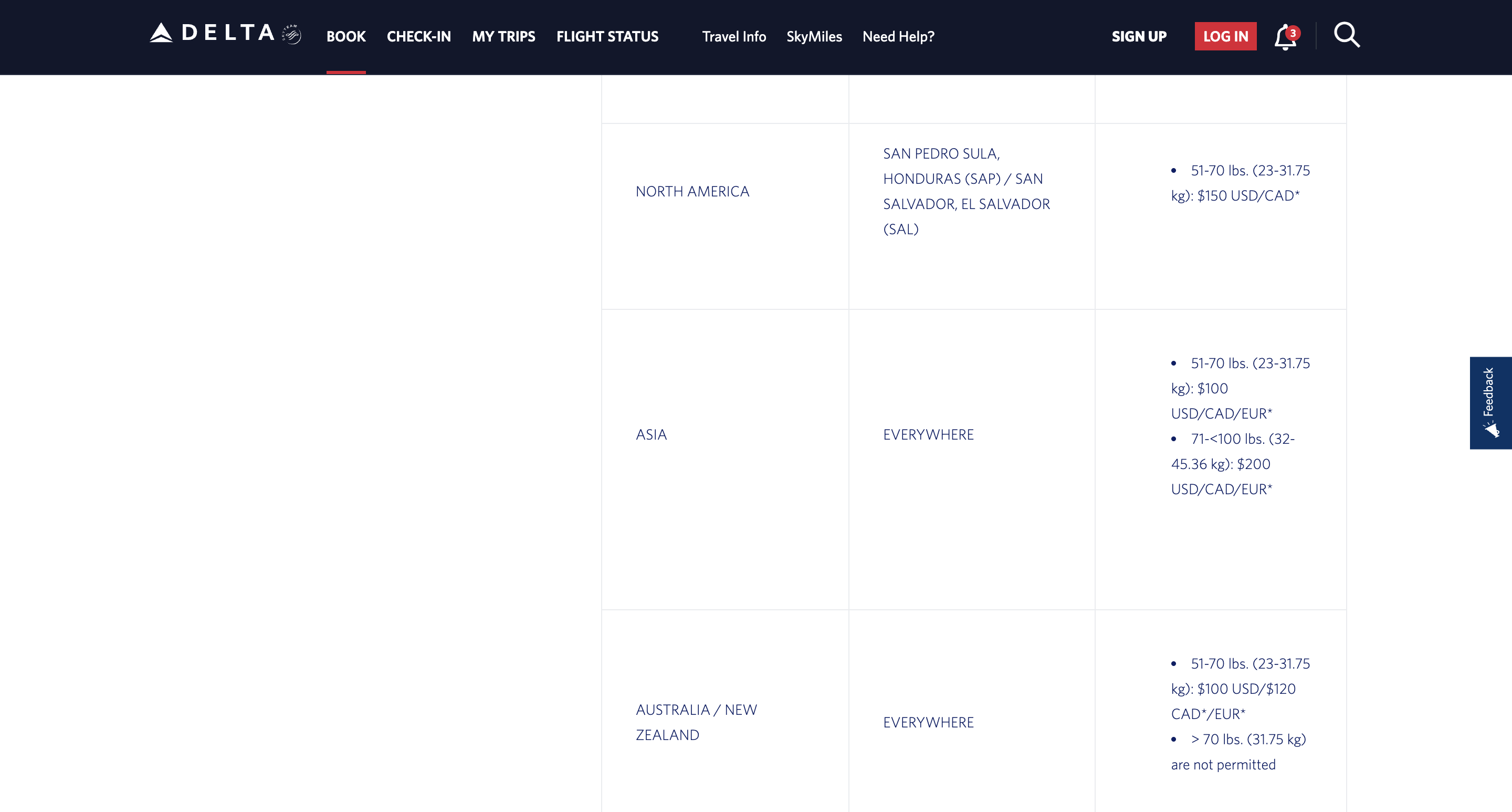
After showing the supervisor Delta’s website, I waited as he consulted with his colleagues. While waiting, I contacted Delta’s customer support via live chat. I asked directly: Can I check bags up to 45 kg? The representative confirmed yes, and when I pushed further — asking hypothetically about multiple 45kg bags — she confirmed that too, saying I could bring up to 10 bags as long as I paid the associated fees.
Meanwhile, the supervisor came back and told me I needed to repack. I asked him to put that in writing — specifically, to document that he was refusing to accept bags within the weight limit advertised on Delta's own site. That way, I figured, I could have proof for a claim when I followed up with the airline after the trip. The supervisor refused.
His explanation: IATA regulations and local rules cap bags at 32 kg for worker safety reasons. I understand that may be true. But that's an operational constraint that Delta is responsible for communicating to its customers. It is not on the passenger to cross-reference airline policy against international labor standards before packing.
Policy Dispute
I was then directed to the duty manager, a woman who had been flown in from Delta’s Auckland base to support station operations following the airline’s HKG launch last week. The conversation was charged, and a bit confrontational; she had made a scene when I had simply asked to reiterate the guidelines.
She pointed to a line on the website that read:
Bags exceeding 70 lbs. are not allowed to/from Europe
Below it, there was a separate footnote:
United States includes the U.S. Virgin Islands and Puerto Rico
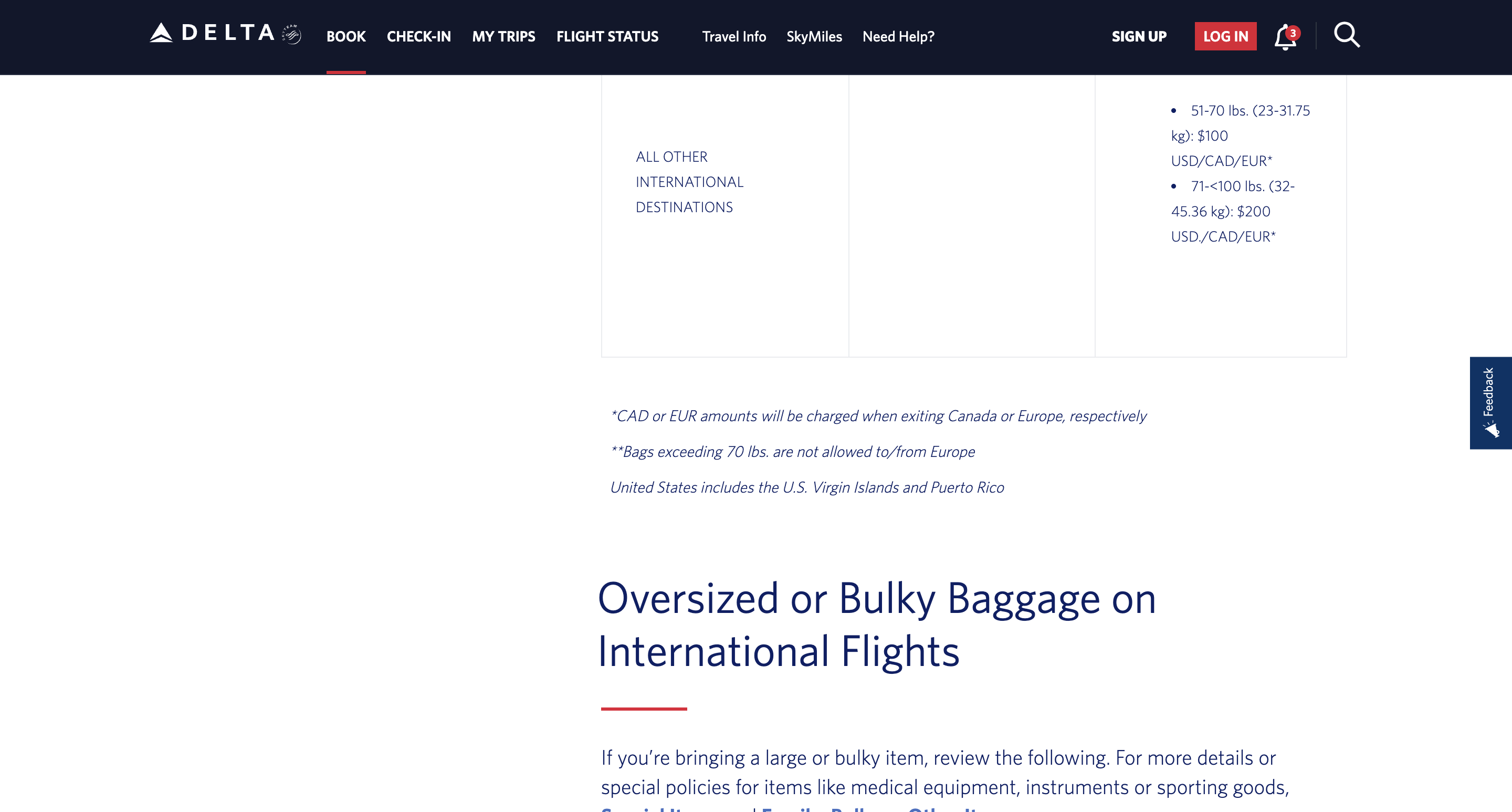
Her reading was that these were a single sentence, meaning bags over 70 lbs. were banned to Europe, the United States, the Virgin Islands, and Puerto Rico. But reading them together, the sentence doesn’t make grammatical sense. And looking at the HTML source code of the page, the two notes are clearly separated:
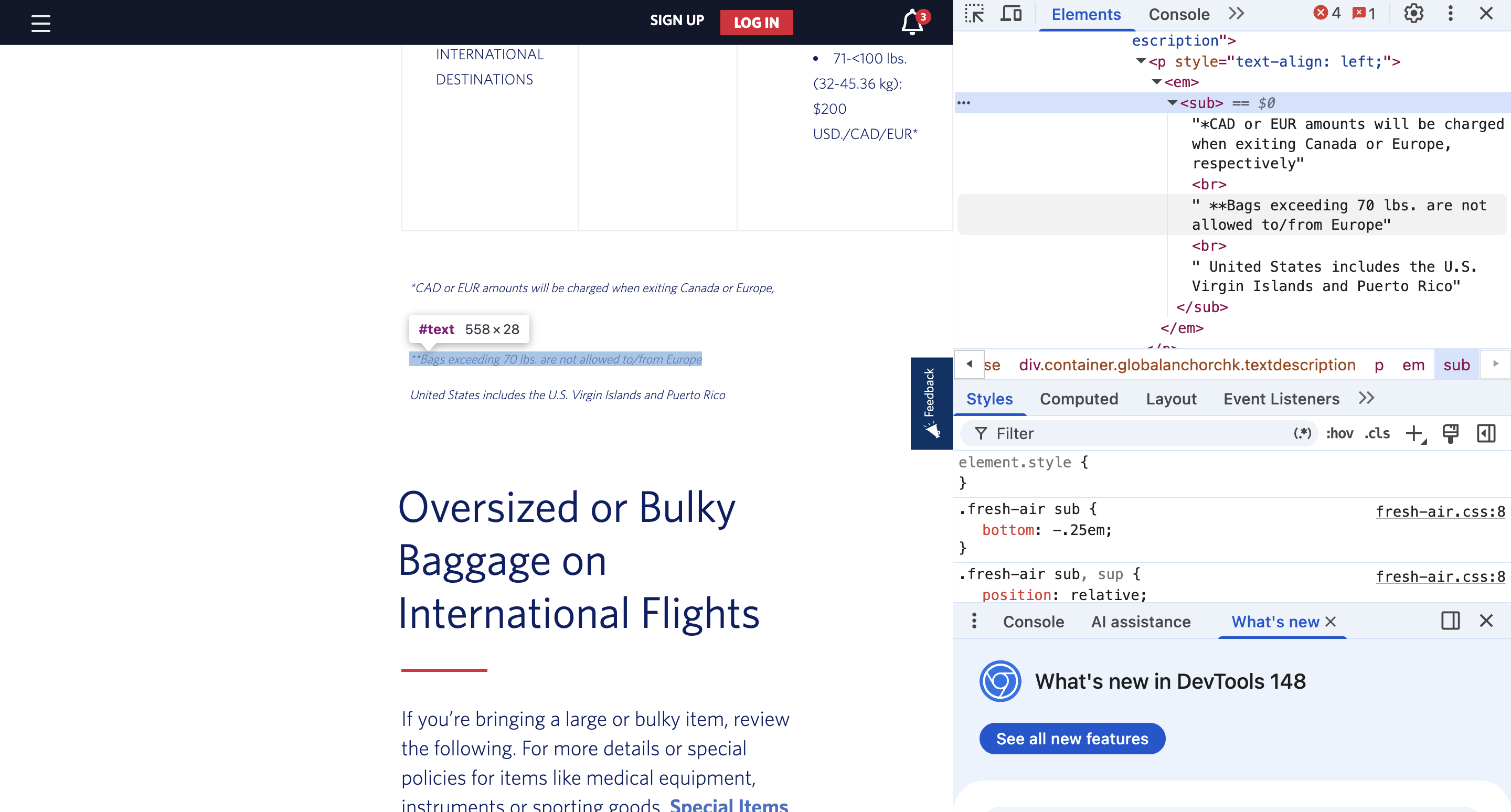
And when I narrowed the browser window significantly, the text reflow confirmed this: the line break was structural, not cosmetic.
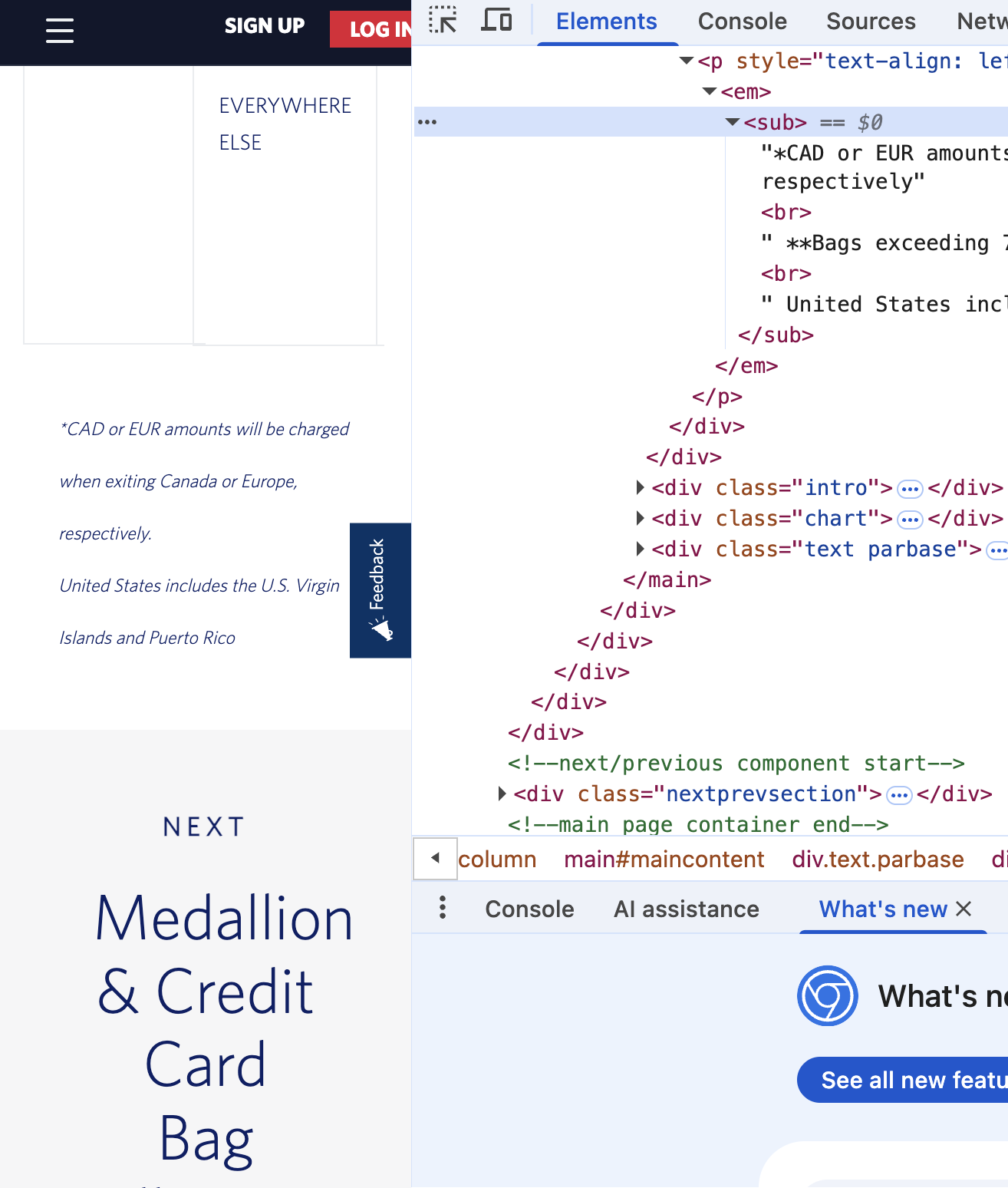
But unfortunately, she wasn't interested in that argument and interrupted me before I could finish.
A Reasonable Resolution … But Not For Long
I asked to speak with someone else. Another station manager, brought in from Tokyo to support the new station opening, joined us.
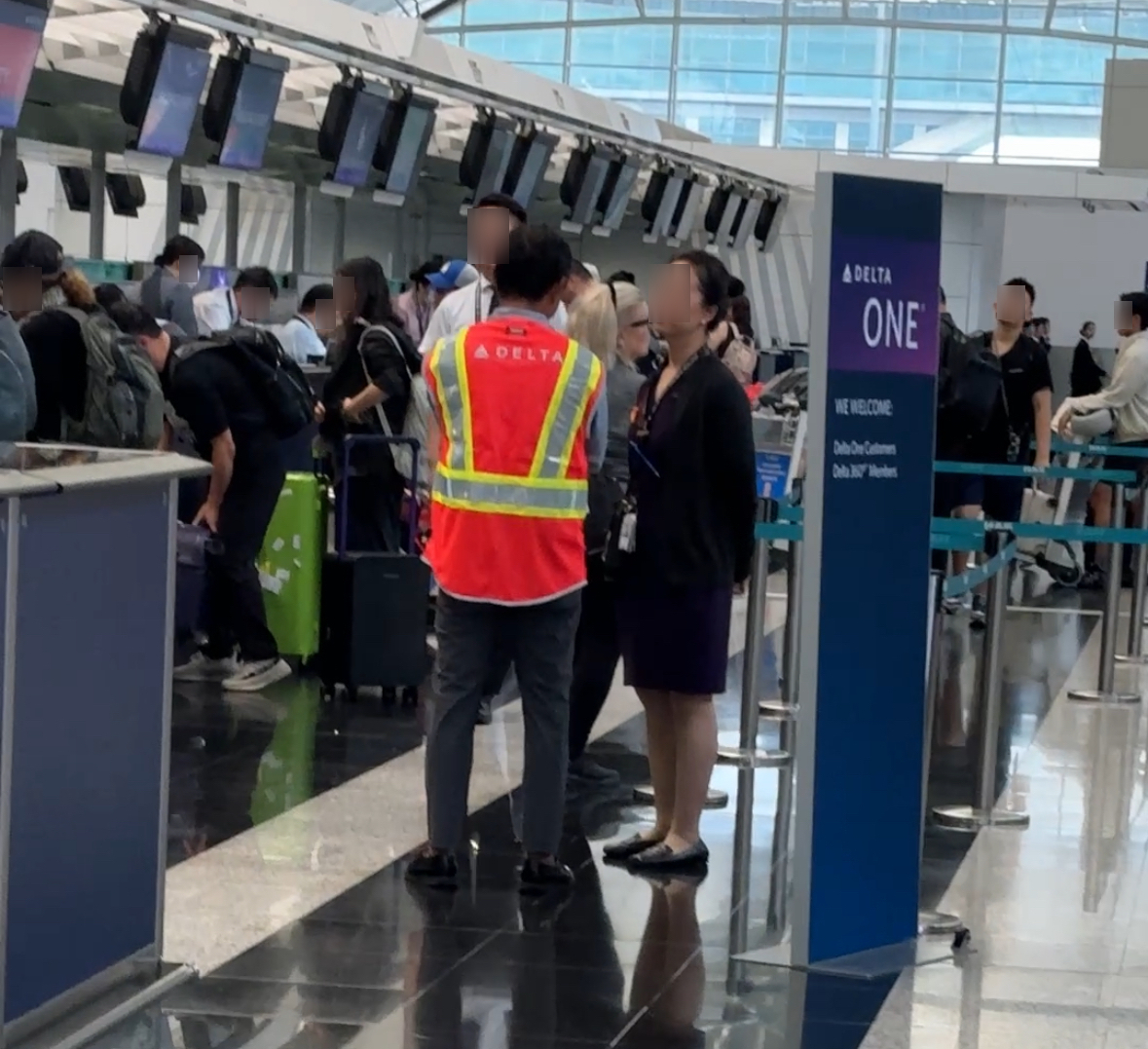
After I walked him through the policy discrepancy, he acknowledged that something had gone wrong and agreed to a resolution: I would pay the initial overage fee, the one I had studied weeks before on the baggage calculator. The remainder would be waived. But to compromise, I would have to repack my bags to fit under the 32kg limit.
It seemed like we were done.
By then, it was 8:11 AM. My flight was set to depart at 9:25. Check-in would close at 8:25.
I had 14 minutes to buy two new suitcases, rewrap and redistribute four bags, and get back to the counter. I did it, spending 776 HKD (~$100 USD) on materials, on top of $50 I'd already paid for the original wrapping job. I made it back to the counter at 8:23.
The Last Two Minutes
The bags were weighed, and I was quoted a fee slightly above the agreed rate. I reminded the agent of the agreement with the supervisor from earlier: I'd pay the original fare, with the rest waived. After some back-and-forth, the price came back down to $1,200.
I was directed to pay. I had Apple Pay on my phone but not a physical card with the right funds loaded — to be fair, this is a standardised policy across airlines that I had overlooked. I asked for a couple of minutes to step to the nearby ATM and load money onto my card.
But the agent said no, and closed the flight.
I had a wedding to attend shortly after landing – being stuck at HKG meant I’d have to miss it.
And I couldn’t simply book another ticket, as other airlines would have charged almost double for baggage overage fees.
What I Take From This
I'm not here to claim that Delta's ground staff were malicious. Some of them handled a difficult situation with real professionalism. But a few things are hard to look past:
- Delta's published policy and its operational practice were in direct conflict. A passenger who followed the website to the letter still couldn't check in. No one at the counter could point to clear documentation explaining why. When I asked for that documentation in writing, it was refused.
- Delta's own customer support contradicted the gate agents in real time. The text chat representative told me I could bring the 45 kg bags I wanted as long as I paid for them. The agents on the ground told me the opposite. Both were speaking on behalf of Delta.
- A resolution was reached, and then collapsed in two minutes over a payment method. After two hours of negotiation, the flight was closed because I needed five minutes to access an ATM. That's the margin that ended it.

The total damage? $150 in packing materials, $1,200 in baggage fees, a missed delivery deadline, and a wedding I wasn't at.
I followed the rules. I showed up early. I paid what was asked. None of it was enough, and Delta has offered no explanation for why its website says one thing and its staff does another.
If there’s a lesson here, it’s a simple one: when an airline’s stated policy and its operational practice conflict, it’s the passenger who pays the price, whether it be in money, time, and in things that can’t be recovered.
KLM Brings Starlink Internet to Long-Haul Flights » Southwest Airlines Becomes First US Carrier to Integrate Flight Booking Into ChatGPT » Caribbean Airlines Expands Network With New Toronto and Caracas Routes »
Comments (5)
 Tom G
I used to work airport ops and 32kg limits are pretty common for manual handling, but the airline website absolutely needs to match what the station can accept
ellie
WHY I NEVER FLY DELTA
cirrus1988
when you asked for the rule in writng... if the restriction was that clear, why didnt they write???
Alfredo
You screwed up. Get over it.
Sergio Cecutta
The most confusing part to me is that the website and chat support seemed to line up, but the counter had a different rule. That feels like an internal communication issue more than anything.
Tom G
I used to work airport ops and 32kg limits are pretty common for manual handling, but the airline website absolutely needs to match what the station can accept
ellie
WHY I NEVER FLY DELTA
cirrus1988
when you asked for the rule in writng... if the restriction was that clear, why didnt they write???
Alfredo
You screwed up. Get over it.
Sergio Cecutta
The most confusing part to me is that the website and chat support seemed to line up, but the counter had a different rule. That feels like an internal communication issue more than anything.
Add Your Comment
TAGS
STORIES Delta Travel Stories Exclusive Experience Delta Air Lines Flight Hong Kong HKG LAX IAH AsiaRECENTLY PUBLISHED
 This Week in Aviation: The 10 Stories That Mattered Most
From major airline developments to aircraft updates and industry shifts, this weekly recap highlights the ten most-read aviation stories from the week of October 04.
INFORMATIONAL
READ MORE »
This Week in Aviation: The 10 Stories That Mattered Most
From major airline developments to aircraft updates and industry shifts, this weekly recap highlights the ten most-read aviation stories from the week of October 04.
INFORMATIONAL
READ MORE »
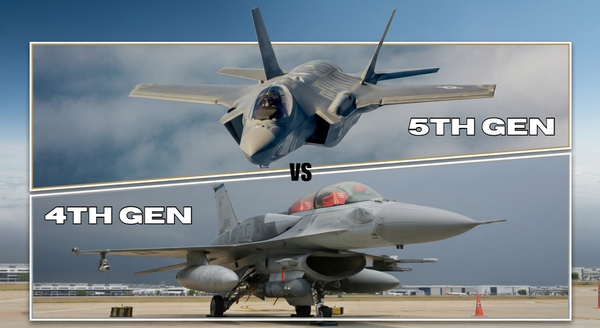 4th vs 5th Generation Fighter Jets: How Fighter Jets Have Evolved
A look at what separates fourth- and fifth-generation fighter jets, from stealth and sensor fusion to combat capability and cost.
INFORMATIONAL
READ MORE »
4th vs 5th Generation Fighter Jets: How Fighter Jets Have Evolved
A look at what separates fourth- and fifth-generation fighter jets, from stealth and sensor fusion to combat capability and cost.
INFORMATIONAL
READ MORE »
 United 777 Diverts to Dublin After Cockpit Windscreen Cracks Over the Atlantic
A United Airlines Boeing 777 bound for Milan made a steep descent and diverted to Dublin after its cockpit windscreen cracked mid-flight.
NEWS
READ MORE »
United 777 Diverts to Dublin After Cockpit Windscreen Cracks Over the Atlantic
A United Airlines Boeing 777 bound for Milan made a steep descent and diverted to Dublin after its cockpit windscreen cracked mid-flight.
NEWS
READ MORE »
More than just headlines.
Get unlimited ad-free access to in-depth aviation news, premium stories, and exclusive insights other sites don't cover.
- Ad-free browsing on AeroXplorer
- Unlimited access to premium and exclusive articles
- Higher photo upload limits & commissions on sales
- Free access to Jetstream Magazine on higher tiers
- Ad-free browsing
- Sell aviation photos with 60% commission
- First week free!
- Everything in Basic+
- Unlimited premium articles
- Sell aviation photos with 70% commission
- Free Digital subscription to Jetstream Magazine
- First week free!
- Everything in Basic+ and Pro
- Sell aviaiton photos with 80% commission
- Early access to exclusive stories
- Free Digital+Print subscription to Jetstream Magazine