
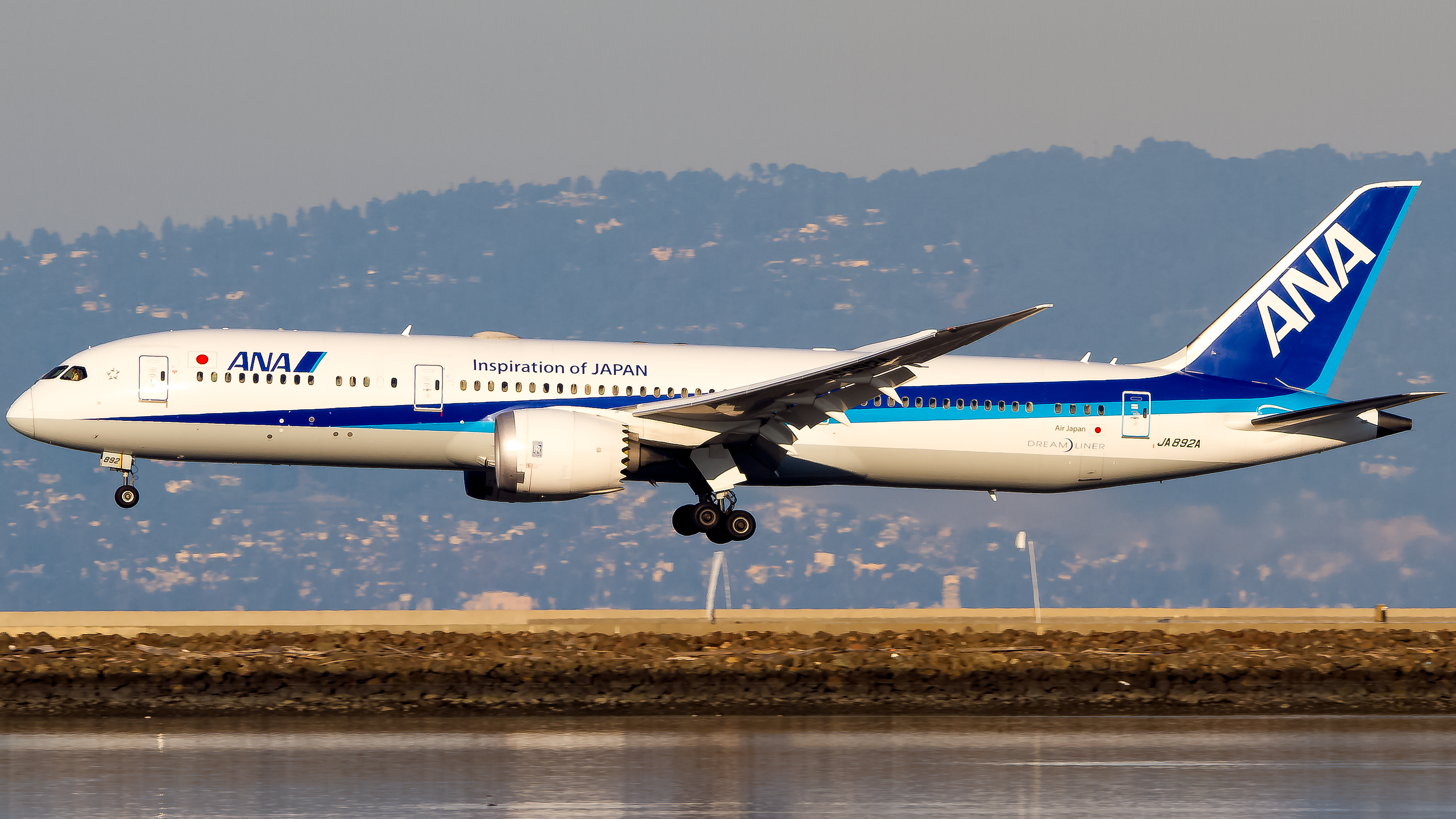
An All Nippon Airways Boeing 787-9 suffered a tail strike while landing at Houston George Bush Intercontinental Airport after the captain inadvertently activated the go-around switch during touchdown, according to investigators looking into the incident.
The event has drawn attention because it highlights how a single unintended input during one of the most demanding phases of flight can lead to aircraft damage, even with experienced crews at the controls.
What happened on approach
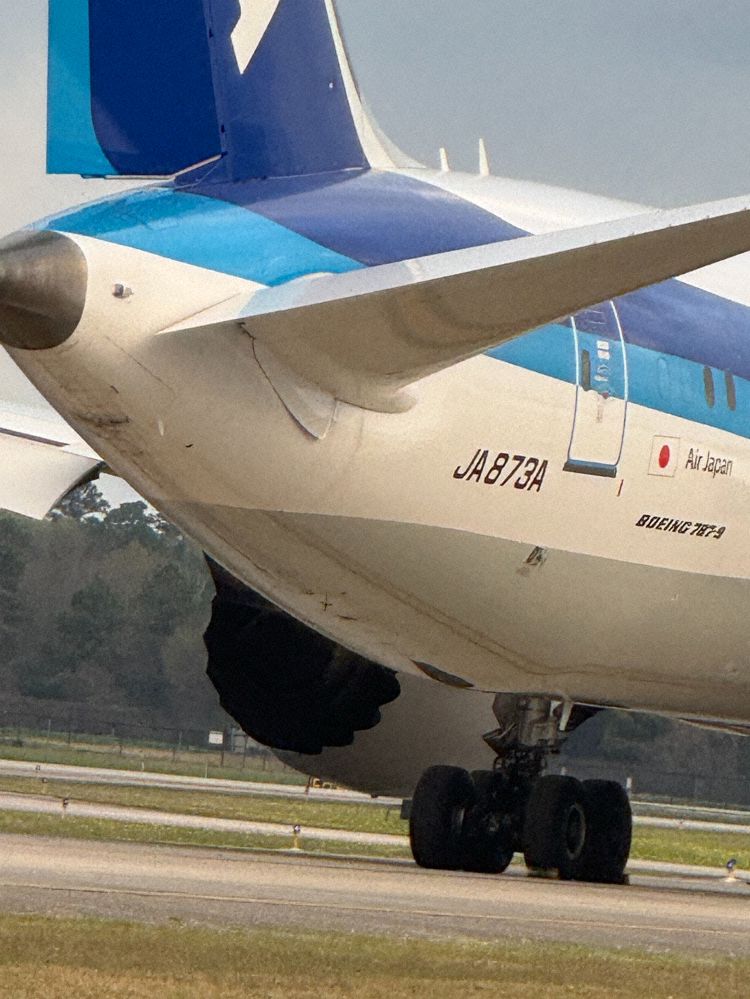
The aircraft, registered JA873A, was operating flight NH-114 from Tokyo Haneda to Houston. As the widebody touched down, the captain's thumb made contact with the takeoff/go-around (TO/GA) switch on the thrust levers. That action commanded the autothrottle to advance for a go-around, just as the aircraft was settling onto the runway.
According to the investigation summary, the crew continued the landing rather than executing a go-around. The combination of increased thrust and the pitch attitude during the landing flare caused the tail of the 787-9 to contact the runway surface.
The aircraft came to a stop safely, and none of the passengers or crew on board were injured. Inspection later revealed damage to the lower aft fuselage consistent with a tail strike.
How the go-around switch works
On the Boeing 787, as on many modern airliners, the TO/GA switches sit on the forward face of the thrust levers. Pressing them commands go-around thrust and engages the appropriate autoflight modes for a missed approach. Pilots use them routinely during departures and rejected landings.
The switches are positioned for quick access during a go-around, when speed matters. That same accessibility, however, means an inadvertent bump during landing can trigger the system at a critical moment. In this case, the switch activated while the aircraft was in the landing flare, altering the thrust and pitch behavior the crew was managing.

Only Way Out: Private Aviation in a Region at War
Why tail strikes matter
A tail strike occurs when the rear underside of an aircraft contacts the runway during takeoff or landing. On stretched aircraft such as the 787-9, the longer fuselage reduces the pitch angle at which a strike becomes possible. Pilots train to manage rotation and flare attitudes carefully to avoid this outcome.
Even a light tail strike can cause structural damage requiring detailed inspection and repair. Aircraft that experience tail strikes are typically taken out of service until engineers confirm the airframe is safe to fly. Repairs on composite structures, such as those used extensively on the 787, can be time-consuming and expensive.
The crew's response
Continuing a landing after a TO/GA activation is not the standard procedure. Boeing guidance generally calls for pilots to execute the go-around once the switches are pressed above a certain point on approach, because the autothrottle and flight director modes reconfigure for a climb.
In this incident, the crew's decision to complete the landing after the inadvertent switch activation is one of the elements investigators are examining. The interaction between the pilot's input, the automation's response, and the resulting aircraft behavior sits at the center of the inquiry.
Investigation and aircraft status
Japanese and US authorities have been notified of the incident, as is standard for events involving Japanese-registered aircraft operating internationally. The aircraft was removed from service for inspection and repair following the tail strike.
All Nippon Airways operates a substantial fleet of Boeing 787s and was one of the launch customers for the type. The airline uses the 787-9 on long-haul routes between Japan and North America, including the Houston service.
A known risk in modern cockpits
Inadvertent activation of cockpit controls has been cited in previous safety reports across the industry. The design tension is straightforward. Controls that need to be reached quickly in emergencies must be within easy grasp, but that same placement can lead to accidental inputs during routine operations.
Manufacturers and operators have addressed this over the years through guarded switches, software logic that requires specific conditions before commands take effect, and revised training procedures. TO/GA switches on modern airliners typically require a firm press, and the systems they command behave differently depending on the phase of flight. Still, incidents like the one at Houston show that human factors remain a persistent challenge.
What this means for you as a passenger
Tail strikes are relatively rare, and aircraft are designed with reinforcement in the aft fuselage to absorb minor contact without immediate danger to those on board. Airlines follow strict inspection protocols after any suspected strike, and aircraft do not return to service until cleared by engineers.
For travelers, the practical outcome is usually a delay or cancellation while the airline arranges a substitute aircraft. In this case, passengers disembarked normally after the landing, and the airline continued to operate its Houston route using other aircraft in its fleet.
Looking ahead
The final investigation report will likely examine cockpit ergonomics, crew procedures, and the specific sequence of inputs and system responses during the landing. Findings from incidents like this often feed into industry-wide safety bulletins and, in some cases, changes to training or procedures.
For now, the Houston tail strike serves as a reminder that even routine landings on modern, highly automated aircraft depend on precise coordination between pilots and the systems around them.
Why Does the Boeing 777-300ER Have Black Lines on Its Wings? » Austrian Airlines Flight Diverts to Sofia Under Fighter Escort After Bomb Threat » This Week in Aviation: The 10 Stories That Mattered Most »

Comments (0)
Add Your Comment
TAGS
NEWS ANA Boeing 787 Tail Strike Houston Airport Pilot Error Go-Around Procedure Aviation Incident Aviation Safety Aviation News Flight OperationsRECENTLY PUBLISHED
 American Airlines Boeing 787 Makes Emergency Landing at O'Hare After Brake Issue, One Hospitalized
An American Airlines Boeing 787 makes an emergency landing to Chicago O'Hare after a brake problem.
NEWS
READ MORE »
American Airlines Boeing 787 Makes Emergency Landing at O'Hare After Brake Issue, One Hospitalized
An American Airlines Boeing 787 makes an emergency landing to Chicago O'Hare after a brake problem.
NEWS
READ MORE »
 Why Aircraft Towing May Be One of the Last Frontiers of Autonomous Ground Operations
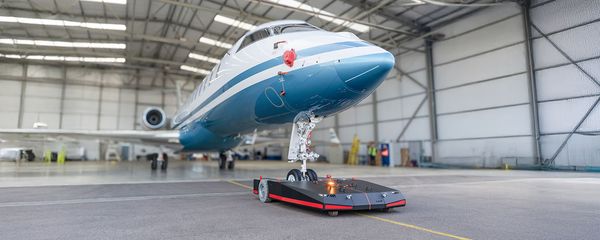
Ground support equipment has advanced steadily toward autonomy: baggage carts and pushback tractors, among others, are being designed to operate with minimal human intervention. Yet the aircraft itself – the single most valuable and structurally sensitive asset on the ramp – is still almost universally towed under direct human control.
STORIES
READ MORE »
Why Aircraft Towing May Be One of the Last Frontiers of Autonomous Ground Operations
Ground support equipment has advanced steadily toward autonomy: baggage carts and pushback tractors, among others, are being designed to operate with minimal human intervention. Yet the aircraft itself – the single most valuable and structurally sensitive asset on the ramp – is still almost universally towed under direct human control.
STORIES
READ MORE »
 British Airways Finishes Starlink Wi-Fi Rollout Across Its A350 Fleet
British Airways has installed SpaceX's Starlink Wi-Fi on every Airbus A350 in its fleet, offering passengers free high-speed internet on long-haul flights.
NEWS
READ MORE »
British Airways Finishes Starlink Wi-Fi Rollout Across Its A350 Fleet
British Airways has installed SpaceX's Starlink Wi-Fi on every Airbus A350 in its fleet, offering passengers free high-speed internet on long-haul flights.
NEWS
READ MORE »
More than just headlines.
Get unlimited ad-free access to in-depth aviation news, premium stories, and exclusive insights other sites don't cover.
- Ad-free browsing on AeroXplorer
- Unlimited access to premium and exclusive articles
- Higher photo upload limits & commissions on sales
- Free access to Jetstream Magazine on higher tiers
- Ad-free browsing
- Sell aviation photos with 60% commission
- First week free!
- Everything in Basic+
- Unlimited premium articles
- Sell aviation photos with 70% commission
- Free Digital subscription to Jetstream Magazine
- First week free!
- Everything in Basic+ and Pro
- Sell aviaiton photos with 80% commission
- Early access to exclusive stories
- Free Digital+Print subscription to Jetstream Magazine