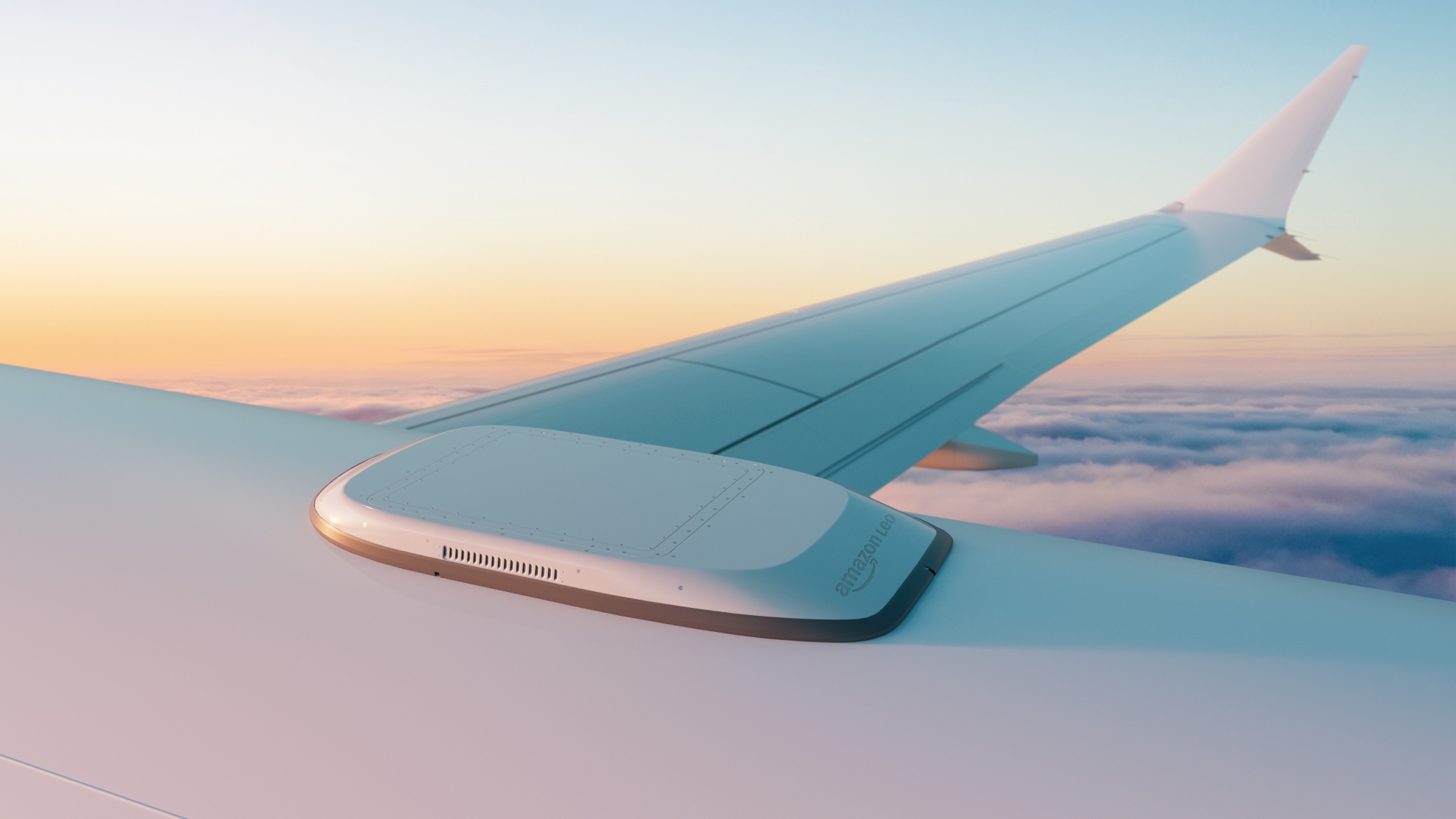
Amazon has drawn the clearest battle line yet in the race to dominate satellite connectivity aboard commercial aircraft. In parallel with the Aircraft Interiors Expo in Hamburg, Germany, the company unveiled the Amazon Leo Aviation Antenna, its first piece of hardware purpose-built for commercial jets, and the specifications it carries are designed to make one statement above all others: that SpaceX's Starlink no longer owns this sky.
What Amazon Has Built
Amazon Leo has announced a satellite antenna that will boost internet reliability for airplane passengers. The antenna will deliver high download speeds of up to 1 Gigabit per second and upload speeds of up to 400 Megabits per second. The antenna is sufficient to connect a full passenger plane and can be installed in a single day.
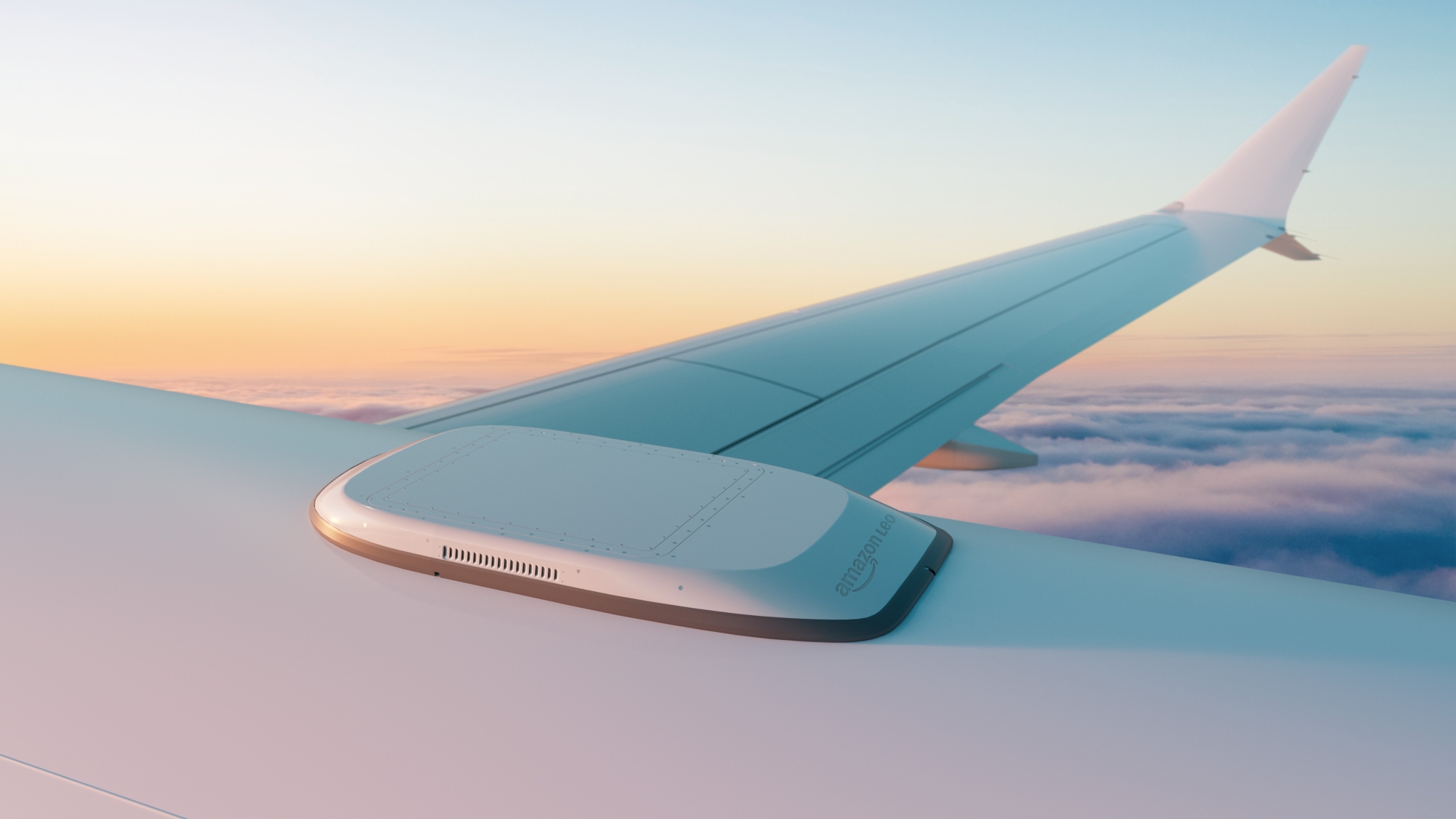
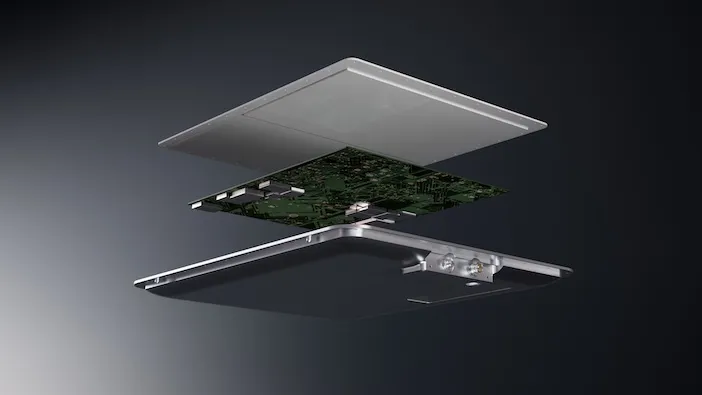
The antenna measures 58 inches long, 30 inches wide, and 2.6 inches high, 147 by 76 by 6.6 centimetres. Those dimensions are on par with a typical Starlink terminal while delivering double the performance. It also includes an integrated modem in the installation package.
The engineering behind the antenna's physical design is as deliberate as its performance targets. The Amazon Leo Aviation Antenna measures 147 by 76 by 6.6 centimetres to help minimise drag and fuel consumption. For airlines operating under the most severe sustained fuel cost pressures in years, antenna aerodynamics are not a cosmetic consideration; they are a direct operating cost variable.
Amazon's Leo aviation antenna incorporates technology from the Leo Ultra dish meant for enterprise users. One key difference is that the plane-based equipment can survive "the demands and stresses of aviation," including harsh weather and low temperatures.
The Voice Behind the Announcement
Trevor Vieweg, director of global business for Amazon Leo, framed the product's ambition in unambiguous terms. "Amazon Leo can connect a full plane of passengers and crew with speeds that handle any activity seamlessly, whether passengers want to game, watch a movie, listen to music, or collaborate with colleagues on a project," said Vieweg.
"We're thrilled to have agreements in place already with Delta and JetBlue based on the strength of our initial offering, and it's only going to get better from here as we innovate together with our customers,"
Vieweg added, signalling that the current product is the starting point of an iterative roadmap rather than a fixed specification.
Delta Signs On
The unveiling of the aviation antenna does not exist in isolation. It followed one of Amazon Leo's most commercially significant milestones to date, when Delta Air Lines confirmed a multi-year agreement on March 31, 2026.
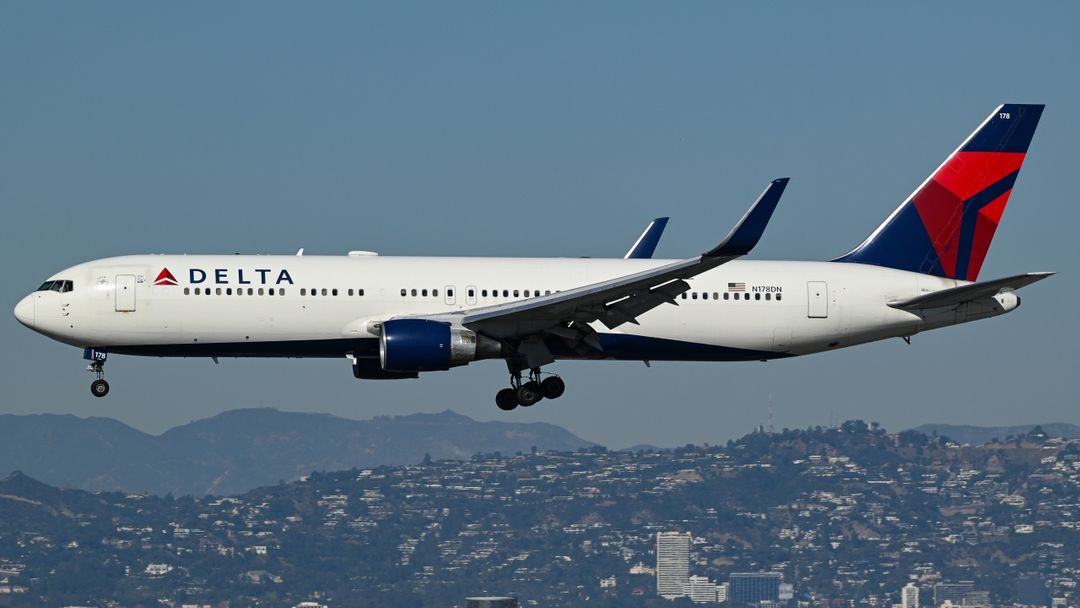
Under the multi-year agreement, Delta will begin rolling out Amazon Leo in 2028 with an initial installation on 500 aircraft, providing customers with high-speed, low-latency Wi-Fi from gate to gate.
According to Amazon, Leo-powered in-flight Wi-Fi will be free for all Delta SkyMiles members. Delta already offers free connectivity to its SkyMiles members via its existing T-Mobile partnership, meaning the airline is maintaining the free-to-passenger model, but upgrading the underlying technology from T-Mobile's arrangement to satellite-grade LEO connectivity.
Andy Jassy, President and CEO of Amazon, spoke directly to the scale of the ambition:
"We've designed Leo to provide high-speed internet to the billions of people on Earth without reliable connectivity, and this agreement with Delta is a great example of the impact and scale of the technology, bringing even faster in-flight Wi-Fi to tens of millions of passengers who fly Delta every year. People increasingly want to stay connected wherever they are in the world, and Leo's speed and reliability are going to have a big impact on businesses, governments, and consumers."
Delta's own CEO placed the announcement in the context of the airline's global strategy. "Delta's future is global," said Ed Bastian.
Delta's deal marks Amazon's second big win with a US airline and its most notable collaboration with a legacy carrier so far. JetBlue was the first airline to commit to the service, with that rollout expected to begin in 2027.
The CEO's Promise on Speed and Price
Amazon CEO Andy Jassy used his annual shareholder letter, published on April 9, 2026, to make the commercial case for Leo in terms that directly targeted Starlink's dominance.
"First, the performance will be stronger, about six to eight times better on uplink, and two times better on downlink, than what customers have access to now," he wrote. "Second, this performance will come at a lower cost than alternatives."
The comparison is striking when set against the numbers. SpaceX currently advertises up to 310 Mbps download and up to 44 Mbps upload speeds per terminal for its Starlink aviation service, amid plans to upgrade a global offering it has been providing to major airlines for more than two years. Amazon Leo's 1 Gbps download and 400 Mbps upload specifications represent a threefold improvement in download and nearly a tenfold improvement in upload performance, if the real-world figures match the advertised ones at scale.
The Satellite Gap
The specification advantage is considerable. The constellation gap is the defining challenge Amazon must now close at speed. At the beginning of April, Amazon had 241 satellites in orbit, compared to more than 10,000 in the Starlink network.
Amazon Leo has so far deployed 241 of a proposed 3,232 first-generation satellites, with initial services now targeting mid-2026, years behind schedule following launch capacity constraints. Providing Wi-Fi on planes would come later, in part because this requires a denser constellation.
Amazon plans to deploy 700 Amazon Leo satellites by mid-2026. That figure, against Starlink's 10,000-plus, illustrates both the scale of the challenge and the pace at which Amazon is attempting to close the gap, with more than 20 full-scale missions planned over the next year.
The in-flight timeline for airline customers reflects this constellation reality directly. A spokesperson for JetBlue, which announced plans last year to connect roughly a quarter of its more than 300 aircraft to Amazon Leo, told SpaceNews it still aims to start providing the service in 2027. Those planes currently rely on Viasat's geostationary orbit satellites for in-flight connectivity. Delta's deployment begins in 2028.
The Cockpit’s Next Revolution: When the Co-Pilot Is a Computer
Starlink's Commanding Position
SpaceX continues to rapidly expand its aviation footprint after connecting more than 1,400 commercial aircraft in 2025 via LEO, which offers lower-latency connectivity than traditional GEO systems. Major customers include United Airlines, Alaska Airlines and Air France.
United is on its way to equip its 1,100-plane fleet with Starlink, which already has a sizeable satellite network operational and numerous big-league airline partnerships lined up, including Qatar Airways, Air France, Emirates, and Virgin Atlantic.
For Starlink, the arrival of a serious hardware competitor does not immediately disrupt those existing agreements. The deals are in place, the satellites are in orbit, and the rollouts are already underway. What the Amazon Leo Aviation Antenna announcement does is firmly establish that the market Starlink has been building will not go uncontested for the second half of this decade.
What It Means for the Industry
"The IFC landscape is becoming increasingly competitive, with Starlink and now Amazon Leo gaining traction as airlines adopt multi-provider and now multi-orbit strategies," Raymond James analyst Rick Prentiss said in a recent note on Viasat's financials.
That framing is significant. The emergence of Amazon Leo as a credible aviation-grade alternative does not simply mean a two-horse race between the world's two most well-resourced private space ventures. It signals a structural shift in how airlines will approach inflight connectivity contracts, with leverage, comparison pricing, and genuine competitive alternatives at the negotiating table for the first time since Starlink established its early dominance.
For passengers, the promise is a straightforward improvement: faster speeds, lower latency, and, critically, free access aboard airlines that are already committed to eliminating the paywall for connectivity. Whether Delta in 2028, JetBlue in 2027, or any future Leo customer, the era of paying separately for slow satellite Wi-Fi is, Amazon is arguing, coming to an end. Whether Amazon Leo can execute at the constellation scale and the deployment pace required to make that promise real before the market calcifies around Starlink will define the next chapter of in-flight connectivity and one of the most commercially consequential technology competitions in commercial aviation history.
Why Aircraft Towing May Be One of the Last Frontiers of Autonomous Ground Operations » This Week in Aviation: The 10 Stories That Mattered Most » German Eurofighters Intercept British Airways Flight »

Comments (0)
Add Your Comment
TAGS
NEWS Amazon Leo Aviation Antenna SpaceX Starlink Inflight Wi-Fi Delta Air Lines JetBlue Satellite Connectivity In-Flight Internet Aviation Technology United Airlines Starlink Aircraft Interiors Expo Airline Wi-FiRECENTLY PUBLISHED
 American Airlines Boeing 787 Makes Emergency Landing at O'Hare After Brake Issue, One Hospitalized
An American Airlines Boeing 787 makes an emergency landing to Chicago O'Hare after a brake problem.
NEWS
READ MORE »
American Airlines Boeing 787 Makes Emergency Landing at O'Hare After Brake Issue, One Hospitalized
An American Airlines Boeing 787 makes an emergency landing to Chicago O'Hare after a brake problem.
NEWS
READ MORE »
 Why Aircraft Towing May Be One of the Last Frontiers of Autonomous Ground Operations
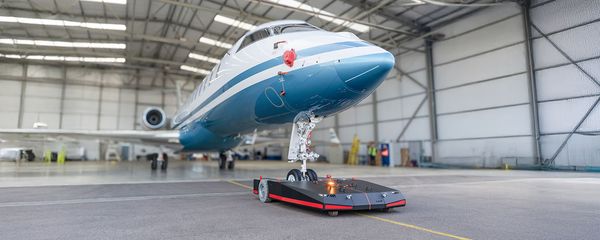
Ground support equipment has advanced steadily toward autonomy: baggage carts and pushback tractors, among others, are being designed to operate with minimal human intervention. Yet the aircraft itself – the single most valuable and structurally sensitive asset on the ramp – is still almost universally towed under direct human control.
STORIES
READ MORE »
Why Aircraft Towing May Be One of the Last Frontiers of Autonomous Ground Operations
Ground support equipment has advanced steadily toward autonomy: baggage carts and pushback tractors, among others, are being designed to operate with minimal human intervention. Yet the aircraft itself – the single most valuable and structurally sensitive asset on the ramp – is still almost universally towed under direct human control.
STORIES
READ MORE »
 British Airways Finishes Starlink Wi-Fi Rollout Across Its A350 Fleet
British Airways has installed SpaceX's Starlink Wi-Fi on every Airbus A350 in its fleet, offering passengers free high-speed internet on long-haul flights.
NEWS
READ MORE »
British Airways Finishes Starlink Wi-Fi Rollout Across Its A350 Fleet
British Airways has installed SpaceX's Starlink Wi-Fi on every Airbus A350 in its fleet, offering passengers free high-speed internet on long-haul flights.
NEWS
READ MORE »
More than just headlines.
Get unlimited ad-free access to in-depth aviation news, premium stories, and exclusive insights other sites don't cover.
- Ad-free browsing on AeroXplorer
- Unlimited access to premium and exclusive articles
- Higher photo upload limits & commissions on sales
- Free access to Jetstream Magazine on higher tiers
- Ad-free browsing
- Sell aviation photos with 60% commission
- First week free!
- Everything in Basic+
- Unlimited premium articles
- Sell aviation photos with 70% commission
- Free Digital subscription to Jetstream Magazine
- First week free!
- Everything in Basic+ and Pro
- Sell aviaiton photos with 80% commission
- Early access to exclusive stories
- Free Digital+Print subscription to Jetstream Magazine