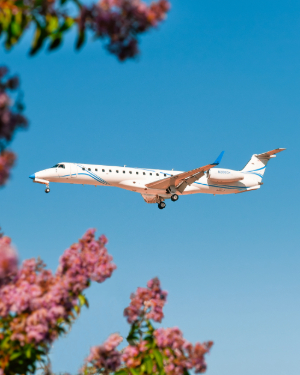


After a unanimous decision made by the Dallas City Council on June 21, Atlanta-based Delta Air Lines will be able to continue flying out of Dallas Love Field (DAL) for the next six years. The verdict ends a seven-year old fight over several of the gates at the Dallas airport.

The history of this dispute goes back to the implementation of the Wright Amendment in 1980 which was sponsored by, and named after, Congressman Jim Wright. The Wright Amendment served as a way to limit passenger traffic at Love Field and protect the interests of Dallas/Fort Worth International Airport in becoming the dominant airport in the DFW metroplex during its early years. One of the main rules within the Amendment states that nonstop flights out of Dallas Love Field had to be to airports within Texas and neighboring states such as Louisiana, Arkansas, Oklahoma, New Mexico, and announced later in 2005, Missouri. Flights outside of this so-called "Wright Zone" were restricted to having less than 56 seats offered in order to prohibit mainline service. Airlines could not offer connecting flights through ticketing or through service on another airline past the five-state region.
The amendment was fully repealed in 2006 with several conditions. The ban on nonstop flights outside of the Wright Zone was to stay in effect until 2014, and through-ticketing to domestic and foreign airports without the hassle of buying separate tickets was allowed immediately. Love Field's capacity would be lowered from 32 to 20 gates, and no international flights would be allowed. Since the repeal Southwest has greatly expanded, with the airline adding cities such as Chicago, Los Angeles, Oakland, New York City, Baltimore, and Orlando. Delta Airlines had been leasing gates controlled by American Airlines, but these American gates were given up in order for its merger with US Airways to be approved and were subsequently leased to Virgin America which quickly developed a focus city at Love Field. Once Alaska Airlines took over the San Francisco-based airline in April 2016, the gate lease was transferred over. This left Delta Airlines without gates to use at the airport.

After being notified it would have to cease service out of the Dallas airport, Delta threatened to sue the city. However, since 2014, Southwest has subleased one of its gates from United and allowed Delta to share the space as a temporary solution. Southwest has wanted to grow at Love Field, but is limited due to post-Wright restrictions. As a result, Southwest has repeatedly tried to remove Delta for several years. From June 23, 2022, that is no longer the case. The Dallas City Council will allow the carrier to operate out of Love Field for the next six years using one of Alaska's gates. In return, Alaska will be paid $200,000 a year by Love Field until September 2028.
KLM Brings Starlink Internet to Long-Haul Flights » Riyadh Airport Closed After Reported Ballistic Missile Strike on Saudia Airbus Jet » Boeing's Touchscreen Flight Controls for 737 Draw Sharp Criticism from Pilots »

Comments (3)
 Dan
Wondrful article. Very informative! Amazing stuff Buddy!
Dan
Did I mention that I LOVE this article?
Dan
Wow. Just wow. This article is great work! I have a granddaughter I think you should meet Mr. Holsenbeck. She is a flight Attendant. I can give you her email.
Dan
Wondrful article. Very informative! Amazing stuff Buddy!
Dan
Did I mention that I LOVE this article?
Dan
Wow. Just wow. This article is great work! I have a granddaughter I think you should meet Mr. Holsenbeck. She is a flight Attendant. I can give you her email.
Add Your Comment
TAGS
NEWS newssouthwestSouthwestWright AmendmentDallas Love FieldDelta NewsSouthwest AirlinesDelta Air LinesRECENTLY PUBLISHED
 This Week in Aviation: The 10 Stories That Mattered Most
From major airline developments to aircraft updates and industry shifts, this weekly recap highlights the ten most-read aviation stories from the week of October 04.
INFORMATIONAL
READ MORE »
This Week in Aviation: The 10 Stories That Mattered Most
From major airline developments to aircraft updates and industry shifts, this weekly recap highlights the ten most-read aviation stories from the week of October 04.
INFORMATIONAL
READ MORE »
 4th vs 5th Generation Fighter Jets: How Fighter Jets Have Evolved
A look at what separates fourth- and fifth-generation fighter jets, from stealth and sensor fusion to combat capability and cost.
INFORMATIONAL
READ MORE »
4th vs 5th Generation Fighter Jets: How Fighter Jets Have Evolved
A look at what separates fourth- and fifth-generation fighter jets, from stealth and sensor fusion to combat capability and cost.
INFORMATIONAL
READ MORE »
 United 777 Diverts to Dublin After Cockpit Windscreen Cracks Over the Atlantic
A United Airlines Boeing 777 bound for Milan made a steep descent and diverted to Dublin after its cockpit windscreen cracked mid-flight.
NEWS
READ MORE »
United 777 Diverts to Dublin After Cockpit Windscreen Cracks Over the Atlantic
A United Airlines Boeing 777 bound for Milan made a steep descent and diverted to Dublin after its cockpit windscreen cracked mid-flight.
NEWS
READ MORE »
More than just headlines.
Get unlimited ad-free access to in-depth aviation news, premium stories, and exclusive insights other sites don't cover.
- Ad-free browsing on AeroXplorer
- Unlimited access to premium and exclusive articles
- Higher photo upload limits & commissions on sales
- Free access to Jetstream Magazine on higher tiers
- Ad-free browsing
- Sell aviation photos with 60% commission
- First week free!
- Everything in Basic+
- Unlimited premium articles
- Sell aviation photos with 70% commission
- Free Digital subscription to Jetstream Magazine
- First week free!
- Everything in Basic+ and Pro
- Sell aviaiton photos with 80% commission
- Early access to exclusive stories
- Free Digital+Print subscription to Jetstream Magazine