When the United Kingdom's air traffic control system faltered on September 8, the effect rippled well beyond British airspace. More than 2,000 flights in and out of the UK were cancelled, crews and aircraft ended up in the wrong places, and knock-on delays stretched across the following days. For anyone who spent that evening in a terminal queue, the next question came quickly: does the airline owe me anything?
The honest answer is more nuanced than most people expect, and it's worth understanding before the next disruption rather than after it. Specialist services such as Flight Delayed, a UK-focused claims company, published their own explainers within a day of the outage, because passengers wanted to know whether flight compensation applied. In most cases tied directly to the NATS failure it probably doesn't, but the reasons why say a lot about how UK passenger rights actually work.
What went wrong on September 8
According to the preliminary report from NATS, the disruption traced back to a software defect in its flight data processing system that played out in roughly a millisecond. That was enough to push the system into its safeguards, forcing controllers onto manual procedures and cutting the amount of traffic UK airspace could safely handle. AeroXplorer covered the findings in detail in its report on the one-millisecond software defect behind the UK air traffic control collapse, including why the fault was unrelated to the August 2023 outage caused by a flight plan the system couldn't interpret.
From an operational point of view, the airlines didn't cause the problem. They were handed a sharply reduced flow rate and had to decide which flights to cancel to keep the rest of the network moving. That distinction is exactly what the compensation rules turn on.
Why an air traffic control failure usually rules out compensation
Under UK law, which kept the old EU261 framework after Brexit, airlines must pay a fixed sum when a flight arrives three or more hours late or is cancelled at short notice, but only if the cause was within their control. The UK Civil Aviation Authority explains in its guide on whether you're entitled to compensation that "extraordinary circumstances" are events that aren't the airline's responsibility, and that when they apply, no compensation is due. Extreme weather, air traffic control restrictions and security issues all tend to fall into that category.
In the days after the outage, the CAA indicated that it considered disruption caused directly by the NATS incident, including its knock-on effects, likely to count as extraordinary circumstances, while stressing that each case depends on its own facts. In practice, that means a passenger whose flight was cancelled because of the flow restrictions on September 8 should not expect a payout, though a delay that turns out to have a different root cause is another matter.
What passengers are still owed, whatever the cause
Losing the right to compensation doesn't mean losing every right. Airlines still have a duty of care during long disruptions, and passengers on a cancelled flight still choose between a refund and an alternative flight. The table below separates the obligations that apply in all cases from the ones that depend on who was at fault.
| Situation | Airline must provide | Fixed-sum compensation? |
| Cancellation caused by air traffic control restrictions | Choice of refund or rerouting, plus meals and accommodation where the wait requires it | Usually not, as it's likely to be an extraordinary circumstance |
| Delay caused by extreme weather | Meals, refreshments and accommodation for long or overnight delays | Usually not |
| Delay of three hours or more caused by a technical fault on the aircraft | The same care and assistance | Generally yes, as courts have ruled most technical problems are not extraordinary |
| Delay of five hours or more, whatever the cause | Option to abandon the trip and get a refund for unused parts of the ticket | Depends on the cause, as above |
How much is at stake when the airline is at fault
When compensation does apply, the amount is fixed by distance rather than ticket price. The CAA sets it at £220 per person for flights under 1,500 km, £350 for flights between 1,500 and 3,500 km, and for longer flights £260 if you arrive between three and four hours late or £520 if the delay is four hours or more. Technical faults are the most common battleground. The CAA's guidance points to the 2014 Court of Appeal ruling in Jet2 v Huzar and the 2015 European ruling in KLM v van der Lans, which together established that routine technical problems, including the early failure of a component, are not extraordinary.
That's why it pays to find out the real reason for a disruption. During a large event like the NATS failure, some flights are delayed for unrelated reasons, such as an aircraft that was already out of service with a fault, and those passengers may still have a valid claim.
What to do the next time your flight is disrupted
A few habits make any claim far easier, whether you pursue it yourself or through a service:
- Keep your boarding pass, booking reference and any receipts for food, transport or hotels you paid for during the delay.
- Ask the airline, in writing if possible, what caused the delay or cancellation, and note the exact time you actually arrived at your final destination.
- Check the great-circle distance of your route, since that decides which compensation band applies.
- Don't assume a claim has expired. Flight Delayed notes that passengers in England and Wales can claim for up to six years after the flight.
The September outage was a reminder that some disruptions are nobody's fault in the legal sense. Knowing which ones those are, and which ones aren't, is what separates a wasted afternoon filling in forms from money that's genuinely owed.
Boeing's Touchscreen Flight Controls for 737 Draw Sharp Criticism from Pilots » NetJets Expands US Footprint With Three New Private Terminals and Larger Palm Beach Facility » FAA Clears JetBlue's $58.5M Purchase of Spirit's LaGuardia Slots »

Comments (0)
Add Your Comment
TAGS
INFORMATIONAL Compensation Travel Informational OutlinesRECENTLY PUBLISHED
 NetJets Expands US Footprint With Three New Private Terminals and Larger Palm Beach Facility
NetJets announces exclusive-use terminals in Dallas, Washington, and Palm Beach, expanding private aviation infrastructure across key US markets.
NEWS
READ MORE »
NetJets Expands US Footprint With Three New Private Terminals and Larger Palm Beach Facility
NetJets announces exclusive-use terminals in Dallas, Washington, and Palm Beach, expanding private aviation infrastructure across key US markets.
NEWS
READ MORE »
 Army Report Points to Systemic Failures in Deadly Black Hawk Collision Near Reagan National
A new Army report identifies systemic failures behind the January collision between a UH-60L Black Hawk and American Airlines Flight 5342 near Washington.
NEWS
READ MORE »
Army Report Points to Systemic Failures in Deadly Black Hawk Collision Near Reagan National
A new Army report identifies systemic failures behind the January collision between a UH-60L Black Hawk and American Airlines Flight 5342 near Washington.
NEWS
READ MORE »
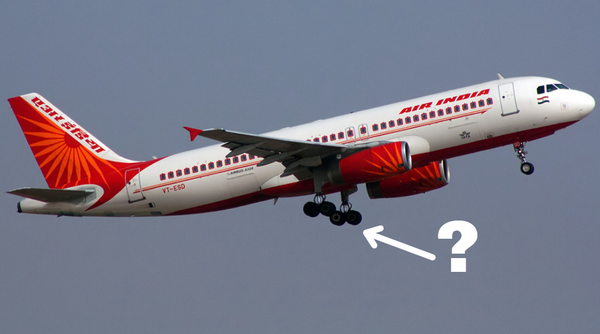 Why Did Some Air India A320s Have Extra Wheels? Bogie Gear Explained
Why Air India operated select Airbus A320s with an unusual bogie landing gear.
INFORMATIONAL
READ MORE »
Why Did Some Air India A320s Have Extra Wheels? Bogie Gear Explained
Why Air India operated select Airbus A320s with an unusual bogie landing gear.
INFORMATIONAL
READ MORE »
More than just headlines.
Get unlimited ad-free access to in-depth aviation news, premium stories, and exclusive insights other sites don't cover.
- Ad-free browsing on AeroXplorer
- Unlimited access to premium and exclusive articles
- Higher photo upload limits & commissions on sales
- Free access to Jetstream Magazine on higher tiers
- Ad-free browsing
- Sell aviation photos with 60% commission
- First week free!
- Everything in Basic+
- Unlimited premium articles
- Sell aviation photos with 70% commission
- Free Digital subscription to Jetstream Magazine
- First week free!
- Everything in Basic+ and Pro
- Sell aviaiton photos with 80% commission
- Early access to exclusive stories
- Free Digital+Print subscription to Jetstream Magazine