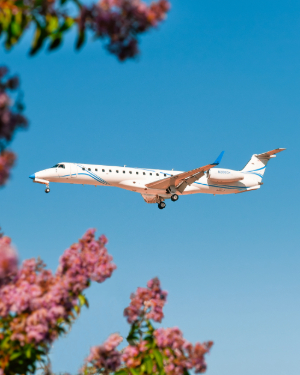

Relatively little discussion or media attention is often given to the speed of airliners, likely because the majority of commercial aircraft all fly at similar speeds.
However, there are some notable technical differences between aircraft, which enable some models to fly slightly faster than others. It’s worth noting that, besides the top 2 on this list, the speed difference between most aircraft is small and doesn’t typically affect flying times all that much.
Here are the 5 fastest commercial airliners ever built.
5th place: Convair 990 Coronado
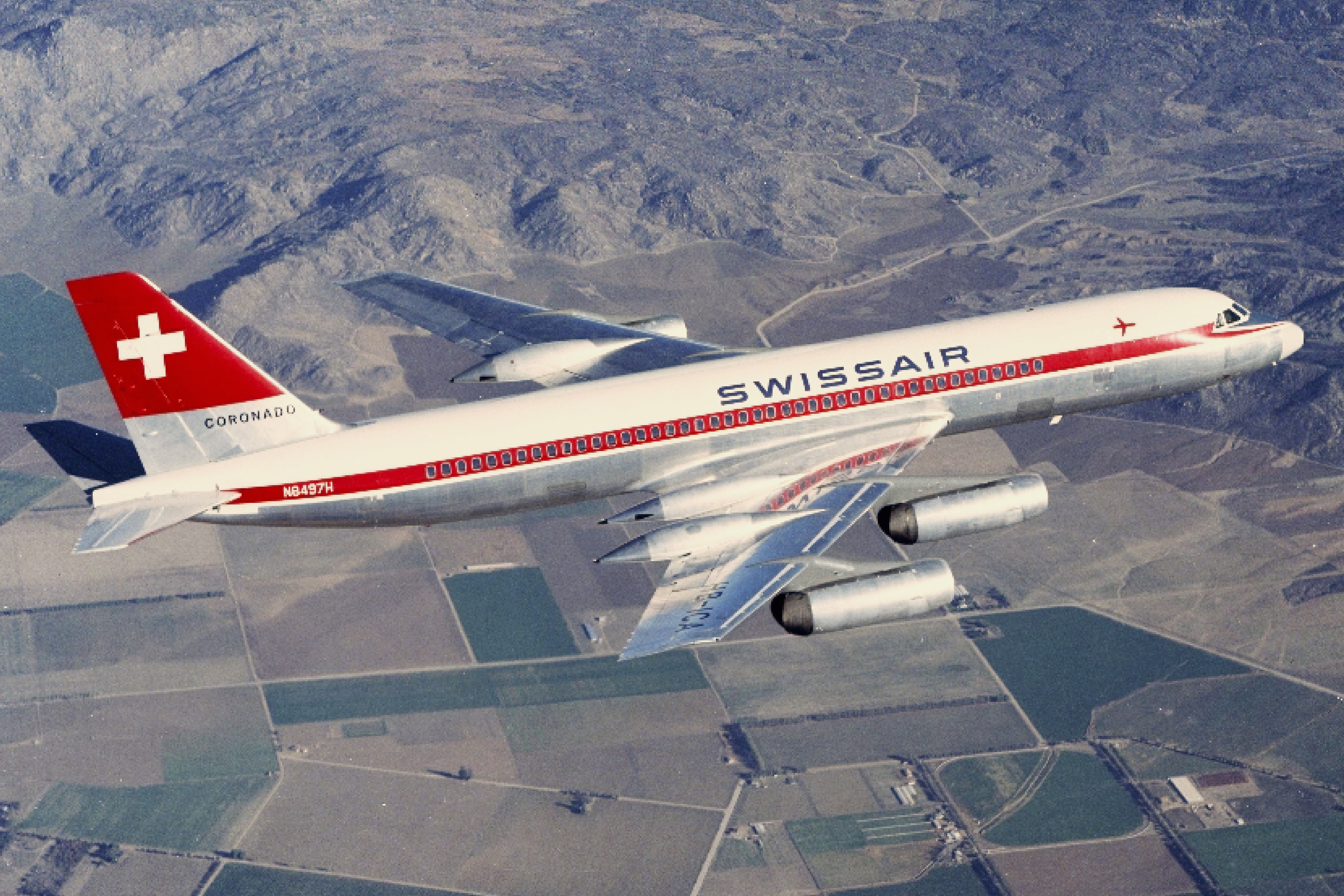
The Convair 990 Coronado is the 5th fastest commercial airliner of all time. Built in the 1960s by the Convair Division of the American company General Dynamics. In service for only 12 years from 1961 to 1973, mainly with American Airlines and Swissair, this aircraft featured a top cruising speed of 610mph or 980 km/h.
While not as popular in terms of airline customers as others on this list, it maintained a healthy presence throughout North America and Europe during its time.
4th place: Boeing 747-8:
The Boeing 747-8 is the newest variant of the popular Boeing 747 series, first designed in the late 1960s. The 747-8 offers airlines more capacity, range, and fuel efficiency compared to older variants of the type.

Entering service in 2012, the jet has seen relatively low passenger demand, with just 3 airlines ordering the type. However, due to its size and ability to carry more cargo than its predecessors, the 747-8 has proved popular with cargo airlines.
Boeing 747-8s have a top cruise speed of 614mph (988km/h), and the passenger variant can carry more than 600 passengers in a range of 8,000 miles or more.
3rd place: Airbus A380
The world’s largest passenger jet, the Airbus A380, offers space for a staggering 850 passengers across two full decks of seating. It can also travel 8,000 miles.

The aircraft was built as Airbus’ response to the popular Boeing 747 family. However, the timeframe of development was very late, and only a handful of airlines ordered the type, instead opting for the smaller, more economical aircraft offered by Airbus or Boeing.
High fuel costs and environmental concerns exacerbated this. The aircraft offers a stellar passenger experience, however, with many airlines choosing to install fancy seats and unique amenities on their A380s.
Still, the A380 maintains an impressive top cruise speed of 634mph, or 1,020 km/h.
2nd place: Tupolev Tu-144
The Tu-144 was a commercial supersonic airliner designed in the Soviet Union in the 1960s, actually beating the famous Concorde to supersonic flight by about 2 months.

The aircraft had a maximum speed of 1,510mph or 2,430mph. However, safety and mechanical concerns plagued this aircraft, and after only 102 flights, it was retired in 1985.
1st place: Concorde
The most famous on this list, the Concorde, was a supersonic airliner in service from the late 1970s until the early 200s. The aircraft was the second-ever commercial supersonic airliner after the Tu-144 and remained in commercial service for 30 years with British Airways and Air France.

The Concorde could fly from New York to London or Paris in only 3 hours, half of what a subsonic airliner would take; this is not a surprise as the aircraft could reach top cruise speeds of 1,354 mph or 2,479 km/h, more than double that of the fastest subsonic airliners. A symbol of innovation, the speed of the Concorde is missed by many.
British Airways Flight to Chicago Forces Emergency Descent After Cabin Pressure Failure » British Airways Unveils World's Largest Business Class Cabin With 106 Seats Aboard Refurbished A380 Fleet » IATA's New Passenger Data Shows Global Air Travel Demand Shrinking for the First Time This Year »

Comments (0)
Add Your Comment
TAGS
INFORMATIONAL Boeing Boeing 747-8 Boeing Airbus Airbus A380 Tupolev Tu-144 Concorde Boom Boom Supersonic Supersonic Nasa Fastest AirplaneRECENTLY PUBLISHED
 Boeing's Touchscreen Flight Controls for 737 Draw Sharp Criticism from Pilots
Boeing's plan to introduce Touchscreen Control Display Units on the 737 has sparked backlash from pilots who warn of safety and usability concerns.
NEWS
READ MORE »
Boeing's Touchscreen Flight Controls for 737 Draw Sharp Criticism from Pilots
Boeing's plan to introduce Touchscreen Control Display Units on the 737 has sparked backlash from pilots who warn of safety and usability concerns.
NEWS
READ MORE »
 Southwest Airlines Blames Brief System Outage for Boarding Delays and Checked Bag Disruptions
Southwest Airlines confirms a brief technology outage disrupted boarding and checked bag operations, forcing gate agents to process travelers manually.
NEWS
READ MORE »
Southwest Airlines Blames Brief System Outage for Boarding Delays and Checked Bag Disruptions
Southwest Airlines confirms a brief technology outage disrupted boarding and checked bag operations, forcing gate agents to process travelers manually.
NEWS
READ MORE »
 Southwest Airlines Considers Boeing 787 Order for Long-Haul International Expansion
Southwest Airlines is evaluating the Boeing 787 Dreamliner as it explores a shift into long-haul international flying, sources tell Reuters.
NEWS
READ MORE »
Southwest Airlines Considers Boeing 787 Order for Long-Haul International Expansion
Southwest Airlines is evaluating the Boeing 787 Dreamliner as it explores a shift into long-haul international flying, sources tell Reuters.
NEWS
READ MORE »
More than just headlines.
Get unlimited ad-free access to in-depth aviation news, premium stories, and exclusive insights other sites don't cover.
- Ad-free browsing on AeroXplorer
- Unlimited access to premium and exclusive articles
- Higher photo upload limits & commissions on sales
- Free access to Jetstream Magazine on higher tiers
- Ad-free browsing
- Sell aviation photos with 60% commission
- First week free!
- Everything in Basic+
- Unlimited premium articles
- Sell aviation photos with 70% commission
- Free Digital subscription to Jetstream Magazine
- First week free!
- Everything in Basic+ and Pro
- Sell aviaiton photos with 80% commission
- Early access to exclusive stories
- Free Digital+Print subscription to Jetstream Magazine