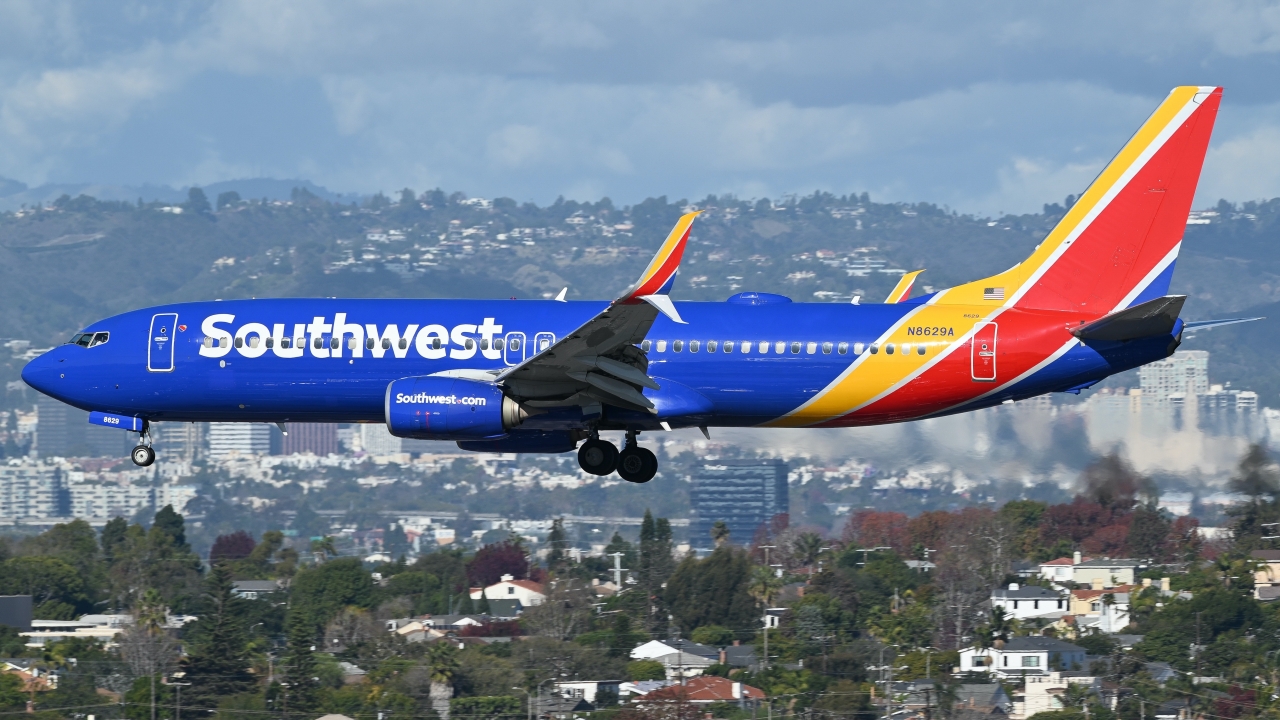

Southwest Airlines announced the launch of Southwest Airlines Renewable Ventures (SARV), a subsidiary focused on helping the airline achieve its sustainability goals by obtaining sustainable aviation fuel (SAF). Southwest also announced a $30 million investment in sustainable fuel technology company and producer LanzaJet.
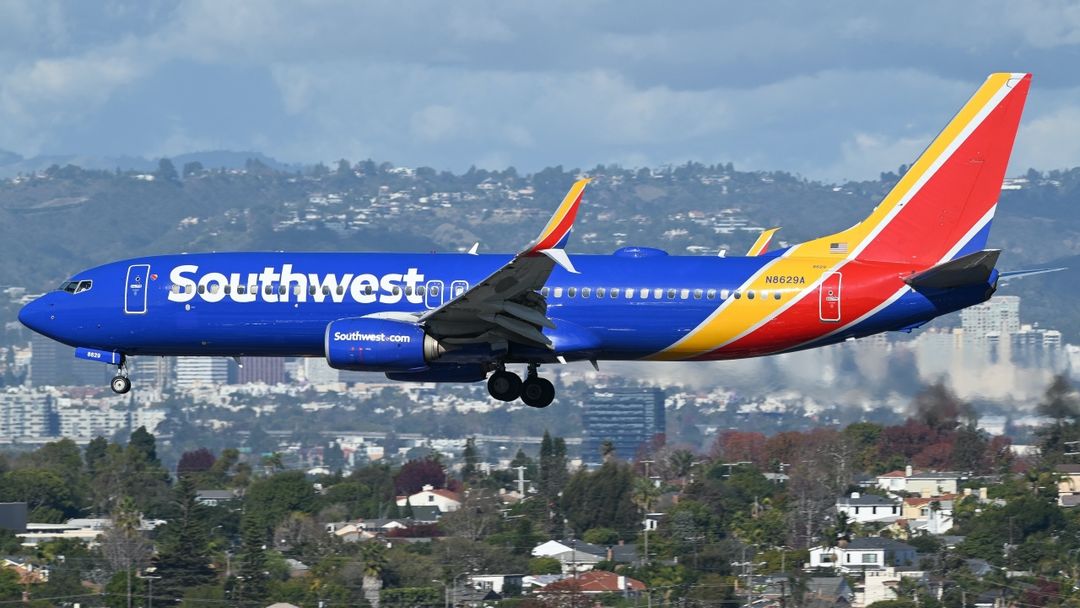
Southwest Airlines Renewable Ventures
Southwest views SARV as key to accomplishing its goal of having 10% of its total jet fuel consist of SAF by 2030. SARV will focus on managing the airline's SAF investment with the division's portfolio including companies that Southwest previously invested in, such as SAFFiRE Renewables (SAFFiRE). SAF offtake agreements will continue to be conducted through another division at Southwest.
SAFFiRE is an important stakeholder since the company's technology can create the cellulosic ethanol required for SAF production. The technology converts corn stover, a widely available agricultural residue feedstock, into cellulosic ethanol. SAFFiRE is one of the few companies that can conduct this process due to a license agreement and collaboration with the U.S. Department of Energy's National Renewable Energy Laboratory.

Tom Nealon, SARV's President and SAFFiRE's CEO, said about the launch of the subsidiary:
"SARV's goal is to help scale SAF through strategic investments, better positioning Southwest to have access to high quality, affordable SAF in accordance with the robust standards of Southwest's SAF policy. Through SARV's investment in LanzaJet, we're also entering the next phase in the commercialization of SAFFiRE technology, which is designed to support the production of cellulosic ethanol that can be converted to SAF."
SAF is one component of Southwest's Nonstop to Net Zero plan that outlines multiple steps towards reaching net zero carbon dioxide emissions by 2050. The other components include the following:
- Reducing single-use plastics from inflight service by 50% by weight by 2025 and eliminating them entirely (where feasible) by 2030.
- Saving 50 million incremental gallons of jet fuel by 2025 and 1.1 billion cumulative gallons by 2035.
- Electrify 50% of eligible ground support equipment by 2030.
- Diminishing emissions intensity by 50% by 2035.
- Shrinking the energy utilization index in its Dallas headquarters by 50% by 2035.

$30 Million Investment in LanzaJet
Southwest and LanzaJet will collaborate on developing a SAF production facility and helping SAFFiRE's cellulosic ethanol become SAF. LanzaJet will develop a facility somewhere in the U.S., while Southwest will be the anchor SAF offtaker. The company's technology can scale SAF production to the levels required to decarbonize aviation and help the industry reach a goal of net zero emissions by 2050. LanzaJet will also assist Southwest with commercializing SAFFiRE's technology, which converts corn stover into cellulosic ethanol.
LanzaJet's CEO Jimmy Samartzis said about Southwest's investment:
"The U.S. is an incredibly important market for us – it's our home, where our technology originated and scaled, the site of our and the world's first commercial ethanol-to-SAF plant, and an important opportunity to support the existing U.S. biofuels and ethanol industries with our leading ethanol-to-SAF technology."

"The alignment of Southwest and LanzaJet is a powerful combination that has the potential to integrate the SAF value chain and to double-down on the U.S. ethanol, aviation, and biofuel industries. Our work together will lead us closer to meeting aviation's decarbonization goals by continuing to scale SAF production in the United States, while also tapping into the U.S. ethanol industry's potential to catalyze the next generation of SAF production."
LanzaJet's newly announced facility will convert SAFFiRE's cellulosic ethanol into SAF. Southwest's $30 million investment comes one month after LanzaJet opened the world's first commercial-scale plant converting ethanol to SAF. The LanzaJet Freedom Pines Fuels plant in Georgia will produce SAF and renewable diesel from ethanol in a low-carbon manner. The company aims to produce one billion gallons of SAF by 2030.
One-Millisecond Software Defect Identified as Cause of UK Air Traffic Control Collapse That Grounded Thousands of Flights » How Aging Aircraft Fleets Are Reshaping the Way Airlines Operate » Major US Airlines Push Back Against Air China's Request for Additional US Flights »

Comments (0)
Add Your Comment
TAGS
NEWS Southwest Airlines LanzaJet SAF Sustainable Aviation Fuel Innovation Sustainability Investment FinanceRECENTLY PUBLISHED
 One-Millisecond Software Defect Identified as Cause of UK Air Traffic Control Collapse That Grounded Thousands of Flights
A new NATS report reveals a one-millisecond software defect triggered the UK air traffic control failure, causing thousands of cancellations.
NEWS
READ MORE »
One-Millisecond Software Defect Identified as Cause of UK Air Traffic Control Collapse That Grounded Thousands of Flights
A new NATS report reveals a one-millisecond software defect triggered the UK air traffic control failure, causing thousands of cancellations.
NEWS
READ MORE »
 AirAsia Pushes Back on Collapse Rumors as Fuel Costs Squeeze Budget Airline
AirAsia CEO Tony Fernandes denies the airline faces collapse, saying travel demand stays strong despite rising jet fuel prices pressuring margins.
NEWS
READ MORE »
AirAsia Pushes Back on Collapse Rumors as Fuel Costs Squeeze Budget Airline
AirAsia CEO Tony Fernandes denies the airline faces collapse, saying travel demand stays strong despite rising jet fuel prices pressuring margins.
NEWS
READ MORE »
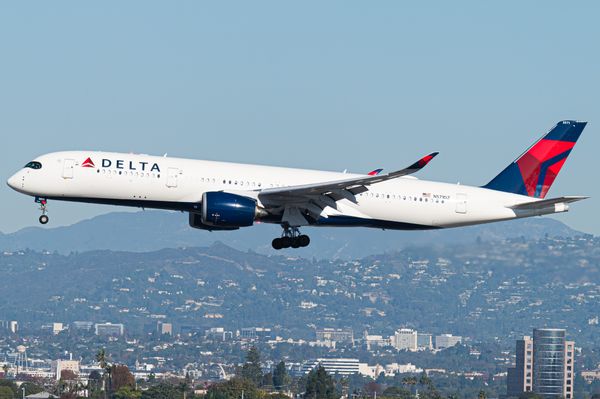 Delta Air Lines Moves to Claim Top Spot at LAX With New Routes and Expanded Schedule
Delta Air Lines plans its largest-ever schedule at Los Angeles International Airport, adding routes and premium seating to overtake rivals.
NEWS
READ MORE »
Delta Air Lines Moves to Claim Top Spot at LAX With New Routes and Expanded Schedule
Delta Air Lines plans its largest-ever schedule at Los Angeles International Airport, adding routes and premium seating to overtake rivals.
NEWS
READ MORE »
More than just headlines.
Get unlimited ad-free access to in-depth aviation news, premium stories, and exclusive insights other sites don't cover.
- Ad-free browsing on AeroXplorer
- Unlimited access to premium and exclusive articles
- Higher photo upload limits & commissions on sales
- Free access to Jetstream Magazine on higher tiers
- Ad-free browsing
- Sell aviation photos with 60% commission
- First week free!
- Everything in Basic+
- Unlimited premium articles
- Sell aviation photos with 70% commission
- Free Digital subscription to Jetstream Magazine
- First week free!
- Everything in Basic+ and Pro
- Sell aviaiton photos with 80% commission
- Early access to exclusive stories
- Free Digital+Print subscription to Jetstream Magazine