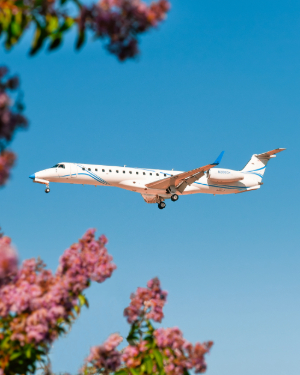


On a chilly November morning, a Virgin Atlantic Boeing 787-9 Dreamliner with callsign Virgin100 took off from London’s Heathrow International Airport (LHR) bound for New York JFK in the Big Apple.
As common a sight as this flight may have seemed, Flight 100 was not your ordinary transatlantic crossing. As hinted by its flight number, this special test flight was powered by 100% sustainable aviation fuel (SAF).

Overview of Flight 100
In 2022, Virgin Atlantic took on the challenge set by the United Kingdom Department of Transport to cross the Atlantic Ocean on 100% Sustainable Aviation Fuel (SAF).
Supported by key players in the aviation industry, such as Boeing and Rolls-Royce (whose Trent 1000 engines powered the Boeing Dreamliner that made the demonstration flight), along with the University of Sheffield, Imperial College, Rocky Mountain Institute, and ICF, over the next year Virgin and their partners researched, experimented, and planned the world's first 100% SAF powered flight.
Sustainable aviation fuels are a special branch of bio-fuels made from renewable hydrocarbon (fat) sources, such as plants and animals as opposed to traditional jet fuel synthesized from crude oil. In recent years, the popularity of SAFs has skyrocketed, with major companies like Google and Microsoft investing in the future of sustainable aviation.
Powering Flight 100 was a unique blend of fuels consisting of 88% HEFA (Hydroprocessed Esters and Fatty Acids) and 12% SAK (Synthetic Aromatic Kerosene).
HEFA is a process that refines common oils, such as vegetable oil, waste oils, and other fats. In doing so, the long chains of fatty acids that constitute the oils create a product that is able to be burned in modern jet engines.
Traditionally, HEFA fuels require additional petroleum based fuels (such as Jet-A) in order to meet current safety standards, previously making HEFA an unviable option for a 100% SAF operated flight.
However through the addition of SAK, a plant-sugar derived replacement for petroleum based fuels, Virgin Atlantic was able to utilize much higher concentrations of HEFA (current regulations prohibit over 50% SAF for revenue flights, so special approval was granted for Virgin Flight 100 and no paying passengers were onboard).
This is, because SAK supplies the necessary aromatics that traditional fuels do. By utilizing these two innovate sustainable fuels, Virgin Atlantic and their partners were able to create a mixture of SAF that was safe and capable enough to fly across the Atlantic Ocean.

Flight 100 - Results
Earlier this week, Virgin Atlantic released the results of their November 28th flight to the public. The seven hour and 35 minute flight showed an impressive 64% reduction in emissions as compared to a standard London to New York flight. That's around 95 tons of CO2 emissions saved!
The reduction in carbon emissions from this flight alone are equivalent to taking 54 cars off the road each year, or eliminating the energy consumption of 33 single-family homes.
Besides a reduction in carbon emissions, many additional benefits were also reported from the flight. Virgin 100 reported improved fuel efficiency compared to Jet-A powered flights, producing 1% more energy from a 100% SAF mixture along with 40% lower particulate emissions (other than CO2).
The reduction in emissions (excluding CO2) promises to cut down on contrails and other pollution caused by conventional fossil fuel powered flights.
In addition to the many benefits yielded from utilizing 100% SAF, Virgin Atlantic also experimented with improving operational efficiency, such as operating more direct flight routes and having shorter taxi times.
These methods saved 4% fuel burn, or as Virgin pointed out, enough SAF to fill 24 Olympic-sized swimming pools. The tremendous reductions in greenhouse gas emissions that SAF fuels present make them a viable alternative for conventional fossil fuel (jet fuel) powered flights.
Looking to the future
With the undoubted success of Virgin 100, the aviation industry looks towards a greener future, one where SAFs will play a major role.
Building upon the work started in 2008, when Boeing and Virgin Atlantic teamed up to power a Boeing 747 in part by SAF, Virgin Atlantic continues to charge towards net-zero carbon emissions by 2050. A big part of the airline's strategy to accomplish their goal is for their planes to operate on at least 10% SAF by 2030.
Speaking after the success of Flight 100, Shai Weiss, Chief Executive Officer at Virgin Atlantic commented "We have demonstrated that it can be done – SAF is a safe drop in replacement for fossil fuel and can be used with today’s infrastructure. We are ready to fly 100% SAF, but a scale up in production of 100 times from where we are today is needed to meet 10% SAF by 2030. We must now see urgent action from Government, oil majors and private capital to invest in the production capacity needed to deliver a thriving UK SAF industry. We’ve proven that if enough SAF is made, we will fly it."
While the push in the aviation industry towards SAF is progress in the right direction, sustainable aviation fuels are not a permanent solution to the massie carbon footprint left by aviation.
At the moment, SAF prices are about double that of traditional Jet-A fuels. This presents economic challenges to airlines, especially as many continue to navigate a post-pandemic world.
Further improvements and changes will have to be made to modern technologies in aviation, including through improved aerodynamics, increased engine efficiencies, exploring other alternative fuels , and electric flight.
Nevertheless, Virgin Atlantic seems poised to take on the challenge and lead the industry into the next chapter of flight.
In the words of Sir Richard Branson, CEO of Virgin Atlantic: "Challenging the status quo is in our DNA at Virgin. Proving that 100% SAF is operationally achievable today, with equivalent safety standards to all our other flights, was a pivotal moment but not a silver bullet. There is more work ahead to scale SAF at pace and whilst we cannot solve that challenge alone, Virgin Atlantic is committed to being at the forefront of the monumental effort required to decarbonise long haul flight.”
SWISS Boeing 777 Diverts to Azores Following Unidentified Cabin Odor Mid-Flight » Airport Rescue Trucks To Get Trackers Following Fatal LaGuardia Collision » American Airlines to Launch Seven New European Routes in Summer 2027 with A321XLR Expansion »

Comments (0)
Add Your Comment
TAGS
NEWS virgin atlantic london lhr new york jfk Boeing Pratt & Whitney sustainable aviation fuel saf 787 United States UKRECENTLY PUBLISHED
 United Airlines Reports A321XLR Range Falls Short of Airbus Marketing Claims
United Airlines says the Airbus A321XLR delivers less real-world range than advertised, limiting certain transatlantic routes travelers hoped to see.
NEWS
READ MORE »
United Airlines Reports A321XLR Range Falls Short of Airbus Marketing Claims
United Airlines says the Airbus A321XLR delivers less real-world range than advertised, limiting certain transatlantic routes travelers hoped to see.
NEWS
READ MORE »
 Airport Rescue Trucks To Get Trackers Following Fatal LaGuardia Collision
The Port Authority equips emergency vehicles at JFK and LaGuardia with GPS tracking after a fatal rescue truck crash exposed critical safety gaps.
NEWS
READ MORE »
Airport Rescue Trucks To Get Trackers Following Fatal LaGuardia Collision
The Port Authority equips emergency vehicles at JFK and LaGuardia with GPS tracking after a fatal rescue truck crash exposed critical safety gaps.
NEWS
READ MORE »
 This Week in Aviation: The 10 Stories That Mattered Most
From major airline developments to aircraft updates and industry shifts, this weekly recap highlights the ten most-read aviation stories from the week of August 23.
INFORMATIONAL
READ MORE »
This Week in Aviation: The 10 Stories That Mattered Most
From major airline developments to aircraft updates and industry shifts, this weekly recap highlights the ten most-read aviation stories from the week of August 23.
INFORMATIONAL
READ MORE »
More than just headlines.
Get unlimited ad-free access to in-depth aviation news, premium stories, and exclusive insights other sites don't cover.
- Ad-free browsing on AeroXplorer
- Unlimited access to premium and exclusive articles
- Higher photo upload limits & commissions on sales
- Free access to Jetstream Magazine on higher tiers
- Ad-free browsing
- Sell aviation photos with 60% commission
- First week free!
- Everything in Basic+
- Unlimited premium articles
- Sell aviation photos with 70% commission
- Free Digital subscription to Jetstream Magazine
- First week free!
- Everything in Basic+ and Pro
- Sell aviaiton photos with 80% commission
- Early access to exclusive stories
- Free Digital+Print subscription to Jetstream Magazine