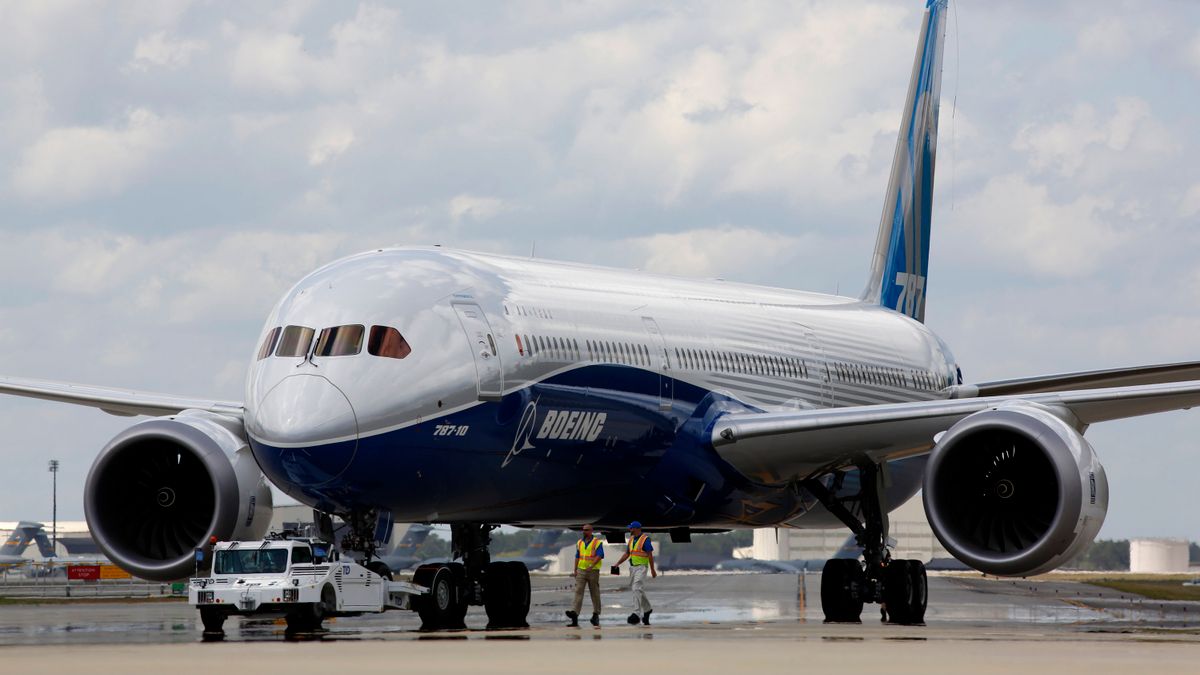
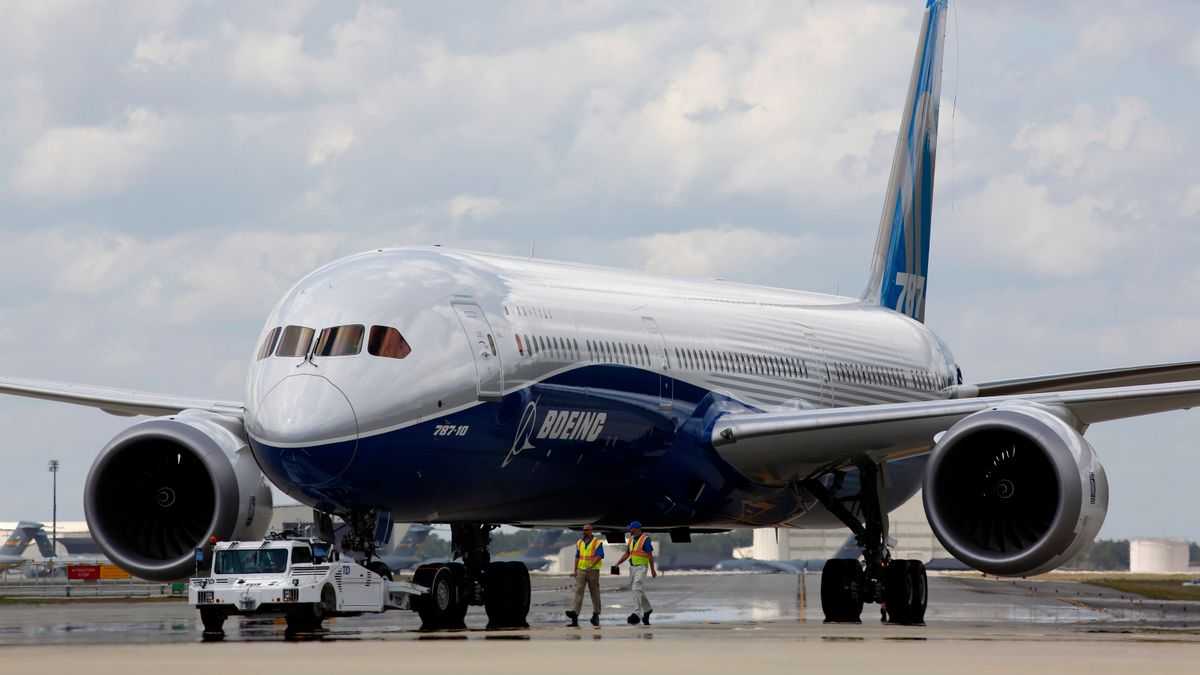
Most passengers boarding a Boeing 787 have never heard of EDAS (Empennage Door Actuation System), and there is no reason they should. The system sits quietly on the tail of the aircraft, doing its job without a single visible moving part during most of the flight. Yet the EDAS is one of the more inventive pieces of engineering Boeing built into the Dreamliner, a hybrid laminar flow control setup designed purely to save fuel by cutting drag. It is worth noting up front that EDAS is not a Dreamliner-wide feature. Only the 787-9 and 787-10 carry it. The original 787-8 was never fitted with the system.
What EDAS Actually Does
EDAS works by managing airflow across the leading edges of the tail surfaces. Rather than letting air become turbulent as it passes over the vertical stabilizer, and on earlier aircraft the horizontal stabilizer too, the system keeps that airflow smooth, or laminar, for longer. Less turbulence means less drag, and less drag means less fuel burned. Boeing has estimated the gain at around 25,000 gallons of fuel per year per aircraft, a meaningful number once multiplied across a fleet flying long-haul routes for decades.
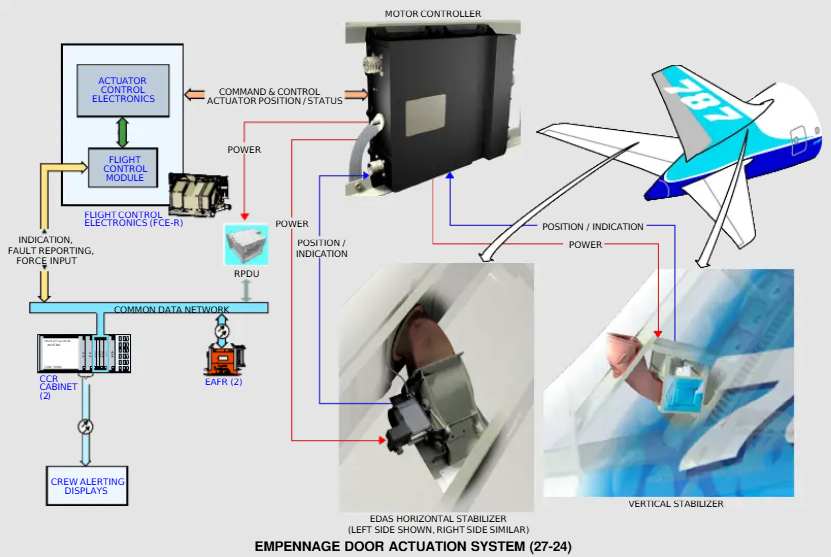
Within those two variants, aircraft built before production line number 526 carry the system on both the vertical and horizontal stabilizers. Later 787-9s and 787-10s only have it on the vertical stab, though the underlying principle is identical regardless of which surface it sits on.
Millions of Holes You Will Never See
The leading edges involved are covered in roughly 27 million tiny perforations, each about the width of a human hair. These holes connect through internal ducting to a set of door assemblies mounted on the horizontal stabilizer, positioned near the leading edge, at the base of the tail, and toward the inboard section on the underside where applicable. Electric motors drive these doors, and depending on the phase of flight, they open in one of two directions to either pull air in or push it out.
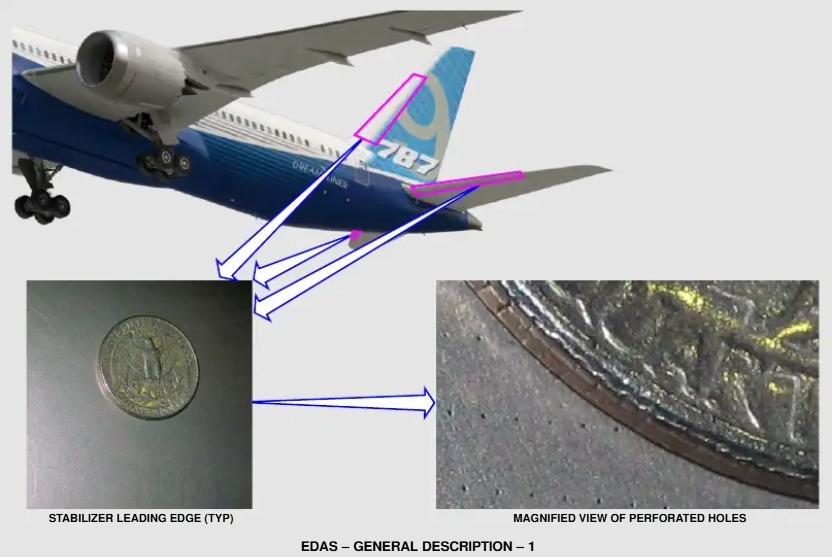
Purge Mode, Then Suction
The sequence starts on the takeoff roll. The larger doors swing open in the forward direction, and the system enters what is known as purge mode. Airflow pressurizes the ducting and forces air back out through the microscopic holes, clearing away any moisture or debris that might have collected inside. It is essentially a self-cleaning step built into every departure.
Once the aircraft accelerates past 190 knots, those doors close and a smaller door opens in the opposite, aft-facing direction. This switches the system into suction mode. Airflow now creates a vacuum inside the ducting, drawing outside air in through the same microscopic holes and pulling the boundary layer along with it. That suction is what maintains laminar flow across the tail surfaces for the rest of the cruise. On approach, once speed drops below 180 knots, the doors close entirely and sit flush with the skin of the aircraft until the next departure.

Analysis: How Spirit Airlines Changed Airline Pricing, then Paid the Price
A System That Has Not Always Lived Up to the Pitch
EDAS is an elegant idea on paper, and it represented a genuine first when Boeing introduced it on the 787-9. In practice, some operators and maintenance crews have reported that the real-world fuel savings did not always match expectations once the added complexity and upkeep were factored in, and a number of airlines are understood to have deactivated the system on portions of their fleets over time. That does not take away from the engineering achievement itself. Few passengers glancing at a 787's tail would guess that a network of hair-width holes and motor-driven doors is quietly working to shave fuel burn on every long flight.
For an aircraft already built around composite materials and efficiency gains, EDAS is a reminder that some of the Dreamliner's most interesting technology is also its least visible.
This Week in Aviation: The 10 Stories That Mattered Most » Heathrow Cites Airline Demand for Slots as Third Runway Review Continues » Lufthansa Wins Bid for 44.9% Stake in TAP Air Portugal, Edging Out Air France-KLM »
Comments (0)
Add Your Comment
TAGS
INFORMATIONAL Boeing Dreamliner 787 Control Surface Flight Control Rudder EDASRECENTLY PUBLISHED
 Lawmakers Press FAA to Suspend AI Air Traffic Control Tool at Washington-Area Airports
Senators and union leaders urge the FAA to pause an AI-driven air traffic management tool at DC airports, citing safety concerns.
NEWS
READ MORE »
Lawmakers Press FAA to Suspend AI Air Traffic Control Tool at Washington-Area Airports
Senators and union leaders urge the FAA to pause an AI-driven air traffic management tool at DC airports, citing safety concerns.
NEWS
READ MORE »
 Lufthansa Wins Bid for 44.9% Stake in TAP Air Portugal, Edging Out Air France-KLM
Portugal selects Lufthansa as preferred buyer for a 44.9% stake in TAP Air Portugal, beating competing offers from Air France-KLM and IAG.
NEWS
READ MORE »
Lufthansa Wins Bid for 44.9% Stake in TAP Air Portugal, Edging Out Air France-KLM
Portugal selects Lufthansa as preferred buyer for a 44.9% stake in TAP Air Portugal, beating competing offers from Air France-KLM and IAG.
NEWS
READ MORE »
 Why Engine Lease Rates Are Still Climbing as Values Level Off
Spirit Airlines’ shutdown released dozens of A320-family aircraft and spare engines into the market, but engine lease rates remain high despite stabilizing values. Explore how engine availability, MRO capacity and aircraft storage are shaping the narrowbody engine leasing market.
INFORMATIONAL
READ MORE »
Why Engine Lease Rates Are Still Climbing as Values Level Off
Spirit Airlines’ shutdown released dozens of A320-family aircraft and spare engines into the market, but engine lease rates remain high despite stabilizing values. Explore how engine availability, MRO capacity and aircraft storage are shaping the narrowbody engine leasing market.
INFORMATIONAL
READ MORE »
More than just headlines.
Get unlimited ad-free access to in-depth aviation news, premium stories, and exclusive insights other sites don't cover.
- Ad-free browsing on AeroXplorer
- Unlimited access to premium and exclusive articles
- Higher photo upload limits & commissions on sales
- Free access to Jetstream Magazine on higher tiers
- Ad-free browsing
- Sell aviation photos with 60% commission
- First week free!
- Everything in Basic+
- Unlimited premium articles
- Sell aviation photos with 70% commission
- Free Digital subscription to Jetstream Magazine
- First week free!
- Everything in Basic+ and Pro
- Sell aviaiton photos with 80% commission
- Early access to exclusive stories
- Free Digital+Print subscription to Jetstream Magazine