
For six years, Carbon Offsetting and Reduction Scheme for International Aviation (CORSIA) has been something airlines could largely plan around. Volunteer if it made sense, sit it out if it didn't. That changes in 2027. Participation becomes mandatory for essentially every ICAO member state, pulling China, India, and Brazil into the scheme for the first time and pushing global emissions coverage well beyond where it sits today. For airlines that treated the first two phases as optional, the runway to prepare just got a lot shorter.
Offsetting 101, No Jargon
CORSIA requires airlines to offset international flight emissions that exceed a fixed baseline, currently set at 85% of 2019 emissions levels. Airlines meet that obligation either by buying carbon credits, called Eligible Emissions Units, or by using CORSIA Eligible Fuels, a category that includes sustainable aviation fuel. Since 2024, that's meant real, calculated obligations rather than voluntary reporting. In 2024 alone, the sector's growth above baseline triggered 55.6 million tonnes of offsetting requirements across participating airlines.
The Opt-Out Window Closes
Phase 1 ran on voluntary participation; 130 states signed up as of early 2026, leaving major aviation markets free to sit it out. Phase 2 removes that choice. From 2027, offsetting requirements apply to flights involving nearly every ICAO member, with only a handful of exceptions carved out: least developed countries, small island states, landlocked developing nations, and countries that made up less than half a percent of global air traffic in 2018. Everyone else is in, whether they opted in before or not.
The scale of that shift shows up fast in the numbers. IBA forecasts airlines will need to offset 79.25 million tonnes of CO2 in 2027 alone, a sharp jump from where obligations sat during the voluntary years. The newly mandated regions carry a lot of that weight: China and India's expected participation alone could drive roughly 27 million tonnes of offset-eligible emissions, much of it concentrated in Asia-Pacific traffic that never faced these obligations before.
Big Carriers, Bigger Bills
This isn't an evenly distributed cost. IBA estimates Emirates could face CORSIA-related compliance costs of up to $346 million in 2027, roughly 3.5% of its projected fuel budget for the year. The top ten airlines globally are expected to shoulder around 29 million tonnes of offsetting between them, driven by long-haul international networks that rack up emissions on exactly the routes CORSIA targets.
Prices aren't holding steady either. Credit supply remains tight; only a fraction of eligible carbon-reduction projects currently has the authorization needed to issue CORSIA-recognized credits, and demand is climbing faster than that supply can keep up. MSCI projects offset prices could reach $25 to $60 per tonne by the late 2020s, more than double where they've traded during the voluntary phase. Airlines that haven't locked in credit sources or built compliance costs into route economics are staring down a moving target.
ReFuelEU and CORSIA Overlap
Here's the part that connects directly back to Europe's own fuel mandate. SAF purchased to meet ReFuelEU's blending requirements doesn't just satisfy that rule; it can also count against CORSIA's offsetting requirement, as long as it clears CORSIA's sustainability bar of at least a 10% lifecycle emissions reduction compared to fossil jet fuel. Airlines documenting SAF use properly, proof of sustainability, proof of purchase, and no double-claiming can apply that same fuel to shrink both bills.
That's a real advantage for carriers already flying SAF-blended fuel into Europe. Airlines operating primarily outside Europe's mandate zone don't get that same two-for-one benefit, and instead face CORSIA's rising credit prices with one less lever to pull.
Credits Are Scarce Too
If this sounds familiar, it should. The credit shortage squeezing CORSIA in 2027 echoes the exact production bottleneck slowing SAF scale-up more broadly: plenty of theoretical potential, not nearly enough infrastructure built out to meet it. Just one carbon-reduction program, a reforestation initiative in Guyana, currently accounts for the bulk of authorized CORSIA credits on the market. Scaling beyond that depends on host countries speeding up authorization processes that have moved slowly so far, and there's no guarantee they move fast enough before 2027 demand hits.

Only Way Out: Private Aviation in a Region at War
What Comes Next
Airlines still treating CORSIA as background compliance have a narrowing window. The credits are getting more expensive, the participant list just expanded to include some of the world's largest aviation markets, and the airlines with SAF strategies already in motion are the ones positioned to offset costs on both sides of the Atlantic. For everyone else, 2027 isn't a distant deadline anymore; it's next year's budget.
FAA Orders Engine Repairs on Airbus A380 Fleet After Uncontained Failure » Riyadh Airport Closed After Reported Ballistic Missile Strike on Saudia Airbus Jet » Lufthansa Wins Bid for 44.9% Stake in TAP Air Portugal, Edging Out Air France-KLM »

Comments (2)
 USAMNESIA
What could possibly go wrong? Another golden opportunity for the globo-cap predators.
mut
I thought aviation types were supposed to be smart. This thing is a suckers bet so gov can suck more money out of your pocket.
The whole environmental thing is being shown for the fraud it is.
USAMNESIA
What could possibly go wrong? Another golden opportunity for the globo-cap predators.
mut
I thought aviation types were supposed to be smart. This thing is a suckers bet so gov can suck more money out of your pocket.
The whole environmental thing is being shown for the fraud it is.
Add Your Comment
TAGS
INFORMATIONAL CORSIA Carbon OffsetRECENTLY PUBLISHED
 Lawmakers Press FAA to Suspend AI Air Traffic Control Tool at Washington-Area Airports
Senators and union leaders urge the FAA to pause an AI-driven air traffic management tool at DC airports, citing safety concerns.
NEWS
READ MORE »
Lawmakers Press FAA to Suspend AI Air Traffic Control Tool at Washington-Area Airports
Senators and union leaders urge the FAA to pause an AI-driven air traffic management tool at DC airports, citing safety concerns.
NEWS
READ MORE »
 Lufthansa Wins Bid for 44.9% Stake in TAP Air Portugal, Edging Out Air France-KLM
Portugal selects Lufthansa as preferred buyer for a 44.9% stake in TAP Air Portugal, beating competing offers from Air France-KLM and IAG.
NEWS
READ MORE »
Lufthansa Wins Bid for 44.9% Stake in TAP Air Portugal, Edging Out Air France-KLM
Portugal selects Lufthansa as preferred buyer for a 44.9% stake in TAP Air Portugal, beating competing offers from Air France-KLM and IAG.
NEWS
READ MORE »
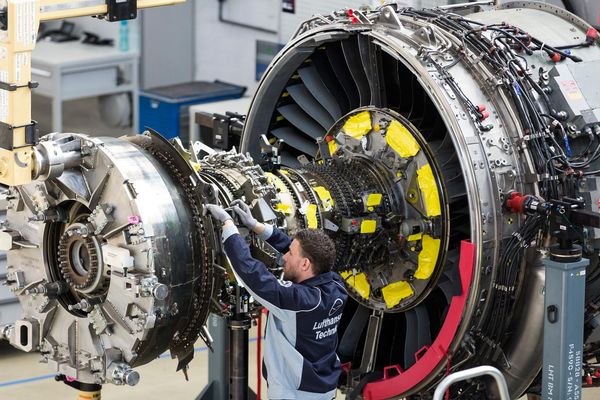 Why Engine Lease Rates Are Still Climbing as Values Level Off
Spirit Airlines’ shutdown released dozens of A320-family aircraft and spare engines into the market, but engine lease rates remain high despite stabilizing values. Explore how engine availability, MRO capacity and aircraft storage are shaping the narrowbody engine leasing market.
INFORMATIONAL
READ MORE »
Why Engine Lease Rates Are Still Climbing as Values Level Off
Spirit Airlines’ shutdown released dozens of A320-family aircraft and spare engines into the market, but engine lease rates remain high despite stabilizing values. Explore how engine availability, MRO capacity and aircraft storage are shaping the narrowbody engine leasing market.
INFORMATIONAL
READ MORE »
More than just headlines.
Get unlimited ad-free access to in-depth aviation news, premium stories, and exclusive insights other sites don't cover.
- Ad-free browsing on AeroXplorer
- Unlimited access to premium and exclusive articles
- Higher photo upload limits & commissions on sales
- Free access to Jetstream Magazine on higher tiers
- Ad-free browsing
- Sell aviation photos with 60% commission
- First week free!
- Everything in Basic+
- Unlimited premium articles
- Sell aviation photos with 70% commission
- Free Digital subscription to Jetstream Magazine
- First week free!
- Everything in Basic+ and Pro
- Sell aviaiton photos with 80% commission
- Early access to exclusive stories
- Free Digital+Print subscription to Jetstream Magazine