Iran Air Flight 655 was a commercial flight shot down by the United States Navy in 1988. This article is written in memory of those lost on board. Originally published in Jetstream Magazine by Hadi Ahmad.
What would have otherwise been a routine passenger flight across the Strait of Hormuz culminated in a heartbreaking tragedy, all because of a costly system misunderstanding by an external party. This is the tragic story of Iran Air Flight 655.
Flight 655: A Scheduled Service
Iran Air Flight 655 was a twice-weekly scheduled service from Tehran to Dubai via Bandar Abbas. The flight's first segment departed from Tehran Mehrabad Airport (THR) towards Bandar Abbas (BND), a port city in the south of Iran.
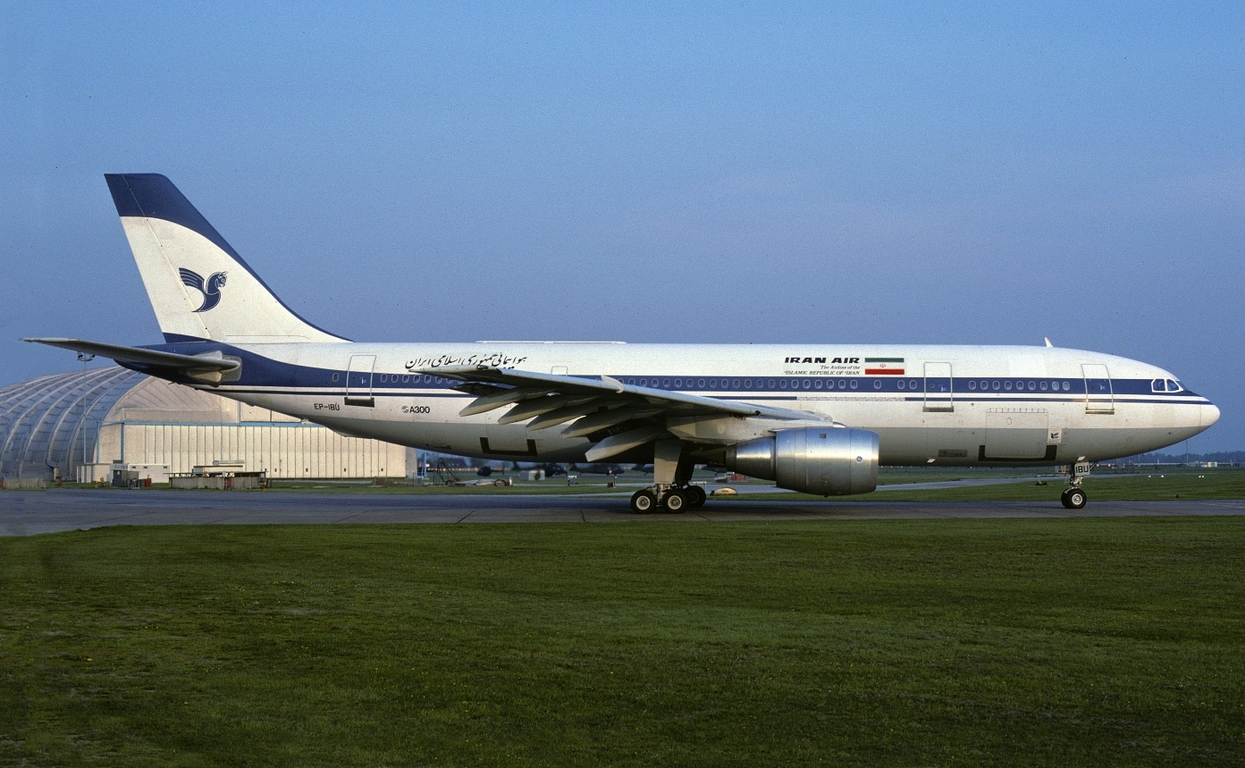
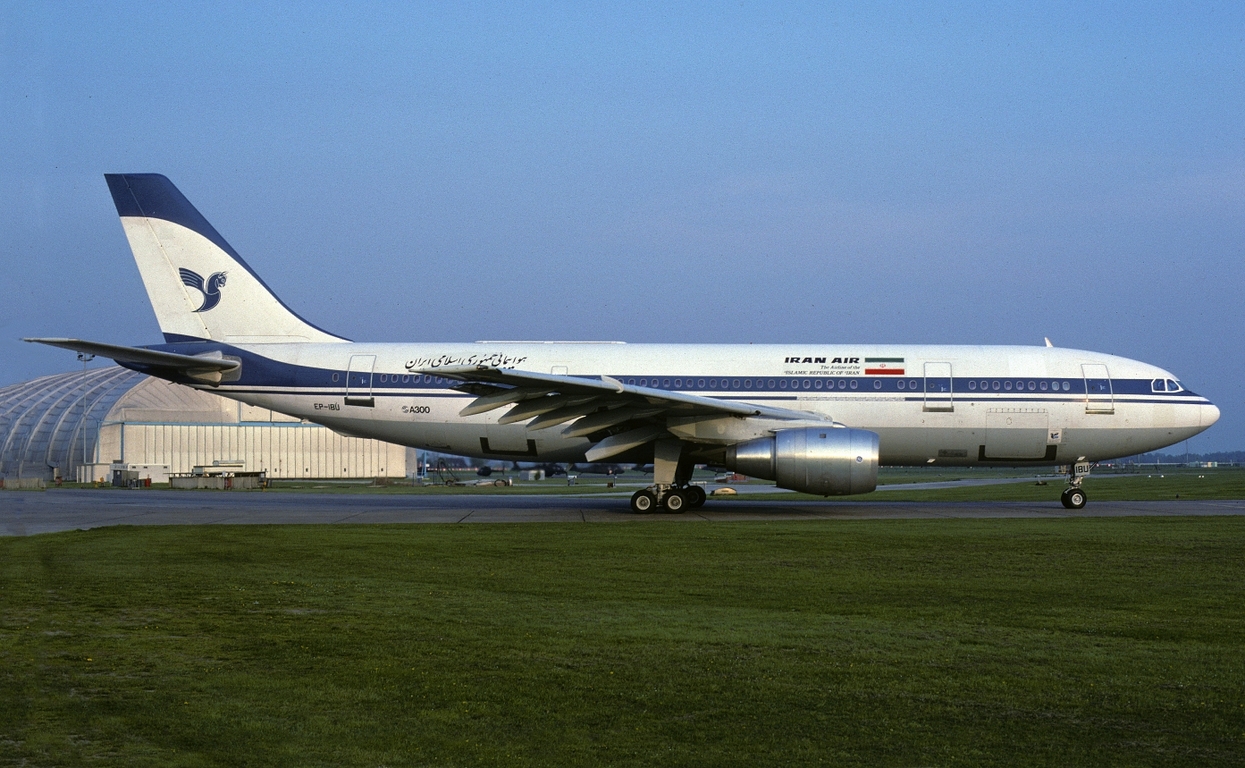
Flight 655 was operated by a six-year-old Airbus A300, registered EP-IBU. This airframe was delivered brand-new to Iran Air in April 1982. At that time, Iran’s aviation industry was in a vastly different state than it is today. With the absence of heavy sanctions, Iranian airlines could take delivery of new Western-built aircraft. This saw Iran Air buying aircraft such as the Airbus A300 and Boeing 747s directly from the manufacturers.
Although the Airbus A300 is fully capable of flying two hours nonstop from Tehran to Dubai, the stop in Bandar Abbas was likely intended to pick up additional passengers. However, there is no official explanation for this.

Given that Bandar Abbas was a smaller city, it is reasonable to assume that Iran Air did not see much demand in operating such a short flight with a large A300. Thus, they added the stopover in Bandar Abbas to serve this smaller market more efficiently. This is supported by the short duration of the stopover and the fact that most of the 274 passengers had boarded in Tehran.
Of the 290 people on board, 274 were passengers and 16 were crew members, mostly from Tehran. Among the total, there were 254 Iranians, 13 Emiratis, 10 Indians, six Pakistanis, six Yugoslavs, and one Italian. The flight was captained by 37-year-old Mohsen Rezaian, a veteran pilot with around 7,000 hours of flight time. 31-year-old First Officer Kamran Teymouri and 33-year-old Flight Engineer Mohammad Reza Amini were also part of the crew.
After a short layover in Bandar Abbas, the aircraft departed at 10:17 a.m. local time with a 27-minute delay due to an unrelated immigration issue. The leg from Bandar Abbas to Dubai is rather brief, as the transit across the Strait of Hormuz takes around 30 minutes.
An Unfortunate Misunderstanding
Flight 655 was assigned to the commercial air corridor "Amber 59", a 20-mile-wide lane on a direct path to Dubai.
A commercial air corridor is a designated route or path within an airspace for commercial air traffic, similar to a highway for cars. This is primarily intended for ease and efficiency of operations, as controllers can direct and route commercial traffic through the same corridors in a given area. Such corridors are commonly seen for flights over oceans or through airspace where there are restricted options for commercial flight paths due to military activity or other reasons.
Because of the short flight, the A300 would climb to an altitude of just 14,000 feet, cruise, and then descend shortly after.
After Flight 655 was airborne, the pilots maintained radio contact with air traffic control facilities in English. It transmitted "Mode 3", the correct transponder squawk code category for civilian aircraft.
A "squawk code" is a signal that an aircraft transmits to air traffic controllers so that it can be identified. These codes contain a single number between 0000 and 7777, with certain codes being universally identified as distress signals, such as 7700, which is signaled by pilots when an aircraft undergoes a general emergency. Commercial aircraft usually send their code using a "Mode 3" protocol, which transmits flight information via the squawk code only.
At this point in 1988, the Iran-Iraq War was raging on. The United States favored Iraq and had deployed naval resources to the Strait of Hormuz. As Iran Air Flight 655 transited the Persian Gulf, the American missile cruiser USS Vincennes was operating in the area. The ship was positioned near Bandar Abbas, an airport that also served as a base for Iranian Air Force F-14 Tomcat fighter jets. As a result, aircraft departing from the airport were treated with heightened suspicion and, in some cases, assumed to be potential threats.

Although Flight 655 was transmitting its correct "Mode 3" signal, the radios on the Vincennes had not yet reset their transmission range. This meant that instead of the "Mode 3" signal being properly received by the Vincennes' radios, the A300's signal was still being interpreted as "Mode 2," the signal indicative of a military aircraft.
The crew of the Vincennes knew that Bandar Abbas Airport served commercial flights and had a listing of its scheduled flights. However, due to both Flight 655's delay and confusion over time zones, the Vincennes crew missed Flight 655's listing on the schedule.
Furthermore, the signal being transmitted by Flight 655 was identical to that of an Iranian F-14 that had flown out of Bandar Abbas a week earlier. Thus, the crew of the Vincennes made the assumption that Flight 655 was an Iranian fighter jet.
Given the conflict in the region, all aircraft in the area were required to monitor the International Air Distress (IAD) radio frequency, 121.5 MHz. This order came a year after the USS Stark incident, when an Iraqi aircraft mistakenly attacked the USS Stark, believing it to be hostile. Reportedly, the Vincennes made 10 attempts on this IAD frequency to warn Flight 655. However, the flight did not respond.
Amid the confusion, the Vincennes then mistakenly identified Flight 655's flight profile as being in rapid descent, similar to that of an attacking F-14. This was despite the ship's onboard combat system correctly showing that the aircraft was climbing out of Bandar Abbas and not descending to attack.

With the A300 not responding and continuing to move toward the ship, the crew perceived it as a hostile Iranian F-14 and engaged the aircraft.
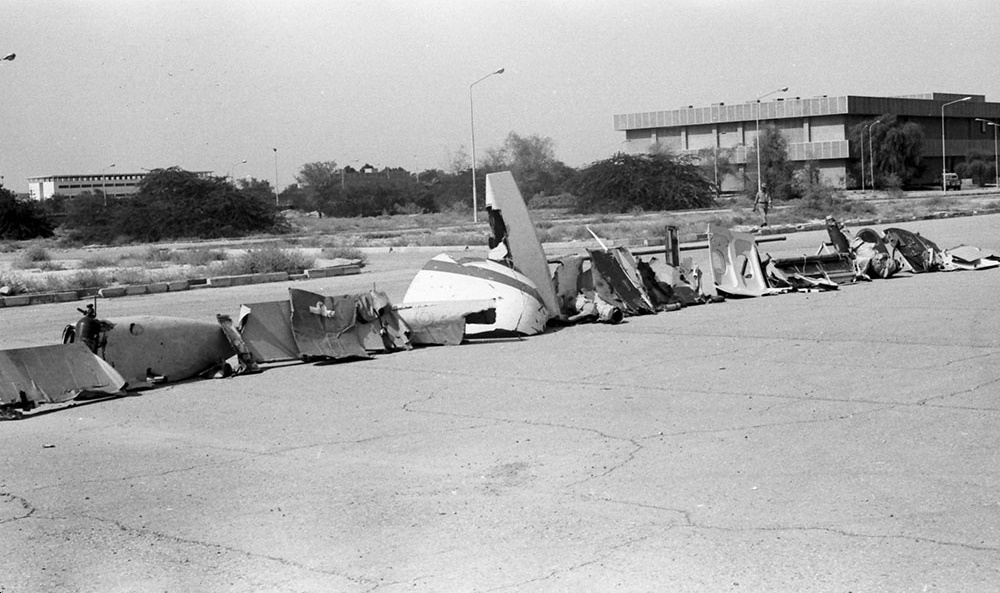
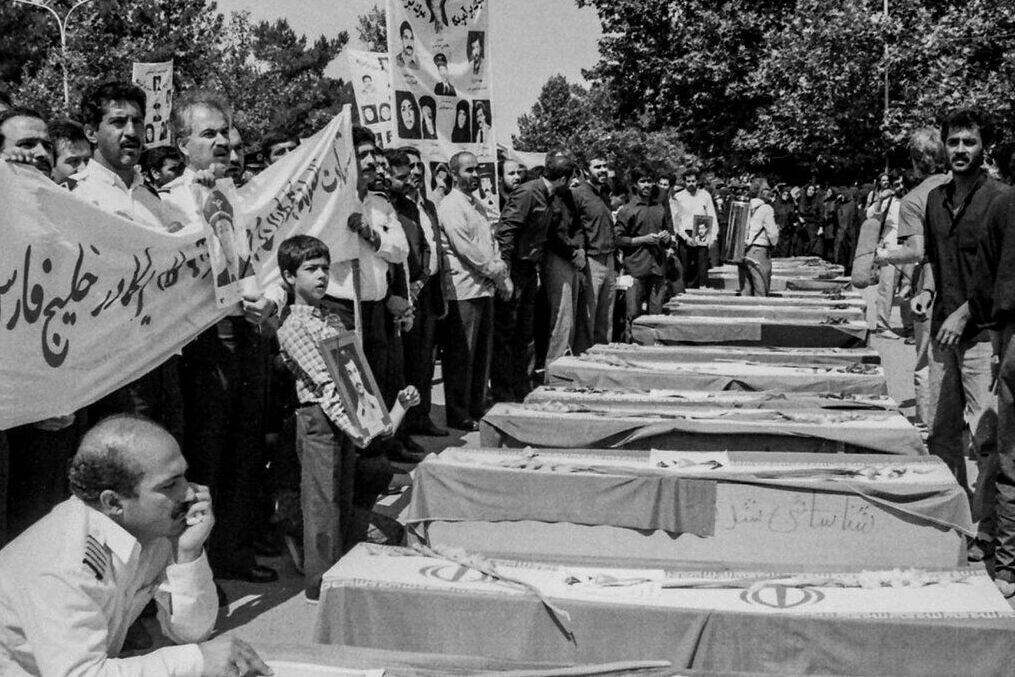
At 10:24:22 a.m., seven minutes after Flight 655 took off, Vincennes fired two SM-2MR surface-to-air missiles from 19 kilometers (12 miles) away. The first missile impacted the aircraft at 10:24:43 a.m., just 21 seconds later. The second missile struck the aircraft shortly after. The A300 disintegrated immediately into three pieces and crashed into the water, tragically killing all 290 people aboard, including 66 infants and children.
Neither the cockpit voice recorder nor the flight data recorder was ever found.

Soon after the incident, Pentagon officials initially stated that the Vincennes had shot down an Iranian F-14. Several hours later, however, they retracted the statement and confirmed Iranian reports that the target was a civilian Airbus A300.
According to the United States, Vincennes mistakenly identified the A300 as an attacking military fighter and misidentified its flight profile. This was despite the Aegis Combat System recording the A300's flight plan as climbing.
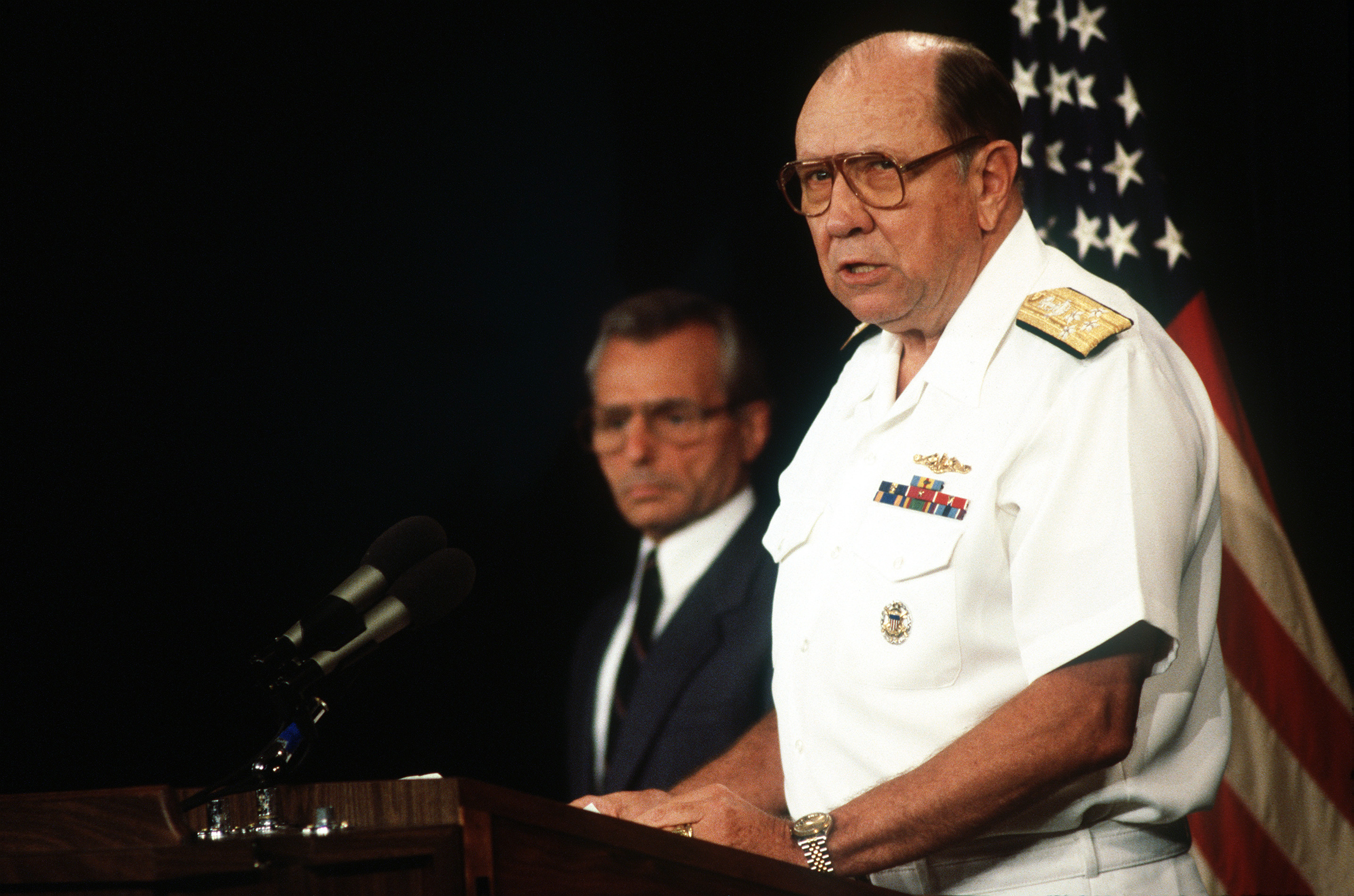
The same reports maintained that Vincennes unsuccessfully attempted to contact the passenger plane 10 times. Seven attempts were made on the military emergency frequency and three were made on the civilian emergency frequency.
However, the A300 was not equipped to receive military frequencies, hence why those messages from the Vincennes were not heard.
Furthermore, the messages transmitted on the International Air Distress frequency could have been directed at any aircraft. This means that Flight 655's pilots might have not realized they were the intended recipients of the warnings.
The Reports Indicated Otherwise
It was later concluded that Vincennes was 2.5 miles inside Iranian territorial waters at the time of the missile strike, further admitted in a report by Admiral William Fogarty.
The "Fogarty Report" as it was called, stated that the Vincennes' tapes confirmed that Flight 655 was on a normal commercial air flight plan profile squawking 6760 on "Mode 3" in a continuous ascent on takeoff from Bandar Abbas.
The report also claimed that Iran was partially at fault for the tragedy by allowing one of their civilian airliners to fly at a relatively low altitude near a hostile area.
The matter of Flight 655 was taken to the International Court of Justice under the name "the Aerial Incident of July 3, 1988" (Islamic Republic of Iran v. United States of America).
The Iranian government maintained that the shootdown was intentional. It is believed that the negligence of the Vincennes' crew amounted to that of an international crime. More specifically, Iran was skeptical about the "mistaken identification" claim, as Vincennes' Aegis radar — as well as the two other nearby U.S. warships — tracked the flight as civilian. Iran also brought attention to the fact that Flight 655 was traveling within a recognized international air corridor.
The case was dropped on February 22nd, 1996 after the U.S. agreed to pay reparations. In total, $131.8 million was paid to Iran in settlement, $61.8 million of which was compensation for the 248 Iranians killed in the shootdown.
While the United States expressed sorrow over the casualties, it did not formally apologize or admit to wrongdoing. This was despite President Ronald Reagan issuing a written diplomatic note to the Iranian government expressing his regret, which he considered an apology. However, Iran did not view it the same way. The distrust that resulted from this tragedy led to further challenges between the two countries, a sentiment that lingers to this day.
This content is only available with an AeroXplorer+ subscription.
Southwest Airlines Considers Boeing 787 Order for Long-Haul International Expansion » Joby Aviation to Pay $116.9 Million in Trade Secrets Case » Aviation Fuel Prices Hit Six-Month High in September »
Comments (1)
 Lazaro
References:
Online casino bonus code Casino Willkommensbonus
Lazaro
References:
Online casino bonus code Casino Willkommensbonus
Add Your Comment
TAGS
STORIES Jetstream Magazine Iran Air 655 Iran Air Tragedy Crash HistoryRECENTLY PUBLISHED
 Boeing's Touchscreen Flight Controls for 737 Draw Sharp Criticism from Pilots
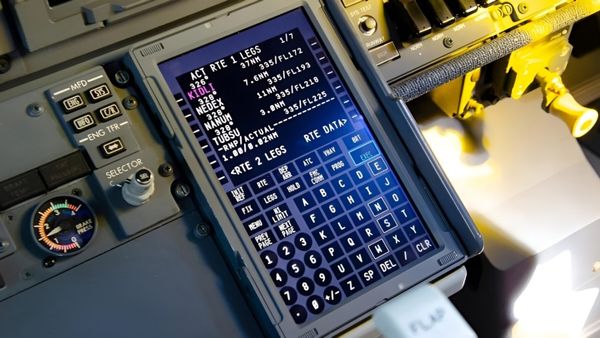
Boeing's plan to introduce Touchscreen Control Display Units on the 737 has sparked backlash from pilots who warn of safety and usability concerns.
NEWS
READ MORE »
Boeing's Touchscreen Flight Controls for 737 Draw Sharp Criticism from Pilots
Boeing's plan to introduce Touchscreen Control Display Units on the 737 has sparked backlash from pilots who warn of safety and usability concerns.
NEWS
READ MORE »
 Southwest Airlines Blames Brief System Outage for Boarding Delays and Checked Bag Disruptions
Southwest Airlines confirms a brief technology outage disrupted boarding and checked bag operations, forcing gate agents to process travelers manually.
NEWS
READ MORE »
Southwest Airlines Blames Brief System Outage for Boarding Delays and Checked Bag Disruptions
Southwest Airlines confirms a brief technology outage disrupted boarding and checked bag operations, forcing gate agents to process travelers manually.
NEWS
READ MORE »
 Southwest Airlines Considers Boeing 787 Order for Long-Haul International Expansion
Southwest Airlines is evaluating the Boeing 787 Dreamliner as it explores a shift into long-haul international flying, sources tell Reuters.
NEWS
READ MORE »
Southwest Airlines Considers Boeing 787 Order for Long-Haul International Expansion
Southwest Airlines is evaluating the Boeing 787 Dreamliner as it explores a shift into long-haul international flying, sources tell Reuters.
NEWS
READ MORE »
More than just headlines.
Get unlimited ad-free access to in-depth aviation news, premium stories, and exclusive insights other sites don't cover.
- Ad-free browsing on AeroXplorer
- Unlimited access to premium and exclusive articles
- Higher photo upload limits & commissions on sales
- Free access to Jetstream Magazine on higher tiers
- Ad-free browsing
- Sell aviation photos with 60% commission
- First week free!
- Everything in Basic+
- Unlimited premium articles
- Sell aviation photos with 70% commission
- Free Digital subscription to Jetstream Magazine
- First week free!
- Everything in Basic+ and Pro
- Sell aviaiton photos with 80% commission
- Early access to exclusive stories
- Free Digital+Print subscription to Jetstream Magazine